
Western United to fight hunger with new partnership

Western United FC has signed a charity partnership with Foodbank Victoria ahead of the 2020/21 A-League season.

Western United have committed to spread awareness related to food insecurity in the state across each of the club’s channels.

Players, staff and members of Western United will have the opportunity to volunteer with Foodbank Victoria to fight hunger in Victoria. Foodbank Victoria are the state’s oldest and largest food relief agency and are based in the western suburb of Yarraville.

Aligning with Western United’s club values, effort and togetherness, this partnership ensures that Victorians in need get the support they require when faced with food insecurity.

The reality is one in five Victorians face this issue, which has ramped up in recent weeks due to the Covid-19 crisis. Foodbank Victoria’s charity partners have reported an increase of up to 50%.

“As a football club, Western United FC is still so young being in our inaugural year of the A-League. The team has worked hard on the pitch, but off the pitch we’re working just as hard to build a club the west will be proud of,” Western United CEO Chris Pehlivanis said.

“This partnership is a solid step for us on that journey.

“The work Foodbank Victoria does, the commitment to the issue of hunger, it’s second to none. Together we’ll combine our strengths and build a partnership that will help fight the hunger crisis.”

Western United say that there is no better time to unite with Foodbank Victoria in the fight to stop hunger.

Photo Credit: Western United Football Club

Previous ArticleNext Article

Football Victoria marks World Autism Understanding Month with Expanded Inclusion Program

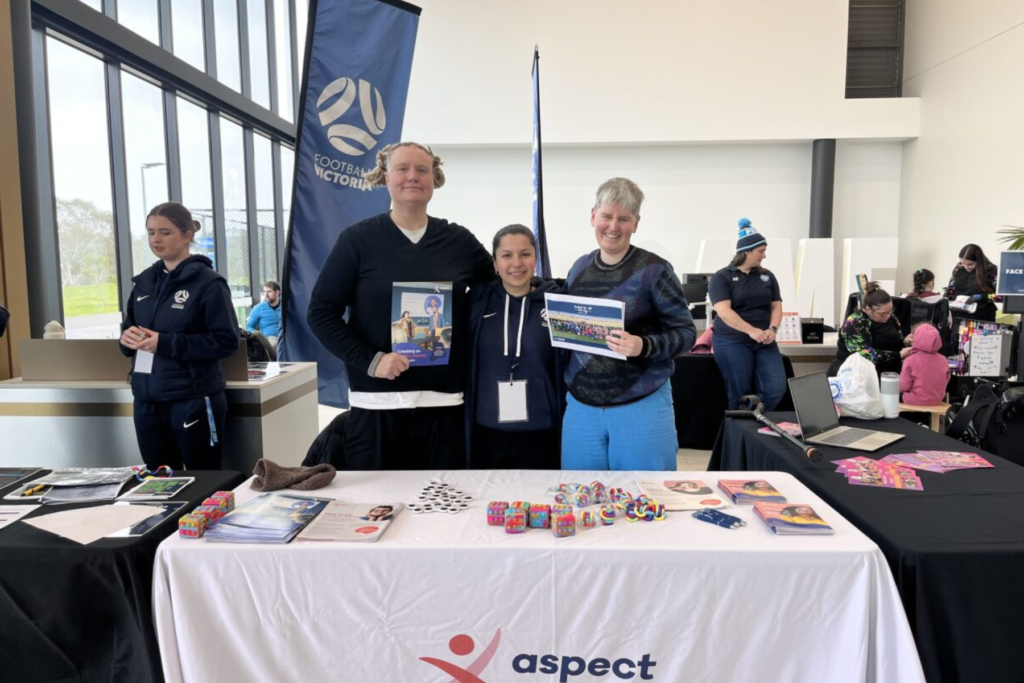
Football Victoria has marked World Autism Understanding Month with a series of practical inclusion initiatives delivered in partnership with Aspect, reinforcing the governing body’s commitment to making football accessible for autistic participants across all levels of the game.

The partnership, now in its second year, has moved beyond awareness into structural change. Environmental assessments have been completed across multiple programs and match days, including at Collingwood City FC and the All-Abilities League match day at Northcote City FC. Each assessment identifies accessibility barriers and provides concrete inclusion principles integrated into the physical and operational realities of football environments.

Ahead of the 2025 Football For All Gala Day, Aspect conducted an environmental assessment of The Home of the Matildas, informing the development of a Visual Story designed to help participants with autism understand the venue and event before arriving. The same approach has been applied to FV’s GO Camps program, giving participants and families the information they need to engage with confidence.

Aspect has also delivered multiple education sessions for coaches throughout the partnership, with a dedicated session for referees held on April 20, the first of its kind, extending autism understanding across match officials and into all parts of the game day experience.

Football Victoria has also joined the Hidden Disabilities Sunflower Initiative, with training and education to be rolled out across the organisation in the coming months, strengthening its capacity to recognise and support participants with non-visible disabilities.

The initiatives reflect a recognition that access to sport is not guaranteed by an open registration form. For many participants with autism and their families, the barriers are environmental, informational and social; and removing them requires sustained investment in education, assessment and design.

UEFA reaffirm partnership with Oceania Football Confederation

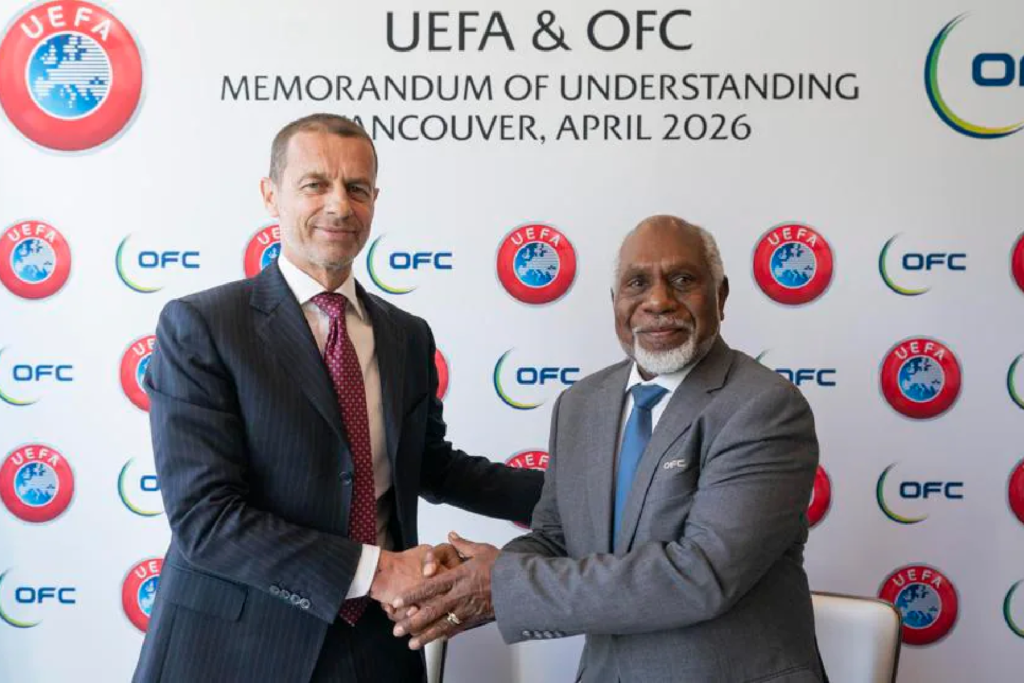
Last week, UEFA signed a Memoriam of Understanding (MoU) with Oceania’s football governing body to continue its commitment  to football in Oceania.


United through football

While being two governing bodies separated by distance, the MoU stands as a symbol of unity and collaboration which supports mutual growth.

The agreement will run until 2031, displaying both parties’ commitment to long-term development through football.

“Europe and Oceania are connected by a shared belief in the importance of investing in people as the foundation of football’s future,” said UEFA President, Aleksander Čeferin, via press release.

“This Memorandum of Understanding brings together UEFA’s experience in elite development and education with OFC’s clear focus on nurturing young talent and strengthening football leadership.”

Furthermore, OFC President, Lambert Maltock, also expressed his confidence in the agreement to support players and pathways alike.

“Our partnership with UEFA reflects a shared commitment to developing the game at every level – from grassroots to elite,” said Maltock.

“By investing in our people and working collaboratively, we are building a more connected, capable and globally competitive football ecosystem for Oceania.”


What the agreement promises

Continuing UEFA’s recent MoUs with CAF (Africa), Concacaf (North, Central America and the Caribbean) and CONMEBOL (South America), the partnership will seek to address several key aspects. These include:

  • Youth football opportunities – supporting OFC’s annual boy’s and girl’s U15 tournaments.
  • Knowledge exchange – reciprocal observer programmes at club finals and national team tournaments.
  • Football development – delivered through the UEFA Together programme.
  • Coach education – sharing of technical expertise and learning activities.
  • Refereeing – opportunities to referee youth tournaments, courses and technical programmes.

Moreover, the agreement outlines a commitment to ensuring football remains a tolerant and inclusive sport, capable of uniting communities and empowering individuals.

Therefore, the MoU between UEFA and the OFC is symbolic of aligned values, principles and vision for the future of football in both regions.


Final thoughts

An alliance of this nature – especially in these uncertain times for global cooperation – is vital.

Football has the power to unite like nothing else.

So governing bodies must recognise the value of connecting across cultures, countries and continents, not only for what it can do for football, but how it can promote fundamental values within the sport as a whole.

Most Popular Topics

Editor Picks

Send this to a friend