

Why the FFA Cup is perfectly placed to kick-start a resurgent season for Australian football

Fans of Australian football could not have predicted the tumultuous ride that the sport has taken over the past few years.

The recent acquisition of all domestic football products (including all A-Leagues, internationals, Asian Cup and FFA Cup matches) by 10 ViacomCBS has delivered an overdue confidence boost for even the most perpetually cynical of Australia’s football fandom. And rather than placate fans with gimmicks, 10 ViacomCBS have opted to embrace football for its greatest attributes – the stories and the fans, qualities that the FFA Cup possesses in abundance.

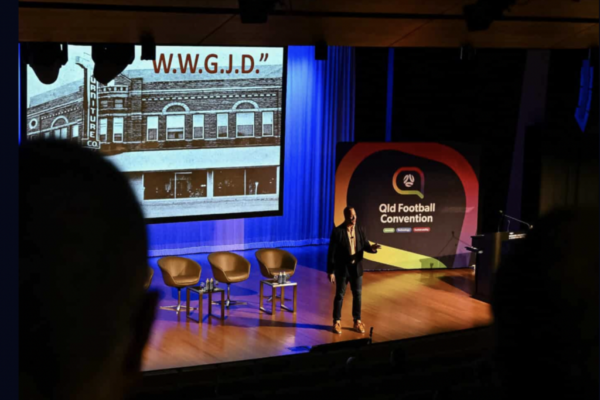
The FFA Cup is not just the often singularly represented storyline of the under-resourced semi-professional minnows taking it to the well-backed sides of the A-League. It’s the deeper footballing stories of club CEO John Boulous encouraging a festival of football atmosphere for Sydney Olympic’s resolute fanbase to enjoy in the upcoming clash against A-League giants Sydney FC; of Head Coach Stewart Montgomery taking an unfancied Mount Druitt Town Rangers to potential lofty heights; and of NBL Hall of Famer and now Blacktown City Executive Chairman Bob Turner working to establish the side as the pride of Blacktown.

Trophy

Each of these fragments in time correspond as mere moments in a competition wholeheartedly intended to enliven the Australian footballing public to latch on to these stories and to the players who shine in these fiercely competitive knockout tournaments.

“We are a big club, with a strong following and tradition in Australian football, and are still recognised nationally. In matches like this, Australians like to see underdogs; they like to see both the experienced and younger kids in our squad get that opportunity,” Boulous said.

“I think what’s important as a club is we need to give them that opportunity. You need to be given that opportunity to play against the best players in Australia. If you play against the best players in Australia, and you do well, you’re all of a sudden on the radar.”

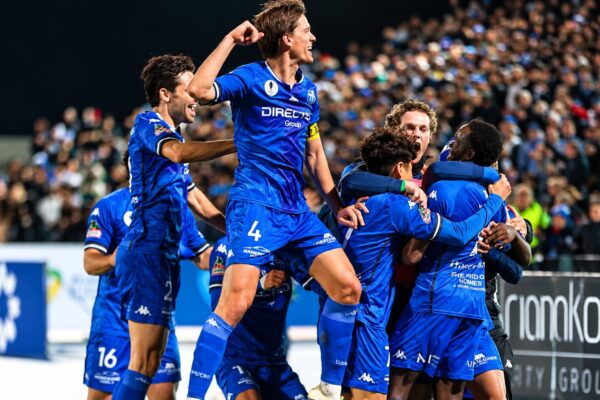
Olympic

Traditionally, the FFA Cup is a curtain raiser to the A-League Men’s competition – but due to COVID-enforced extended lockdowns across Australia, the competition has experienced significant delays.

However, by remaining steadfast in ensuring that the competition is completed, Football Australia have stayed true to the timeline they committed to in the release of their Domestic Match Calendar that was outlined earlier this year.

Even if that means National Premier Leagues (NPL) clubs are handed less time to prepare, their excitement is still palpable.

The capacity for NPL clubs to be able to effectively match A-League sides well into their own pre-season is an obvious challenge befitting any gargantuan David versus Goliath monolith of an analogy that has been overcome by these same clubs for years. And it is certainly one the clubs are well aware of and eager to overcome.

“It just highlights that with extensive training, focus, application and resources being thrown at the NPL level in the lead-up to these games, the difference between a standard A-League player and your good NPL player is not that big. The difference is training and that continued exposure to professional full-time training,” Montgomery said.

“I’ve got no doubt that if we gave two thirds of the players in the NPL exactly that you’d see games being even closer.

“I think historically the A-League teams are coming into their pre-season when we are finishing our season but this will be interesting, because the A-League teams have been well and truly in their preparation for pre-season and are super fit.

“They’ve had the ability to train because of their professional status through the government giving them access to training, whereas the NPL clubs haven’t been able to do anything. It’ll be an interesting to see the outcome of these next three games.”

Rangers

This year’s iteration of the FFA Cup will offer NPL clubs a greater impetus to pursue a spot in the FFA Cup Final – due to the added incentive of a spot in the Asian Champions League’s preliminary round.

Whilst cup competitions are traditionally notable for facilitating matches typified by a dearth of free-flowing end-to-end football due to the added weight of expectations and the intuition for coaches to (understandably) invoke their innermost pragmatic instincts, they exist as a platform for unpredictable instances of magic and breath-taking nights of football. Blacktown City are no strangers to such occasions, having notched a remarkable 3-2 win over their upcoming Round of 32 opposition – Central Coast Mariners – in the 2017 edition of the tournament at the very same stage.

With the tie set to take place at Mudgee’s Glen Willow Regional Sports Stadium, there will be an undoubted added intensity to the game.

“The reason we took it to a regional area in Mudgee is that Central Coast and ourselves both thought that this would be a very positive move for football. For Mudgee it’s a great opportunity to see top-notch football and from what I understand, their ground is top-notch,” Turner said.

“We know that they’ll welcome us and we’re expecting a big crowd.

“Four years ago, we played the Mariners in the FFA Cup and we knocked them off. And then we played the Wanderers and had 5,000 people at the ground. It’s a great stimulus for us to be able to show our credibility as a team and bring some extra pride as a team.”

BCFC

The strength of the FFA Cup lies in not just how effectively it encapsulates Australian football as a microcosm, or in the way it emphatically engages the hardcore Australian football fandom, but in the way it unites and invigorates local communities. A notion all three club devotees are impressively aware of.

“We hope to be able to get a strong crowd here at Belmore. And it will be Olympic supporters and Sydney FC supporters, but we hope that it will be football supporters. Because people have been starved of opportunities to go and watch football matches, and now, they have the opportunity,” Boulous conveyed.

“We’ve got a ground that can hold, in today’s climate, a really strong and big crowd. And I think that that’s important to get people here and back into football. People here want to see it.”

For Sydney Kings legend Bob Turner, both the legacy of his time at Blacktown City and the impact of a potentially successful cup run is uncemented as of yet.

“Our goal is to become what the Panthers are for Penrith, we’re Blacktown City. There’s plenty of sport being played, but there’s nobody like us in town. For me that’s a huge plus. We have all of the ingredients, including one of the nicest stadiums in all of Sydney which we now control and we have history,” he said.

“The one thing I can say we’ve been a letdown in, from a marketing point of view, is how to tell Blacktown who we are. Within two years I think that we’ll be the toast of Blacktown. Blacktown has 188 different nationalities and arguably 80% of them grew up in a country where football is number one.”
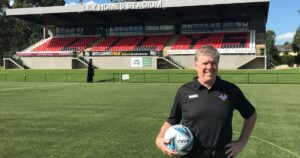
Turner

For Montgomery, the occasion will be one to savour for a Rangers side representing a community with plenty to prove. Particularly in a winnable match against a Wollongong Wolves side they had beaten 3-0 prior to the NPL NSW season being interrupted.

“It can put an exclamation mark on a season that had unfulfilled expectations, so, it allows us to continue playing, stay together as a group and build the club’s profile which is really important for us,” he said.

“A lot of people are waiting for us to fall over and they’re expecting us to drop back down. So, every day we approach it in the same way where people expect us to not perform, and every time we do the opposite of that we send a message.

“We represent an area that doesn’t get the respect that it deserves and we take the park to represent the whole of the City of Blacktown area and the Western suburbs. We take a lot of pride in that and we’ve got a great, passionate vocal support that gets behind us. And Saturday night’s going to be a great night.”

Leading into the season there will be six FFA Cup Round of 32 games available to attend or to watch via Paramount+, with more to follow-up the beginning of the A-League Men’s season on Friday, November 19. All tickets to games can be accessed via the FFA Cup website here.
Previous ArticleNext Article

Beyond the Pitch: Miyuki Kobayashi on the Real Challenges Facing Japan’s Women’s Game

Last week, Soccerscene spoke to pioneer of women’s football in Japan, Miyuki Kobayashi, about the game’s development in Japan and the intersection between sporting and social change in the country.


Talent, quality and recent silverware

After Japan’s recent AFC Women’s Asian Cup victory in the final against Australia, the women’s national team solidified its standing as the No.1 team in Asia.

Throughout the last 15 years, Japan’s women’s national team has grown into a formidable opponent, boasting a World Cup trophy, an Olympic silver medal, as well as three AFC Women’s Asian Cups.

The talent is undeniable. The quality is unwavering. And the team shows no signs of slowing down.

But these victories and trophies on the world stage wouldn’t be possible without the leaders behind the scenes – none more so than Miyuki Kobayashi, former WE League Board Member and current JEF United Ladies Scout and Academy Chief.


Laying the foundations

Kobayashi has led the charge for women’s football in Japan, promoting not only a sport which values success, but one which empowers female footballers across the nation.

“At university, not many girls were playing and we didn’t have an official team. I went to the US and the environment was so different,” Kobayashi explained.

“That opened my eyes – women can play. That’s how I started the women’s soccer league when I came back: to make an environment for girls to play.”

Thus, accessibility and opportunity became driving factors behind Kobayashi’s work, not only for those on the pitch, but for those in the dugout.

“I got involved at the JFA (Japanese Football Association) to promote women’s football. We wanted to create the opportunity for women to be coaches.”

“They are coached by men all the time, so even when the top players leave the football world, they never think to be involved.”

Furthermore, as a former coach of JEF United Ladies Youth and General Manager, Kobayashi was intent on employing as many female coaches as possible. It was not merely a personel change, but a challenge to widespread social attitudes.

“When I started to employ female coaches, the girls’ parents asked why the coach wasn’t a man. But gradually, we started to make it equal – they didn’t talk about the gender, but about the quality of the coach.”


The mission to empower

In 2011, the same year Japan’s women won the World Cup, the domestic league was yet to become professional. Known as the Nadeshiko League, players would work during the day and train in the evenings.

The transition from an amateur to the current professional league required time, resilience and a change in perspective.

“The sports world in Japan is more traditional – it is dominated by men,” said Kobayashi.

“If you want to make the environment even, or (want) more women to come into the (football) world, you can change the mind of the players.”

Since 2021, the WE League has embodied a sense of growth and positive change for the women’s game. In name and nature, it looks to empower players, coaches and all involved in the industry.

“I was in charge of mission achievement for women’s empowerment. We wanted to educate the players, to inspire girls and women who watch the game.”

However, the drive to empower women in football was not without backlash and challenges.

“Some people don’t like that word: ’empowerment’. It’s too strong for them. Some women really appreciate it, but it’s not easy to change the mind of society through football,” Kobayashi admitted.


Growing and attracting talent

Although WE League clubs are accelerating youth development and expanding pathways across U15, U18 and first team football, Kobayashi acknowledged that the overall product must improve to bring foreign players to Japan and entice homegrown talent to stay.

“Most of the national team players go to Europe or North America. I don’t say it’s a problem, but from a young age, girls who can play in the WE League want to go abroad,” Kobayashi outlined.

Indeed, when looking at the starting XI in last month’s AFC Women’s Asian Cup final, only one player – Hana Takahashi – plays in the WE League.

But the key to attracting domestic and international players to the WE League, is aligning financial investment and industry attitudes.

“The reason why women’s football has developed in European countries is the social thinking – you have to be equal and have the same opportunities as men in football. The Japanese way of thinking, especially in the football world, is not that at all,” Kobayashi continued.

“When I speak to people at Spanish clubs, women’s football is not a charity, but an investment.”

“We have assets. We have good, young players, but we’re exporting them, so we need to import too.”

Indeed, Spain is a perfect example of what can happen when investment becomes intentional, not optional. Back-to-back UEFA Women’s Nations League titles, 90% television viewership increase since 2016, and record-breaking crowd numbers reflect what can happen when the industry aligns in vision and commitment.

Japan has the players to compete against any nation in the world. Purposeful investment, combined with its overall quality of players and style, could transform the WE League into a true, global powerhouse.


The vision for the future

Moving forward, Kobayashi hopes that girls progressing through JEF United’s academies develop confidence and resilience, whether as players or people.

“We want to make the girls – even if they aren’t in JEF United – continue playing football and continue to be leaders,” Kobayashi said.

“Some of them have a dream to be a coach or a leader off the field too, so that’s one of the attributes we want to develop.”

This resilience, reflected by the club’s ‘never give up’ philosophy, is testament to the vision of empowerment championed by Kobayashi across the women’s game.

Even in the face of social obstacles and a lack of financial investment, perseverance and hard work is at the bedrock of women’s football in Japan. It is not just that these values exist, but that they are consistently manifested on and off the pitch, which can show future generations that football is a sport for all – men and women alike.


Final thoughts

There is no limit to what the WE League and the national team can achieve if given the resources it deserves. All the ingredients are there: individual quality, a distinct playing style, football philosophy and ambitions to grow.

By following the example of industry leaders like Kobayashi, women’s football in Japan can hopefully continue to make waves of impact – in the sporting landscape and society as a whole.

Victory unites with Roasting Warehouse in culture-led partnership

The Melbourne-based anf family-owned business will join the Victory family, uniting two institutions which represent the city’s culture and identity.

A partnership with local roots

As the newest partner of Melbourne Victory, Roasting Warehouse joins forces with a vital part of the city’s sporting landscape.

The club’s Managing Director, Caroline Carnegie, outlined why the partnership bears so much value to both parties.

“We are excited to collaborate with Roasting Warehouse, a community-oriented destination for high-quality coffee, proud of its foundations in Melbourne,” said Carnegie via official media release.

“Football and coffee sit at the epicentre of Melbourne’s culture. The two go hand-in-hand, consistently at the centre of the conversation that stirs Melburnians, which is no different to the conversation sport and Melbourne Victory stir in the State.”

Indeed, this is a partnership which combines the identity, passions and culture of an entire city, therefore giving it the foundations required for long-term, mutual success.

Representing the best of Melbourne

Both Victory and Roasting Warehouse are hugely successful in their respective industries. They are institutions with community-oriented philosphies, who pride themselves on craft and quality.

“We’re incredibly proud to partner with Melbourne Victory, a club that represents the heart, passion, and ambition of Melbourne,” revealed Roasting Warehouse Head of Brand, Alexander Paraskevopoulos.

“As a Melbourne-founded, family-run business, supporting a team that means so much to the local community feels very natural for us.”

Furthermore, through their high-quality blends, Roasting Warehouse will look to prepare Victory’s players and staff for high performances on the pitch as the seasons nears completion.

But this is about far more than just fueling athletes.

This is a partnership which embodies and unites two of Melbourne’s greatest strengths and cultural markers – a connection forged from the city’s very own DNA.


For more information about Roasting Warehouse, click here.

Most Popular Topics

Editor Picks

Send this to a friend