

Football Coaches Australia presents ‘The Football Coaching Life Podcast’ S2 Ep 9 with Gary Cole interviewing Phil Moss

Phil Moss FCA

Phil Moss is currently the Head of Coaching & Distinctive Leadership at the National Australia Bank and President of Football Coaches Australia. He is also an analyst with Big Sports Breakfast in Sydney.

‘Mossy’ played his junior football in Manly Warringah and progressed as a senior player on the Central Coast and Eastern Suburbs before getting a professional contract with Northern Spirit in the National Soccer League, where he played with Graham Arnold, Robbie Slater and Ian Crook.

His coaching career began at Dee Why with a Championship win. He worked as an assistant with Graham Arnold at Central Coast Mariners, the Olyroos and Sydney FC in addition to enjoying two seasons as Head Coach at the Mariners. Phil has been a part of the successes at all of these clubs and helped the Olyroos qualify for the Olympic Games.

President of FCA since its inception, he describes the importance of FCA in ‘wrapping a collective arm around coaches’ in what can be a very lonely experience. He discusses the importance of ‘collaboration’ with Member Federations and Football Australia in achieving successful outcomes for football in Australia.

Phil also explains why he is proud of what FCA has achieved through a tough couple of years during Covid lockdowns and what the focus is for the organisation in both the short and long term.

This is a conversation filled with wisdom, as Mossy provides wonderful insight into moving from sports coaching into the corporate world. He also delves into the differences between coaching, leadership and developing resilience.

Please join me in sharing Phil Moss’ Football Coaching Life.

Previous ArticleNext Article

More than 220 coaches attend Football South Australia’s second NOVA Youth Club Championship workshop

Football South Australia drew more than 220 coaches to its second NOVA Youth Club Championship Coaches Workshop in late May, underlining the scale of engagement clubs are generating through the state’s restructured youth competition framework.

The online session was facilitated by Football SA Technical Director Michael Cooper, who also serves as Junior Matildas Head Coach. Cooper shared observations from the AFC U17 Women’s Asian Cup and Australia’s qualification for the FIFA U17 Women’s World Cup, giving club-level coaches a window into the demands and standards of elite international football.

The presenter line-up extended that international lens further. Lachlan Tosh and Cristiano Dos Santos spoke to their experiences in national tournament environments, while legendary Australian coach Tom Sermanni addressed the fundamentals of youth coaching. Colin Sanctuary from the University of Newcastle examined coaching language and its direct influence on player learning.

Themes running across the session included the primacy of long-term player development over short-term results, with presenters consistently emphasising technique, ball mastery, individual improvement, and decision-making under pressure. Coaches were encouraged to expose players to varied styles of play, facilitate practice outside organised training, and help young players retain possession longer in match conditions.

Post-session feedback pointed to strong practical value, with coaches singling out clear communication, relationship-building, and age-appropriate feedback as key takeaways.

The workshop series sits within the broader transition from the Youth Premier League to the Club Championship model, which ties coaching participation to championship points for clubs and CPD credits toward individual coaching diplomas. Six workshops are scheduled across the season, with four still to come.

Premier League backs grassroots football in Singapore

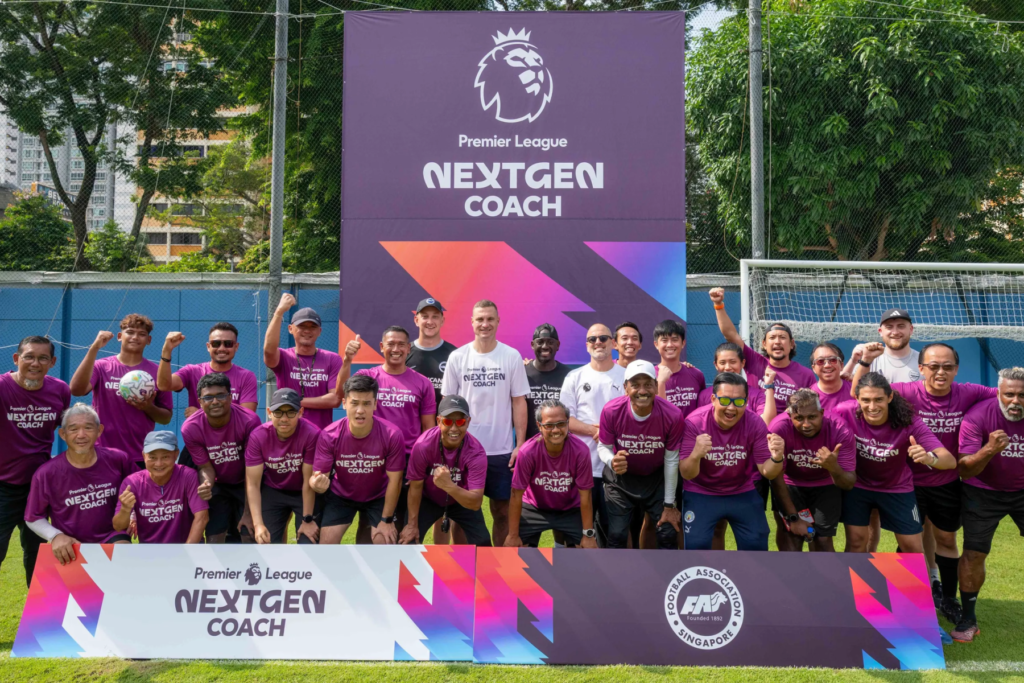
The NEXTGEN coach programme saw past legends and current coaches unite to deliver an activity intent on supporting grassroots football through high quality and inclusive coaching.


Creating new leaders

To reach the top in elite football requires tactical education, personal guidance and consistent support throughout the development journey.

Coaches therefore take on a great deal of responsibility for players seeking a top-flight dream.

Yet even for those who never make it to the top, there is always one coach who stands out. Not necessarily for the silverware achieved or results on the pitch, but for the way they helped build a person off the pitch to play better on it.

The Premier League’s NEXTGEN Coach programme in Singapore aims to equip coaches with the skills and knowledge to do exactly that: creating welcoming environments which nurture confidence and a love for the game.

“This will hugely benefit local coaches, providing them with expert training and skills that will cascade into the communities they coach in,” said Premier League Director of Community, Nick Perchard, via media release.

“After opening the League’s first international office in Singapore more than seven years ago, we are now building on our commitment to the country with a structured coach development programme.”


What does the programme include?

The programme initially saw Premier League coaches deliver training sessions to coaches from StarHub – the League’s broadcast partner in Singapore who engage with local community football.

Furthermore, the training was consolidated through stakeholder engagement events and talks from 150 students at the Institute of Technical Education about their careers in the game.

In total, the programme saw 30 coaches take part – all from diverse backgrounds selected by the Football Association of Singapore (FAS) to maximise community reach and positively impact as many young individuals as possible.

“Youth development is a key priority for FAS, and it starts at the grassroots level,” explained FAS General Secretary, Badri Ghent via media release.

“Coaches play a central role in shaping not just how young players learn the game, but how they experience it, building confidence, character and a lifelong connection to football.”

Through high quality programmes like NEXTGEN, grassroots football can grow to ensure future coaches and players are confident in themselves and their future roles in the game.

Most Popular Topics

Editor Picks

Send this to a friend