





Western United announce Lakeside Stadium as one of four home grounds – challenge issued by South Melbourne

Western United FC has announced that they will play home fixtures out of Lakeside Stadium in season 2021/22, only for South Melbourne FC to challenge the announcement hours later.

United, which made a long-awaited update on the construction of its new stadium yesterday, released a statement this morning confirming that Lakeside Stadium – home of NPL outfit and unsuccessful A-League licence bidder South Melbourne – will be included in its rotation of home games this season.

The club announced that Lakeside will host seven home games for the A-League side in 2021/22 season, the first of which will come against Perth Glory on Friday, November 26 in Round 2.

However, South Melbourne has moved quickly to challenge the announcement.

Western United had revealed Lakeside Stadium as one of its home grounds for the 2021/22 season, with a written statement on the club’s website.

“United had limited options for the season due to the lack of rectangular stadiums in Melbourne, and the requirement that stadiums must meet the minimum A-League venue standards,” the statement reads.

“Several other options were investigated during the process but did not materialise as viable. This included Knights Stadium in Sunshine which unfortunately required significant infrastructure investment to meet A-League standards.

“United was keen to continue playing at AAMI Park as per the 2020/21 season, but this option was heavily opposed by cross-town rivals Melbourne Victory and Melbourne City, despite being the only rectangular stadium in Melbourne that meets all requirements to host an A-League game.

“Lakeside Stadium was selected for several reasons including being easily accessible both on public transport and on road networks with ample parking for United fans based in the west of Melbourne. It is also a purpose-built football stadium that can be adapted to meet to A-League standards, which was a critical factor in the decision-making process.”

South Melbourne has since directly challenged that any agreement is in place at all.

“South Melbourne FC notes the announcement by Western United FC of its intention to use Lakeside Stadium for a select number of games in the 2021/22 A-League Season,” the NPL club noted in a statement.

“Lakeside Stadium and Albert Park is the home of South Melbourne FC and has been for over 60 years. Our licencing arrangements with Lakeside Stadium and the State Government ensures it will remain this way for decades to come.

“South Melbourne FC has a stadium, we have a home and we are proud to call it our own.

“Executives at Lakeside Stadium and Melbourne Sports Centres have advised South Melbourne FC that contrary to the announcement made by Western United FC, there is no written or signed agreement in place with Western United FC or the Australian Professional Leagues to allow Western United FC access to Lakeside Stadium for the 2021/22 A-League Season.

“South Melbourne considers Western United to be a direct competitor in the Melbourne, Victorian and Australian football market. Their acceptance to the A-League was based largely on the commitment to having a purpose-built football stadium constructed in Melbourne’s west. It is approaching three years since the A-League expansion clubs were announced and construction works have still not commenced. Western United’s use of Lakeside Stadium is not acceptable and South Melbourne FC will vigorously oppose any such plans.

“South Melbourne can confirm that it will be exercising all rights to prevent Western United FC from playing A-League matches at Lakeside Stadium.

“The club will provide its members, players, parents and supporters with further updates as information is available.”

Whilst the South Melbourne statement alleges that “Executives at Lakeside Stadium and Melbourne Sports Centres have advised South Melbourne FC that contrary to the announcement made by Western United FC, there is no written or signed agreement in place with Western United FC or the Australian Professional Leagues to allow Western United FC access to Lakeside Stadium for the 2021/22 A-League Season”, the official Melbourne Sports Centres account did retweet the Western United announcement earlier in the day.

The tweet has since been deleted.

In a written statement released earlier in the day, Western United confirmed that the club considered a range of alternative venues but was met with a wide range of challenges, including from AAMI Park anchor tenants and cross-town rivals, Melbourne City and Melbourne Victory.

Western United CEO Chris Pehlivanis explained the ill-fated search for a suitable rectangular stadium west of Melbourne’s CBD was a vital reminder of the importance of the club’s stadium and precinct project in Wyndham.

“We’ve been working hard to find the best home ground for us, which is not a simple process in a complex sporting environment topped with a global pandemic,” he said.

“Unfortunately, what we want and what our members tell us they want – a rectangular pitch to A-League standard located in the west of Melbourne – doesn’t exist. That’s why we are building Wyndham City Stadium.

“For this season, we wanted to build a home ground advantage that would not only benefit us on the pitch but provide the best solution for a great fan experience for our loyal members and fans that have been with us from the beginning.

“We’re really lucky as a club, we have tough, relentless and dedicated fans that I know will stick on this journey with us through the tough times as we build towards being a great club for the west for generations to come.”

Previous ArticleNext Article

Football SA Extends Sammy D Foundation Partnership Into Third Year for Violence Prevention Round

Football South Australia will run its fifth consecutive Violence Prevention Round in partnership with the Sammy D Foundation from 3 to 5 July, with junior teams again asked to wear blue armbands throughout the weekend.

The arrangement was formalised in March 2022, when Football SA and the Foundation signed a three-year agreement, funded by SA Power Networks, to deliver the Foundation’s Monkey See, Monkey Do program to more than 7,500 junior members across 52 clubs.The program is a 90-minute session delivered by Sammy D Foundation facilitators focused on changing players’ attitudes toward bullying and violence and educating parents and club members about the impacts of inappropriate sideline behaviours, built around the story of Sam Davis, the 17-year-old South Adelaide junior footballer whose death in a one-punch assault in 2008 led his parents to establish the Foundation.Football SA general manager George Georganas and Foundation chief executive Brigid Koenig confirmed the partnership at its 2022 launch, framing it as a mechanism for improving club culture from junior sidelines upward.

The round has run every season since, expanding in 2023 to incorporate the Federation Cup Final at ServiceFM Stadium,a weekend Football SA dedicated as the Sammy D Violence Prevention Round alongside the Federation Cup Final Day continuing through the 2024 season,when it was again scheduled as a designated round ahead of that year’s Federation Cup Final and shifting from an early blue tape design to the blue armbands used in 2025 and again this year.

A prevention model funded outside government

The Foundation’s programs, including its work with Football SA, are financed through corporate and philanthropic support rather than recurring government funding. Its rollout with Football SA was backed by SA Power Networks, and separate school-based programs in the state’s Far North have relied on grants from philanthropic trusts.Both the Perpetual Foundation’s Kevin Barnes Gift Fund Endowment and the Fred P Archer Charitable Trust have funded the Foundation’s work in that region.

The State Government’s response to the Royal Commission into Domestic, Family and Sexual Violence, released in December 2025, commits $674 million over ten years to a 136-recommendation reportstructured around themes spanning structural reform, workforce and community education, crisis response, and establishing a foundation for prevention, delivered by Commissioner Natasha Stott Despojaafter four women were killed in the state within a single week in November 2023. The Commission’s focus on domestic, family and sexual violence is distinct from the youth bullying and alcohol-related violence at the centre of Sammy D Foundation programs, but its response includesan expansion of abuse prevention programs to support behavioural change for people who use violence, alongside prevention and awareness activities aimed specifically at young people.

Separately, the Department for Education’s own violence prevention program, developed after a 2022 ministerial roundtable, has directed a $6 million Safe and Supportive Learning Environments Plan of Action toward schools, afterreported violent incidents in South Australian public schools rose 50 per cent in 2023, with more than 13,000 critical incidents recorded that year. The department has since reportedits first decline in secondary school critical incidents in 2024, a 4.5 per cent reduction from 2019 levels, along with a 7.3 per cent fall in suspensions and a 20.8 per cent fall in exclusions in 2025. It also noted thatviolence in primary schools has continued to rise since the pandemic, and that physical violence against teaching staff, the large majority involving primary-aged students, climbed from 273 incidents in 2021 to 662 in 2024.

Evidence from earlier rollouts

Sammy D Foundation programs delivered through junior sport have previously reported strong self-assessed outcomes. An earlier three-year rollout of a related program through SANFL Juniors, a separate competition to Football SA,reached up to 12,800 young players and their families, with 98 per cent reporting increased awareness of the impact of one-punch violence and 89 per cent reporting they avoided a violent situation because of the program.

A national evidence guide on preventing violence through sport, compiled by Our Watch, notes that69 per cent of Australian children and 87 per cent of adults took part in sport or physical activity over a twelve-month period, while also pointing toa lack of research assessing the effectiveness of such approaches, and the need for more robust evaluation of primary prevention programs within sport settings.

Clubs taking part in this year’s round have again been supplied with blue armbands for junior teams, with Football SA and the Foundation asking clubs to share images from the weekend under the round’s official hashtag.

Juan Mata Commits to Melbourne Victory’s Future with Ownership Stake

Melbourne Victory has announced that Spanish football icon Juan Mata has joined the club’s ownership group, marking one of the most significant investment moves by a current international footballer in Australian football history.

The agreement sees Mata acquire an ownership stake in Victory while continuing to weigh up whether he will extend his playing career beyond the 2025/26 A-League Men’s season. The investment is separate from any future playing contract and reflects a long-term commitment to both the club and the wider Australian football landscape.

Should Mata eventually retire from professional football, he will also take on a leadership role by chairing a newly established football committee at Melbourne Victory, helping shape the club’s football operations and strategic direction.

More than another football investment

While former elite players have increasingly entered football ownership around the world, Mata’s decision stands apart because he is investing directly into the club he currently represents.

The move places Melbourne Victory among a growing list of clubs benefiting from investment by globally recognised football figures. However, unlike celebrity ownership groups where players often become passive investors after retirement, Mata is embedding himself within the club while still competing at the highest domestic level.

Commercial terms of the transaction remain confidential, although the investment has been described as a significant long-term minority stake designed to strengthen the partnership between Mata and the club well beyond his playing career.

A vote of confidence in Australian football

Perhaps the most significant aspect of the announcement is what it says about the perception of Australian football internationally.

After arriving in Australia following spells with some of Europe’s biggest clubs, including Manchester United, Chelsea and Valencia, few would have predicted that Mata would choose to invest his own capital into an A-League club.

Instead, the 2010 FIFA World Cup winner has described Australian football as a competition with genuine long-term potential.

“Australian football has a future I genuinely believe in,” Mata said.

“From the moment I arrived at Melbourne Victory, I’ve felt the passion of this club and the potential of the A-Leagues, and I want to be part of building what comes next—not just for a season, but for the long term.”

Mata added that becoming a shareholder represented “the natural next step” after enjoying his first season at Victory.

Rewarding an outstanding first season

The investment follows what has been one of the finest individual campaigns by a marquee player in recent A-League history.

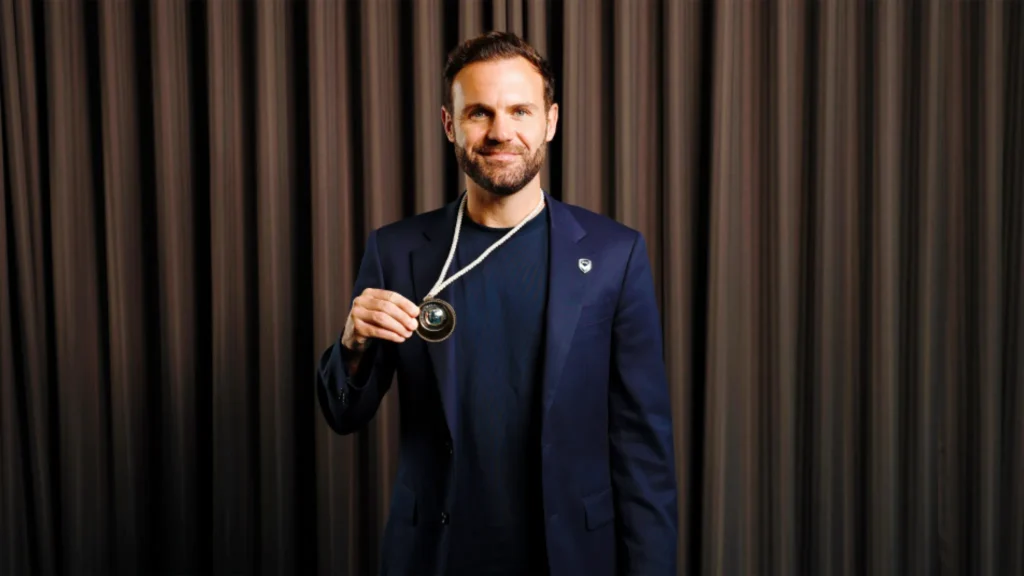
The 38-year-old registered five goals and 13 assists across 25 appearances during the 2025/26 season, earning the Johnny Warren Medal as the league’s best player while also claiming Melbourne Victory’s Player of the Year honours. His performances helped guide Victory back into the Finals Series and demonstrated that his influence extends far beyond his reputation.

Rather than treating Australia as a final destination before retirement, Mata has instead become increasingly involved in shaping the game’s future.

A growing portfolio of sporting investments

Melbourne Victory is not Mata’s first venture into sports ownership.

The Spaniard already holds ownership interests in Major League Soccer expansion club San Diego FC and Formula One outfit Alpine Racing. He has also invested in Mercury/13, the multi-club ownership group focused on developing women’s football globally.

These investments reflect a broader trend among modern footballers who are leveraging their experience and networks beyond their playing careers. For Melbourne Victory, securing someone with Mata’s global football knowledge, commercial experience and international connections represents an opportunity that extends well beyond the pitch.

Landmark moment for Melbourne Victory

Victory Chairman John Dovaston described Mata’s investment as a significant endorsement of both the club and the A-Leagues.

According to Dovaston, Mata is a discerning investor with stakes in elite sporting organisations worldwide, making his decision to back Melbourne Victory a strong signal of confidence in the club’s direction and the league’s future.

Managing Director Caroline Carnegie echoed those sentiments, describing the announcement as “genuinely groundbreaking” and highlighting Mata’s combination of world-class football intelligence, investor mindset and long-term commitment.

A statement beyond Melbourne

Australian football has long sought greater international credibility. Not only through marquee signings, but through meaningful long-term investment.

Mata’s decision represents something arguably more valuable than a headline player signing. By committing financially to Melbourne Victory, he is effectively betting on the future growth of both the club and the A-Leagues.

At a time when Australian football continues to pursue increased investment, stronger governance and greater global relevance, having one of the game’s most respected figures choose to become an owner may ultimately prove to be one of the competition’s most powerful endorsements.

Most Popular Topics

Editor Picks

Send this to a friend