


Zena Sport: Helping female goalkeepers stay protected

Donna Johnson started Zena Sport with the aim of protecting women athletes in high-impact sports. With the help of her husband, former AFL footballer and Western Bulldogs captain Brad Johnson, Zena Sport is changing the way female athletes look at injury prevention.

Their Female Impact protection garment, known as the Zena Z1 performance vest, offers support and impact protection, while also giving compression for enhanced post-game recovery.

The impact vest isn’t visible under a jersey or shirt while being lightweight and breathable without restricting a player’s movement, weighing only 160 grams.

Donna came up with the idea after after she watched a local women’s AFL game, with plans to continue expanding the product line after their initial success.

“My wife Donna was at a local game with her best friend who had a couple of daughters playing, and one of them came off that game with a big knock to the breast,” Brad said.

“We thought is there anything to help these girls during that development phase of life? That’s how the conversation started with us, and we continued to explore it.”

After discovering there wasn’t a large body of research in the area of injuries specific to women’s athletes, Zena Sport conducted their own.

“We worked with Deakin University in that process, and there were a lot of things to tick off,” Brad Johnson said.

“We went through their Centre of Sports Research, and the vest has been validated to show it absorbs a high level of contact.”

The AFLW embraced the impact vests, and now Zena Sport is expanding into other sports.

“The last 18 months we’ve been going flat out, AFLW was our first port of call but Melissa Barbieri jumped onboard quickly and she loves wearing it in goal,” Donna said.

“Soccer is one sport that the vest has been well received, and the feedback has been great so we want to push it even further and harder through the soccer world.”

Melissa Barbieri, a former Matilda’s goalkeeper, had an early opportunity to test the vest out before launch.

“Once I tried it I felt that little more protected in collisions, and as a goalkeeper hitting the ground and the ball hitting your chest,” Barbieri said.

“I have some breast cancer in the family, so I wanted to protect myself as much as possible, so it was a welcome revelation.”

Barbieri, who played 86 times for Australia, values the product as perfect for women goalkeepers who need extra safety during games.

“First and foremost I feel it gives you compression, which is always good for recovery, but it also gives you an extra layer of protection from any hits you might have via the ground, opposition coming in or friendly fire,” she said.

“Certainly when you are in a one-on-one predicament in a game, coming out and spreading yourself with as much width as possible and not protecting yourself in the chest area, it’s perfect for feeling that little bit of extra protection.”

Brad Johnson is the Western Bulldogs’ all-time appearance holder in the AFL, and his own experiences in professional sports influenced the design of the vest.

“It was always wait until you are injured, and then protect it to return to play. In that regard, I wore a rib-guard in the final few years of playing, under my jumper without anyone knowing, and away I went,” he said.

“So from that I was keen to add that element to it which has become a really popular part of the vest.”

For Barbieri, the impact vest not only offers her safety and confidence on the field, but she also believes in the company behind the product.

“Supporting someone who is so passionate about female athletes is really great to see, and it’s a homegrown family company, so I want to get behind them as much as much as possible,” she said.

Zena Sport is providing women and girls the opportunity to play contact sport to their full potential while raising awareness about the need to protect themselves from injury.

You can visit the Zena Sport website for more information, or view the ZENA Z1 Impact Protection Vest.
Previous ArticleNext Article

Football West’s Female Football Week draws record engagement from Metropolitan Perth to Remote Kunurra

Football West has wrapped up its 2026 Female Football Week with activations spanning metropolitan Perth, regional Western Australia and national online platforms, as participation data from the state’s most remote football association underlined the scale of demand for women’s and girls’ football beyond the city.

Kununurra Soccer Association, situated in the East Kimberley more than 3,000 kilometres from Perth, recorded 47 new female registrations aged 7 to 12 across the first two terms of 2026 through Football West’s Junior Girls United program, representing a 30 percent increase in female membership that coaches Hannah Grominsky and Evie Marchetti described as overwhelming.

“The support from the community has been simply awesome,” Grominsky said. “We’re up to nearly 50 registered girls now. The majority of them have never played before or aren’t part of our association, so it’s great to give them a positive football experience in a comfortable environment.”

The program, supported by the Federal Government’s Play Our Way grant, now runs every Wednesday and has extended football activity into the cooler months of the Kimberley calendar, a season when the association would not traditionally operate. The result is a cohort of players new to the game, in a region where access to organised sport has historically been constrained by geography, infrastructure and seasonality.

Recognition across the state

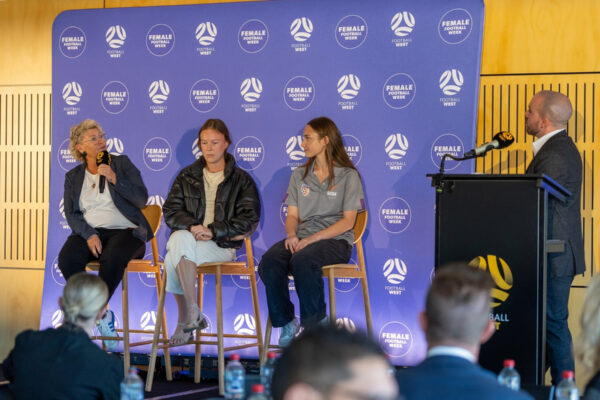
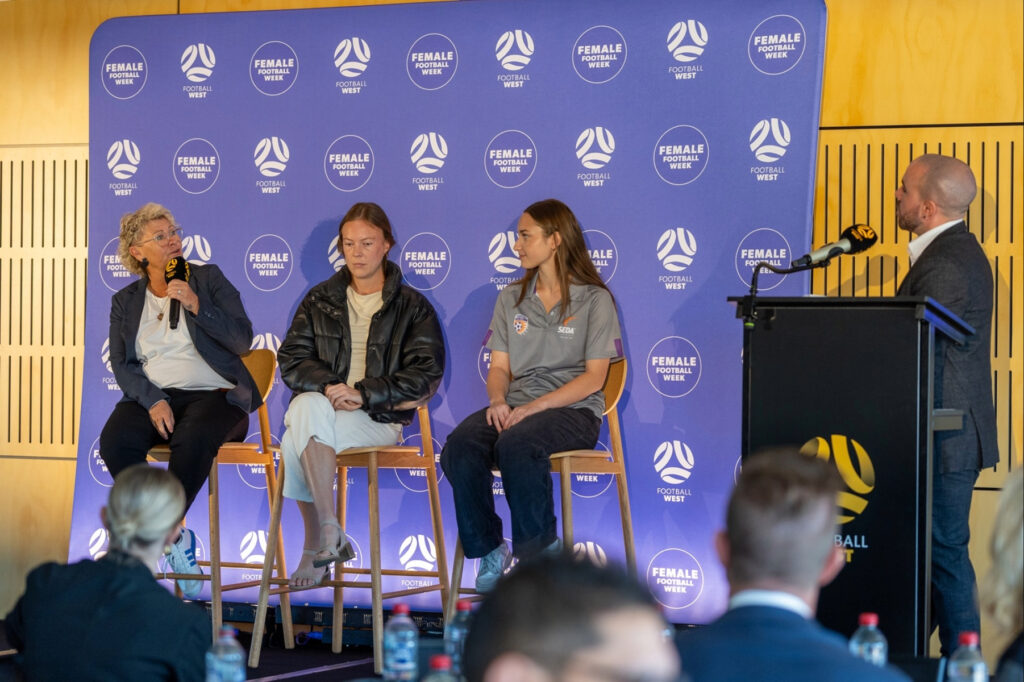
Back in Perth, Female Football Week’s centrepiece event was the Women in Football Celebrate You Breakfast at the Sam Kerr Football Centre, featuring two panel discussions covering officiating pathways, coaching development and advocacy for women in football.

Subiaco AFC NPL Women’s head coach Christine Coppin, who is one of few women coaching at her level in the region, said events like the breakfast were critical to making the pathway visible for others.

“I’d love to see more women coaches putting their hat in the ring, both at junior and senior levels, realising that there’s more to football than just playing,” Coppin said. “They can stay involved in the sport as they get older in different ways.”

A regional Women in Football Breakfast in Albany drew more than 30 attendees, while a Girls Day Out event in the same city attracted more than 50 participants aged 6 to 16 for a come-and-try introduction to the game, extending the week’s reach into the Great Southern and reinforcing Football West’s stated commitment to building women’s football outside metropolitan areas.

Recognising those who make it happen

The week’s awards, nominated by the WA public, recognised five individuals whose contributions to female football across the state were judged most significant over the past year. Cassandra Paxman of Albany Rovers FC was named Coach of the Year, Georgia Whitelaw of Great Southern JSA and Albany JSA took Referee of the Year, Karen Harris of Carramar Shamrock Rovers FC was named Volunteer of the Year, Georgia Aiesi of Mandurah City FC received the Player of the Year award, and Melissa Spillman of Football Futures Foundations was named Community Champion of the Year— a recognition she also received at the national level.

Football West Female Football and Advocacy Manager Sarah Carroll said the week had reinforced both the momentum and the responsibility facing the sport.

“Female Football Week continues to showcase the incredible passion and growing appetite for the women’s game,” Carroll said. “It’s a reminder of how important it is that we keep working together to drive the game forward.”

The contrast between a packed breakfast at the Sam Kerr Football Centre and a Wednesday afternoon program in Kununurra working around wet season schedules captures something essential about where women’s football in Western Australia actually lives. The growth is real, and it is happening in places the cameras do not always reach.

The Man Who Built a Women’s Football Program from Nothing is now an Award-Winning Gender Equity Leader

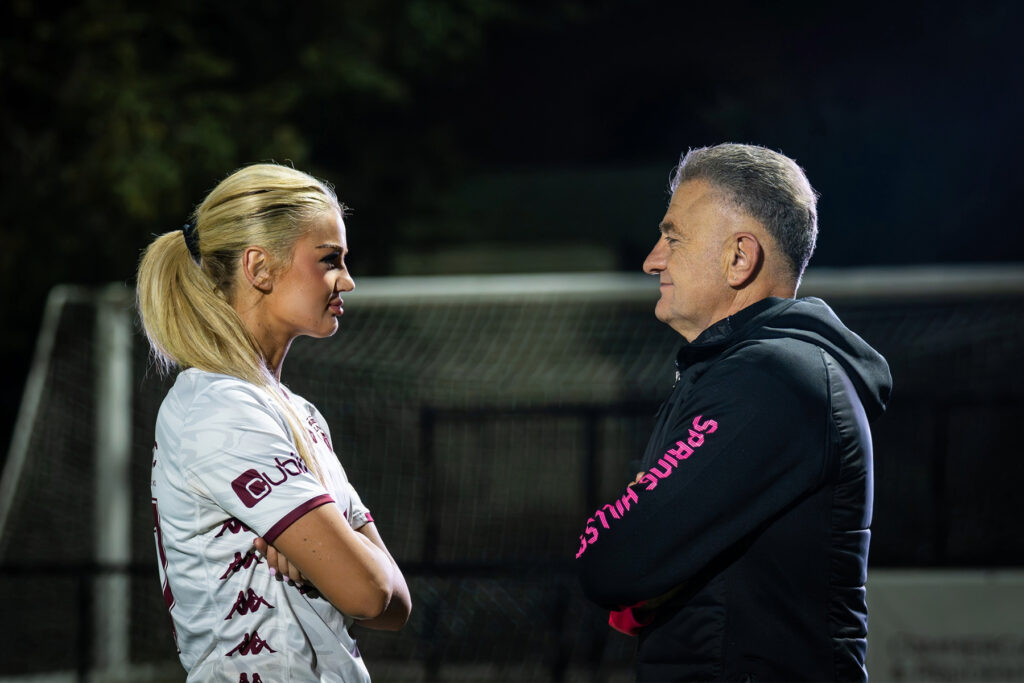
Eight years ago, Spring Hills Football Club did not have a girls’ team. Today it has one of the most recognised women’s programs in Melbourne’s west, a senior NPLW side, and a head coach who has just been named Gender Equity Leader of the Year at the Melton City Council Volunteer Achievement Awards.

Tom Markovski, Spring Hills’ NPLW Head Coach, received the award at a ceremony coinciding with National Volunteer Week, recognised for his community leadership, promotion of gender equality and commitment to advancing the status of women and people of all genders in sport. The recognition comes from outside the football community entirely, awarded by a local council celebrating volunteers across every sector of civic life in one of Melbourne’s fastest-growing regions.

Building from scratch

When Markovski arrived at Spring Hills, women’s football at the club did not exist. His first act was to champion the establishment of the club’s first all-girls team, a process that required persuading a club culture built around men’s football that the investment was worth making.

Women’s football in community clubs has historically struggled to access the same facilities, scheduling priority, coaching resources and institutional support as the men’s game. Clubs have been slow to invest in programs whose return is less immediately visible than a senior men’s premiership, and in a growing outer-suburban community like Melton, where volunteer capacity is finite and demand across every program is high, the case for building something new always has to compete with the urgency of maintaining what already exists.

Markovski made the case anyway, and kept making it across eight years of coaching senior and junior NPL teams while simultaneously building the structural foundations of a women’s program designed to outlast any individual’s involvement. The club’s first all-girls team became multiple junior girls teams. Those junior teams created the pipeline for a senior women’s side. The senior women’s side created visible pathways for younger players to see where the game could take them within their own club.

The outcome is a program that Spring Hills now holds up as central to its identity rather than supplementary to it. The club has become a leader in female participation in Melbourne’s west, and recently made history within the NPLW Victoria structure by fielding junior teams coached entirely by female coaches, a milestone that reflects the depth of the program Markovski helped build.

What the Award Recognises

The Melton City Council’s decision to name Markovski its Gender Equity Leader of the Year places his work in a frame that extends beyond football. Melton is one of the fastest-growing local government areas in Australia, a diverse and rapidly expanding community where the institutions that bring people together, like schools, councils, sporting clubs, carry an outsized responsibility for social cohesion.

Mayor Cr. Lara Carli, speaking at the awards ceremony, reflected on the role volunteers play in communities like Melton’s. “Volunteering creates friendships, strengthens communities and builds a sense of belonging,” she said. “It helps people feel connected, supported and valued, and those things are more important than ever in a growing and diverse community like ours.”

For the girls now playing football at Spring Hills who were not playing anywhere eight years ago, Markovski’s contribution is not abstract. It is the specific and concrete fact of having somewhere to play, someone to coach them, and a pathway that leads somewhere.

Most Popular Topics

Editor Picks

Send this to a friend