

David Clarkson on returning to South Melbourne FC with Nicholas Maikousis at the helm

South Melbourne FC is one of the most successful and famous Australian clubs, a powerhouse in the National Soccer League and Victorian NPL and is now set to be part of the establishment for the National Second Tier (NST) to arrive in 2025.

David Clarkson is a hall of famer at South Melbourne and one of the prominent players during the golden years of their dominance in the NSL from 1996-2003.

After years in the A-League within development, he has recently returned to the club to become their Head of Community Football Programs.

Soccerscene recently sat down with Clarkson, alongside South Melbourne FC President Nicholas Maikousis, to ask about why he joined the club, what are some of the new initiatives, and how these fit into the club’s position in the NST and also the local community.

Congratulations on your new role David, what made you return to this club?

David Clarkson: I had played before with the club for seven years and had an amazing time. What we did speaks for itself with a great bunch of people on and off the pitch.

Nick’s been at the club for 35 years and he was around when I was playing, we have had a strong relationship and we’ve remained friends.

Why do you think you wanted to participate in this initiative?

David Clarkson: I do my best thinking when I’m running and one day I was out and thought I wanted to speak to Nick again, and I wanted to put another proposal.

Nick said that ultimately it was the timing that worked.

I’ve learned a lot over the journey and for many years I worked in the A-League.

As the football environment changed, I believe I’m able to bring those learnings back to this club which is part of my DNA and always in my heart; I know it sounds cliché but it’s the truth.

Where I feel I can add benefit to the club is in this community space, working with juniors and bringing people back. South Melbourne is a big brand, and a big brand must deliver.

I’m really excited about the opportunity for myself and the club.

What are the initiatives and strategies you were planning to roll out?

David Clarkson: We wanted to start with the basics and that is setting up holiday camps. We know in this day and age that parents are looking for things for their kids to do during the school holidays.

Why not go to your local football club and do something you enjoy?

We had very little lead-in time for these school holidays, and we got around 50 boys and girls each doing the program.

From these camps, we plan to grow and add in more initiatives, including things such as pre-academy programs and squad development programs.

Nicholas Maikousis: Due to our history, we have a lot of community clubs that are South Melbourne-friendly clubs for decades.

As a resource, David will be able to further support the relationship with these community clubs, so his role is critical in managing those relationships and adding value to those South Melbourne community clubs.

David Clarkson: On top of that, we must respect our past. This Club has an unbelievably rich history with not just players but terrific individuals.

We won four national championships over the journey and for these individuals, South Melbourne is still who they are. I want to reach out to those old members and bring them back, and I feel that’s an important part of this role.

South Melbourne is one of the establishment clubs for the upcoming National Second Tier. With the announcement of this community initiative, we were wondering how these two projects are connected.

Nicholas Maikousis: Unlike the A-League franchises, we are still a members-based club, our community owns this club and so the value we add to the NST can really take us back to our roots.

The national second division allows us to add resources back into the club. If we are truly back onto the national stage, then there are certain parts of the business that need to be strengthened – with the community support program being one of those areas.

David Clarkson: On that, we have a wonderful opportunity to create something special; the foundation is what you build on, we need a strong foundation for the future.

The NST is a pathway for young players, they don’t need to look elsewhere and they can come into the South Melbourne system that is structured and set up and now they can play in a national competition.

This really takes the ceiling off for the club to progress.

Nicholas Maikousis: We were Australia’s biggest club before the turn of the century and although we maintained momentum for years, thanks primarily to David’s team, we are only recently seeing that diminishing.

I believe the National Second Tier will be a renaissance for us.

The opportunity lets us play on the national stage and still maintain relationships with the clubs that are from the broader South Melbourne family. This will be key to David’s role.

Are these initiatives going to engage with these partner clubs and will it be solely football or aspects of the business be involved as well?

David Clarkson: Everything we do with our partner clubs has to be a 50/50 benefit for both. This is the way I’ve set up these programs before in the A-League. Because the question you need to ask is if there’s no profit, why are these clubs sending the kids to us?

What we plan to do is run programs in conjunction with the clubs, including player development programs which means the money that comes in will go to the club’s players, parents, and the registration.

This grows the game, and the money coming in from this can be reinvested back into football, new facilities and new equipment, and scholarship programs. These are really important to us.

From what you guys have said currently, do you think the National Second Tier is allowing the club to be more ambitious?

Nicholas Maikousis: The reality is we got to invest in the club and build its resources; the NST will double our expenses and revenue streams.

South Melbourne will turn into a four-million-dollar business from a two-million-dollar business right now including expenses.

In the old NSL days, we had about 4-5 individuals in the administrative team, and that is where we are going to be in this new second tier.

Also, the amount of talent these old clubs produced was because kids got an opportunity in the old NSL. We’d sell players overseas, it’s good for the game to have this back.

We only tick the basic boxes now, so much more we could and should be doing, David’s appointment is an example of that progression.

David Clarkson: There is money in football, the NST just needs to be supported and it will grow.

On the other hand, with the new NST in conjunction with these community initiatives, do you think South Melbourne and other NST clubs will be able to bridge the gap in Australian football between community clubs and the A-League?

Nicholas Maikousis: Football Australia has talked about building a proper football pyramid, which has been lacking because of the gap between the A-League and state competitions.

Our clubs in the NSD will be able to bridge that gap.

With the history and heritage of the club, is there a sense of responsibility for South Melbourne to deliver development to the community and the game in the NST?

Nicholas Maikousis: I’ve heard this argument before, of trustworthiness and integrity which is critical to us and something unique to us.

We have a responsibility to our own community and the broader footballing community because we have delivered before on so many levels.

So many of the great stories and personnel for the A-League and Australian football are from South Melbourne, the greatest of all of course is Ange Postecoglou.

Any final messages about your initiative and goals?

David Clarkson: South Melbourne is a club of the people, serving the community, girls, boys, and persons with disabilities, you are welcome at our football club.

We are going to provide programs and look after people, players and parents to try and give them everything from their first experience into football, to playing for the Matildas or Socceroos.

This badge means a lot to people but only if it keeps delivering and that’s what we intend to do.

David Clarkson and Nicholas Maikousis are proud of their club and ambitious about their new goals combining both community initiatives with their rise to the National Second Division.

More will come in the coming months from the “Oceania Club of the Century” both in the community and wider footballing spheres.

Previous ArticleNext Article

The A-Leagues Final Series important status also a secret hinderance

The Isuzu A-League finals series is a huge event in the footballing calendar, though its contribution to stagnant attendance numbers in the league is something to be said.

If the 2025/26 finals series follows similar patterns to those before it, it will gather huge traction and strong ticket sales.

It is the largest event for the domestic league, bringing in massive amounts of viewership through media and gate receipts.

Finals series from years past have shown this, with the 2024/25 final, a Melbourne derby, being sold out within 48 hours and gathering significant viewership online.

The idea of a finals series lies within the Australian sporting ethos; the other sporting codes have had this tradition for most of their existence, especially in recent history.

Football, though, is different from the rest of the sporting codes in Australia, unique even. This has historically contributed to its inability to integrate into the same supported status as other codes.

Many in the Australian footballing community, supporter groups, players, coaches, and even the new Director of Football Australia, have voiced concerns over fan numbers in the league competition.

It wouldn’t be absurd to say that maybe, though profitable now, the finals series is actually taking away from the league itself.

Consider the media image: the league winner is called the “minor premiership,” and ticket sales and viewership figures reveal a huge disparity between the two parts of the A-League.

It must be said that an alternative that could work in unison with the league and possibly increase viewership of the league itself would be a great advantage.

It would allow the league to gain more jeopardy and drama, which could build greater interest in attending league games.

One alternative is already here.

No other sporting code in Australia has both a league competition and a cup competition. Football in Australia does.

The Hahn’s Australia Cup is our equivalent to the FA Cup in England or the Copa del Rey in Spain.

These are competitions that offer a finals option in a different competition entirely. They generate huge traction while never diminishing the importance of the league and, therefore, its popularity.

These cup competitions cannot be discussed without acknowledging some obvious differences.

They don’t face the same popularity issues that football does in Australia. It’s obvious the Hahn’s Australia Cup doesn’t yet gain the traction that the finals series does.

However, for a healthy footballing environment with increasing fan numbers, it should.

The idea of elevating the Hahn’s Australia Cup and scaling back the finals series is a complex question, one that is treated like a “no-go zone” by many in the Australian footballing community, and that is understandable.

Though big changes like this might, in the end, be credible options for the future of the sport in this country.

Larger plans must be set in motion, strategies that can be worked towards and refined along the way. It is the process by which all large organisations, business models and even national governments build their strategies.

Such a shift will be scrutinised and pushed back against.

Though with further fine-tuning and smart investment in development, not to mention the introduction of promotion and relegation and the possibility of changing the footballing calendar.

It could replicate the success that these two-competition models already enjoy in other leagues.

The added importance that the premiership would gain, the reality that every game matters, could alongside other strategies entice fans to more games, increase viewership and ticket sales, and create more dedicated fan bases. It works in other nations, very well in fact.

The possibility of two teams lifting a trophy, rather than one single event defining it all, sounds like a strategy that could deliver more engagement over longer periods of time.

Maybe Australian football doesn’t need to answer this question just yet. It is complex, difficult and it would require a great deal of work, including significant investment into the game, which is another issue entirely.

Yet as low attendance numbers persist in the A-League, even alongside increased media viewership, something needs to change for football in Australia.

The rise in popularity of this game and its dedicated community deserves bold ideas and forward thinking.

Ideas like this could eventually begin to change the landscape of the beautiful game in Australia for the better.

Media Mega-Mergers, Minor Leagues: Why Global Consolidation Should Be a Wake-Up Call for Australian Football

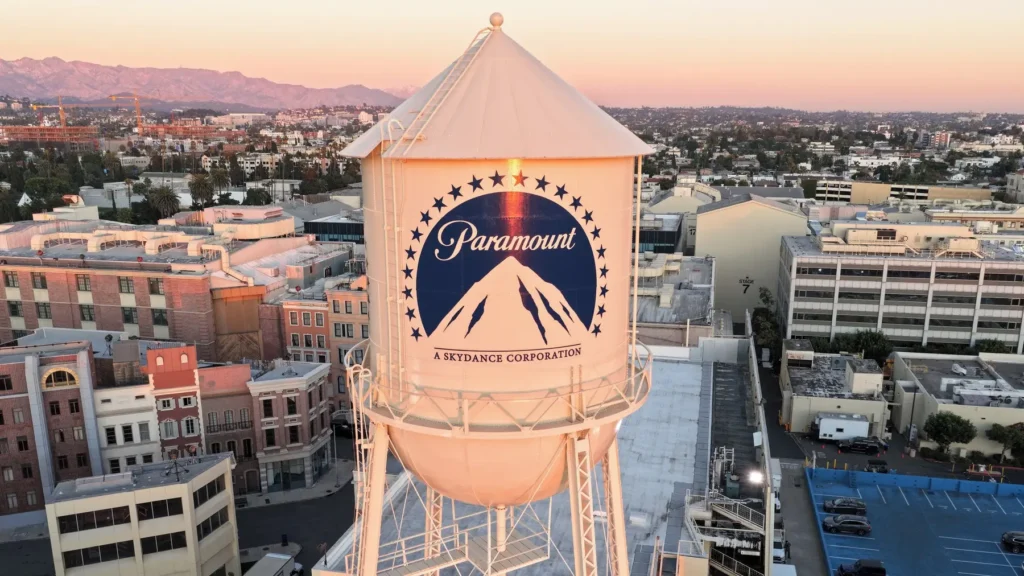
The approval of a reported $113 billion merger between Warner Bros. Discovery and Paramount Global is being framed as the creation of a “next-generation media and entertainment company.”

But beyond Hollywood headlines, the deal signals something far more consequential for sport: a global media landscape rapidly consolidating into fewer, more powerful hands.

For Australian football, particularly the A-League, this is not just background noise. It is a structural shift that could define the league’s future.


A shrinking marketplace, a growing imbalance

The merger brings together an enormous portfolio of assets, such as film studios, broadcast networks and streaming platforms, under a single corporate umbrella. It reflects a broader industry trend: scale is no longer an advantage in media, it is a necessity.

Yet with that scale comes concentration. Fewer buyers now control more platforms, more audiences, and more capital. Critics of the deal have warned that such consolidation risks reducing competition and narrowing the range of voices in global media.

For sport, the implications are immediate.

Broadcast rights are no longer negotiated in a diverse, competitive market. Instead, leagues are increasingly competing for space within vertically integrated media ecosystems. This is because decisions are driven not just by audience demand, but by global strategy, bundled content offerings and long-term platform growth.


Why the A-League is particularly exposed

This shift lands unevenly across the sporting landscape.

Leagues like the Australian Football League (AFL) and National Rugby League (NRL) remain dominant domestic products, commanding billion-dollar broadcast deals and consistent mass audiences.

The A-League, by contrast, operates from a more fragile commercial base.

Despite its global game status, the league continues to face:

  • Inconsistent crowd figures
  • Fluctuating visibility
  • A comparatively modest broadcast deal with Paramount

In a fragmented media environment, this is manageable. In a consolidated one, it becomes a vulnerability.

Because as the number of broadcasters shrinks, so too does the margin for leagues that are not seen as “must-have” content.


From open market to closed ecosystem

The critical shift is not just economic, it is also structural.

In the past, leagues could leverage competition between broadcasters to drive rights value. Now, with fewer but larger players, the balance of power tilts toward the platforms.

Content is no longer simply acquired, it is curated.

And in that environment, only properties that deliver one (or more) of the following will thrive:

  • Guaranteed audiences
  • Global scalability
  • Year-round engagement
  • Strategic value within a broader content ecosystem

This is where the A-League faces both its greatest challenge—and its greatest opportunity.


The overlooked strength of Australian football

While often positioned as a “developing” product domestically, football offers something no other Australian code can replicate: global alignment.

As the world’s most popular sport, football operates within an international ecosystem that extends far beyond national borders. Australia’s geographic position, bridging Asian and Western markets, adds further strategic value.

For a global media entity like Paramount, this matters.

The A-League is not just local content. It is potentially exportable, scalable and aligned with global football narratives. It also taps into younger, more digitally engaged audiences, who are increasingly driving subscription-based streaming growth.

In a media environment defined by platform expansion, that is not a weakness. It is an underutilised asset.


Why consolidation should drive MORE investment

The instinct in a consolidating market is often caution by tightening budgets, focusing on proven performers and minimising risk.

But for Australian football, that approach is self-defeating.

Because without investment:

  • Production quality stagnates
  • Storytelling weakens
  • Audience growth plateaus
  • Commercial value declines

And in a system that rewards scale and engagement, stagnation is equivalent to irrelevance.

Instead, consolidation should be seen as a trigger for strategic investment:

  • Elevating broadcast presentation
  • Strengthening club identities and narratives
  • Expanding digital and streaming integration
  • Positioning the league within the broader global football conversation

In short, making the A-League indispensable, rather than optional.


The real risk: being left behind

The emergence of media giants like a merged Warner Bros. Discovery and Paramount Global signals a future where content is filtered through fewer, more powerful gatekeepers.

In that world, leagues that fail to assert their value risk being sidelined, not because they lack potential, but because they fail to meet the evolving demands of the platforms that distribute them.

For the A-League, the danger is not collapse. It is marginalisation.

A slow drift into irrelevance while larger codes capture the attention, investment, and audiences that define modern sport.


Conclusion: a defining moment

This merger is not about Hollywood. It is about power.

Power over distribution. Power over audiences. Power over what gets seen and what does not.

For Australian football, the message is clear.

In a world of media consolidation, visibility is earned through value, not assumed through presence.

And if the A-League is to secure its place in that future, investment is no longer optional.

It is existential.

Most Popular Topics

Editor Picks

Send this to a friend