




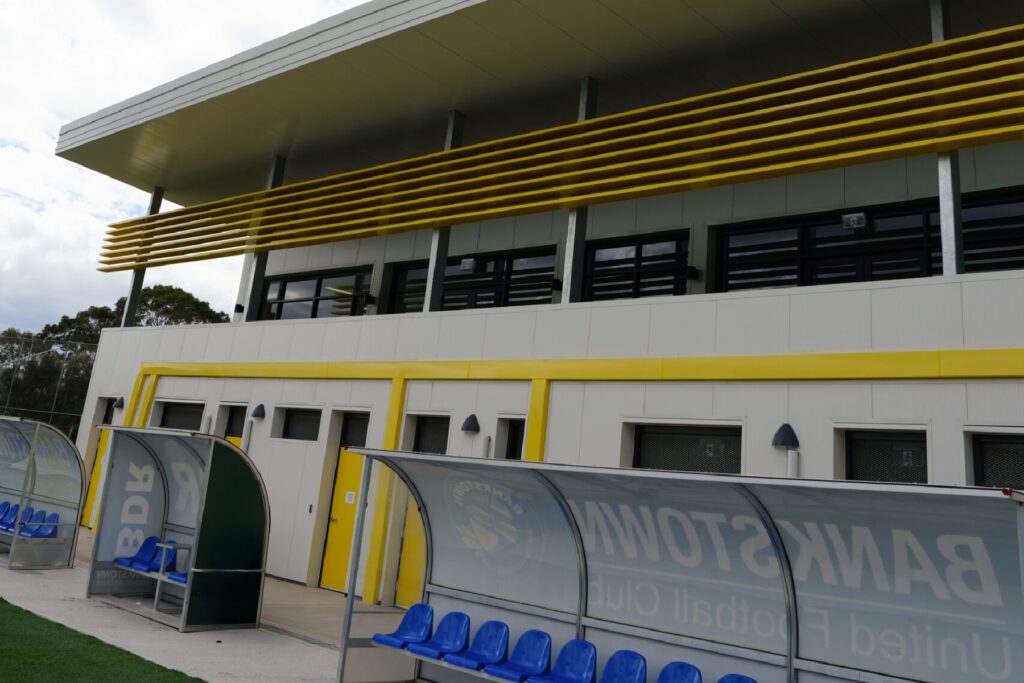
BDAFA emphasies youth and community through football initiatives

As the 2026 grassroots season begins, Bankstown District Amateur Football Association (BDAFA) commenced a series of initiatives to underline the importance of community, youth participation and inclusivity.

Accessible, affordable, enjoyable

The work of BDAFA highlights the core values which uphold grassroots football in Australia.

Bringing the community together, creating inclusive environments, and keeping the game affordable are all at the forefront of recent initiatives.

As a result, the 2026 season promises to be a huge success for all involved – from players to volunteers.

“At the heart of everything BDAFA does is our community,” said General Manager, Leanne Millar, via press release.

“This season, we’re proud to be keeping football affordable for our children and creating competitions where everyone feels welcome to be part of the game.”

The vision to ensure football remains accessible – whether socially or financially – is behind BDAFA’s work. Providing free footballs for kindergarten students, and capping registration fees for 6 and 7-year-olds at $50 highlight the organisation’s commitment to the grassroots landscape in the region.


Creating a home for all

Moreover, supporting drives to increase participation in the local community – from young people to Over-35s, is the recently established Bankstown “Home of Football.”

But while a multi-purpose facility and synthetic pitch are welcome additions to the local infrastructure, their value goes far deeper.

The “Home of Football” is not just a venue for the game itself, but a place where all can come together through a shared love of football.

“The development of Bankstown’s Home of Football is one of the most significant milestones in the association’s history,” continued Millar.

“The synthetic pitch has been in use for the past three years, and now, with the completion of the building, we have a truly multi-purpose venue that will serve not only our football community but the wider community as well.”

Grassroots is the foundation of the game we love.

Thankfully, BDAFA is making sure it has a sustainable and successful future ahead.

Previous ArticleNext Article

Football West hosts Papua Football Academy as Asian ties deepen

Football West has hosted members of the Papua Football Academy from Indonesia on an eleven-day exchange visit to Perth, marking a significant step in the governing body’s Asian Engagement Strategy and demonstrating football’s capacity to build meaningful cross-cultural relationships across the region.

Supported by the WA Government, the visit brought 60 players aged 13 to 15 from across Papua province to train alongside Football West Academy players and local clubs, including Perth Azzurri and Perth Glory. The group also attended A-League and New Balance NPL WA matches, toured Optus Stadium, visited the WA Institute of Sport, ECU Joondalup and John Curtin College of Arts, and met with the Indonesian Consulate General in Perth.

“Football West is committed to leading football diplomacy in the region, and this program is a great example of football’s power to connect people, build relationships and create genuine pathways,” said Football West Asian Engagement Advisor Robbie Gaspar. “It’s all about the people-to-people connections”.


Leading initiatives

Established in 2022 through a partnership between PT Freeport Indonesia and the Football Association of Indonesia, the Papua Football Academy provides high-performance training, education and welfare support for talented young players from one of Indonesia’s most geographically remote provinces. The program has quickly become one of Indonesia’s leading youth development initiatives, with ambitions to build international connections through training camps, matches and partnerships.

Papua Football Academy Director Wolfgang Pikal said the visit had provided his players and coaches with a standard of facilities and competition exposure unavailable at home. “We have nothing like this in Papua,” he said. “It has allowed the coaches to learn something new and for the kids to measure themselves against young players in Perth.”

Pikal flagged hopes of placing two or three players in Perth competitions in the future as the partnership develops.

Football Victoria marks World Autism Understanding Month with Expanded Inclusion Program

Football Victoria has marked World Autism Understanding Month with a series of practical inclusion initiatives delivered in partnership with Aspect, reinforcing the governing body’s commitment to making football accessible for autistic participants across all levels of the game.

The partnership, now in its second year, has moved beyond awareness into structural change. Environmental assessments have been completed across multiple programs and match days, including at Collingwood City FC and the All-Abilities League match day at Northcote City FC. Each assessment identifies accessibility barriers and provides concrete inclusion principles integrated into the physical and operational realities of football environments.

Ahead of the 2025 Football For All Gala Day, Aspect conducted an environmental assessment of The Home of the Matildas, informing the development of a Visual Story designed to help participants with autism understand the venue and event before arriving. The same approach has been applied to FV’s GO Camps program, giving participants and families the information they need to engage with confidence.

Aspect has also delivered multiple education sessions for coaches throughout the partnership, with a dedicated session for referees held on April 20, the first of its kind, extending autism understanding across match officials and into all parts of the game day experience.

Football Victoria has also joined the Hidden Disabilities Sunflower Initiative, with training and education to be rolled out across the organisation in the coming months, strengthening its capacity to recognise and support participants with non-visible disabilities.

The initiatives reflect a recognition that access to sport is not guaranteed by an open registration form. For many participants with autism and their families, the barriers are environmental, informational and social; and removing them requires sustained investment in education, assessment and design.

Most Popular Topics

Editor Picks

Send this to a friend