

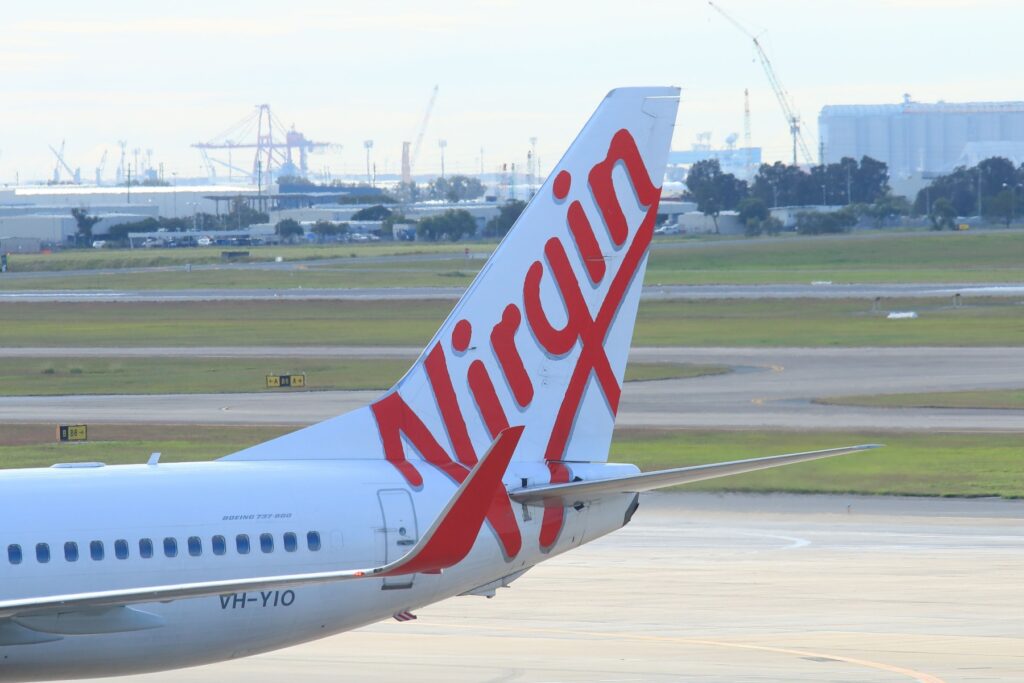
WA Government and Virgin Australia Partner to Bring Discounted Flights for Italian Football Series in Perth

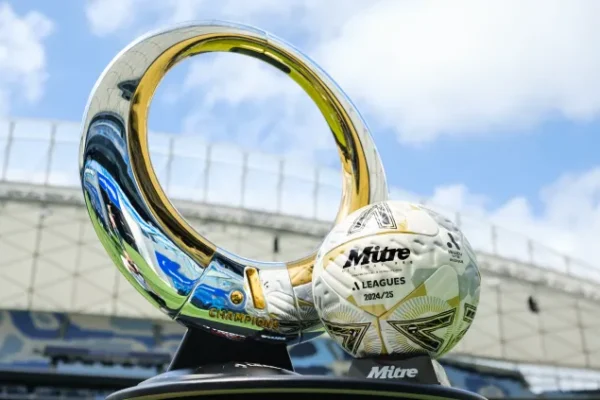
The Western Australian Government has partnered with Virgin Australia to offer discounted airfares to Perth ahead of a three-match series featuring AC Milan, Inter Milan, Juventus and Palermo, in a move that reflects how state governments are increasingly using major sporting fixtures as tools of tourism and economic strategy.

Subsidising travel costs rather than simply promoting the matches signals a shift in how state governments are approaching major sporting events. WA Tourism Minister Reece Whitby positioned the series within the state’s broader Winter of Unmissable Sport strategy, framing the partnership as a way to fill hotels, support local businesses and generate visible economic activity across a single week of programming. That logic places football alongside other major events states have used to justify public investment in visitor attraction, where the return is measured in tourism spend rather than ticket revenue alone.

A bet on Australia’s appetite for European football

Touring Italian clubs is not a routine occurrence in Australia, and Sport and Recreation Minister Rita Saffioti’s comments point to an underlying assumption behind the investment: that the existing fan base for European football in Australia is substantial enough to justify a state government underwriting travel costs to fill a stadium on the other side of the country.

Australian audiences for international football have grown considerably over the past decade, driven by streaming access, diaspora communities and the rising visibility of leagues once difficult to follow locally. State governments positioning themselves to capture economic value from that growth, rather than leaving it to broadcasters and travel operators, marks a change in how football’s commercial footprint in Australia is being treated by policymakers.

It also raises a question likely to recur as more international club fixtures are scheduled in Australian cities: whether public subsidy for travel around marquee football events delivers economic value beyond the host city, or whether the benefit is concentrated narrowly within the host state’s tourism and hospitality sectors. Virgin Australia’s involvement reflects the commercial logic on the airline side, with the partnership forming part of a broader push to connect Australians with major domestic and international destinations.

For the domestic football industry, the series is a reminder that international club football is competing for the same audience attention as the A-Leagues and grassroots competitions. Whether that competition proves complementary or extractive, in terms of where football-related spending in Australia ultimately lands, is a question state and national football bodies are likely to watch closely as similar fixtures become more frequent.
Previous ArticleNext Article

Football West runs Indigenous pilot program during NAIDOC Week’s 50th anniversary

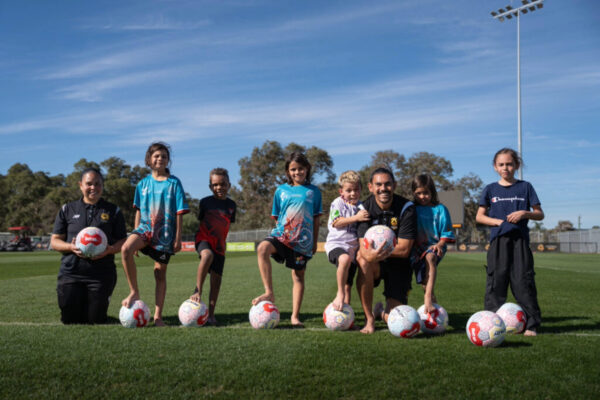
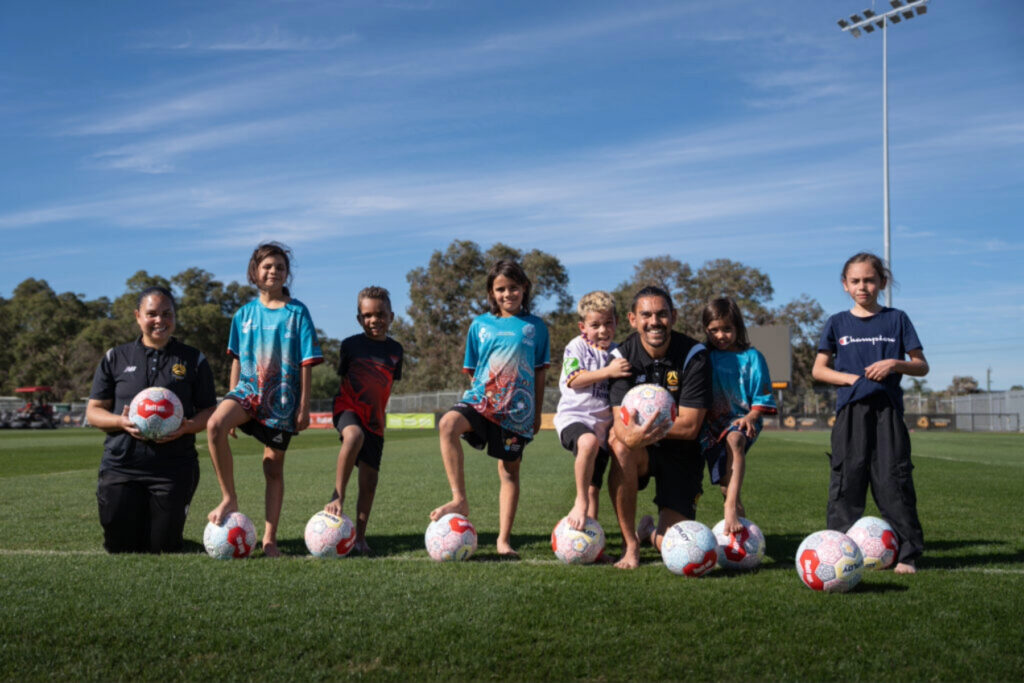
Football West ran a pilot program for Indigenous children at the Sam Kerr Football Centre during NAIDOC Week’s 50th anniversary. Former Socceroo David Williams delivered the session.

This year’s national NAIDOC theme, “50 Years of Deadly,” marks five decades since the movement began. It honours the Elders, artists and communities who built it.

“Having these young indigenous kids here at the Sam Kerr Football Centre was great to see,” Williams said. “The feeling they got running around the same pitch the Socceroos and Matildas have trained on was special for them and me.”

A player turned administrator

Williams retired from professional football in November 2025 after a career-ending ACL injury. As a teenager he trained with Club Brugge and Liverpool, and coach Miron Bleiberg once described him as the “best Australian prospect since Harry Kewell.”

He went on to become the first Indigenous player to represent Melbourne City, scored in the UEFA Cup against Eintracht Frankfurt, and won the Indian Super League with ATK.

Since retiring, Williams has moved into administration at Football West. He also sits on the Indigenous Football Australia Council, which oversees the grassroots initiative John Moriarty Football.

A name with its own history

Football Australia named Williams head coach of the Charles Perkins XI last year, the governing body’s national Indigenous youth team. Football Australia renamed the side in 2025 in honour of Dr Charles Perkins AO, following endorsement from the Perkins family and the National Indigenous Advisory Group.

Perkins, an Arrernte and Kalkadoon man, played for Adelaide Croatia and Pan Hellenic in the 1950s. He went on to become the first Aboriginal Australian to graduate from university and a leader of the 1965 Freedom Rides.

Football Australia has described the renamed team as reflecting a commitment to embedding cultural identity and leadership within its high-performance pathway for Aboriginal and Torres Strait Islander youth.

What happens next

“After living out my dream as a professional player, to now being able to offer experiences like this and hopefully inspire the next generation of young Indigenous footballers is very rewarding,” Williams said. “There is also a lot of talent that we can tap into.”

He said running the session during NAIDOC Week let Football West mark two things at once. “Creating a fun session for these kids during NAIDOC Week meant we could celebrate culture and sport in one go,” he said.

Williams wants the session to become a regular fixture rather than a single event. “Going forward, I would love to put on more of these programs throughout the year and get more indigenous youngsters playing football,” he said.

Football West has not yet confirmed funding or a schedule for further sessions.

Mizuno’s Australian gamble: can a 120-year-old brand break through?

When Mizuno unveiled a mural of Socceroos captain Harry Souttar on a Richmond wall during the 2026 World Cup, the company’s name did not appear on the artwork. The artist, Rory Ledge, painted Souttar as the “Minister of Defence” behind a brick wall. Channel 7 and Channel 9 turned up. The Herald Sun ran it in their Saturday edition. Mizuno’s brand director called it “mainstream awareness” without paid media.

The mural sat within a broader push by the Osaka-based company to expand in Oceania. For the fiscal year ending March 2026, Mizuno reported sales of ¥259 billion, up 7.8 per cent year-on-year, with net income of ¥18.4 billion representing 20.5 per cent growth . Operating profit rose to ¥22.6 billion. The Asia and Oceania segment is central to the company’s medium-term plan, which targets net sales of ¥290 billion by fiscal 2027.

The growth imperative

Australian football has not historically been kind to specialist boot brands. Nike, Adidas and Puma dominate retail shelves. A-Leagues collective bargaining agreements and club deals have locked in incumbents. For a brand without the marketing budgets of its competitors, the path to relevance runs through the players.

Mizuno has grown its Australian ambassador base from one athlete to around 20 across the A-Leagues in recent seasons. Melbourne City’s Tolgay Arslan, who played in the Bundesliga and Serie A before arriving in Australia, told Front Page Football: “If I discovered these boots ten years ago, I would wear these boots overseas in my career.” Western United midfielder Angus Thurgate called them “the comfiest boots I’ve ever worn”.

The mural moment

Richmond was chosen for the mural because of its location. The suburb sits at the centre of Melbourne’s sporting precinct, five minutes’ walk from the MCG and AAMI Park. It is already home to murals of AFL players. Rowena Corner Store owner Con, who agreed to host the artwork, had previously welcomed murals of Dusty Martin and an AFLW player.

“We didn’t have access to Harry because he was in the US competing,” brand director Rishi said. “We couldn’t do a photoshoot. So we had to be clever. The best ideas come from real time, aligned with what the public discourse looks like. Once we saw his Wikipedia page updated to refer to him as the Minister of Defence, we knew we could play into this.”

Ledge incorporated an existing window into the design to create a net behind Souttar’s figure. The mural appeared the morning of the Paraguay match, when Australia’s clean sheet sent them into the knockout phase.

The World Cup provided a massive backdrop. The Socceroos’ run captivated the nation: 4.84 million Australians tuned in to the Paraguay match, making it the most-watched World Cup match in SBS history at the time, with an average audience of 3.086 million . The final reached 5.26 million viewers, and cumulative tournament reach hit 18.04 million— 64 per cent of Australia’s population. SBS director of sport Ken Shipp said: “We’ve never seen engagement at this level.” Mizuno spent comparatively little and had Channel 7 and Channel 9 on site.

The commercial question

For a brand with limited marketing firepower, organic PR coverage is the prize. The question for the company’s Oceania division, still in growth mode, is whether a mural and a handful of player endorsements can convert into sustained commercial traction. Retail partnerships with Ultra Football, which has created a dedicated Mizuno space at its Melbourne store, suggest the company is thinking beyond campaigns.

Mizuno’s European expansion has taken a different path. The company signed a five-year deal to become AS Monaco’s technical equipment partner from the 2025-26 season, its first entry into Ligue 1. It already has a presence in Germany’s Bundesliga and Italy’s Serie A. In Australia, institutional partnerships are harder to secure. The approach has been slower: build through athletes, then through community, then through culture.

The Queensland government signed a Memorandum of Understanding with Mizuno in March 2026 to explore the Japan-Australia Sports & Health Innovation Exchange (JASHIE), a two-year partnership focused on sport and health innovation . The agreement supports Queensland’s preparations for the 2032 Olympic and Paralympic Games.

The mural campaign reflected a broader trend in sporting brand marketing, where IP restrictions and athlete availability increasingly demand creative solutions. “I love what Levi’s did because they were able to lean into their brand codes and tell what I believe to be the most memorable advertising story from the World Cup,” Rishi said. “This is a different page out of fundamentally the same playbook.”

Mizuno’s boots are not cheap. The Made-in-Japan models retail well above competitors’ offerings. The brand’s pitch rests on quality and heritage, not price or volume. That is a harder sell in a country where discounting dominates and cost-of-living pressures are squeezing households.

The Souttar mural will eventually fade or be painted over. Mizuno is betting that by the time it does, enough Australian football fans will have noticed the three stripes’ quieter rival.

Most Popular Topics

Editor Picks

Send this to a friend