

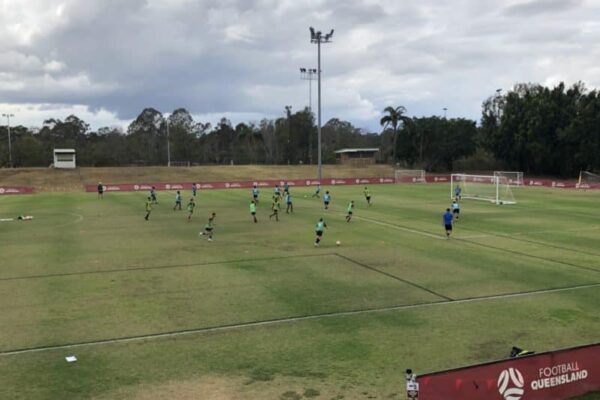

Is a changing climate making summer football in Australia an impossibility?

Politicians who deny the obvious reality that the climate is constantly changing are few and far between. Tensions do arise when the reasons behind the changes become the topic of conversation. Such disagreement around that point does not require exploration on Soccerscene.com.au.

However, what does require some though and reflection is the decision to play Australia’s top tiers of both men’s and women’s football during the summer months. It was a no-brainer when it came to the W-League, with a mirroring of the men’s competition and the potential for double-headers and cross promotion informing the decision.

Therefore, the powers at be made the logical choice to play the elite women’s competition at the same time of year as the men, amidst the stifling summer heat that appears to only intensify as the decades roll by.

Australian men’s football had its origins in the winter months until the decision was made to shift the then NSL competition to summer in the season of 1989/90. It was a dramatic change and one that many saw as having great potential due to football avoiding direct competition with the nation’s more established and ingrained winter codes.

Others feared the move, the heat and the potential cultural change that it would bring to fans of clubs that had existed in a steady winter routine within which they were quite comfortable.

The thinking behind the move was not only to disassociate football from other domestic codes. Matching the Australian season with European competitions would eventually see transfer windows align and allow for greater fluidity of movement for players.

Furthermore, international windows would coincide, Australia could compete in future World Cups without detrimental impact on the local scene and quite ironically, the thinking was that fans would enjoy matches in more pleasant weather, outside the wet and sodden coldness of winter.

How the thinking on weather and climate has turned since the final days of the 20th Century.

Increasingly hot conditions over the last 10 years and a clear rise in average temperatures has led many to call for a return to winter for both the A and W Leagues. Those voices cite health risks and potential disaster for players, officials and fans.

Drinks breaks and some flexibility in kick-off times exist as contingency plans, however, 40 degree Celsius days that ease off to 35 degree evenings offer players little respite from the heat. Most importantly, the standard of football is tested under such conditions and there is an obvious and negative impact to the product in both leagues.

Season 2019/20 has had the added challenge of smoke and ash from the bush fires that have ravaged the eastern and southern parts of the nation. Adelaide United fans called out the A-League and FFA after those with the power to alter a kick-off time were reluctant to do so.

The Red’s active support group threatened to boycott matches should the situation arise again.

Fans have also stayed away in Sydney and Melbourne with a throat scratching haze decreasing the pleasure and enjoyment of attending a football match. The challenge of boarding public transport in extreme late afternoon conditions to ensure arrival at the venue for a 7 or 7:30pm kick-off has also led to many staying away.

An increasing number of fans of the A and W Leagues have been content to watch matches at a local hotel or in their own home.

Whilst an outlier season of heat and oppressive conditions might not be enough to convince many that a move back to winter is required. The consistency of temperature increases and a sustained pattern has many starting to think twice about when Australian football should be played.

The Australian Bureau of Meteorology has found that 2019 was indeed the warmest year on record. The data also confirms that all states and the Northern Territory experienced both maximum and minimum temperature records and rainfall across the country was 40% below average levels.

It made for the driest year on record and led to much of the dry fuel that saw more than 11 million hectares destroyed across the nation.

That pattern has seen summer footballers roast in the highest average decade (2010-2019) of mean temperatures on record. 2019 saw maximum temperatures reach 2.09 degrees above historical averages and the current summer stands to be another in a long line of record breaking seasons.

In my view, Australian football works better in the summer months, for many of the reasons outlined above. However, should such weather patterns persist, as the experts suggest they will, further questions around the viability of holding football competitions in Australia during summer will continue to be asked.

There will indeed be a tipping point and player health and safety will potentially be the deal breaker that eventually sees matches postponed until conditions are conducive to playing football.

Playing the game in summer had immense upside but a changing climate looms as a serious threat to the move.

Previous ArticleNext Article

Football Has the Audience. Does It Have the Commercial Strategy?

Soccerscene has launched Survey 4: Commercial Confidence in Football, calling on clubs, sponsors, governing bodies, commercial leaders and football industry professionals to assess whether the game is making the most of its enormous commercial potential.

Football has the audience, participation base and community reach to be one of Australia’s most powerful commercial platforms. But does the industry have the commercial strategy, professionalism and infrastructure required to turn that potential into sustainable growth?

That is the question at the centre of Soccerscene’s latest industry research.

The survey examines how attractive grassroots football is to potential commercial partners, what industry professionals believe is limiting football’s commercial potential, and whether clubs are presenting themselves professionally enough to sponsors.

It also explores what sponsors value most when engaging with football – from community reach and participation scale to brand alignment, values and purpose – as well as whether improved facilities could directly contribute to stronger sponsorship outcomes.

Is football fully capitalising on its commercial opportunity?

Football continues to provide brands with access to highly engaged communities across grassroots, community and elite environments. Yet the commercial landscape remains fragmented, with clubs operating with vastly different levels of resources, capability, governance, media infrastructure and commercial expertise.

Soccerscene’s survey is designed to capture the industry’s perspective on where the opportunities exist – and where football may be leaving commercial value on the table.

The research will look specifically at four key areas:

  • Commercial attractiveness – How attractive is grassroots football as a commercial partnership?
  • Commercial barriers – What is holding football back from reaching its full commercial potential?
  • Club professionalism – Are clubs presenting themselves effectively and professionally to sponsors?
  • Sponsor value – What are sponsors really looking for when they invest in football?

The survey also asks whether better facilities would have a direct impact on sponsorship outcomes, highlighting the potential relationship between infrastructure, commercial presentation and investment.

Have your say

Soccerscene is encouraging football clubs, sponsors, commercial professionals, governing bodies, administrators, media professionals and industry stakeholders to participate.

The findings will contribute to Soccerscene’s ongoing program of industry research, designed to provide a clearer picture of the challenges and opportunities facing football and the organisations operating within it.

Take the Survey: Commercial Confidence in Football

Complete the Commercial Confidence in Football Survey here

The survey will close on 30 August 2026 at midnight, with responses received before the deadline included in the final analysis.

Football has the audience. The question is whether it has the commercial strategy to match.

Football Queensland’s Logan hub plan rejected by council

Football Queensland’s plans for a major new football hub at Meakin Park have been rejected by Logan City Council. The proposed $76.1 million redevelopment aimed to create a state home for football in Queensland.

Council unanimously rejected Football Queensland’s request for longer-term leases and additional land at the Slacks Creek site. The decision leaves the organisation’s current leases in place. The proposed development would have delivered new playing fields, elite training facilities and a dedicated home for Football Queensland.

Three-stage development

The first stage of Queensland Football’s development carried an $8.5 million price tag. It would upgrade fields, lighting, drainage and irrigation across Meakin and Mappas parks. The goal was to create a six-field, international-standard training venue.

The second stage represented the largest investment. Football Queensland planned to spend $55.3 million on a new headquarters at the adjoining Queens Park site. The facility would include a Women and Girls Academy, sports science facilities, sports medicine and strength and conditioning services.

A third $12.3 million stage would add an indoor futsal academy and two synthetic fields. Football Queensland said the project could create a major football precinct for the region. It also saw the facility playing a role in Queensland’s preparations for Brisbane 2032 and beyond.

Lease decision creates roadblock

Queensland’s governing body sought a 25-year lease with an option for another 25 years. Chief executive Robert Cavallucci said longer tenure was essential to secure government funding and move the project forward. The organisation has around three years remaining on its existing leases.

Council took a different view. Concerns included community access, funding certainty, future costs and the level of use at the existing facilities. Councillors also questioned whether a long-term arrangement would deliver enough benefit to Logan residents and grassroots clubs. Logan Council has now ordered a review of Football Queensland’s performance under its current lease.

Grassroots football at the centre

The decision highlights a wider issue for football infrastructure. Major facilities can provide elite pathways, sports science and high-performance opportunities, but unless councils can ensure local players and clubs can access the fields, they will be rejected.

Meakin Park already serves several sporting organisations, including football users and community sporting groups. Football Queensland said it had invested almost $2 million at Meakin Park and Mappas fields. It also argued the precinct operates at around 130 per cent capacity. For Queensland football, the challenge now is finding a model that can deliver high-performance facilities while expanding access for the community.

The proposal may have been rejected, but the need for better football infrastructure remains. With participation growing and Brisbane’s 2032 Olympic Games approaching, the debate over where and how Queensland builds its next generation of football facilities is unlikely to disappear.

Most Popular Topics

Editor Picks

Send this to a friend