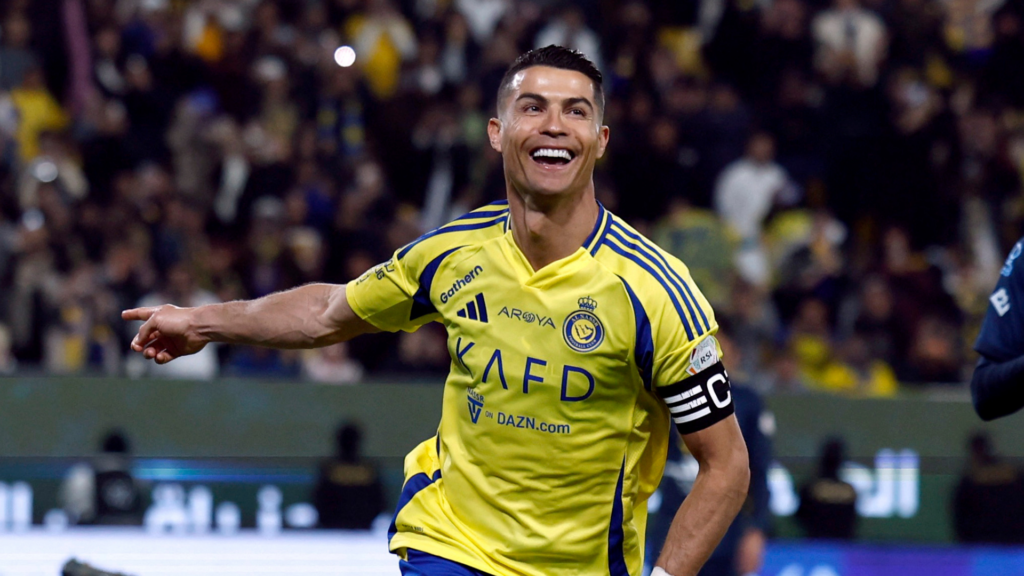
Image Credits: BEIN Sports
The Saudi Pro League was designed to become football’s next global powerhouse.
Starting in 2022, Saudi Arabia transformed its domestic competition from a league rarely discussed outside the Middle East into one of the biggest stories in world football. Cristiano Ronaldo arrived at Al-Nasar in 2022. Karim Benzema followed suit a year later. Sadio Mané, Neymar, N’golo Kante and other established stars made the move. Billions were spent, and suddenly the Saudi Pro League was impossible to ignore.
But the formula that created the league’s global attention is beginning to change. Cristiano Ronaldo has revealed that this season will probably be his last in professional football. Funding for Saudi clubs is being reduced, and the league’s transfer strategy is moving away from the ageing superstars that defined its rise.
So, is the Saudi Pro League entering the next stage of its development, or beginning to lose the very things that made it relevant?
Ronaldo’s final season could leave a huge hole
For all the talk about Saudi Arabia’s investment, there is no escaping one fact: Cristiano Ronaldo changed everything. When the Portuguese superstar moved to Al-Nassr during the 2022-2023 season, he became the face of the Saudi Pro League almost overnight. His arrival helped turn Saudi football into a global talking point and opened the door for other major names to follow.
Now, that era could be coming to an end. In an interview with Vogue, Ronaldo said that 2026–27 is “probably” his last year of football and that he wants to leave a “spectacular legacy”. At 41, the Al-Nassr captain has already reached the final stages of a career that has lasted more than two decades.
For the Saudi Pro League, however, his retirement is about more than one player. Ronaldo is a global marketing machine. His goals, interviews, and social media presence have given Al-Nassr and the league itself an international audience that few Saudi players could generate on their own.
The question is simple: when Ronaldo leaves, how much of that attention leaves with him?
The funding cuts change the equation
The second problem is money. The Saudi Pro League’s rapid growth has been built on extraordinary levels of investment. The Public Investment Fund’s (PIF) involvement in four of Saudi Arabia’s biggest clubs helped finance the recruitment of some of football’s biggest names.
Now, that spending is being reined in. The PIF sold 70% of its stake in Al-Hilal and has cut funding to the highly controversial LIV Golf league completely. That does not mean Saudi football is suddenly broke. It does, however, represent a significant change from the spending spree that made the league famous.
This is where the Saudi Pro League faces its biggest test. When you have almost unlimited financial power, attracting players is relatively straightforward. When the money becomes tighter, clubs have to compete on something else.
The league now has to prove that it can offer development and growth of its homegrown talent too. That will also help to build invested supporters and a sustainable football culture.
The superstar shopping spree is slowing down
The transfer market is already beginning to look different. In 2023, the Saudi Pro League’s recruitment strategy was difficult to miss: identify the biggest names in European football and bring them to Saudi Arabia. Ronaldo earns $6.1 million (3.2 million pounds) a week. Neymar remains the record signing of the SPL, costing Al Hilal $147 million (90 million euros) from Paris Saint-Germain.
The list went on. But the league’s approach is now shifting. Rather than simply targeting established stars in the latter stages of their careers, Saudi clubs are increasingly looking at younger players with potential and resale value. Al-Hilal’s signing of 24-year-old Dutch winger Crysencio Summerville is one example of that change.
That could be good business. But it is also less glamorous. There is a big difference between announcing Ronaldo or Neymar and announcing a promising 24-year-old winger. One generates worldwide headlines; the other requires dedicated fans who have been invested in the SPL because of those headline signings.
That could make the league harder to market internationally in the short term. Yet perhaps that is exactly what Saudi football needs. The league cannot rely forever on players who are already famous elsewhere, and the SPL will have to be increasingly smart with its investments.
There is a reason to believe in the project
It would be easy to look at Ronaldo’s retirement, reduced spending and fewer superstar signings and declare the Saudi Pro League will become irrelevant. The league has already achieved something that would have seemed unlikely only a few years ago: it has forced itself into the global football conversation.
Saudi clubs are now internationally recognisable, the competition has attracted genuine world-class talent and the league has a much larger global profile than it did before 2022.
More importantly, the shift away from ageing superstars could eventually make the competition stronger. Instead of spending endlessly on players approaching the end of their careers, Saudi clubs can invest in younger footballers, local talent and long-term development. The league has acknowledged that improving domestic football and giving Saudi players greater opportunities is a more sustainable goal than simply collecting famous names.
That is the real opportunity. Ronaldo may have been the reason millions of people first looked at the Saudi Pro League, but he does not have to be the reason they stay.
The next stage of Saudi football will not be judged on how it invests in football ahead of its 2034 FIFA World Cup. The Saudi Pro League has already proved that money can buy attention, but now it has to fight to keep it before the world descends on the country in eight years.