


Making Football Fairer: Dreamstock DSFootball Platform

Player scouting is one of the most challenging and vitally important tasks a club has to manage, without fresh and skillful new players a club will struggle to compete with its peers.

However, scouting can take a significant amount of time, manpower and research, leaving clubs with less resources at a significant disadvantage.

Additionally, for young players aiming for a professional career in football it can be extremely difficult to get noticed, especially if they are unable to frequently travel to far away tryouts.

To bridge the gap, Japanese organisation Dreamstock aims to reshape traditional scouting procedures via technology.

Launched in 2017, Dreamstock operates one of the largest online player selection platforms in the world – DSFootball.

Via DSFootball, Dreamstock strive to achieve three goals on the path to make football fairer for upcoming talents:

  • Create connections between club and players.
  • Generate opportunities through technology and innovation.
  • Transform the scouting market with transparency

DSFootball Platform 

Available in two packages, DSFootball is a multifaceted platform designed to aid both clubs and players. The first package is designed for grassroots clubs and academy players, while the second is a premium version tailored for professional clubs and players.

Through the DSFootball app, players create a profile that details their physical attributes, location, position and footballing history. Additionally, they can upload video clips of their performances to entice clubs to contact them.

For clubs, the DSFootball platform allows them to search for the perfect players to fit their unique needs by filtering their searches.

The platform houses a vast and expansive youth database for players across the U13, U15, U17 and U20 age groups, presenting the aforementioned player profiles to clubs.

These profiles showcase the important player information scouts need to know, so they can determine if potential players are suitable for them or note. Most importantly, the profiles showcase valuable game footage and clips, allowing scouts and coaches to see the potential of players without travelling to see them in person.

Through the DSFootball platform, clubs can individually contact interesting players via their profiles, or they can launch scouting events and tryouts to assess players in person. Furthermore, DSFootball allows for direct contact to player representatives to foster important connections and conversations.

Via DSFootball, Dreamstock provides a way for clubs to access and scout players they normally never would have been able to under traditional methods, as it drastically reducing barriers for upcoming young players.

In providing each of these services, DSFootball acts as a one-stop-shop for clubs, significantly reducing the amount of hassle they are subjected to.

Global Impact 

Developing from its two headquarters in Brazil and Japan, Dreamstock has achieved significant success in its short lifespan via the DSFootball platform. With the company and its platform having grown active in over 36 countries, encompassing more than 200 clubs and 50 leagues.

Through their work, Dreamstock has fostered key partnerships with premier competitions such as the Bundesliga, Serie A, Eredivisie and even Australia’s very own A-League.

As a product, DSFootball has been revolutionary. With over one million registered players on DSFootball, Dreamstock has created a premier destination for clubs to select future stars from, connecting players to clubs at a faster and more expansive rate than ever before.

For players, DSFootball has proven to be an excellent way to develop personally and attract attention from clubs. Of the one million plus registered players on the DSFootball platform, more than 100,000 are active participants in selection.

There is no sign of Dreamstock slowing down either, attaining over two million website views each month, illustrating a continued desire for the platform.

For more information on Dreamstock and the DSFootball platform, click here.

Previous ArticleNext Article

Referees to improve consistency with new UEFA guidelines

In a meeting between Chief Refereeing Officers within UEFA and its 55 national associations, enhancing consistency and clarity underpinned the principle goals for the upcoming season.

Improving officiating

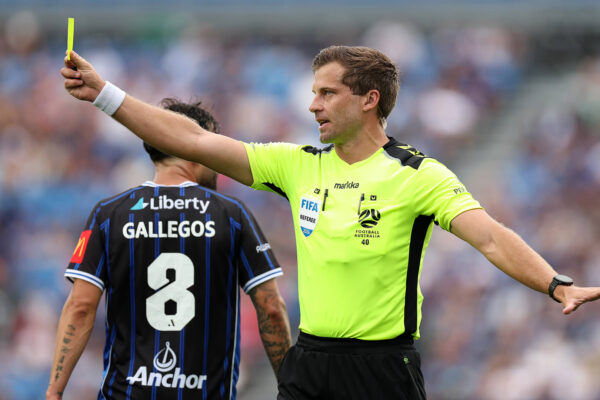
Referees – and particularly the usage of VAR – are often at the centre of post-match debates.

As the introduction of new technology into match officiating increases year-on-year, referees are in the spotlight more than ever before. The expectation was that more technology would decrease errors and controversy, but the opposite has proven to be the case.

Which is why the agreement and alignment between European nations marks a key step in the future of match officiating; the meeting between UEFA, its national associations and a representative of the International Football Association Board (IFAB) displays intention and commitment to ensuring future in-game decisions are clear, not controversial.

Meeting chair and UEFA Director for Refereeing, Roberto Rosetti, outlined why the agreement will have a vital impact on the future of European football, both domestically and internationally.

“The fact that all 55 national associations and UEFA have agreed on guidelines towards a more consistent approach to the application of the Laws of the Game marks a significant milestone,” Rosetti said.

“It will help improve the understanding of refereeing decisions among players, clubs and supporters and all stakeholders in the game.”

“For the popularity of football it is essential to remove all doubt from the game and ensure that the laws are applied with clarity.”


Limiting technology use

A widespread criticism of match officiating in recent years is the regularity with which VAR intervenes and interrupts match tempo.

The issue, however, is not that VAR can review decisions – in fact, this summer’s FIFA World Cup displayed an effective use of VAR during a case of mistaken identity, in which a player received a yellow card offence for a foul committed by an opposition player. In this regard, VAR was a vital part of ensuring a simulation offence did not go unpunished.

Frustration, however, grows when the use of VAR goes beyond checking “clear and obvious” errors. Lengthy replays, a multitude of angle-checking clips and the disruption of game flow all contribute to feelings of frustration among fans.

But recent amdendments aim to limit this in the upcoming season. VAR is an essential part of fair officiating, but responsibility must lie with the referee.

The new rules introduced by the IFAB are available here, with further initiatives to follow from UEFA in the coming weeks.

Tottenham Hotspur deliver player development workshop for Football NSW

The workshop focused on sharing knowledge and insights regarding player development, bringing together more than 120 coaches from across NSW with those from Tottenham Hotspur.


Experience, insight and education

Valentine Sports Park hosted the Continuing Professional Development (CPD) workshop, uniting Football NSW coaches and members of Tottenham Hotspur’s coaching staff to encourage discussion and learning opportunities about player development.

Tottenham’s player development pathway – from the academy to the first team – has produced some of the most respected names in Premier League history, including Harry Kane and Ledley King.

Under the leadership and guidance of Tottenham Hotspur Player & Coach Pathway Co-ordinator (and UEFA A Licence Coach), Jimmy Martin, as well as members of Tottenham’s coaching staff, Shannon Maloney, Kevin Moffatt and Tyler Blackwood, the workshop was a unique opportunity to learn from some of the most experienced coaches in the game.

“Coach education is a vital part of developing football across NSW, and having more than 120 coaches attend this workshop highlights the appetite within our football community to continue learning and improving,” explained Football NSW Head of Football, Edward Ferguson.

Ferguson continued to outline the value of learning from an organisation like Tottenham Hotspur, a team who have helped grow some of the game’s most exceptional talents. The lessons taken will consequently help to inform future approaches to coaching in NSW.

“The focus remains on creating better learning environments for players, encouraging decision-making, creativity and long-term development.”

What the workshop involved

The workshop encouraged coaches to dive into all aspects of player development: the technical, tactical, physical and mental aspects which contribute to the English academy setup.

Furthermore, Maloney, Moffatt and Blackwood – all of whom helped deliver a practical session for attendees – showed how a club’s playing identity can work alongside challenging training environments for players.

Game understanding, creative problem-solving and technical proficiency underpinned the main themes driving the workshop. In an age where individual expression on the pitch appears a dying art, Tottenham Hotspur coaches remain committed to encouraging players to feel confident adapating to a range of in-game scenarios.

Football NSW coaches were also able to attend a Q&A session with King, who spoke about his playing experiences for both club and country.


Final thoughts

As Australia continues to nurture the current and upcming generations of talented footballers, workshops such as this are a vital, fundamental part of the journey.

The fastest way to be among the best is to learn from them. The aim now is for Football NSW coaches to take the lessons learned, and apply them to football development in their own academies and teams across the state.

Most Popular Topics

Editor Picks

Send this to a friend