



Peter Kokotis: ‘South Melbourne Was Never Built to Finish Second’

South Melbourne football director, Peter Kokotis, has just one complaint following the club’s historic Australia Cup triumph last Saturday: that the team he has played a primary role in building may not have had due time to take it all in.

As those players – just a week on from becoming the first semi-professionals to win the national Cup – headed to Sydney for their next assignment, Kokotis took a rare moment to himself. Remaining in Melbourne, he reflected on what the achievement meant to the club he started supporting as an eight-year old in 1979, his uncle earlier a signatory to their 1959 establishment.

‘As was common with a lot of young Greek boys, our fathers were of a different generation. My father was in the hospitality industry, always working nights. So that two, three hours with him every second Sunday was gold to me. It was my time with dad,’ Kokotis told Soccerscene Unfiltered.

‘Once we dropped to the State League in 2005 some of us stayed, but a lot left or didn’t come at all, or went off to Melbourne Victory. We went from an NSL powerhouse to a club struggling to compete.

‘The last seven days [as we spoke] haven’t been normal. It’s been an incredible outpouring of emotion, gratitude from all over the community with people reaching out. It’s been really refreshing and lovely to listen to people’s stories of how it’s impacted them.’

From the gloom, South Melbourne now finds itself in its strongest position of the post-NSL era. Once a FIFA-licensed player agent, Kokotis has served as South’s general manager, a board member, and the past two seasons as senior football director – an immense task, given the relentless schedule the club is undertaking.

Off-field, they’re banging at the gates for an A-League license, a status they’ve been denied numerous times over the past 20 years. This time does feel different; with the A-League stagnating and South packing the stands on Cup final night, their top-flight exclusion looks ever-more incongruous with the broader health of the game.

While their preparedness to step up can’t just hinge on a result here or there, Kokotis is aware their on-field showings do supplement their attractiveness as a proposition – significantly.

‘We are evolving as a club, and there are many things we do outside of the senior team that are about cultural connection, the wider community. We’re not just a team that cares about trophies and silverware,’ he says.

‘But South is not a club built on coming second… and [winning] is my area. I feel the responsibility, the legacy and the history of the club, and all the success and great people that have come before us.

‘I feel obligated to maintain the machine and keep it going. This time is unique with what’s going on in the football landscape, and success now is very important.’

Catch the full chat with Peter Kokotis on Soccerscene Unfiltered: from helping Brazilian flair reach Australia and backing the unfancied Sinisa Cohadzic, to the top-down versus bottom-up growth debate, and plenty more…

Previous ArticleNext Article

Soceroos and Matildas sue Football Australia over financial dispute

Players of the Socceroos and Matildas have launched legal action against Football Australia over a multi-million dollar dispute relating to their revenue-sharing agreement in the NSW Supreme Court.

According to the Australian Associated Press (AAP), the players’ union, Professional Footballers Australia (PFA), are enacting on behalf of the players and are understood to be pursuing a seven figure claim.

The PFA is expected to argue the revenue-sharing agreement between the governing body and national team players is not being fulfilled properly.

The PFA is yet to comment.

But the FA has acknowledged the legal dispute, claiming it is in relation to, “a third party in connection with a separate matter currently being conducted before the National Dispute Resolution Chamber (NDRC)”.

‘The Supreme Court’s role is limited to the subpoena process, and its involvement ends once that process is complete,’ an FA spokesperson said.

‘As the NDRC matter is ongoing and subject to confidentiality obligations, Football Australia will not comment further,’ they stated.

In 2023, a collective bargaining agreement was signed between the players’ union and FA. It gave the Socceroos and Matildas stars a portion of the national teams revenue which contributes up to half of FA’s overall earnings.

Additionally, the agreement included incentives for players and FA to work together, allowing both sides the chance to reap even larger rewards.

Registration fees or sponsors for programs that fund grassroots football are strictly prohibited in relation to the players’ cut of revenue. 

However, as long as it relates to the national team the players receive an 18-20 per cent portion of all relevant finances. This could include ticketing, kit sales, broadcast or sponsorship contracts. Through the CBA this money makes its way back to the players.

Matildas icon Lisa De Vanna, who played 150 times for the national team from 2004-19 has already made her opinion heard on there lawsuit via X.

“1 of the best-paid teams in the world, w best elite environments: 40 personal staff,business flights,5 star hotels, private chefs N baristas n still not happy,” she said.

“Instead of knocking game when it’s at its lowest, maybe play for pride n not greed.”

The disagreement comes just before the Socceroos head to the Middle East during the November international break.

With the squad set to be announced later this week, the ill-feeling between players and the governing body will hopefully remain separate from the performances on the pitch.

Brisbane Roar partners with PlanPay for 2026/27

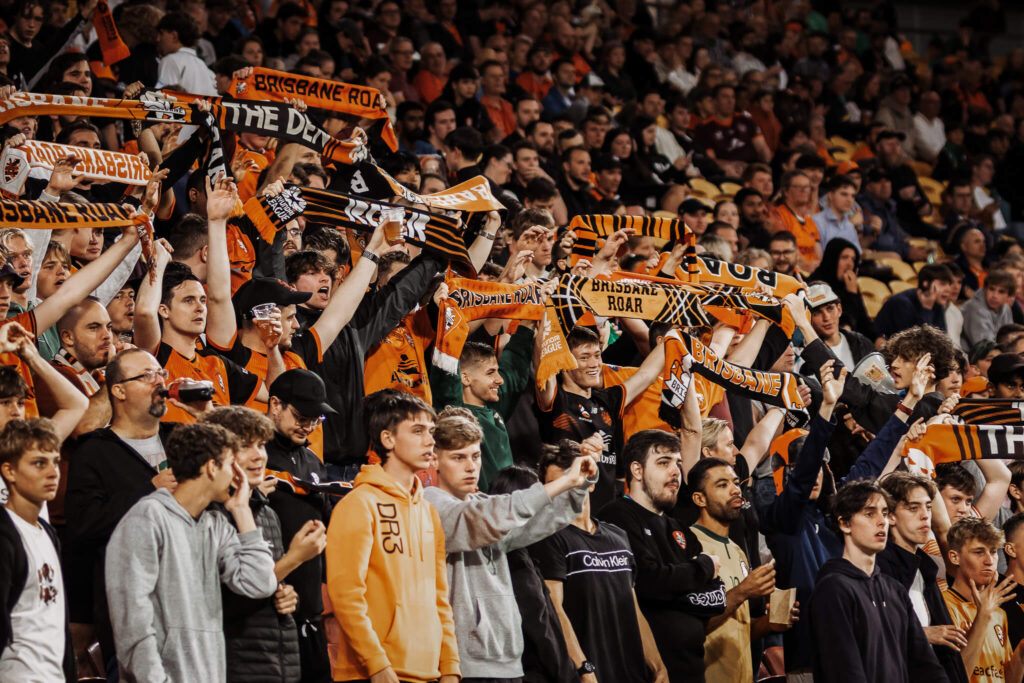
TWELVE months ago, as the 2025/26 A-League Men’s season kicked off, Brisbane Roar’s active supporter group surged back to life.

‘The Den’ – as they’re known – had been a famous feature of the Roar’s Championship-winning glory years. Now heavily re-populated by a younger wave of supporters, their enthusiasm through early-season results against Macarthur, Melbourne City and Newcastle made them, momentarily, the talk of the A-League.

The Roar’s administration understand what a crucial role their supporters play in the health of the club – be they the new generation at the front of The Den, or the loyalists who have ridden the ups and downs of their 21 A-League seasons.

So, they have partnered with Australian-founded company PlanPay, to soften the financial barriers and increase fiscal flexibility for those wanting to cheer on the Roar’s men’s and women’s sides, helping to get them in the stands as early as possible.

‘Membership is the most important thing we offer, but given the current cost of living crisis, it’s also the hardest ask at the moment,’ Roar’s Head of Public Relations and Communications, Joseph Esposito, told Soccerscene.

‘When you’re targeting families of four, or youngsters, a full membership can be a big hit in one go. It’s important to be realistic, so having an option like PlanPay lets members spread that cost over time with no interest and no credit check.’

‘It also means we can get people to commit to membership earlier, to come on board and be part of something. It works on both ends, allowing us to offer an earlier price point for potential members – and most importantly, we’re not asking them to spend beyond their means.’

One of PlanPay’s key advantages is its ability to align payment schedules with how Australians actually earn their income.

According to Australian Bureau of Statistics payroll data from March 2024, approximately 86% of Australian employees are paid weekly or fortnightly, with 33% receiving weekly wages and 53% paid fortnightly. In comparison, just 12% are paid monthly.

Despite this, many traditional membership payment options are structured around upfront or monthly payments, which don’t necessarily align with household cash flow.

By offering weekly, fortnightly or monthly instalments, PlanPay allows Roar supporters to choose a payment schedule that suits their payday and household budget, making football memberships more manageable without relying on credit, interest or debt.

The partnership is also timely in a local sense; the ABS has also found sports participation costs in Brisbane rose 9.6% in the year to June 2025. Furthermore, as of March 2026, 41% of Australians had used a BNPL service in the past six months (Finder).

‘From our end, it’s essentially a bit like a modern layby. You choose your membership, pay a small deposit, and then pay the rest in instalments on the schedule that suits the individual,’ said Esposito.

‘Once the first payment is made your membership is fully active. We have previously had monthly payments to ease the pinch, but opening it up to have fortnightly or weekly options, more often makes it a whole lot easier to have people in.’

PlanPay was founded in Sydney in 2022 as a digitised lay-by for travel, and has since moved into ticketing, sports, and live events alongside expansion into the US and UK.

The company is now based in Charlotte, North Carolina, while maintaining its engineering, customer support and onboarding presence in Australia. PlanPay continues to partner with merchants globally to bring another way to pay, to more fans, Brian Learst, Chairman of PlanPay said:

‘We are thrilled to help Brisbane Roar FC lower the total cost of attending their matches by providing fans with debt-free, interest-free flexible payment plans.’

‘PlanPay allows fans to purchase the best seats early and customise their payment size and timing.’


Both the Roar’s men’s and women’s side present as fascinating prospects this season.

Newly-appointed women’s manager Johnathan Clemente is the youngest manager in A-Leagues history, with his charges looking to better last season’s impressive semi-final finish.

Meanwhile, the men’s outfit kicked off their second season under Michael Valkanis on Friday at Suncorp Stadium with an impressive win over Perth Glory, and will again rely on the energy and passion of those in the stands to drive their success both on and off the field.

‘Our fans are not just the present, but the future. In that regard, it’s not about getting them to spend beyond their means; it’s about allowing them to get in earlier, and in an easier way,’ continued Esposito.

‘Lots of younger fans are students, or they’re early in their working lives. Being realistic about it, paying a full season membership can sometimes be a real barrier, especially if they’re living out of home, paying rent for the first time.

‘Having PlanPay allows them to have the option that isn’t acquiring interest or debt, makes it easier for them to budget, and most importantly allows them to do what they do, without spending beyond their means.’

Make Membership More Accessible for Your Fans — Talk to PlanPay

Most Popular Topics

Editor Picks

Send this to a friend