


The Young Socceroos exposed one of Australian football’s biggest problems

Australian football has spent years trying to create a clearer structure for the game.

But one question keeps resurfacing: who is actually responsible when the interests of Australian football collide?

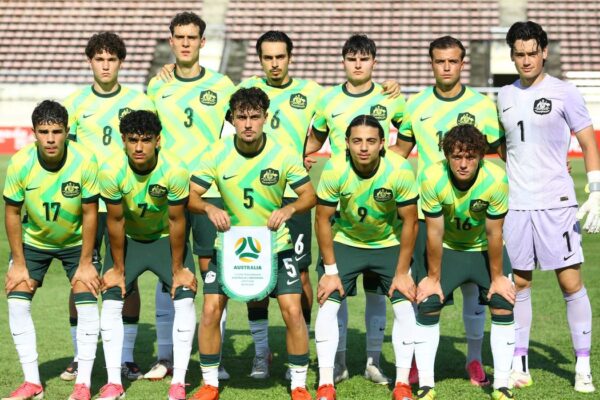
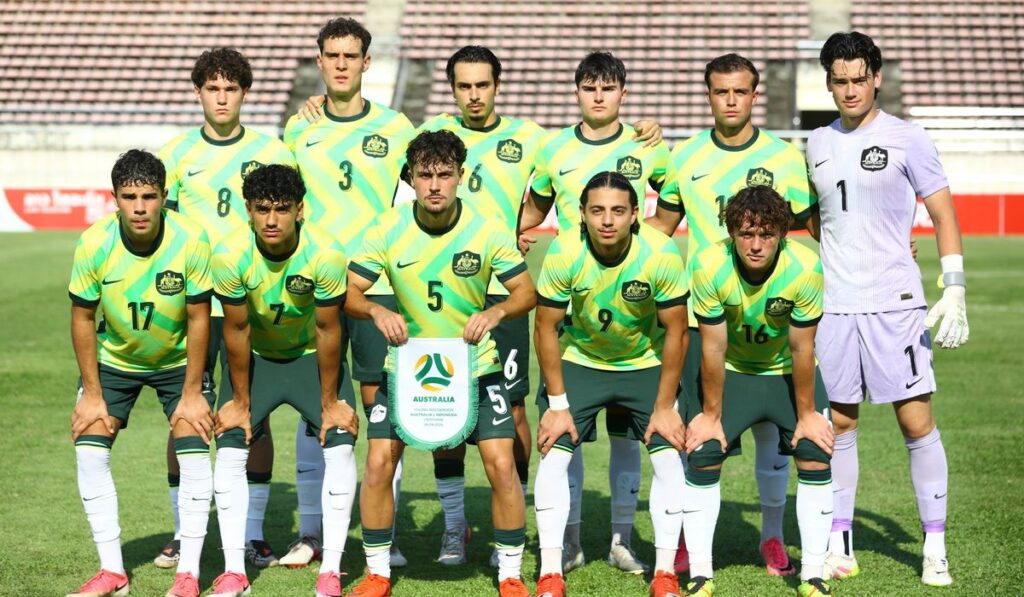
The Young Socceroos failing to qualify for the 2027 AFC U20 Asian Cup is the latest example.

Australia finished third in its qualification group after a 2-0 defeat to Indonesia, failing to qualify for a tournament it won in 2025.

The result itself was disappointing. Buthe circumstances around the squad selection were arguably more so.

Several A-League players were unavailable because their clubs did not release them for the qualification campaign. Melbourne City’s Lawrence Wong and Medin Memeti and Adelaide United’s Amlani Tatu were among those affected.

The reason is straightforward. The U20 qualification tournament fell outside a FIFA international window, meaning clubs were not obliged to release players. A previous agreement between Football Australia and A-League clubs had allowed national teams to select domestic players outside those windows, but that arrangement expired.

That leaves a much bigger question than whether three players should have been available.

Why was there not a structure in place that could resolve this conflict before it became a problem?

One game, multiple priorities

The answer is partly structural.

Football Australia is responsible for the national teams and the broader national framework. The APL operates and commercialises the A-Leagues. State federations oversee their own competitions and development structures, while clubs have their own commercial, sporting and player-development priorities. Meanwhile, the PFA represents the players.

Football Australia’s own governance outline acknowledges the unbundling of Football Australia and the APL was completed at the end of 2020, while noting the two organisations still need to collaborate across areas including pathways, community football and national teams.

On paper, that separation makes sense.

In practice, difficulties emerge when the model is tested and conflicts of interest emerge.

A club has an obligation to its competition and its squad. Football Australia has an obligation to its national teams. Players have career considerations, while the APL has commercial and scheduling interests. State bodies have their own competitions and pathways.

None of those interests in isolation are necessarily unreasonable.

The problem comes when they point in different directions.

The cost of fragmentation

This is not the first time the club-versus-country question has reared its head.

The same issue has affected Australia’s youth pathways before. In 2012, then-national technical director Han Berger acknowledged the particular difficulty Australia faces because many young players are overseas and youth international tournaments are often held outside FIFA windows, meaning clubs are not obligated to release their players.

And there is a broader irony here.

Australian football is producing young players good enough to attract serious international interest. A-League clubs are increasingly important development environments, with 15 A-League players included in Australia’s 2025 U20 World Cup squad.

Yet the system seems to struggle coordinating those same players when the national team needs them.

That is not necessarily a club problem.

It is a system problem.

Who gets the final say?

The answer cannot simply be that Football Australia should have more power.

Nor should clubs be expected to sacrifice their own interests whenever national teams come calling.

The real issue is whether Australian football has clearly defined the points at which the interests of the national team, professional clubs and players intersect and importantly, where they take priority.

If it has, those rules need to be understood and consistently applied.

If it hasn’t, this should be the catalyst to fix them.

Because the consequences extend beyond one U20 tournament.

Australia’s youth national teams are part of the country’s player-development pathway. International tournaments provide players with experience, exposure and opportunities to progress. The U20 Asian Cup also serves as a pathway towards the FIFA U20 World Cup.

Missing that pathway matters.

At the same time, A-League clubs are investing in academies, recruiting young players and trying to build sustainable professional businesses. They cannot simply operate as talent suppliers for national teams without considering their own competitive and commercial interests.

That tension is natural, and not going away.

Australian football needs alignment, not another power struggle

The answer may therefore be less about deciding who is in charge and more about establishing who is responsible for what.

Football Australia, the APL, clubs, state federations and the PFA do not need identical objectives.

But they do need a common framework for the moments when those objectives collide.

That could mean clearer player-release agreements, longer-term scheduling coordination and defined mechanisms for resolving disputes before squads are announced.

The alternative is a cycle of arguments.

Clubs blame national team scheduling. National teams point to player availability. Players find themselves caught between employers and country. Fans are left wondering why a supposedly connected football system cannot agree on something as fundamental as making Australia’s best young players available for an international tournament.

That is why the Young Socceroos’ failure to qualify should prompt a bigger conversation than whether three A-League players were released.

Australian football has spent years building separate professional, national and community structures.

The next challenge is making those structures work as one.

Because when nobody has the authority or responsibility to resolve the competing interests, everyone can have a legitimate position and Australian football can still lose.

Previous Article

‘Wunderbar’ – FC Bayern turns to enterprise AI with Wonderful partnership

FC Bayern Munich is taking another step into the world of artificial intelligence after agreeing to a three-year global partnership with enterprise AI company Wonderful. The deal makes Wonderful the German club’s Official Enterprise AI Partner until 2029. The partnership will focus on putting AI into real-world use across Bayern’s operations, rather than limiting it to experiments or demonstrations.

AI to assists Matchday Fan Services

Wonderful’s first project will target one of the busiest and most varied areas of the club: matchday fan support. Specifically, initial implementation will be an AI agent designed to provide digital ticket support. Matchdays create a huge spike in demand for customer service for all manner of reasons: fans may struggle to access tickets, encounter account problems or need help with time-sensitive issues shortly before kick-off.

Bayern plans to use Wonderful’s technology to handle these requests faster than previously. Instead of each individual case entering a traditional support queue, the AI agent can process requests instantaneously, interacting with the club’s existing systems to hopefully resolve it. The aim is simple: get fans answers in moments, and into their seats!

The system will be integrated into Bayern’s existing technology environment – important as the AI will not operate as a separate chatbot disconnected from the club’s data and systems. It is being designed to work within the infrastructure Bayern already uses.

How Wonderful AI works

Wonderful describes its platform as an ‘enterprise AI system built to create, operate and improve AI agents.’ Those agents can perform tasks rather than simply generate text. They can work with company data, access connected systems and complete multi-step processes. The platform uses a system of reusable “skills”. Each skill can contain the instructions, tools, information and checks needed to complete a particular task. An agent can then use the appropriate skills depending on what a user needs.

For Bayern, that could mean an agent identifying that a fan has a ticket-access problem, retrieving the relevant information from the club’s systems and helping resolve the issue. Wonderful also connects its agents to existing enterprise systems. Its platform is designed to work with data platforms, customer relationship systems and other systems of record. This allows an agent to act on current information instead of relying solely on a static database.

More than a ticketing tool

Bayern and Wonderful have indicated further enterprise AI use cases will be introduced during the partnership. While customer support is an obvious starting point, AI agents could theoretically assist internal teams, automate administrative workflows or help employees find and process information.

Wonderful’s platform is designed to support customer-facing agents as well as internal and back-office workflows. It can operate across channels including chat, email and voice, giving the partnership room to expand beyond the first use case. The company also uses a deployment model built around teams working directly with organisations to put AI into production.

Bayern’s AI Strategy Enters a New Phase

The partnership signals a broader shift in how football clubs can use AI. Rather than focusing solely on analytics, Bayern is looking at AI as part of its everyday operations.

The first test will come through fan service. If the ticketing agent can reliably solve problems during the pressure of matchdays, the club will have a practical foundation for expanding AI into other areas. For the club, the biggest opportunity is therefore not one chatbot, but the creation of AI infrastructure that can support multiple parts of its organisation.

The three-year partnership gives the club and Wonderful time to develop that infrastructure. The first use case is focused and practical. The longer-term ambition is considerably broader. The next phase will be about proving that technology can make the experience better for fans while also making the organisation more efficient behind the scenes.

Football West and Keystart announce three-year grassroots partnership

Football West has secured a new three-year naming rights partnership with Keystart, strengthening commercial support for Western Australia’s grassroots football competitions.

From the 2027 season, the men’s State League will become the Keystart State League, with the partnership covering the State League Night Series, Division One and Division Two competitions across First Team, Reserves and Under 18s, as well as the State League Awards.

The partnership will also see Football West rename its annual Junior and Senior Country Week carnivals Keystart Country Week from this year. The event brings regional football associations together in Perth during the September school holidays.

Keystart CEO Mark Tomasz said the partnership would provide the organisation with an opportunity to connect with Western Australians through grassroots football while supporting its broader home-ownership mission.

“We are proud to partner with Football West and support local grassroots football,” Tomasz said.

Football West CEO Jamie Harnwell said the organisation was delighted to secure the three-year commitment, describing the partnership as an important boost for the State League and Country Week.

“These are exciting times for grassroots football in WA,” said Harnwell.

The deal gives Keystart a significant presence across senior and regional football in WA, while providing Football West with longer-term commercial backing for two key areas of the state’s football ecosystem.

Keystart, a WA Government initiative, has supported more than 126,000 Western Australians into home ownership since 1989 through low-deposit and shared-equity home loans.

Partnerships of this kind play an important role in strengthening the grassroots sporting ecosystem, providing organisations with the commercial support needed to deliver strong community participation opportunities. They also give businesses a meaningful way to connect with local communities while contributing to the long-term growth and sustainability of the sport.

Most Popular Topics

Editor Picks

Send this to a friend