
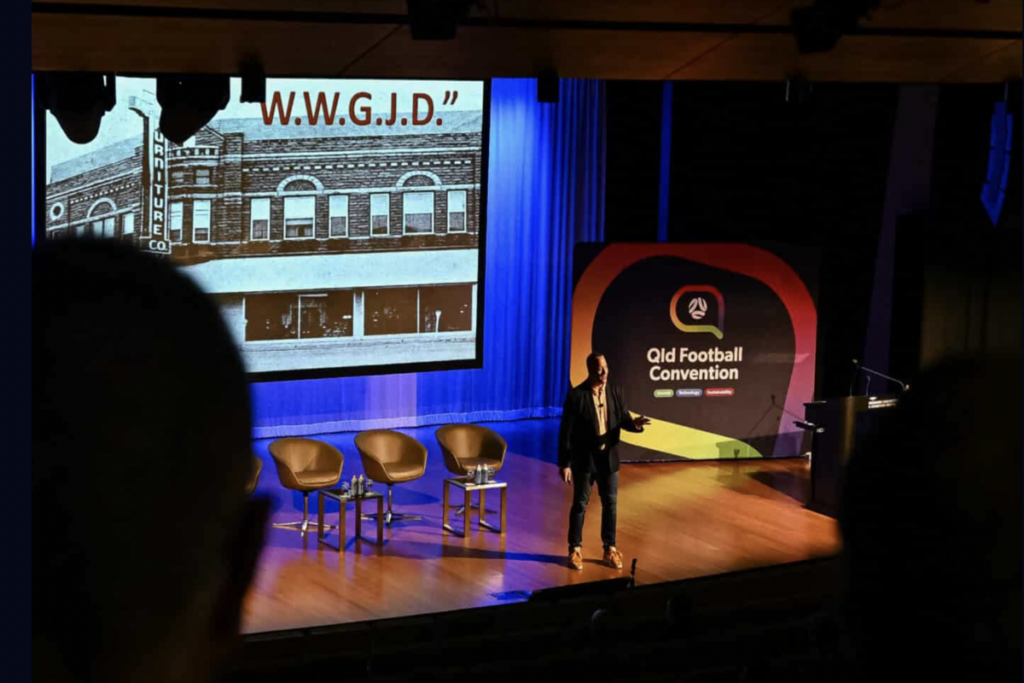
Why the Queensland Football Convention Must Become a Date in Every Football Leader’s Diary

The future of football won't be built by people operating in silos. It will be built by bringing the best minds, leaders, administrators and businesses together to challenge thinking, confront difficult issues and find better ways forward.

Football has no shortage of conversations.

The real question is whether we are having the right conversations, with the right people, in the right room — and whether those conversations lead to better decisions.

That is why the Queensland Football Convention has become an event that deserves far greater attention across Australian football.

What Football Queensland has created is more than a convention. It is becoming a meeting point for the people who are shaping, managing, delivering and investing in the game.

For those of us involved in football, that matters.

The modern football administrator is navigating an increasingly complex environment. Clubs are dealing with financial pressures, governance expectations, facility challenges, participation demands, workforce issues, commercial sustainability and the constant need to deliver better experiences for players, coaches, volunteers and communities.

At the same time, the football industry is changing around us.

Technology is accelerating. Artificial intelligence is beginning to influence the way organisations operate. Data is becoming increasingly important. Talent development continues to evolve. Commercial expectations are changing. Governance is under greater scrutiny. Facilities and infrastructure remain critical. And clubs are being asked to think more strategically about their future.

These are not simple issues.

They cannot always be solved in a boardroom, through an email or within the traditional football structures we have relied upon for decades.

Sometimes, you need to get the best people in the industry into the same room.

That is where the value of the Queensland Football Convention becomes apparent.

Getting the best people in the room

One of the greatest strengths of an event like this is the opportunity to hear from people who are experiencing these challenges from different perspectives.

Club presidents.

Chief executives.

Technical directors.

Coaches.

Administrators.

Commercial leaders.

Government and infrastructure representatives.

Technology providers.

Business leaders.

Industry experts.

And people who are simply prepared to challenge the status quo.

The value isn’t necessarily found in agreeing with every speaker or every idea.

In fact, it should be the opposite.

Football needs environments where people can respectfully challenge ideas, unpack difficult issues and ask the questions that sometimes don’t get asked within the everyday football ecosystem.

That is how we elevate the debate.

And that is something Soccerscene strongly believes in.

The conversations behind the conversations

There are plenty of subjects in football that create pressure for administrators.

Governance is one.

Financial sustainability is another.

Facilities and infrastructure continue to be a major issue.

Talent pathways generate debate.

The relationship between participation, performance and commercial sustainability creates its own challenges.

Technology and AI will increasingly change how football organisations operate.

And then there are the human challenges — volunteers, staff, leadership, culture and the expectations placed on people who are often trying to run complex organisations with limited resources.

These issues deserve more than surface-level discussion.

They need to be unpacked.

What does good governance actually look like at club level?

What does a sustainable football business look like?

How can clubs become commercially stronger without losing their community identity?

How do we use technology intelligently rather than simply because it is new?

How do we develop people as well as players?

How do we create better environments for administrators and volunteers?

And perhaps most importantly, how do we prepare football organisations for the next five, ten and twenty years rather than simply solving the problem directly in front of us?

These are the conversations that matter.

It is becoming a destination

From a Soccerscene perspective, one of the most interesting developments is the growing interest beyond Queensland.

I have personally had conversations with businesses here in Melbourne who are now looking at the Queensland Football Convention and considering 2027 as a genuine window of opportunity.

That tells us something.

When businesses outside the state begin looking at the event not simply as a football convention, but as a place to connect with clubs, administrators, decision-makers and industry leaders, its significance starts to change.

It becomes a marketplace of ideas.

It becomes a networking opportunity.

It becomes a business development opportunity.

It becomes a place where relationships can begin that may ultimately benefit clubs, organisations and the broader football industry.

And that is a positive development for everyone.

More than two days in the diary

For anyone running a football club or football-related business, the value of attending extends well beyond sitting in a room listening to presentations.

It is the conversation over coffee.

The introduction you didn’t expect.

The discussion after a panel.

The connection with another administrator dealing with exactly the same challenge.

The opportunity to hear how another organisation has approached a problem.

The chance to discover a technology, service or business model that could make your organisation better.

These are the things that don’t necessarily appear on the event program, but often become the most valuable part of attending.

That is why I believe the Queensland Football Convention has reached the point where it should be pencilled into the diary as a must-attend event.

Not because you have to be there.

Because there is a genuine opportunity to become better by being there.

A responsibility for the football community

I also believe there is a responsibility on Queensland’s football leadership and, importantly, its member federations to get behind this event.

If we genuinely believe collaboration is important, then we need to demonstrate it.

Member federations should be encouraging their clubs, administrators, coaches, technical leaders, volunteers and commercial stakeholders to participate.

This should not be viewed as simply another event on the football calendar.

It should become a pinnacle industry event for Queensland football.

The more diverse the room becomes, the stronger the conversations become.

And the stronger the conversations become, the greater the opportunity to improve the game.

That is the real opportunity.

Elevating the debate

Soccerscene is proud to support initiatives that create space for football to have better conversations.

We don’t need to agree on everything.

We do need to be willing to listen.

We need to challenge.

We need to learn from each other.

And we need to bring people together who may not otherwise have the opportunity to sit around the same table.

The Queensland Football Convention provides that platform.

For clubs, it is an opportunity to learn.

For administrators, it is an opportunity to develop.

For businesses, it is an opportunity to connect.

For leaders, it is an opportunity to challenge their thinking.

And for football, it is an opportunity to collectively look forward.

The football industry is changing quickly.

The organisations that thrive will be those prepared to keep learning, keep questioning and keep building relationships beyond their own walls.

That is why the Queensland Football Convention matters.

And that is why, from my perspective, this is no longer simply an event to attend when the calendar allows.

It is an event that belongs in the diary.

Elevate the debate. Build the relationships. Share the knowledge. And, ultimately, make football better.

That is the opportunity in front of us.
Previous Article

‘All this post-football, I never predicted’ – James Holland on settling in at Nottingham Forest

This article originally published by Box2Box


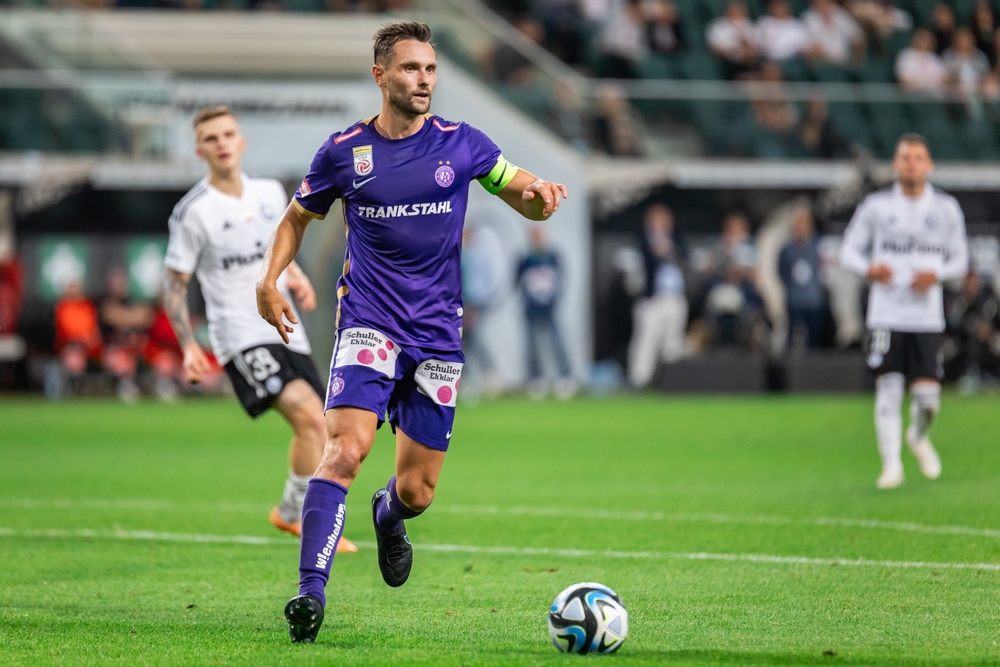
JAMES Holland says his transition from Austrian club football to management was never foreordained, but on reflection his exposure to top managers right through his playing days goes a way to explaining his rapid ascent on the touchline.

Still only 37, Holland is in his second season as an assistant manager at a Premier League club. Joining Oliver Glasner’s team at Crystal Palace last season saw highs, lows and a European trophy; Glasner then moved north to Nottingham Forest in the summer with a fleet of assistants – including his Aussie ‘transition coach’ – in tow.

Holland achieved plenty in a career that included sixteen Socceroos caps, a trip to the 2014 World Cup and Champions League football, but in holding his current position at a relatively young age – and at a time when respect for Australian managers is growing – he seems once again on the verge of big things – just as he was when coming through the AIS and Newcastle Jets in the A-League’s early years.

“Last season was my first year out of playing and as an Australian in Austria who landed in the Premier League, I was pretty irrelevant here in the grand scheme of things,” Holland told Box2Box from his Nottingham apartment, shortly after their 2-1 win over Aston Villa.

“Firstly, I was just trying to find my feet. As a footballer, I was always thinking ‘what’s next, what’s next?’ But as a coach, I’ve wanted to just be where my feet are. My philosophy last year was very much to just take it all in.”

It’s now well-documented Holland and Glasner first crossed paths at LASK Linz, one of two big Austrian clubs where the former enjoyed his most consistent years on the park. Glasner was mid-way through a four-year revival project at a heavyweight fallen on hard times – ‘it’s pretty incredible when you look at the story’ – when he signed Holland in 2017.

“LASK were traditionally a big club but had been relegated for financial reasons, and Glasner was the one that brought them back up. I went there during the period they’d landed back in the first league.

“Once I landed I could tell relatively quickly he was on it. There’s his attention to detail… his ability to make the complex simple and communicate it to a footballer who needs simple answers in high-stress situations. There’s his drive and sheer force of nature, and want to win and get better every day.

“I could tell relatively early on that as a player, I was going to learn a lot from him.”

Now working together at a third club, Holland speaks to the beneficial combination of both proximity to Glasner, and the intensity of the Premier League. It’s also not just a working relationship; shortly after we spoke Holland was off to make his gaffer’s tee time, called upon for a round of golf on their day off.

“We played 60 games [last season]…I was with him every day in the car, driving home. As a young coach, seeing the amount of stress with all that’s going on up close and personal was a little bit overwhelming, but also a masterclass in how to deal with it all.

“Watching how he works and seeing how big that leadership component is – not just on the pitch, which is such a small part of being a coach – but seeing him lead a group and organisation. Managing up, down, sideways, the media. We had an incredible amount of press.

“We also started 18 games unbeaten (including games spanning back to the previous season), but later had a 12-game streak where we didn’t win. So to see the ups and downs, and in the end to win the Conference League, to me was a masterclass. I wrote a lot of things down!”


Holland first made his name as a member of the Jets’ Championship squad of 2007/08, starting in the Grand Final as an eighteen-year-old. Highly rated and soon to captain Australia at an U20 World Cup, he played just 23 matches before moving to AZ Alkmaar in 2009.

The Dutch side were flying at the time; the older and more established Brett Holman played a hand in their drought-breaking 2008/09 title, but Holland never cracked a senior game at the club. But while he may not have been thinking about it at the time, he was already under the tuition of some top managerial minds.

“At the beginning of my European career my first three coaches were Louis van Gaal, Ronald Koeman and Dick Advocaat – a nice little list to be able to learn from!

“Even going back to my AIS days I had some really good coaches, and then Gary van Egmond gave me my start at Newcastle.

“But for the first three years [in Europe] I felt like I was on a treadmill working as hard as I could but going nowhere, but learning a lot of lessons along the way, which was a great experience. It was a fun time in my career – a difficult time, but a fun time in life.”

Also during this time Holland debuted for the Socceroos, and after waiting patiently under Pim Verbeek and Holger Osiek, momentarily found himself near the front of the midfield queue during Ange Postecoglou’s 2013-14 overhaul – right on the dawn of the Brazil World Cup. Holland has spoken previously of his disappointment in not making the very most of those opportunities.

But while Postecoglou has a reputation of maintaining a cold, professional distance from his players, there are also many stories of his benevolence towards fellow coaches. Over a decade on from their first meeting, so it’s now proved with Holland.

“Ange is someone that’s obviously massive for most young Australian coaches. I only touched base with him during the National Team and would have loved to have worked with him for a lot longer. As young up-and-coming Australian coaches, he gave us permission to dream.

“At least from my experience, he’s also someone that always takes the time whenever you reach out. I was lucky enough to meet with him a few times last year, almost as a mentor, just to pick his brain, which is something I’m really grateful for.”


Nottingham Forest’s new coaching staff have a serious task at hand. Postecoglou was one of four permanent managers to pass through last season, which had started with their owner dreaming of winning the Europa League but ended just five points safe from relegation.

“After we lost to Leeds in the cup, I spoke to a few of the staff and you could definitely feel the heaviness of last season. Just to observe people around the place, being like ‘oh no, not again.’”

“You feel they’ve had a lot of coaches in, a lot of voices… and last year was obviously tumultuous. I could almost feel in the stadium, and within the group and staff, the expectation of the worst as opposed to belief of what’s possible in a positive sense.

“As a new coaching staff we’re not just instilling a new philosphy…we’re trying to shift the mindset and culture. That’s been an interesting part for me personally as a young coach, and something Ollie is very aware of.

“But the club’s full of good humans, and it’s a really nice place for me to work personally, and the coaching staff are all enjoying it. Everyone’s been open, helpful, and hopefully we can kick on from the weekend now, as well.”

So although not yet in an outright managerial position of his own, Holland again finds himself on the list of Australians plying their football trade abroad, who those across his homeland feverishly check up on at the end of each weekend from afar – just as it was during his long playing career.

“All this stuff post-football, I never, ever predicted, to be honest. From my experience, most footballers overestimate their ability and underestimate the job, but I certainly didn’t do that.

“I knew coaching was a difficult gig, but was lucky enough to get the opportunity and I’m embracing it, mate.”

FCA Relaunches Coach Education Program with Expanded CPD Opportunities Through 2026

Football Coaches Australia (FCA) is set to relaunch its Coach Education Program, offering coaches across the country a comprehensive schedule of online workshops and new education opportunities through to the end of 2026.

Following a break in the program during the FIFA Men’s World Cup period, FCA’s coach education schedule returns this month with a strong focus on providing coaches with opportunities to complete the Continuing Professional Development (CPD) hours required to maintain their coaching licences.

FCA plans to deliver two online workshops per month through to December, alongside a range of additional coach education initiatives covering the technical, tactical, physical and emotional aspects of the game.

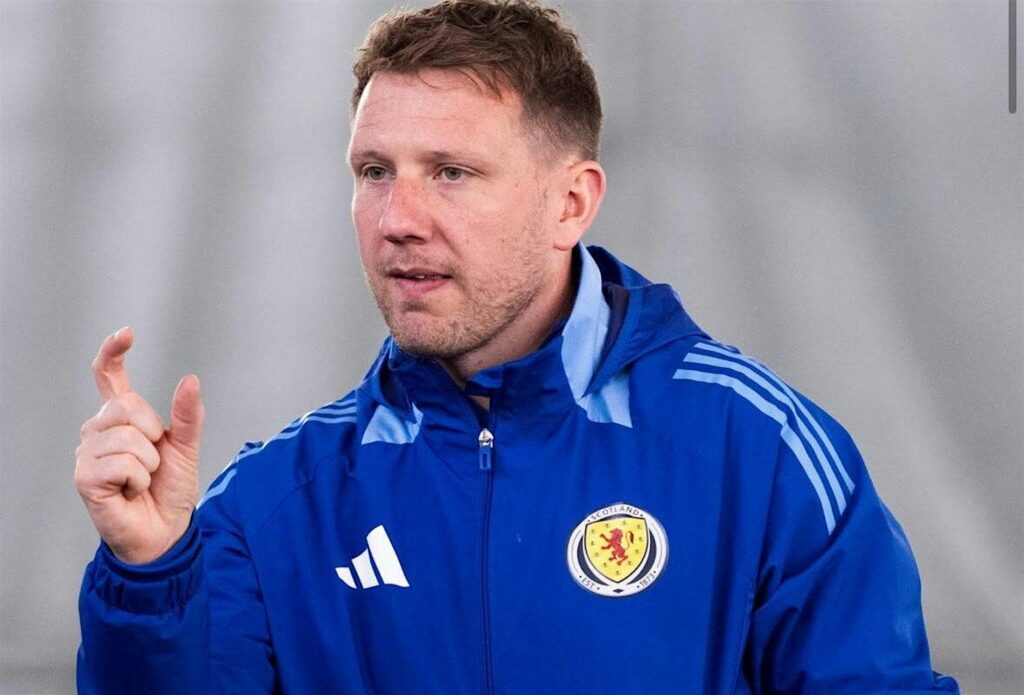
The program returns on Monday, August 24, with Scottish FA Coach Education Manager Martyn Buckie presenting Technical and Tactical Priorities – The Differences When Coaching Junior/Youth and Adults.

Buckie has been a regular presenter across FCA’s coach education program and will return with another engaging session designed to provide practical insights for coaches working across different levels and age groups.

FCA members can attend the session free of charge when using the FCA member code, while guests and non-members can register for $22.50.

The following week, on Monday, August 31, Scottish National Women’s Team coach Melissa Andreatta will present The Identity Advantage – Building a Team to Stay Connected When Pressure Is Highest.

Andreatta’s session will explore the importance of team identity and connection, particularly in high-pressure environments, providing coaches with insights applicable across the game.

FCA President Ian Greener said the return of the program represents an important opportunity for coaches to continue developing their knowledge while meeting their CPD requirements.

“Our ongoing relationship with Football Australia to provide these sessions, all supported with CPD, is a valuable component of the coach education landscape and one we here at FCA are proud to bring to coaches at all levels of our game,” Greener said.

The program will continue throughout September, with Ernie Merrick among the presenters already confirmed and further speakers to be announced in the coming months.

FCA’s expanded schedule is designed not only to help coaches accumulate vital CPD hours, but also to expose them to a diverse range of perspectives and expertise from across the football community.

A major new initiative will begin in October, with renowned coach Ron Smith delivering a six-part series focused on using information technology to develop coaches’ skills in match analysis.

The series will provide Australian coaches with a new opportunity to explore the use of technology and match analysis as part of their coaching development. Initially, the program will be limited to 10 coaches, with further details to be announced by FCA shortly.

With two quality sessions planned each month through to the end of the year, FCA’s renewed Coach Education Program will provide coaches at all levels with regular opportunities to learn, connect and continue their professional development.

Further presenters, workshops and education opportunities will be announced throughout the coming months.

Registrations for Martyn Buckie’s August 24 workshop are now open via this link.

FCA looks forward to welcoming coaches back to its Coach Education Program and continuing to support the development of coaches across Australian football.

Most Popular Topics

Editor Picks

Send this to a friend