


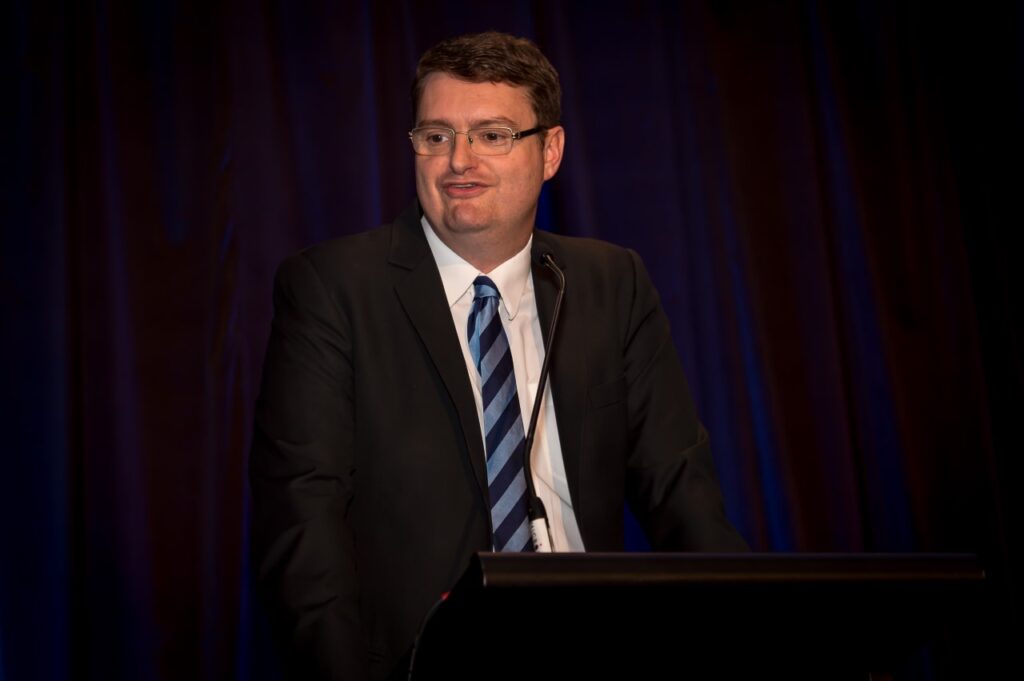
Football NSW CEO Stuart Hodge: “If we can get clarity and alignment together then I think we can see football reaching its potential”

Stuart Hodge 2

A long-time adherent of the world game, Football NSW Chief Executive Officer Stuart Hodge has been in charge of the state footballing body since 2017. His time in the role has included navigating back-to-back major lockdowns through a pandemic in NSW, with the current lockdown period beginning in late June.

The surge in COVID-19 cases across NSW left football in a tentative place nearly two months ago, but an extended lockdown has forced Hodge and Football NSW to ultimately cancel the remaining NSW-based state league seasons and its National Premier Leagues competitions.

Steering not just an organisation, but a state with such an engrained passion and commitment to football through a pandemic not once, but twice, has been a major challenge of Hodge’s time at the helm of Football NSW. If anything, leading the Football NSW family through such tough times has made Hodge appreciate the game to an even greater extent.

Stuart Hodge

Q: It’s been announced that all Football NSW seasons have been officially cancelled following a board meeting on Wednesday evening. How challenging was it for yourself and the board to make this difficult decision?

Stuart Hodge: Any decision to cancel a competition is a serious one, and one that you wear with a heavy heart. We all would have loved to have seen all of the competitions come to an end and all of the effort from the players, coaches, volunteers, everyone rewarded with a proper conclusion.

Unfortunately, the circumstances that we’re in now with the pandemic and with the extended lockdown that we’ve been in – we’re coming up towards two months now that we wouldn’t have had teams training – it’s getting later into the year and understandably without a roadmap from the government as to how sport’s going to come out of this, it was the sensible conclusion.

Really, it was the decision that we had to take. And as hard as that is, at least it now gives certainty to everybody, and we can now start to plan how the 2022 season now looks like.

We would’ve loved to have been able to play on. If you look at some of our competition structures, especially around our women’s league, we have around 80 players from the W-League playing in our WNPL which is a demonstration of what a fantastic league that is. We were facing significant crossover with the W-League, and then as every week of the lockdown went on it became pretty obvious that we weren’t going to be able to play out a season without a significant clash with the W-League.

Q: Obviously, it’s a challenging time at the moment with NSW (in addition to other states) going through a severe lockdown. How are Football NSW working to aid clubs throughout this period?

Stuart Hodge: I think the decision that we made gave our NPL clubs certainty. That’s one of the things I think many clubs wanted clarity on. Being in limbo and wondering whether you’re going to return means that they’re holding on and waiting for the decision, at least now they can take the appropriate action and move on.

We’ve revised our club entry fees to ensure some financial relief for the clubs. We’re also advocating for government support. We were successful in doing that last year and hope that further support from government will come.

And then with our association clubs, most of our metropolitan associations have already decided to cancel the rest of their season. So, again it’s about how we can support clubs to get through this period and make sure they’re strong for next year.

Q: Football NSW this week encouraged clubs to get involved in initiatives like the Club Facility Project Plan, what do these initiatives do for clubs looking to get government support during this period of financial duress?

Stuart Hodge: It’s a challenging time and I guess what has been a positive from the recent NSW Government budget is the significant investment into infrastructure. And in particular, sporting facilities.

We’re like many other states in that we have a chronic shortage of facilities, both quality and quantity. And it really is the main thing that’s holding us back from increasing even more so in terms of participation.

So, we’ve undertaken some projects including a facilities audit and facilities strategy to position us , our associations and clubs well to capitalize on some of the upcoming grant programs that the government has announced. There’s a Greater Cities Fund, a Centre of Excellence Fund and there’s a Multi-Sport Facility Fund that will all open soon from the NSW Government and we are working hard to make sure football is well-prepared to apply for those grants.

In addition to that, we have the Women’s World Cup coming and we’re working closely with the Office of Sport in proposing a Legacy Fund. And we’re working with Football Australia on that as well. It would be specific to the football community to be able to access. We’ve been doing a lot of advocating directly with ministers to really emphasise the need for investment into football facilities, and we’ve been pleased with some of the NSW Government’s grant programs in recent times.

We’ve seen a large portion of the available funds being allocated going towards football projects.

Q: How are you feeling following the announcement of the Domestic Match Calendar by Football Australia recently?

Stuart Hodge: I think it’s a really important project to undertake. Having a really fixed calendar where there’s more alignment in the game is very positive.

As I mentioned earlier, we’ve got some challenges we face in regards to some crossover with the W-League and our competition. So, we’re working to see how we can better position that. I think the Domestic Match Calendar is really important in that it gives everybody a clear view of when everybody’s playing and where they’re playing. I guess then it opens up opportunities for discussion around other competitions and where they fit in.

It gives us opportunities to build our activities around national team matches. We of course know with the Women’s World Cup coming – and once we become available again to have national teams come there – I’m sure there’ll be a lot of matches involving the Matildas and national teams will want to come and play here.

So, having that Match Calendar and that visibility is going to be very important for us all to plan as we head into the future.
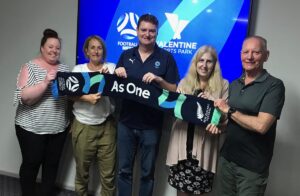
WWC As One

Q: Beyond the impact of COVID-19, what are your most significant priorities for Football NSW for the rest of 2021?

Stuart Hodge: Obviously, at the moment the stability of everyone involved in Football in NSW is our priority. And making sure that we don’t leave anyone behind and everybody comes through this pandemic.

We’ve also got summer football coming up which is important for us, and that’s what we’re also working with the government on in terms of looking at how we can operate summer football.

The facility grant programs that I mentioned earlier that will open up during this year are vital for our community and putting in place a fantastic legacy program with the government will be absolutely vital.

So, I think that they’re the key things that we want to be focusing in on, not just for after this pandemic but now. Because they’re so vital to the future of the game and with the Women’s World Cup coming up, it’s really a once in a generation opportunity to capitalise on having such a massive event here.

The legacy starts now – we’ve already seen a significant increase in female players and a 15% increase in female referees.

Q: How do you see the responsibilities of the state federations evolving over the next few years?

Stuart Hodge: I think that state bodies play an important role in the whole structure of football in Australia. There was an announcement that Football Australia had made that collectively we’re looking at a review into the game and looking at how the game is operated. And I think what’s really important is that we have clear roles and responsibilities across the different areas of the game.

Every aspect of the game plays an important role. And I think if we can get clarity and alignment together then I think we can see football reaching its potential here in Australia.

Q: What do you want to say to the Football NSW community during this tough period?

Stuart Hodge: I know it’s a difficult time at the moment for everybody, but if there’s a general message out there that I’d like to say to the football community of NSW that they stay strong.

When football resumed last year and I visited clubs, the overwhelming feedback I received was how playing and being involved at a club was a huge boost to the mental health of participants.  We appreciate the physical benefits of sport, but the mental side of it is vital.

I want to thank everybody, especially the volunteers, for their understanding and patience during this difficult time and we wish everybody to stay safe as well. We can’t wait to have everybody back on the field in the near future.


Previous ArticleNext Article

Ernie Merrick: ‘There are many clubs that would be fantastic additions to the A-League’

Ernie Merrick will be forever recognised as a key figure through the A-League’s golden early years. Appointed Melbourne Victory’s foundation manager in 2004 he led the club to not just silverware, but legitimacy and respect in a serious sport city.

A Scottish migrant and PE teacher by trade, Merrick was the youngest of the NSL’s managerial crop when he started with Preston in 1987 in the era of Thomson, Arok & Matic; when he finished with Newcastle in 2020 he was the elder statesman in the A-League age of Postecoglou, Popovic and Arnold.

For the places the game took him and all he achieved – including time as national team manager of Hong Kong – Victory supporters can comfort themselves in the fact that for whatever they feel towards Merrick and his iconic group of players, that feeling is mutual.

‘Yes, definitely,’ Merrick told Soccerscene Unfiltered when asked if managing Victory was the highlight of his career.

‘I think success is [fans] having identification with players, especially. We had Victorian boys playing for Victory.

‘That second year I was determined to have a complete pre-season. Archie Thompson bought me a birthday cake with 200 candles and said “Ernie, we’ve had 200 training sessions. We should celebrate this” – so he was looking forward to a big year, and we won the Grand Final 6-0.’

Nearing 20 years on, Victory and the A-League in general haven’t managed to drive forward as would have been hoped. Unsurprisingly that comes as painful to Merrick, as does the change in landscape regarding his other great passion and contribution in player development. 

‘I’m disappointed, as would most people be, that it’s struggled so badly. To me, there’s something missing,’ said Merrick of the current state of the A-League.

‘Those players we produced at the AIS and VIS went on to be the golden generation. Unless the league is fixed, there’s going to be ongoing problems with the financial status of things.

‘You just cannot earn enough money from selling a youngster, who you might get a million for, who then becomes worth several million in a few years if he does well. Maybe there’s a bit too much of selling players early.’

As someone who gave enduring service across Australia’s two domestic leagues, his voice holds weight in the consideration as to whether it’s time to now blend the, in today’s hyper-corporate landscape.

‘South Melbourne and Preston are two clubs that are perfect for the A-League, I think, down the track. They’ve set up, they’ve endured, they’ve been resilient, they’re playing good football and they’ve got a home base with a home crowd, which is far better than starting a club up from scratch.

‘All those players coming through those squads and the number of supporters they’ve got would be a huge addition. In Sydney too, there’s Marconi – there are so many good clubs around that I think would make a great addition to the A-League.’ 

Merrick also spent thirteen years as head coach at the Victorian Institute of Sport. He feels modern player development is an equation we still haven’t got right, post the closure of the AIS’ football program in 2017.

While many argue the move to club-based academy structures has seen Australia fall more in line with global practice while still producing players of quality, Merrick still feels there is merit in a national high performance program, in addition to club academies.

He was in the process of setting up state academies through the Member Federations during his time as Football Australia’s chief football officer from 2022-25. While the Victoria project was short-lived, academies in Tasmania, Western Australia and South Australia continue to run, but it appears the broader expansion of the concept has been abandoned.

‘I think both systems should work [together] equally well. When I started with the FA program clubs thought they would lose players to us, but I didn’t take any of their players. We offered the opportunity of a high-performance program to other youngsters.

‘We could develop players completely; we weren’t restricted to playing 4-3-3 to combine with the way the first team were playing. We provided more of a rounded education, and good players can play in any system.

‘We managed to affect the coaches involved so they were up to date with the latest information on methods of coaching, etc.’

Catch the full chat with Ernie Merrick on Soccerscene Unfiltered: from being two-footed by a 15-year old Kevin Muscat to his enthusiasm for the future of the Socceroos, his memories of Wellington and Newcastle, and plenty more…

Grassroots Investment is key to ensuring passion for Australian football remains – and grows

Australian football is continuing to grow, with record attendances and TV viewership up year-on-year due to the increasing value and demand of games across the country.

What started as a small ember stoked by a cultural heritage brought from Europe, has borne a league invested in by foreign states and major global equity firms, and a country that consistently supports its national teams at major tournaments globally; the fire is truly alive. But, can it be sustained and given even more life?

Ann-Marie Balliana, secretary of Illawarra club Fairy Meadow United, spoke with Soccerscene.

‘The biggest challenge for football in this country is how to take advantage of huge grassroots numbers and translate this into support for other levels of the game,’ said Balliana, formerly a long-term CEO of Football South Coast.

‘Instead of capitalising on this huge asset of participation numbers, it appears football is unfortunately bound by limited investment and various layers of internal boundaries.

‘There are lots of opportunities for football to rise to the next level, and significant work required to get there.’

The World Cup proves football belongs in Australia:

The success of the Socceroos in reaching the last six consecutive men’s World Cups has greatly boosted the domestic interest in football, with the 2026 World Cup highlighting how far the team has come, and how many people are behind them to succeed.

The SBS and SBS On Demand coverage of the tournament reached over 18 million Australians (64% of the population) and over 209 million hours were consumed via these sites.

Meanwhile, over 10,000 dedicated fans paid up to AUD $25,000 to watch their country participate live in North America. 

I took in the tournament from Melbourne, and the energy among the city was undeniable. Bubbling with excitement were people conversing who usually wouldn’t, and there lay an air of calm between the 90 minutes of euphoric nation-wide highs. 

Federation Square was at full capacity (7,500) for many of the group games and the knockout match against Egypt- despite the 4.00am kick-off time.

Alongside that, AAMI Park held 6,000 more spectators in the early hours of the day for the knockout game. Despite the time zone killing any convenience, the fans diligently showed up.

The post-World Cup glow also took effect: Queensland selling out both recent friendlies against Brazil.

World Cup 2026 TV ratings

Match Overall reach Average audience viewership Key detail
Final: Spain vs France 5.26m (peak) 2.69m Most watched World Cup match in SBS history
Australia vs Paraguay 4.84m 3.09m Highest viewed fixture for Socceroos
Australia vs Turkey 4.78m 3.04m Top performing early fixture

The rise of the domestic game persists:

Domestically too, figures show Australian football is continuing to grow.

October’s 2026 Australia Cup final between South Melbourne and Melbourne Victory was not only a match that will be remembered by fans for its entertainment and underdog storyline, but for investors and governing bodies that can clearly see the growing market for football in this country.

AAMI Park had its record attendance broken as 29,911 spectators packed in to watch the game. Furthermore, the TV viewership of the Cup final had a 56% increase from the previous year. The demand for football is growing significantly.

A-League Stats and Records 2025/26 season:

  • 3 sold out finals games- 22% increase on attendance last season.
  • 27% increase in digital viewership on Paramount+ and 17% on 10 Streaming.
  • For the last four seasons, over 1.3 million fans have  attended games throughout the campaign
  • TV viewership exceeded 11 million views.
  • Social media reached over 7 million people (10% increase).
  • Newcastle Jets, Adelaide United and Perth Glory all broke their previous attendance records.

The Cup final saw a non A-League club win the trophy for the first time in competition history.

South Melbourne fans. Credit SMFC

‘It also showed that NPL clubs such as South Melbourne have a fantastic support base, and this shows the potential of football to really capitalise on the community support that does exist for clubs,’ said Balliana.

‘The costs of running an A-League club are clearly the biggest issue in growing our national competition, and without significant investment through broadcast, government and other revenue streams, there are limited opportunities to take advantage of huge grassroots numbers.’ 

England is widely regarded as having the best domestic competitions on the planet, largely due to its impact on communities right across the country. However, its most attractive quality is competitiveness, and this is best showcased in the FA Cup.

Teams across all divisions have the chance to play against each other, which occasionally sees semi-professional ‘non-league’ sides the opportunity to play against a giant, such as Manchester United or Liverpool. 

Often referred to as the ‘magic’ of the cup, there is a belief that any team can win on any given day – even if their odds of succeeding are the football equivalent of what David had in beating Goliath.

The magic is in the upsets, and that competitiveness is what ties the whole football pyramid together. For the game in Australia to grow, and to sustain itself,  matches must be competitive from the first minute to the last, from the A-Leagues to the grassroots pitches all across the country.

The importance of grassroots football:

To understand football- from financial investments, market growth, popularity or simply emotional attachment – you have to start at the bottom of the pyramid.

The base of football in every country is the grassroots game. It lays the foundation, and both the future of the A-League and the Soceroos & Matildas is entirely in the hands of the grassroots level. 

Globally, amateur matches are played everyday. Those clubs have a youth system, in which the talent pool is small, and so more established clubs recruit players from that pool. This process continues all the way to the world’s elite. Domestic talent comes from grassroots football, and without domestic talent, the game is nothing.

Once a fire is lit, it needs a constant fuel source to keep it alive. If the wood is wet or rotting, the fire will slowly dissipate into ash. To keep that from happening, the fuel needs to be re-supplied so it steadily grows. Neglecting grassroots football is the quickest way for the game to decline and it is why it is imperative that it is well-funded.

‘Grassroots football is where children start their journey in football.  It’s where players fall in love with the game and develop a passion for playing,’ said Balliana.

‘This not only applies to players, but also administrators, coaches and referees. Grassroots football creates opportunities for all roles across football providing pathways across all levels of the game.’

Recently, Football NSW pledged over AUD $200,000 to three amateur clubs. The funding will allow them to upgrade facilities, create more inclusive and accessible environments and improve the fans match day experience.

Additionally, since 2020 the Dickinson Foundation set up the Active Kids Grant and has provided over AUD $5.5 million worth of equipment and uniform to support over 1000 community clubs. In 2026, 40 football clubs were supported nationwide. 

Commitment to grassroots is necessary, nation-wide. With it, clubs can grow and give players the opportunity to improve and be noticed by more established teams. Investing in grassroots football is investing in the future.

Finance and infrastructure:

As the game has grown throughout the pyramid, so too has investment in it. Globally speaking, football is an industry that has boomed in the digital age, and grown beyond what was previously conceived as possible. Some investors were early; others are riding the wave hoping it never breaks, but inevitably it will.

Everything has to peak, yet that doesn’t mean all conclusions are negative Whatever the fate of the financial wave, neither a tsunami nor shallow brake will impact people’s true love of the game. The game may take many forms, but the fans will be there for generations to come.

In 2021, US private equity firm Silver Lake acquired a 33.3% minority stake in the A-League for AUD 140 million that valued the whole organisation at AUD 425 million.

The finances of the APL have been an issue in the years since, and what becomes of their relationship with Silver Lake remains to be seen. In positive news, Network 10 & Paramount+ recently renewed their broadcast deal worth AUD 100million for an additional two years, so interest is there. Domestically, football has plenty of space to grow.

‘There is always a direct relationship between World Cup success and increased participation given the exposure of football is heightened and more people want to play,’ Balliana continued.

‘However, this also comes with challenges as infrastructure is clearly not to the level it needs to be to support the size and growth of football across our region and the country.’

As audiences grow – particularly when it comes to our national teams – the fire will continue to need fuel, and that can only be sourced organically from the ground up.

Through the continued development of grassroots football, football can still grow to be the dominant sport in this country.

Most Popular Topics

Editor Picks

Send this to a friend