



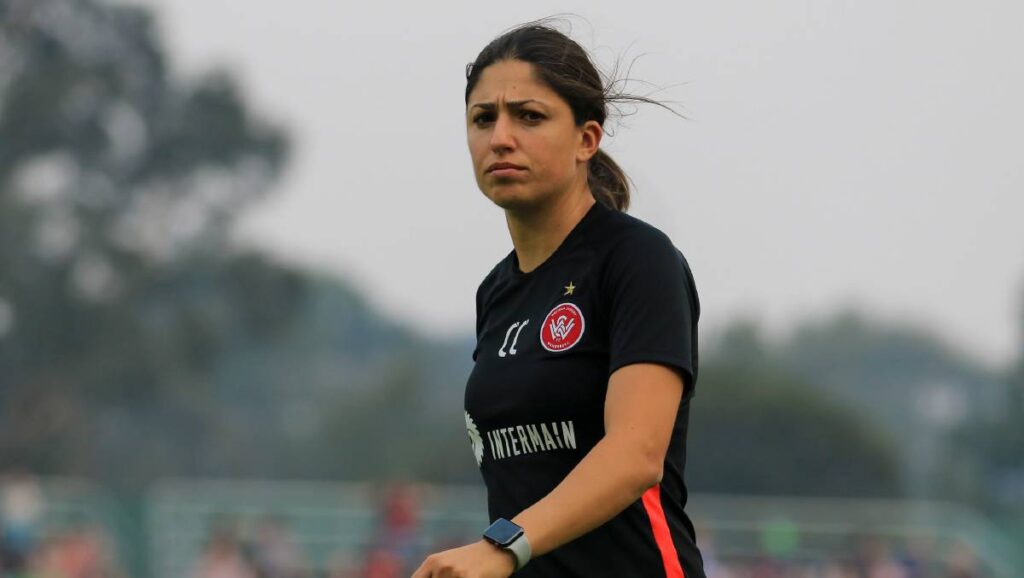
June 1 this year saw long-time stalwart of the Western Sydney Wanderers – Catherine Cannuli – appointed to the role of Head Coach of the Women’s side for the upcoming 2021/22 A-League Women’s season.
In addition to having built up an impressive resume through her role as Women’s Technical Director at the Southern Districts Football Association, Cannuli has been announced as the latest addition to the Executive Committee at Football Coaches Australia (FCA).
Her landmark year of achievements thus far reflects her immense efforts in working to reach what she acknowledges as a personal high point in her coaching career. Cannuli’s success is undoubtedly a testament to her determination, but her transition from player to coach was self-admittedly challenging one.
The lack of clear routes towards securing coaching roles at all levels of the game has led FCA and Professional Footballers Australia (PFA) to announce – within their Memorandum of Understanding strategies –all members of PFA’s Alumni will have their joining fee to FCA waived in an effort to provide additional support to aspiring coaches.
In a wide-ranging chat with Soccerscene, Cannuli spoke on her efforts to reach the point she is at now in her career and highlighted the significance of this recently announced FCA and PFA Alumni partnership.

It was announced in June that you were to become the new Head Coach of the Western Sydney Wanderers. What has that been like for you so far?
Catherine Cannuli: It’s been exciting and challenging. Obviously, with the current COVID-19 situation that we’ve been in, I probably had four or five weeks in charge as the head coach and then we went into lockdown. So a lot of it has been done from behind a computer. But it’s been a great time to be able to plan and make sure that everything was ready to go come first day of pre-season.
In terms of opportunities for females in football following the end of their playing career, can you give us some insight into what was going through your head as you were coming to the end of your playing time?
Catherine Cannuli: I really didn’t think about coaching straight away to be honest. I retired and I thought I was going to get my weekends back and be a normal person. My friends were always having a go at me for missing so many significant birthdays or weddings.
It was after being off for about six or seven months, and not having football, where I realised more than anything what it left in me as a person. Football’s been such a big part of my life. It took me some time to realise that I couldn’t be a player anymore, because the commitment at the time was really hard – juggling full-time work and doing everything that I wanted to do. I was at a crossroads in my career at that point. It was thinking ‘do I sacrifice another four years or do I just focus on work and preparing for life after football?’.
It was at that point that I got into contact with the Southern Districts Association and explained that I wanted to give back to our community and asked what I could do to get involved with the girls. I went down and did some sessions with the team at the time, and within six months I’d landed myself my first coaching gig. I took over the First Grade Women’s team there and that was it. I fell into coaching.
What was it like mentally traversing that transition period between playing and coaching?
Catherine Cannuli: It was clear, because everything that I’d spoken to the club about they were on board with what I wanted to do and the vision that I had for young girls in the South-West region. For kids in the Liverpool and Fairfield areas, young girls like myself didn’t have the opportunity to be mentored or be coached. They didn’t have an environment where they felt they’d be able to really excel.
For me it was pretty clear from day one that I wanted to make a change. It was hard to transition, because after my first couple of years in coaching I remember going back to some of my coaches that had coached me for a long time and apologising. Because I didn’t realise what it actually took to be a coach. As a player, you turn up; you train; and you go home. As a coach there’s so much planning going on in the background that players just wouldn’t have an idea about.
The transition was definitely difficult, but after my first 12 months of coaching, I chose to dedicate myself to it. I had a business at the time and I stepped away from it to be able to then go into coaching. At the time I was working at Westfields Sports High School and Southern Districts and learning my trade, and it wasn’t easy when I decided to pursue coaching as I felt like I was back at square one again.
But it was really important for me to experience it that way. Even now that I’m at the top of my game as the Head Coach of the Western Sydney Wanderers, I feel that as a coach it is really important that you learn your trade, go through different environments and see different things before you actually get there. It shapes you as a person and as a coach.
What have been your key learnings in your role as Women’s Technical Director at the Southern Districts Football Association?
Catherine Cannuli: I think that the main one has been learning to build an environment for not just your players, but your staff and everyone to excel in. I think it’s important that everyone knows what your vision is and what direction you’re wanting to go in within your program and your football. It’s important that everyone understands that if they’re on this journey with you, they have a clear understanding of what the message is and what you want to do.
Whether I’m at Southern Districts or at the Wanderers, having that clear message with your players and your staff of ‘this is what it’s going to take to be successful’, and that we can do it as a collective.
Sometimes you see people saying ‘it’s my way or the highway’, whereas with me it’s about bringing people on the journey with you and making them understand what you want to achieve and how you want to achieve it.
Do you feel the partnership between FCA and PFA Alumni will aid aspiring female football coaches?
Catherine Cannuli: I think back to when I did my first C License and how far coach education and support has come. FCA have been a massive game changer in the coaching space, not only for females, but for males.
For any coach that aspires to be better and wants to be helped, even for those A-Leagues players wanting to transition out of playing into coaching, I think it’s important that there’s a mentorship and a process in what we want to do and how we want to do it.
Sometimes when we jump straight into the deep end it becomes difficult to have an understanding of what the role of a coach is. If you are a player, the role of a coach is a very different role to when you’re a player.
The partnership between FCA and PFA is huge. I’ve always said that football needs to come together and we need to work together as one. This is showing that together we can be stronger. And these partnerships are only going to allow our players and people to grow and further develop their skills in that space.
You’ve recently been announced as an addition to the Executive Committee at FCA. What initiatives will you be looking to drive as a part of your work there?
Catherine Cannuli: I think the main one is to give as much coach education as we can for all coaches. Giving all people from all different levels the number of resources that they can get onto. You can already see that with a lot of the workshops that we’ve been running. The numbers that we’ve been getting for these have been fantastic.
For me, the key thing with FCA is to drive its existence for people to understand that FCA is there and what it can do for coaches. Because I’ve already seen how it supported me over the last two years as a member. And I think, down the track, FCA is going to have such a significant impact on the coaching life. It’s going to be amazing to see where it’s going to be having known where it started.

What changes and opportunities for the women’s game are you hoping to see come to the fore leading into and after the 2023 Women’s World Cup?
Catherine Cannuli: The greatest achievement for me with receiving the opportunity to be the Head Coach of the Western Sydney Wanderers is that other females can look to this and say: ‘Hey, I can be a Head Coach at the A-League Women’s as well’. That’s the most important, that young female coaches can actually aspire to be a coach in the A-League Women’s.
The more that we see it on the TV and the papers that there are female coaches leading the way, there’s going to be even more opportunity for young females to come through NPL clubs and do coaching.
At the moment, the number of coaches in the female space in a professional environment is probably quite low. And that’s something that we need to keep driving change for; changing the dynamics around females not thinking that there are those opportunities for coaching when there are.