

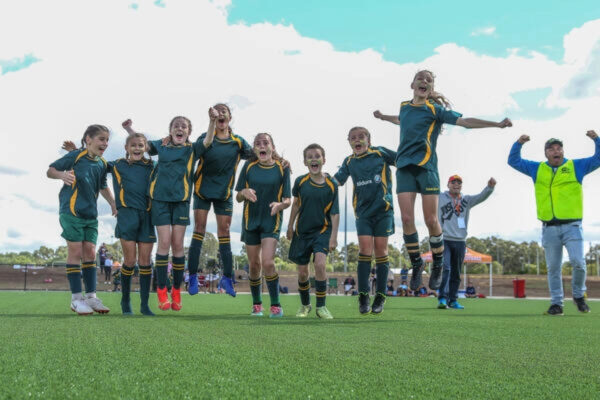

Olympic Park undergoes stage three redevelopment

Banyule City Council has commenced stage three works on Olympic Park as the venue continues to prosper in redevelopment.

Olympic Park is located in Heidelberg West on the western fringe of the municipality. Home to Heidelberg United Football Club, it is an established sport and community recreation reserve with a significant history – once used as a prominent training base for the 1956 Olympic Games.

The venue is undergoing a four-stage redevelopment process in order to provide functional and appropriate levels of sport and recreation infrastructure, and shift towards more informal and casual recreation pursuits.

Originally adopted by Council on March 14, 2017, the Olympic Park master plan has seen the first and second stages already completed, which included:

  • The redevelopment of the main playing pitch (natural turf)
  • Underground infrastructure
  • Reshaping of dirt mounds around the pitch and access paths.
  • Synthetic mini-roos pitch/warm up area (including drainage, fencing and lighting).
  • Car parking with Water Sensitive Urban Design elements including bio swales and bio retention basins.
  • Playground with nature place, structured play, shelter, BBQs and picnic furniture.
  • Electrical substation upgrades and main pitch lighting
  • Landscaping and shared paths.
  • 1956 Memorial Olympic Garden.

The third stage of the process is in place to construct a new car park located at the north entrance road to Olympic Park Reserve, including water sensitive urban design. The works began in late December last year and are scheduled to be completed by March 2022.

Stage four works are expected to begin mid 2022 and predicted to be finished by March 2023. It is still in the planning phase for the time being, where it currently includes:

  • Reconstruction and realignment of the northern cricket pitch (including drainage, lighting, fencing).
  • Reconstruction and realignment of two additional soccer pitches / cricket pitch with wicket between the soccer pitches (including drainage, irrigation, fencing, lighting).
  • New pavilion (change rooms, toilets, social space).
  • Cricket practice nets.
  • Acrylic futsal/basketball area (including fencing, lighting).
  • Refurbishment of Barrbunin Beek.
  • Landscaping and paths.

It is estimated that the cost of stage three and stage four works will be $7.5m. Council has allocated $3.0m (over four years) and the State Government has funded $4.5m.


Previous ArticleNext Article

Football Victoria Backs Campaign to Shield Junior Players from Gambling Harm

More than 600 sporting clubs across Victoria have enrolled in a state government program designed to limit young players’ exposure to gambling, with Football Victoria now urging its community clubs to join before a late-July registration deadline.

The Love the Game initiative asks clubs to formally commit to a set of principles: refusing sports betting sponsorships, developing internal harm prevention policies, and building environments where coaches, parents and players are equipped to discuss gambling risks with children.

The program’s public health rationale has a sharper statistical edge than its community-facing materials suggest. A 2025 study of Victorian secondary school students aged 12 to 17 found that nearly 30% had gambled at some point, and among those who had gambled in the past year, 7.5% met the criteria for problem-gambling and a further 26.8% were classified as ‘at-risk’. The research, commissioned by the state government and published earlier this year, also found that students exposed to gambling venues and advertising were more likely to gamble or to do so in a risky manner.

The most recent Victorian Population Gambling Study found that Victorians aged 18 to 24 are the group least likely to gamble overall, yet carry the highest rates of harmful gambling across all age groups. Young people aged 18 to 34 are around five times more likely to bet on sports than older cohorts.

When the data lands at the clubhouse door

Football Victoria’s support for the program reflects a broader recognition within community sport that participation rates and club culture are connected. The environments clubs create shape whether young people stay in sport and what norms they carry with them into adulthood. For football specifically, which draws participants across a wide range of socioeconomic backgrounds, that responsibility is not evenly distributed. Approximately 440,000 Victorians, or 8.5 per cent of the state’s population, are classified as being at some risk of experiencing problem gambling.

The Victorian Government’s program gives clubs more than symbolic membership. Registered clubs receive practical tools to develop governance frameworks around gambling harm, resources for coaching staff and volunteers, and standing as part of a growing network of clubs taking a formal position on the issue.

Researchers have described the current framing of gambling harm as a matter of personal responsibility as inadequate, arguing it is a public health issue requiring a systemic response. Community football clubs, with their reach into households across the state, are one of the institutional levers available to make that response visible.

Melbourne Victory driving strong partnerships with BYD

The innovative vehicle manufacturer will join the Victory family as a Major Partner and Exclusive Motor Vehicle Supplier in a 12-month deal.


Elite performance, accessible for all

The alliance between Melbourne Victory and BYD reflects both parties’ commitment to progress, efficiency and high performance. It brings together two organisations who share vision and values, two fundamental aspects of any successful partnership.

On one hand is a rapidly growing and community-connected manufacturing company with over 100 sites, intent on providing reliable vehicles to Australian families. On the other, a successful club in the heart of Melbourne, with ambitions to progress on the pitch while regularly engaging with the community.

Melbourne Victory Managing Director, Caroline Carnegie, commented on the strong foundations of the partnership with BYD.

“Founded only a decade apart, there is a shared history of, and ambition for, continued accelerated growth between Melbourne Victory and BYD.”

“Not only is there a clear alignment of our vision and values to lead, unite, connect and inspire, but a mutual commitment to creating a better future for our communities.”


Delivering for the community

As part of the partnership, BYD’s branding will feature on Victory’s home and away jerseys, as well as across the Academy, media and Community assets.

Moreover, the agreement comes as a response from Victory to members and fans’ wishes for not just any vehicle partner, but one which is appropriate and coherent to their day-to-day lives. And as BYD Australia Chief Operating Officer, Stephen Collins, explained, the new energy vehicle manufacturer is driving far more than just passengers.

“We are thrilled to join forces with Melbourne Victory, a club that shares our relentless drive for performance and innovation,” expressed Collins.

“As the exclusive vehicle supplier, we’re not just providing new energy mobility; we’re supporting the team’s journey towards a more sustainable future.”

New energy, new partner and new ambitions for Melbourne Victory, who will compete on the international stage next season in the AFC Champions League Two.

And with a partner like BYD to back them, players and fans in the Victory family will be hoping it is the start of a journey to success.


Most Popular Topics

Editor Picks

Send this to a friend