

How the Indigenous Football Council plans to improve pathways

IFA Council

As Australia’s longest running and most successful Indigenous football initiative for 2–18-year-olds, the John Moriarty Football (JMF) program has been a significant contributor to creating sustainable social change and providing pathways for Indigenous footballers and their communities.

The establishment of the Indigenous Football Australia (IFA) Council has been designed to wholly embrace young Indigenous players, with the Australian Professional Leagues and A-Leagues heavily involved to help facilitate determined change.

As the overarching body overseeing the strategic direction of JMF, the IFA has initiated a council to help create exponential social change through football, expand JMF and ensure more equitable access to the great game of football for grassroots and elite Indigenous players.

The 16-member IFA Council has majority Indigenous membership, and is gender equal, with each member brought onboard to bring their unique, lived experience, skills, aligned values and goals for Indigenous football in Australia. Each is committed to creating tangible, equitable and lasting change.

In a wide-ranging conversation with Soccerscene, IFA Council convenor and JMF Program Director Jamie Morriss discussed the plans and estimated impact of the IFA Council on supporting Indigenous communities around Australia.

Jamie Morriss

What was the process of organising and initiating the Indigenous Football Australia Council like?

Jamie Morriss: We identified strong individuals with a range of skills to support the strategic direction of John Moriarty Football (JMF). We wanted a cross-section of individuals in different professional capacities across media, academia and sport – which includes previous Socceroos and Matildas on the council who we believe are really powerful and can help provide us some fantastic insights and direction for the program moving forward. And obviously Adam Goodes being an Indigenous professional athlete himself, his insight is going to be invaluable to understanding how we can really support players coming through the pathways in our program.

The advisory board includes the likes of APL CEO Danny Townsend, Liberty A-Leagues stars Jada Whyman and Allira Toby, and AFL legend Adam Goodes. How do you feel their experience and knowledge will help to guide the council going forward?

Jamie Morriss: They all bring a fantastic range of experience and knowledge that we can draw on. Obviously, Jada being a current player in and around the Matildas squad means she’s lived and breathed the experience of moving away from home to Sydney for her schooling and to follow her professional pathway in football. This is invaluable because we have scholarship players that we support in Sydney and we hope to grow this initiative and provide more opportunities to Indigenous players from regional and remote areas.

Jada’s lived experience is really important because she’ll be very conscious of what’s needed to be successful in that pathway. Because we know it can be quite difficult to move away from home and not feel as connected to Country and culture and Jada’s definitely someone who can offer support with this.

What is the IFA Council striving for? What is its purpose within football in Australia?

Jamie Morriss: Having expanded our program from two communities in the Northern Territory to 19 of them across three states, our vision is to continue growing and maximising JMF across Australia and providing the benefits to more Indigenous communities.

Eventually we’d like to see the program being offered across each state as a national program. The IFA Council’s purpose is to guide that strategic direction and look at how we can continue to improve the program that we’re currently delivering.

This feels like an overdue step in a positive direction for football in Australia, how is the IFA Council looking to expand on the work done by JMF?

Jamie Morriss: For over a decade, JMF has developed a successful model that uses the power of football to transform the lives of Indigenous children, families and communities. The IFA Council was appointed to help supercharge this success.

The IFA Council members bring expertise across different sections of professional football, media and academia. By leveraging this strength we will be able to expand JMF and also continue to develop all aspects of the program. For instance, having Prof. Gail Garvey – who is a leading Indigenous health researcher – on the IFA Council will hopefully help us improve the health outcomes of our program.

Jamie Morriss IFA

As an expansion to John Moriarty Football, what initiatives will the IFA Council be looking to implement to grow opportunities and create sustainable social change for Indigenous youth and communities?

Jamie Morriss: The main areas the IFA Council will focus on initially is the future growth and sustainability of JMF. They will be providing guidance on measurement and evaluation, new funding streams, strategic partnerships, delivery models, cultural needs of players and best practice delivery.

Another area is considering new regions where JMF could be delivered. Consultation is a really important process as part of how we decide where to deliver our program. We often get calls from different communities, Elders and Traditional Custodians to say that they’d love a program like JMF in their community.

This process obviously takes a lot of decision-making and community consultation which the IFA Council will be able to support. We’re very community-driven so that consultation piece is really important to understand what their needs are and how we tailor our program to suit the community, rather than only providing a generic program.

How has it been seeing the impact of JMF and the IFA on Indigenous communities around Australia?

Jamie Morriss: I’ve been here now for three years and have had the pleasure of being out to the communities that we deliver to and talking closely with community members and key stakeholders. We have an internal measurement and evaluation process in place to make sure we are achieving what the communities would like us to achieve.

In some of the communities we deliver to, before JMF began there were very limited sporting opportunities. For instance, AFL is big in Tennant Creek and many in the community are passionate about the game but that was the only sport that was played until the JMF program started. Now after three years of working with the community and consistently delivering in-school sessions, after school sessions, community events and school holiday clinics – all for free – the game has grown in popularity. Not only that, but schools are seeing an improvement in student attendance and focus, we are providing vital guidance on health & wellbeing, our coaches are role models to the young people and our young players are engaged in a positive and healthy activity.

Local employment is also a really big part of JMF. Some of the communities we deliver the program in have unemployment rates as high as 50 percent. We provide the training to become football coaches with Football Australia coaching accreditations, as well as other professional accreditations and professional development opportunities, including Indigenous Mental Health, First Aid, and Safe Food Handling courses.

When Macarthur FC first entered the A-League they committed to the development of a football academy for Indigenous youths. Unfortunately, it did not come to fruition. Do you see any potential for something similar to be led by JMF and the IFA Council?

Jamie Morriss: I do remember that initiative and I think it was a great vision. JMF has an integrated tiered delivery model.

  • Grassroots: Our grassroots program reaches 2,000+ Indigenous children with a football skills program designed to improve school attendance and achieve resilient, healthier outcomes in remote and regional Indigenous communities.
  • Advanced players: We provide opportunities for advanced players with additional training sessions and tournaments.
  • JMF Scholarships & Pathways: For those showing exceptional talent and dedication to their education we provide scholarship support. This includes school tutoring, placement with a football club plus fees, help with equipment and more.
  • Elite players: Extended support facilitating Institute of Sport, A-Leagues, Matildas, Socceroos and International Club pathways.

With guidance from the IFA Council we will consider each of these tiers, how they may be improved or expanded, all through the lens of the Aboriginal worldview and Closing the Gap targets (of which we are currently achieving proven progress in 13 of the 17 targets).

Previous ArticleNext Article

‘We’re on our own’: Malvern City’s fight for a fair go

At Malvern City Football Club, the problem isn’t finding girls who want to play football.

It is finding appropriate facilities for their growing cohort of young girls to play at.

The club now has close to 100 girls in its female program, built up over the past six years. But at Sir Zelman Cowen Park, which Malvern City has called home for decades, there are no dedicated female change rooms or toilets.

Instead, there are shared facilities, public toilets and, according to club President John Hatzis, situations in which parents, coaches and team managers have had to effectively stand guard so girls can use the toilets without others entering.

“The problem we’ve got is that the public toilets are often locked, or they’re just not accessible,” Hatzis told Soccerscene

The result, he says, is a bizarre and frankly uncomfortable workaround: adults physically blocking the toilets so girls can use them.

That is the human face of what has become a much bigger argument about sporting infrastructure in the City of Stonnington.

It is the sort of arrangement that might have been observed decades ago.

Not something we see in 2026.

Malvern City isn’t a small club asking ratepayers to build it a palace.

It has more than 800 registered players. Its female program is approaching 100 participants. Its junior high-performance program is thriving, while its senior men’s side just earned promotion to VPL1.

And yet its president says the club has spent years being told, essentially, to wait.

“We’re doing everything right as a club,” Hatzis says.

“But every year around this time, we get teams of girls, we get teams of boys coming over to us and we’re saying, ‘We can’t help you. We just don’t have the facilities.’”

That should concern more than just football people.

Where Stonnington chooses to spend

Stonnington is not a municipality that pinches its pennies on sport – far from it.

The council recently completed the Stonnington Sports Centre at Percy Treyvaud Reserve, a $49.9 million project described by council as its largest-ever investment in community sport. The project delivered new facilities for tennis, lawn bowls, cricket, lacrosse, netball and basketball, as well as four indoor courts and more than 200 undercover car spaces. A project where the council contributed $45.9 million.

There are also millions more in the current and forward capital programs.

The 2026-27 budget includes $600,000 for maintenance and renewal works at Malvern Valley Golf Course. Sports-ground asset renewal and oval reconstruction programs amount to about $13.5 million over the forward program to be carried over the next decade. Pavilion renewal is worth roughly $7.3 million over the same period, while outdoor tennis facilities have a forward renewal program of about $3.3 million.

There is a roughly $10.4 million forward program attached to Central Park Pavilion and about $7 million for Waverley Oval Pavilion.

None of this means football is entitled to an equal slice of every dollar.

Many of these facilities are shared between sports. A cricket oval can also be an AFL ground. A sportsground renewal program can benefit soccer as well as football. Money allocated to floodlights or pavilions cannot simply be stamped with one sport’s logo.

A $66 million gap — and a question of priorities

There is no doubt Stonnington, too, has a legitimate argument on the other side.

Council has identified an enormous backlog of sporting infrastructure needs. Its own figures suggest about $124 million in required investment, with only about $58 million currently funded over the coming decade.

That leaves a gap of roughly $66 million.

The council cannot fix everything at once.

But that is precisely why the argument over Malvern City is worth having.

Hatzis does not dispute there are competing demands. In fact, one of the more revealing parts of our conversation was his admission that football itself bears some responsibility.

For years, he says, football clubs have simply found a way to survive.

“The squeaky wheel receives the oil,” he said.

“Obviously, we haven’t been squeaking enough over many decades and we’ve just made do with what we’ve got.”

That is a remarkably candid admission from a club president trying to make a case against his local council.

But Hatzis believes patience has run out.

A decade of planning, but no clear timeline

Malvern City has been at Zelman Cowen for almost half a century. The club says the pavilion dates back to the late 1980s, and despite repeated approaches to council, there is still no funded redevelopment of the facility in the current budget.

The council is now undertaking a 10-year Sport and Recreation Plan for Zelman Cowen, following consultation with more than 400 community members. The park contains five sports fields covering roughly 47,500 square metres and caters for football, Australian rules football, baseball, cricket, athletics and ultimate frisbee.

Council acknowledges that the precinct is under increasing pressure and that its future planning needs to consider accessibility, safety, gender equity and universal design.

But planning is not building.

And a plan without funding is a very long way from a toilet that actually works.

That is Hatzis’ frustration.

“We’re being constantly told that there’s a plan to redevelop Zelman Cowen,” he says.

“But the problem is that there is no funding.”

His estimate is that Malvern City could be seven-to-ten years away from seeing meaningful redevelopment.

Fair Access in policy, barriers in practice

That is where the council’s own rhetoric around women’s sport becomes important.

Stonnington’s sports infrastructure planning recognises that many older sporting facilities were not designed for equitable participation by women and girls.

That is not an abstract policy problem at Zelman Cowen.

There are girls standing outside a toilet.

There are parents being asked to intervene.

And there are young players who, he fears, could eventually decide that the inconvenience isn’t worth it.

“If they’re not willing to fund it, then how long can clubs fund it?” he asks.

That is the question Stonnington needs to answer.

Not because Malvern City should automatically jump to the front of the queue, but because the council needs to be able to explain why it has placed this particular queue in the order it has.

The comparison with other sporting facilities is inevitably going to be uncomfortable.

Hatzis points to the state-of-the-art facilities available to some AFL and cricket clubs. He points to major investment at Toorak Park and the new Stonnington Sports Centre.

His argument is that Malvern City would be prepared to meet council halfway.

Malvern City is willing to meet council halfway

The club would lobby state and federal governments. It would seek private funding. It would even ask its own support base to contribute.

“We’d be happy to go and lobby the state and federal government to help us with the funding,” Hatzis says.

“And even creating some private funding. I’d be happy to get our support base to help with that also.”

That matters, because this isn’t simply a demand that ratepayers write Malvern City’s club a cheque.

It is a demand for a pathway. Give us a plan. Give us a timeframe. Give us something to work towards.

Instead, Hatzis says, the message from council has become increasingly difficult to accept.

“The communication coming down the line that we don’t have any funding is absolutely wearing thin.”

Football’s missing support

One of the more damning parts of our conversation wasn’t even about the council.

Hatzis says he has repeatedly contacted Football Victoria seeking support. He says he has been told someone would contact him to begin an engagement process and that Malvern City is an important part of the fabric of Victorian football.

That call is yet to come, which raises an uncomfortable possibility: perhaps Malvern City’s problem isn’t just that it has failed to convince Stonnington; perhaps it’s that football itself has historically been too willing to accept second-best facilities and making do.

Football has grown enormously in the past 25 years, while girl’s and women’s football in particular has exploded across the past decade. Clubs are increasingly expected to provide pathways from junior participation to elite competition.

Yet the infrastructure beneath that growth has not kept pace.

A story bigger than one club

That is where Stonnington’s own Fair Access Policy becomes particularly difficult to reconcile with what is happening at Zelman Cowen.

The council says the policy is designed to address “known barriers” experienced by women and girls in accessing community sport facilities, before acknowledging in its budget that implementing Fair Access will require “significant new funding”.

It is a remarkable admission: the council recognises the barriers, recognises that its sporting infrastructure needs to change, yet the girls at Malvern City are still being asked to wait for the money to make that change happen.

Malvern City’s story is therefore bigger than one pavilion.

It is about what happens when a sport grows faster than the facilities designed to accommodate it.

And it is about whether councils can continue to promote female participation while asking girls to accept facilities that would be considered unacceptable in other parts of community life.

Stonnington says it has limited resources.

That is undoubtedly true.

But scarcity does not remove the responsibility to explain the choices being made.

If there is $600,000 available for one year’s renewal and maintenance at a golf course, if millions are flowing through tennis, pavilion and sports-ground programs, and if a $49.9 million flagship sporting centre can be delivered, then telling Malvern City simply that there is “no funding” is not really an answer.

It is only the beginning of the question.

Why that facility?

Why now?

Why them?

And why not Zelman Cowen?

Malvern City has spent decades making do.

Its president admits the club has not always been loud enough.

But over the last decade, that has changed.

“We’re doing everything right as a club,” Hatzis says.

“We need to be heard”

Perhaps the real test for Stonnington now is not whether it can find enough money to fix every sporting facility in the municipality.

It clearly cannot.

The test is whether, when the council sits down to decide who waits another decade and who moves forward. Malvern City, a club with more than 800 players, a senior men’s program that is among Victoria’s elite, and a growing cohort of girls can make a convincing enough case to finally move up the list.

Because asking girls to wait years for a proper place to change is not a particularly convincing way to build the future of women’s sport.

Brazil is coming. But what is the real price of bringing football’s giants to Australia?

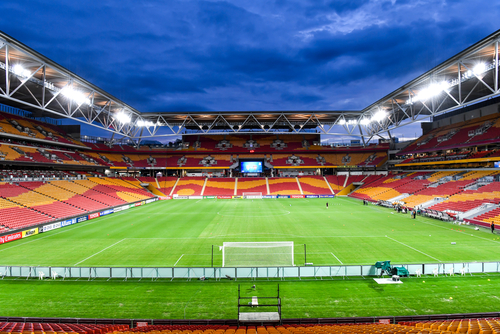
There is something undeniably exciting about Brazil coming to Australia. The five-time World Cup winners will face the Socceroos twice in Queensland from Friday, with Townsville and Brisbane set to host the blockbuster fixtures.

For Australian football, these are the kind of games that should be anticipated, celebrated and capture the public’s attention. But they also raise questions: how much should Australian football pay to bring the world’s biggest nations here, and when does the bill become too big? 

The cost of bringing the big names

Australia has always paid up to bring big names down under. Last week’s NFL game in Melbourne, at a cost of between $10 and 15 million dollars to the Victorian Government, is just the latest example.

It could cost the same amount to bring Brazil to Queensland. A report in The Sydney Morning Herald last year revealed Brazil was reportedly seeking around $7.5 million per match to play in Australia. The fee is in line with other major international events; Western Australia reportedly faced a bill of around $12 million in taxpayer funding for the recent Perth Italian Football Festival.

I’m worried Football Australia won’t get return on investment to make this particular event worthwhile. The enormous fee to bring Brazil to Australia can’t immediately be justified as an investment in our footballing future. Instead, Football Queensland and the state government could have put these funds into grassroots facilities. Part of Football Queensland’s scrapped state headquarters investment plan was to spend $8.5 million to refurbish fields, lights, drains and irrigation at Mappas and Meakin parks. Instead of these plans to invest in the state’s youth players and academies, money has been spent on two international friendlies.

So ahead of the fixtures, the question remains: will these games inspire the future generation, and will participation grow? The NFL match was impossible to ignore: a sold-out MCG and a live audience of 2.1 million on free-to-air, not even including those watching on ESPN and Netflix. Football Australia is not simply buying 90 minutes of football; it is buying the attention that comes with Brazil. So let’s see if they can maximize returns. 

Ticketing Tells a Story

Ticket sales provide insight into the interest in the fixture. Brisbane has sold much quicker than Townsville, but neither have sold out as yet. The fact these games didn’t immediately sell out may be considered surprising as there is a genuine appetite in Australia for elite international football at the moment, evidenced by SBS’ World Cup viewership numbers of 17.1 million.

Brazil is bringing some of its brightest stars: Vinicius Junior, Raphinha, Bruno Guimaraes, Marquinhos and Endrick are among the headline names in their squad. The star power is there. So why haven’t these matches sold out? There’s a chance it comes down to the competition and the visibility of the event.

The viewing problem

The timing of this fixture could raise eyebrows amongst fans. As much as Australia and Brazil will draw huge crowds, both games fall on either side of the AFL Grand Final. The 2024 AFL Grand Final, which involved Queensland’s Brisbane Lions, drew over 4 million viewers on free-to-air. Brisbane, who have won the last two premierships, will feature once again on Grand Final day. Therefore, fans who could’ve attended may instead be making the trip to Melbourne.

Then comes the strangest part: one of the fixtures Australia will play will not even be available on free-to-air television. The Townsville match will be shown free on Network 10 and 10 Streaming, as well as Paramount+. The Brisbane match, however, will be available exclusively on Paramount+. That creates a disconnect. If governments and football administrators are spending millions to bring a global sporting brand to Australia, why should a large section of the Australian public need a subscription to watch the second match?

The Brisbane game is behind a paywall, limiting the national reach of the event. Reach is surely part of the justification for spending big on Brazil, it’s not just that 50,000 people get to sit inside Suncorp Stadium. It is that millions of Australians get exposed to the spectacle and if that audience is restricted, the value of this fixture is limited.

A solution could be to spend the money on advertising the match to the public to try to generate interest across streaming and free-to-air. With less than a week until the first game I don’t believe the advertising has done enough to generate enough interest to justify a $15 million price tag for the two game series. 

The Brazil friendlies will be spectacular. They should attract big crowds, create memories and give the Socceroos an excellent test against one of football’s most recognisable nations. But for the appropriate return, attention must be measured. Does this fixture carry on the Socceroos hype and keep the eyeballs of the general public on our sport? I’m not convinced. However, if these matches bring new fans to football, strengthen the national team and create lasting investment in the sport, the enormous price tag could still be justified. But if they simply produce two nights of football before the attention disappears, then Australian football has paid a premium for a very expensive show.

Most Popular Topics

Editor Picks

Send this to a friend