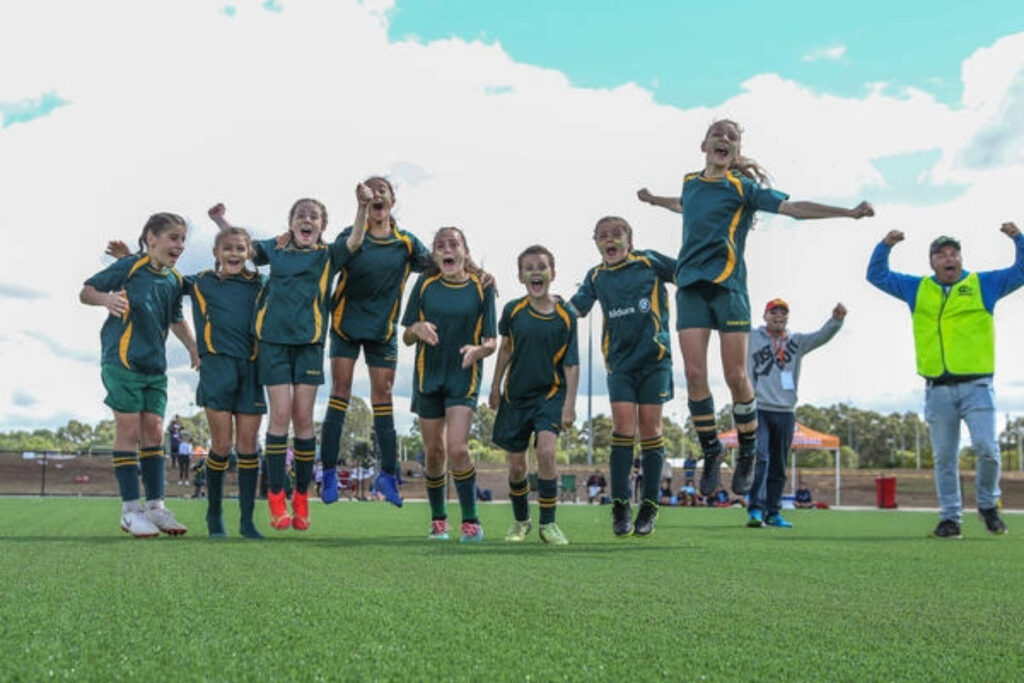


Football NSW present strategic plan for 2023-2026

Football NSW Strategic Plan

In creating a smooth experience for all, Football NSW has set in motion its strategic plan for 2023-2026, with its mission being to lead and support the growth of football across all cultures and communities.

The plan provides a structure to meet the required objectives and key pillars, in pursuit of ambitious goals that include remaining the largest participation sport in the state, evolving the largest team sport for women, as well as attaining 50/50 gender participation for which the co-hosting of the FIFA Women’s World Cup in 2023 that will help to galvanise the sport like nothing before.

The five key pillars, which had community consultation in mind, is growing female football by co-hosting the world next year, supporting community football in achieving 75% retention rate for the members to deliver a positive football experience for all, delivering quality competitions for all participants and supporters, averaging 45% selection for national teams by providing development opportunities and being collaborative, transparent and ambitious in governance and operations of the game.

Football NSW make it their daily priority to stay true to their beliefs of integrity, tenacity, inclusivity and resilience.

Football NSW will implement these strategies through volunteers, LGAs, coaches, players and sponsors and commercial partners to name a few.

Football NSW Chairman, Gilbert Lorquet, said via press release:

“There is a lot to be excited about over the coming years, headlined by next year’s co-hosting of the FIFA Women’s World Cup Australia & New Zealand 2023, as we move forward with Football NSW’s Strategic Plan, we remain committed to working alongside Football Australia towards our shared goals for football within the nation’s largest Member Federation.”

The next steps for Football NSW will be to annually prepare operational plans, performance targets and budgets within this framework for Board review and approval – as well as reporting to members at every AGM and provide regular updates on the progression in executing these policies.

You can view the Strategic Plan here.

Previous ArticleNext Article

More than 220 coaches attend Football South Australia’s second NOVA Youth Club Championship workshop

Football South Australia drew more than 220 coaches to its second NOVA Youth Club Championship Coaches Workshop in late May, underlining the scale of engagement clubs are generating through the state’s restructured youth competition framework.

The online session was facilitated by Football SA Technical Director Michael Cooper, who also serves as Junior Matildas Head Coach. Cooper shared observations from the AFC U17 Women’s Asian Cup and Australia’s qualification for the FIFA U17 Women’s World Cup, giving club-level coaches a window into the demands and standards of elite international football.

The presenter line-up extended that international lens further. Lachlan Tosh and Cristiano Dos Santos spoke to their experiences in national tournament environments, while legendary Australian coach Tom Sermanni addressed the fundamentals of youth coaching. Colin Sanctuary from the University of Newcastle examined coaching language and its direct influence on player learning.

Themes running across the session included the primacy of long-term player development over short-term results, with presenters consistently emphasising technique, ball mastery, individual improvement, and decision-making under pressure. Coaches were encouraged to expose players to varied styles of play, facilitate practice outside organised training, and help young players retain possession longer in match conditions.

Post-session feedback pointed to strong practical value, with coaches singling out clear communication, relationship-building, and age-appropriate feedback as key takeaways.

The workshop series sits within the broader transition from the Youth Premier League to the Club Championship model, which ties coaching participation to championship points for clubs and CPD credits toward individual coaching diplomas. Six workshops are scheduled across the season, with four still to come.

1200 players to descend on Geelong for Football Victoria Country Championships as Regional Football Enters New Era

More than 1,200 junior footballers from across regional Victoria will converge on Geelong this weekend for the 2026 Football Victoria Country Championships, with players representing eight regions competing across the King’s Birthday long weekend at Stead Park and Myers Reserve.

The tournament, which has been running since 1978 and has grown into one of the largest junior football events in the country, takes on additional significance this year. It marks the first Country Championships since Football Victoria announced a restructured regional football model in December 2025, making this edition an early measure of how that new framework translates into competitive outcomes at the representative level.

Sixty-seven teams will compete across Under-11 to Under-16 age groups for both boys and girls, with finals day scheduled for Monday. All fixtures and results will be available through the DRIBL app.

More than silverware

FV Regional Development Manager Lauren Stevens said the tournament represented something beyond the competitive results it produces.

“The Country Championships are an exciting opportunity for players from across regional Victoria to come together, represent their region and create lasting memories both on and off the pitch,” Stevens said. “This tournament has a rich history and continues to play an important role in bringing regional football communities together while providing players with the chance to experience a high-level representative environment and talent identification opportunity.”

That dual function is central to what makes the Country Championships structurally significant. For many players travelling to Geelong this weekend, a regional representative tournament is the highest level of football they have experienced. For some, it will be the environment in which they first come to the attention of Football Victoria’s technical staff and pathway programs.

The talent identification dimension carries particular weight at a moment when Football Victoria’s participation numbers are at record levels and the pipeline from community football to elite competition has never been more closely scrutinised. The 2025 Annual Report documented a 14 percent overall participation increase, with junior football among the fastest-growing segments. Tournaments like the Country Championships are where that growth begins to translate into representative opportunity for players who live outside metropolitan Melbourne.

Regional football in transition

The timing of this year’s Championships against the backdrop of Football Victoria’s regional restructure adds a layer of context that will be watched closely by administrators and clubs. The December 2025 announcement of the new regional model represented the most significant structural change to regional football governance in the state in some years, and the process of transitioning Life Members from regional associations into the Football Victoria honour roll at last month’s AGM reflected the scale of that change.

How the eight regions perform this weekend will offer an early indication of whether the restructured model is serving regional communities effectively.

The Corrie Koppen Fair Play Award, introduced last year to celebrate the life and legacy of the late Cornelius Koppen, adds a dimension to the competition that sits alongside the on-field results. The award is given to the region judged to have played and conducted itself in the spirit of the game, a recognition that how communities behave at a junior tournament is as meaningful as what they win.

Most Popular Topics

Editor Picks

Send this to a friend