
Football Australia release collaborative One Football Strategy with Member Federations

Football Australia

Following several months of collaborative development alongside the nine member federations, Football Australia has announced the release of their One Football Strategy document.

Having procured the strategy through a number of in-person working group meetings around the country over the past 18 months, this document serves as both a commitment from Football Australia and each Member Federation around the direction for the game, and as an expression of a common desire to work collectively to take Australian football to new heights by 2026.

A first of its kind for Australian football, the One Football Strategy establishes a framework with targets for Australian football that each Member Federation will align and contribute to.

It acknowledges the diversity of football in Australia, and the different local contexts that can be seen across the continent, by providing Member Federations the opportunity to localise responses and approaches while still working towards a consistent vision for the future of the game.

The Strategy opens with 12 different targets for Australian football by 2026, to be achieved by FA working together with Member Federations and the broader Australian football community.

These targets will be achieved via work through four distinct pillars, representing different ways that members of the Australian football family engage with the game:

  • Participants and Clubs
  • Elite Teams & Pathways
  • Fans
  • Unifying Football

Each of the four pillars includes a specific ambition for the future of Australian football, as well as several focus areas, initiatives and results that will see football move closer to realising that ambition.

The Pillars are underpinned by three enablers:

  • Reshape the game for Women & Girls
  • Leverage the 2023 FIFA Women’s World Cup
  • Align digital and data strategies

According to Football Australia’s statement, these enablers will guide thinking and contribute to the success of all four pillars.

Over the past 20 years, football has been the fastest growing sport in Australia, and it remains the largest club-based participation sport in the country today.

This scale provides opportunities for the game to come together collaboratively, using a fifth consecutive FIFA World Cup qualification for the Subway Socceroos and a home 2023 FIFA Women’s World Cup for the CommBank Matildas to kick off an exciting period for Australian football.

The Member Federations, in various stages of the strategic planning cycle, will develop or release strategic plans that are inspired by this collaboratively developed strategy for the game.

Football Australia envision the document’s release as a critical step to progressing Principle VII of the XI Principles, ensuring that the game moves towards a more connected and united Australian football family – working together to deliver the best possible experience for all those who live and love football.

The FA One Football Strategy 2022 – 2026 can be read here.
Previous ArticleNext Article

SBS expands Australian Championship broadcast coverage for 2026

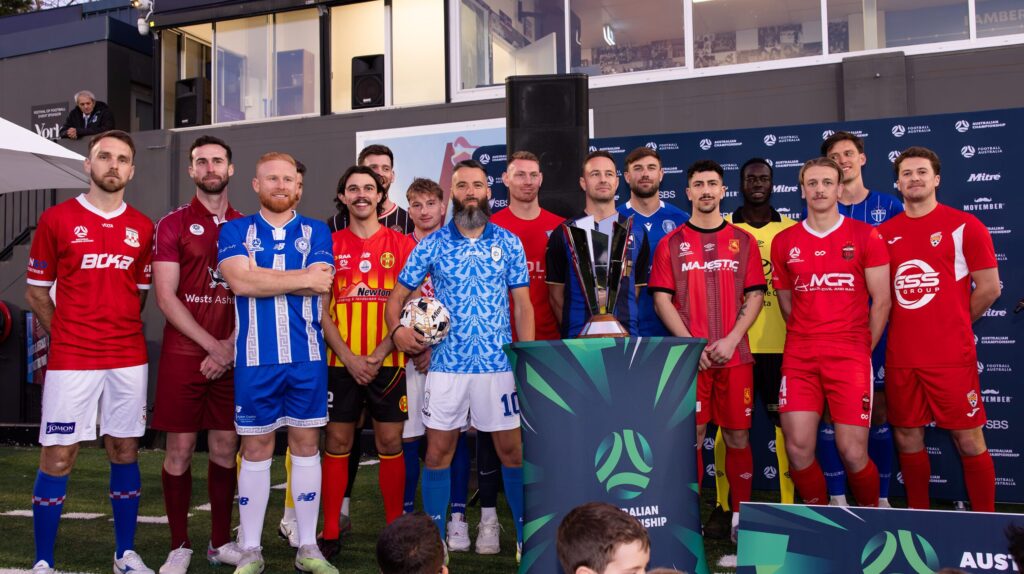
The Australian Championship will enter its second season with an expanded broadcast partnership between Football Australia and SBS. The 2026 competition will feature two live SBS broadcasts in every round, marking an increase from the tournament’s debut season.

Thursday night football will form a key part of the new broadcast schedule. The opening match will see Preston Lions face Wollongong Wolves on October 15th, with the game broadcast live on SBS2 and SBS On Demand. Saturday football will also remain part of the free-to-air schedule; first up, Sutherland Sharks’ clash with South Melbourne on October 17th will be shown live on SBS and SBS On Demand.

The expanded agreement gives the competition a greater presence across SBS’s linear channels while retaining its full streaming coverage, with every match across the 2026 Australian Championship available live on SBS On Demand. The platform also provides full replays and highlights for viewers to access at their discretion.

In addition to SBS’ coverage, Football Australia will also stream the competition via YouTube.

The Australian Championship consists of a six-round group stage, finals beginning at quarter-finals from November 26, and a Grand Final scheduled currently between December 10-12.

It features 16 clubs from seven states and territories. The broadcast schedule places several historic fixtures in front of a national audience: South Melbourne will meet Sydney United 58 in a repeat of the 1999 NSL Grand Final, and Sydney Olympic and Marconi Stallions will also renew a rivalry that includes NSL Grand Final meetings in 1989 and 1990.

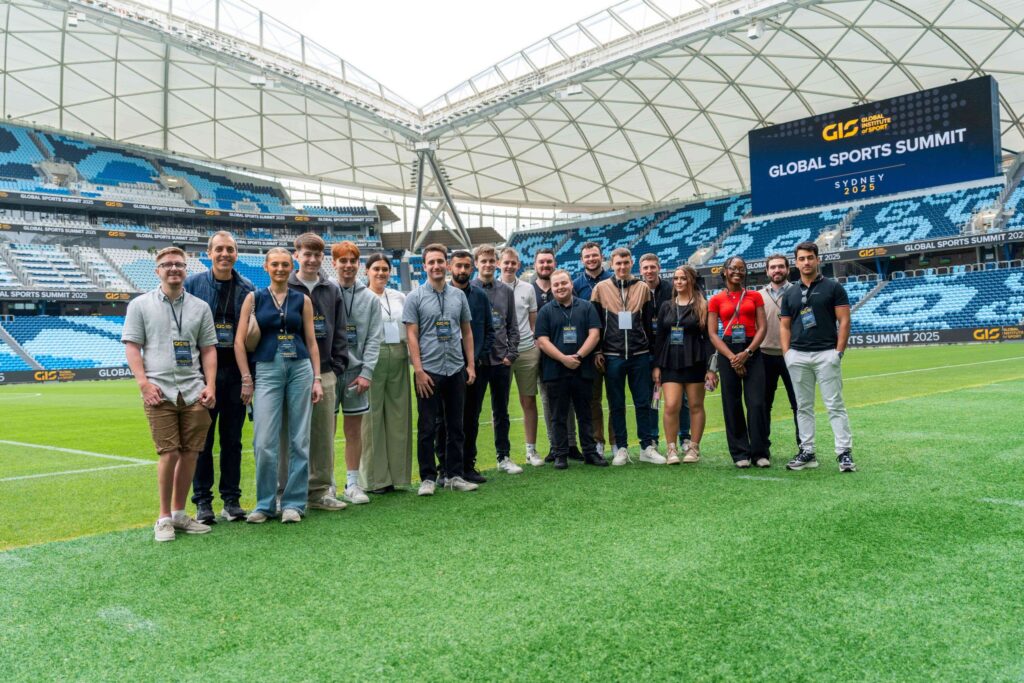
GIS Sydney continues to connect students with Australia’s sports industry

Following the launch of its Sydney campus in 2025, the Global Institute of Sport (GIS) is continuing to establish itself in the nation’s sports industry. A leading provider of degrees and executive education in sport, GIS provides students the chance to study at two of Australia’s biggest sporting venues: Allianz Stadium and the Sydney Cricket Ground (SCG).

Programs such as Sports Analytics and International Sports Business are delivered in collaboration with the University of Newcastle, and feature the chance for students to gain exclusive access to the sports industry.

More than 50 guest speakers have shared their experience with students studying at GIS Sydney, representing organisations like FIFA, Red Bull, Cricket Australia, and the AFL. While learning about the regional and national sports industry in the classroom, students have also had the chance to gain an international perspective through GIS’ signature Global Sports Summits, which have given Sydney students access to iconic sporting venues around the world from London to Miami.

Outside of the iconic venues students can call their classrooms, the organisation prioritises the real, industry placements needed to put theory into practice by providing each student with 140 hours of relevant work experience throughout their studies. Included in this are several sporting organisations who are keen to welcome GIS students on board, including the Professional Football Scouts Association (PFSA), Football Coaches Australia, and Basketball NSW.

GIS also has a partnership with popular network and app Yakka Sport to connect students with paid employment opportunities while they study.

Behind these advancements at the GIS Sydney campus is an Industry Advisory Board which features a host of experienced figures from the world of sport. Included in the Asia-Pacific branch is Chair James Rosengarten, GM of the Melbourne Renegades; Kevin Jang, Managing Director of CAA Stellar Korea; and Brad Lloyd, GM of the Carlton Football Club.

Since launching, GIS’ Sydney campus has ultimately combined its locations and industry connections to provide the next generation of sports professionals with the knowledge, network, and confidence to tackle the rapidly evolving sports industry.

Most Popular Topics

Editor Picks

Send this to a friend