Soccerscene the only online publication dedicated to the Australian and international football industry. It serves as a practical guide for those involved in the business of running a football club and bringing readers up-to-date research and development across all football matters providing insights, discussion and information related to topics that matter.
Football Victoria campaign for upgrade to Baranduda Fields
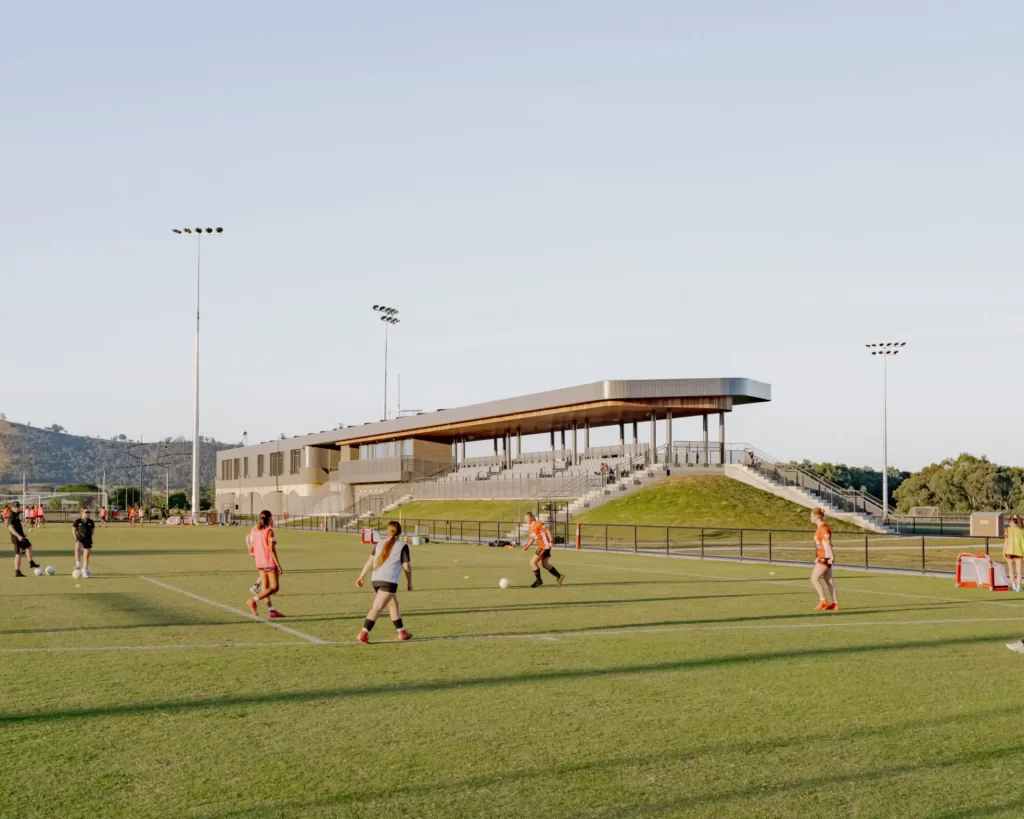
Football Victoria is partnering with the local community of Wodonga in advocating for a significant expansion of Baranduda Fields to help accommodate the rapid growth of football participation in the region.
Wodonga, a growing regional city south of the Victoria/New South Wales border, has seen involvement in football increase by over 130% in just six years.
A massive part of that is the growth of women’s & girl’s football, with participation increasing by almost 300% in the last six years alone.
With such a dramatic rise, the current facilities are not able to meet the demand.
Alongside the local community, Football Victoria is campaigning for a synthetic pitch and lighting infrastructure to be provided for Baranduda Fields. This would provide players the chance to play year round, including at times when the weather may preclude use of traditional pitches.
It would not only help Murray United FC, who play and train there, but create a regional football hub capable of supporting the increase in activity within the local area.
Football Victoria’s Head of Government Relations & Facilities, Lachlan Cole, said in a press release, ‘The growth of football across this part of Victoria has been extraordinary, and the numbers tell only part of the story.’
‘Football Victoria has a strategic commitment to regional football, and Baranduda Fields gives us the opportunity to think beyond one club for the benefit of a whole region,’ he said.
Whilst the demand for football continues to grow across the country, areas like Wodonga are feeling the exponential rise more than others. Particularly highlighted by the dramatic increase in female participation, the need for upgraded accommodation is no longer a future consideration.
Speaking to Football Victoria, Murray United FC Chairman Pedro Afonso said, ‘A synthetic pitch and lighting would unlock much-needed access to the regions first synthetic football pitch, which provides major benefits to all year round participation and provides access in all weather conditions.’
‘More space and capacity gives Murray United and the sport in the region ability to keep growing. The demand is here – we need the infrastructure to match it.’
Whilst the games grows, the facilities need to be available to sustain it. Football Victoria’s pledge to help maintain that is exactly what the next generation requires.
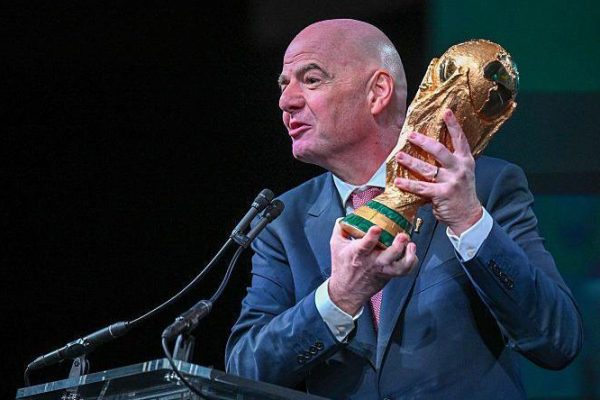
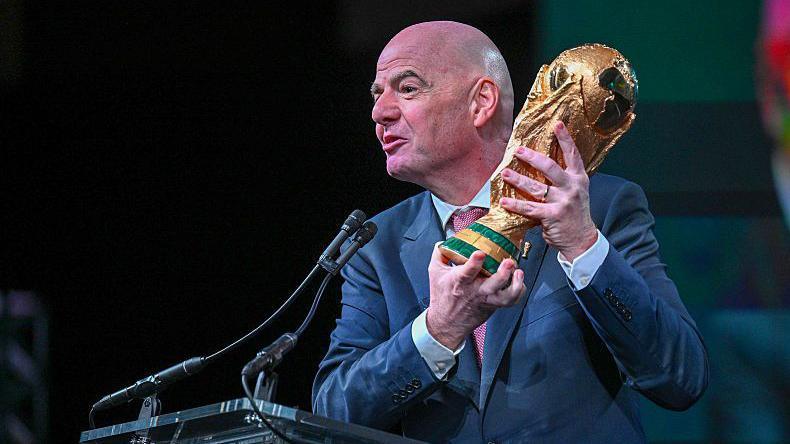
Last Thursday (Nov 12), a New York City judge denied requests made by FIFA subsidiaries to block a move by UEFA, who filed court documents in August pursuing information relating to FIFA President Gianni Infantino’s failed World Cup private investor plan.
Nine days after the 2026 World Cup, FIFA and Infantino officially put forward the FIFA Forward Enterprise proposal (FFE) which shook the football world to its core.
The plan was to sell a minority stake (roughly 20%) in the governing body’s competitions to private investors, but was cancelled in the following days due to intense backlash and boycott threats from UEFA and CONMEBOL, and varying levels of distaste from other confederations.
Lawyers representing UEFA are seeking evidence from Joshua Kushner’s New York investment firm Thrive and FIFA advisors JP Morgan surrounding the FIFA backed investment plan.
In an eight-page document written by the judge, they said the attempted block by two FIFA subsidiaries failed because they “do not have a direct, substantial and legal protectable interest” in the proceedings.
‘Nothing in this record indicates that the U.S. FIFA parties, or even FIFA itself, will be parties in the contemplated criminal proceedings,’ the ruling stated.
After the immense fallout between FIFA and UEFA, Infantino said the project had ‘created divisions’ and become ‘no longer in the interest’ of its original objective.
The FIFA President had offered its 211 member associations $40 million USD ($59 million AUD) if they supported the proposal which would see all FIFA competitions privately invested in, including the men’s and women’s World Cups.
The investment would have seen the younger brother of U.S. President Donald Trump’s son-in-law, Jared Kushner, be the financial anchor of the venture.
The fallout of FFE was undeniably the biggest crisis Infantino has faced during his near-eleven-year stint as FIFA president, although he remains the favourite to win reelection for another term in March.
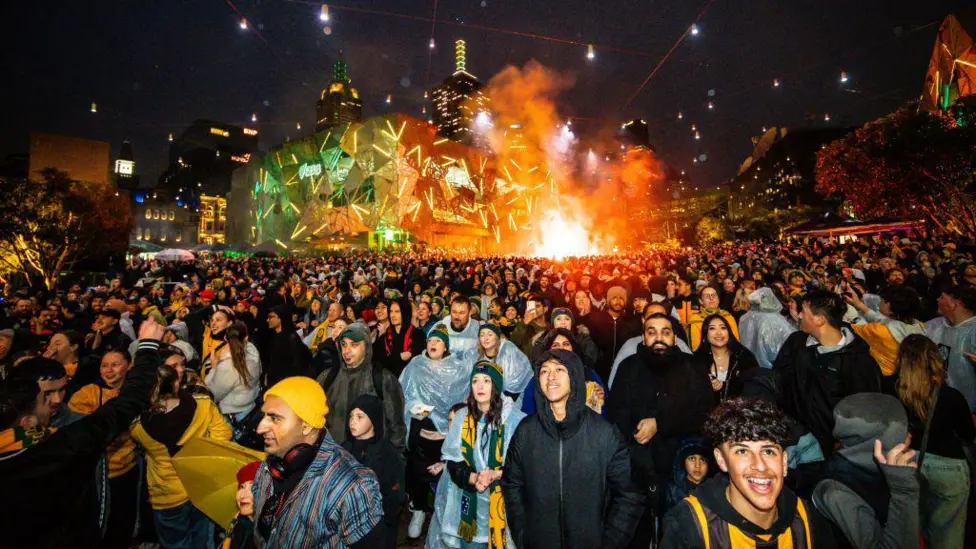
Melbourne's Federation Square. Credit BBC Sport/GETTY IMAGES
Australian football is continuing to grow, with record attendances and TV viewership up year-on-year due to the increasing value and demand of games across the country.
What started as a small ember stoked by a cultural heritage brought from Europe, has borne a league invested in by foreign states and major global equity firms, and a country that consistently supports its national teams at major tournaments globally; the fire is truly alive. But, can it be sustained and given even more life?
Ann-Marie Balliana, secretary of Illawarra club Fairy Meadow United, spoke with Soccerscene. ‘The biggest challenge for football in this country is how to take advantage of huge grassroots numbers and translate this into support for other levels of the game,’ said Balliana, formerly a long-term CEO of Football South Coast.
‘Instead of capitalising on this huge asset of participation numbers, it appears football is unfortunately bound by limited investment and various layers of internal boundaries.
‘There are lots of opportunities for football to rise to the next level, and significant work required to get there.’
The World Cup proves football belongs in Australia:
The success of the Socceroos in reaching the last six consecutive men’s World Cups has greatly boosted the domestic interest in football, with the 2026 World Cup highlighting how far the team has come, and how many people are behind them to succeed. The SBS and SBS On Demand coverage of the tournament reached over 18 million Australians (64% of the population) and over 209 million hours were consumed via these sites. Meanwhile, over 10,000 dedicated fans paid up to AUD $25,000 to watch their country participate live in North America.
I took in the tournament from Melbourne, and the energy among the city was undeniable. Bubbling with excitement were people conversing who usually wouldn’t, and there lay an air of calm between the 90 minutes of euphoric nation-wide highs.
Federation Square was at full capacity (7,500) for many of the group games and the knockout match against Egypt- despite the 4.00am kick-off time.
Alongside that, AAMI Park held 6,000 more spectators in the early hours of the day for the knockout game. Despite the time zone killing any convenience, the fans diligently showed up. The post-World Cup glow also took effect: Queensland selling out both recent friendlies against Brazil.
World Cup 2026 TV ratings
Match
Overall reach
Average audience viewership
Key detail
Final: Spain vs France
5.26m (peak)
2.69m
Most watched World Cup match in SBS history
Australia vs Paraguay
4.84m
3.09m
Highest viewed fixture for Socceroos
Australia vs Turkey
4.78m
3.04m
Top performing early fixture
The rise of the domestic game persists:
Domestically too, figures show Australian football is continuing to grow. October’s 2026 Australia Cup final betweenSouth Melbourne and Melbourne Victory was not only a match that will be remembered by fans for its entertainment and underdog storyline, but for investors and governing bodies that can clearly see the growing market for football in this country. AAMI Park had its record attendance broken as 29,911 spectators packed in to watch the game. Furthermore, the TV viewership of the Cup final had a 56% increase from the previous year. The demand for football is growing significantly.
A-League Stats and Records 2025/26 season:
3 sold out finals games- 22% increase on attendance last season.
27% increase in digital viewership on Paramount+ and 17% on 10 Streaming.
For the last four seasons, over 1.3 million fans have attended games throughout the campaign
TV viewership exceeded 11 million views.
Social media reached over 7 million people (10% increase).
Newcastle Jets, Adelaide United and Perth Glory all broke their previous attendance records.
The Cup final saw a non A-League club win the trophy for the first time in competition history.
South Melbourne fans. Credit SMFC
‘It also showed that NPL clubs such as South Melbourne have a fantastic support base, and this shows the potential of football to really capitalise on the community support that does exist for clubs,’ said Balliana.
‘The costs of running an A-League club are clearly the biggest issue in growing our national competition, and without significant investment through broadcast, government and other revenue streams, there are limited opportunities to take advantage of huge grassroots numbers.’
England is widely regarded as having the best domestic competitions on the planet, largely due to its impact on communities right across the country. However, its most attractive quality is competitiveness, and this is best showcased in the FA Cup. Teams across all divisions have the chance to play against each other, which occasionally sees semi-professional ‘non-league’ sides the opportunity to play against a giant, such as Manchester United or Liverpool.
Often referred to as the ‘magic’ of the cup, there is a belief that any team can win on any given day – even if their odds of succeeding are the football equivalent of what David had in beating Goliath.
The magic is in the upsets, and that competitiveness is what ties the whole football pyramid together. For the game in Australia to grow, and to sustain itself, matches must be competitive from the first minute to the last, from the A-Leagues to the grassroots pitches all across the country.
The importance of grassroots football:
To understand football- from financial investments, market growth, popularity or simply emotional attachment – you have to start at the bottom of the pyramid. The base of football in every country is the grassroots game. It lays the foundation, and both the future of the A-League and the Soceroos & Matildas is entirely in the hands of the grassroots level.
Globally, amateur matches are played everyday. Those clubs have a youth system, in which the talent pool is small, and so more established clubs recruit players from that pool. This process continues all the way to the world’s elite. Domestic talent comes from grassroots football, and without domestic talent, the game is nothing. Once a fire is lit, it needs a constant fuel source to keep it alive. If the wood is wet or rotting, the fire will slowly dissipate into ash. To keep that from happening, the fuel needs to be re-supplied so it steadily grows. Neglecting grassroots football is the quickest way for the game to decline and it is why it is imperative that it is well-funded.
‘Grassroots football is where children start their journey in football. It’s where players fall in love with the game and develop a passion for playing,’ said Balliana. ‘This not only applies to players, but also administrators, coaches and referees. Grassroots football creates opportunities for all roles across football providing pathways across all levels of the game.’
Recently, Football NSW pledged over AUD $200,000 to three amateur clubs. The funding will allow them to upgrade facilities, create more inclusive and accessible environments and improve the fans match day experience.
Additionally, since 2020 the Dickinson Foundation set up the Active Kids Grant and has provided over AUD $5.5 million worth of equipment and uniform to support over 1000 community clubs. In 2026, 40 football clubs were supported nationwide.
Commitment to grassroots is necessary, nation-wide. With it, clubs can grow and give players the opportunity to improve and be noticed by more established teams. Investing in grassroots football is investing in the future.
Finance and infrastructure:
As the game has grown throughout the pyramid, so too has investment in it. Globally speaking, football is an industry that has boomed in the digital age, and grown beyond what was previously conceived as possible. Some investors were early; others are riding the wave hoping it never breaks, but inevitably it will. Everything has to peak, yet that doesn’t mean all conclusions are negative Whatever the fate of the financial wave, neither a tsunami nor shallow brake will impact people’s true love of the game. The game may take many forms, but the fans will be there for generations to come.
In 2021, US private equity firm Silver Lake acquired a 33.3% minority stake in the A-League for AUD 140 million that valued the whole organisation at AUD 425 million. The finances of the APL have been an issue in the years since, and what becomes of their relationship with Silver Lake remains to be seen. In positive news, Network 10 & Paramount+ recently renewed their broadcast deal worth AUD 100million for an additional two years, so interest is there. Domestically, football has plenty of space to grow.
‘There is always a direct relationship between World Cup success and increased participation given the exposure of football is heightened and more people want to play,’ Balliana continued. ‘However, this also comes with challenges as infrastructure is clearly not to the level it needs to be to support the size and growth of football across our region and the country.’
As audiences grow – particularly when it comes to our national teams – the fire will continue to need fuel, and that can only be sourced organically from the ground up. Through the continued development of grassroots football, football can still grow to be the dominant sport in this country.