
How clubs can manage their finances

The ability for a soccer club to control their finances is make or break for the long-term success both on and off the pitch.

For local level teams, it can make all the difference to have an adequate system in place.

Club staff have to think on a day-to-day basis about ways to improve their finances and in turn grow their income. It’s something that needs consistent maintenance, otherwise it can all get out of hand.

That’s why organisation is the ultimate key to success. The main thing to do is review finances at the end of each month. This is assessing all incomings and outgoings and checking if these are at typical levels.

Getting the club to have an account on its own will prevent errors or mix ups, which could happen if it’s a joint account with a board member.

When the financial year comes to an end, annual reports must be prepared by an accountant or checked by someone with relevant expertise.

Another aspect to the financial process is budgeting, both for short term and long term. Budgeting should take place on both a short term and long term basis. The short term budget would outline both daily, monthly and quarterly outgoing and incoming funds, while the long term budget shows funding for 3-5 years.

It’s important to keep it realistic, ensuring a club knows what they expect to spend. Being able to stay under budget means it can be revised for the following year. When formulating the budget, what was spent last year versus income will be taken into consideration. It will highlight where spending for supplies may need to be cut, or even negotiating for a better deal.

The club treasurer is normally the one in charge of maintaining the budget, but all senior figures at the club can look over it.

Gaining as much income as possible will point a club forward in the right direction. There are many factors which can contribute to income growth, with clubs encouraged to review the following areas to maximise their profit:

  • Membership and subscription fees.
  • Finding and sticking with key sponsors.
  • Fundraisers and events.
  • Commercial activities.
  • Acquiring grant funding.
Previous ArticleNext Article

Football Has the Audience. Does It Have the Commercial Strategy?

Soccerscene has launched Survey 4: Commercial Confidence in Football, calling on clubs, sponsors, governing bodies, commercial leaders and football industry professionals to assess whether the game is making the most of its enormous commercial potential.

Football has the audience, participation base and community reach to be one of Australia’s most powerful commercial platforms. But does the industry have the commercial strategy, professionalism and infrastructure required to turn that potential into sustainable growth?

That is the question at the centre of Soccerscene’s latest industry research.

The survey examines how attractive grassroots football is to potential commercial partners, what industry professionals believe is limiting football’s commercial potential, and whether clubs are presenting themselves professionally enough to sponsors.

It also explores what sponsors value most when engaging with football – from community reach and participation scale to brand alignment, values and purpose – as well as whether improved facilities could directly contribute to stronger sponsorship outcomes.

Is football fully capitalising on its commercial opportunity?

Football continues to provide brands with access to highly engaged communities across grassroots, community and elite environments. Yet the commercial landscape remains fragmented, with clubs operating with vastly different levels of resources, capability, governance, media infrastructure and commercial expertise.

Soccerscene’s survey is designed to capture the industry’s perspective on where the opportunities exist – and where football may be leaving commercial value on the table.

The research will look specifically at four key areas:

  • Commercial attractiveness – How attractive is grassroots football as a commercial partnership?
  • Commercial barriers – What is holding football back from reaching its full commercial potential?
  • Club professionalism – Are clubs presenting themselves effectively and professionally to sponsors?
  • Sponsor value – What are sponsors really looking for when they invest in football?

The survey also asks whether better facilities would have a direct impact on sponsorship outcomes, highlighting the potential relationship between infrastructure, commercial presentation and investment.

Have your say

Soccerscene is encouraging football clubs, sponsors, commercial professionals, governing bodies, administrators, media professionals and industry stakeholders to participate.

The findings will contribute to Soccerscene’s ongoing program of industry research, designed to provide a clearer picture of the challenges and opportunities facing football and the organisations operating within it.

Take the Survey: Commercial Confidence in Football

Complete the Commercial Confidence in Football Survey here

The survey will close on 30 August 2026 at midnight, with responses received before the deadline included in the final analysis.

Football has the audience. The question is whether it has the commercial strategy to match.

Football West runs Indigenous pilot program during NAIDOC Week’s 50th anniversary

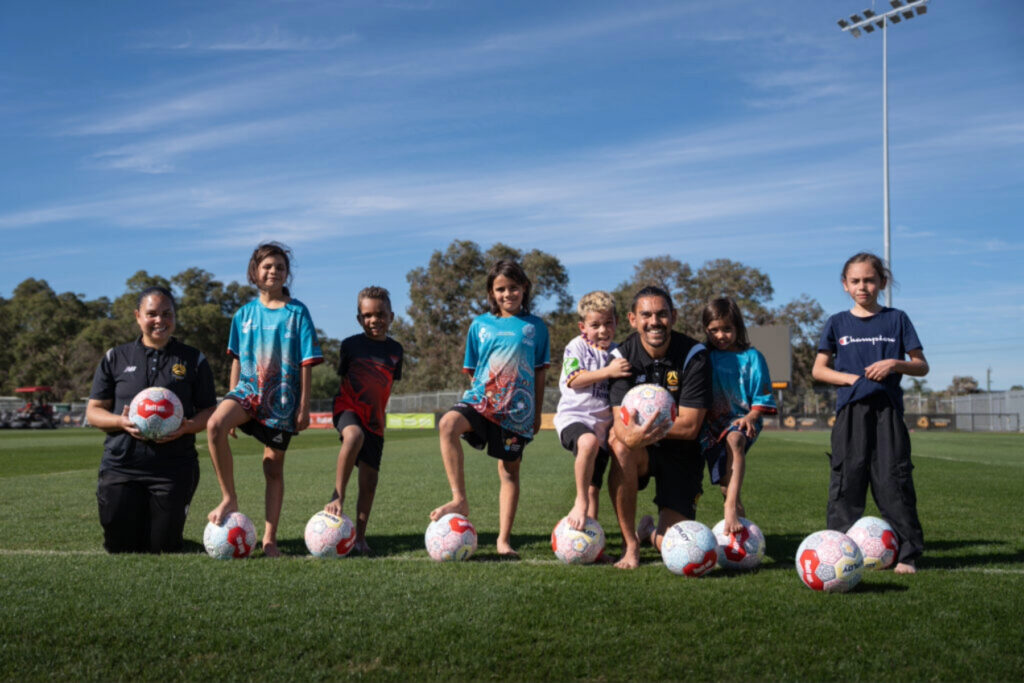
Football West ran a pilot program for Indigenous children at the Sam Kerr Football Centre during NAIDOC Week’s 50th anniversary. Former Socceroo David Williams delivered the session.

This year’s national NAIDOC theme, “50 Years of Deadly,” marks five decades since the movement began. It honours the Elders, artists and communities who built it.

“Having these young indigenous kids here at the Sam Kerr Football Centre was great to see,” Williams said. “The feeling they got running around the same pitch the Socceroos and Matildas have trained on was special for them and me.”

A player turned administrator

Williams retired from professional football in November 2025 after a career-ending ACL injury. As a teenager he trained with Club Brugge and Liverpool, and coach Miron Bleiberg once described him as the “best Australian prospect since Harry Kewell.”

He went on to become the first Indigenous player to represent Melbourne City, scored in the UEFA Cup against Eintracht Frankfurt, and won the Indian Super League with ATK.

Since retiring, Williams has moved into administration at Football West. He also sits on the Indigenous Football Australia Council, which oversees the grassroots initiative John Moriarty Football.

A name with its own history

Football Australia named Williams head coach of the Charles Perkins XI last year, the governing body’s national Indigenous youth team. Football Australia renamed the side in 2025 in honour of Dr Charles Perkins AO, following endorsement from the Perkins family and the National Indigenous Advisory Group.

Perkins, an Arrernte and Kalkadoon man, played for Adelaide Croatia and Pan Hellenic in the 1950s. He went on to become the first Aboriginal Australian to graduate from university and a leader of the 1965 Freedom Rides.

Football Australia has described the renamed team as reflecting a commitment to embedding cultural identity and leadership within its high-performance pathway for Aboriginal and Torres Strait Islander youth.

What happens next

“After living out my dream as a professional player, to now being able to offer experiences like this and hopefully inspire the next generation of young Indigenous footballers is very rewarding,” Williams said. “There is also a lot of talent that we can tap into.”

He said running the session during NAIDOC Week let Football West mark two things at once. “Creating a fun session for these kids during NAIDOC Week meant we could celebrate culture and sport in one go,” he said.

Williams wants the session to become a regular fixture rather than a single event. “Going forward, I would love to put on more of these programs throughout the year and get more indigenous youngsters playing football,” he said.

Football West has not yet confirmed funding or a schedule for further sessions.

Most Popular Topics

Editor Picks

Send this to a friend