
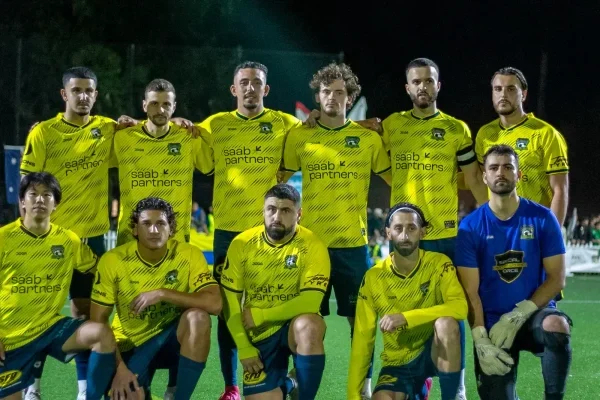



Barnsley FC’s under-17s pathway delivers six Zone League debuts in 2026

Barnsley FC has integrated six of its under-17s players into first and reserve grade football during the 2026 Zone League season, the Hunter Valley club has confirmed.

The elevations include a debut in goal at first grade level and a goal scored by another player promoted to third grade, as the club continues to formalise the pathway connecting its junior and senior programs across the 2026 season.

Team Operations Coordinator Josh Boote said the movement of players between grades had been a deliberate focus through the season.

“We have had six boys from the under-17s come up and play Zone League, with one making his debut in goals in first grade,” Boote said.

Barnsley FC head coach Jacob Avellis said the under-17s squad had trained and competed alongside senior sides throughout 2026.

“The under-17s have been a part of our season all season. We support them, they support us,” Avellis said.

Zone League is the third tier of competition within Northern NSW Football, administered jointly by Newcastle Football, Macquarie Football and Hunter Valley Football, the three sub-federations covering the region. The competition spans three divisions and around 35 clubs across more than 10 local government areas.

Clubs can be promoted from Zone League into Northern League One, the tier above, while individual players who progress through zone competition remain eligible for representative selection at state level.

Midfielder Oliver Cousin was handed the reserve grade captain’s armband late in a recent match, a decision the club attributed to his consistency and development through the season. Barnsley FC described the appointment as an example of the club’s junior-to-senior structure in practice.

Avellis said the club’s junior programs continued to depend on volunteer coaches and administrators to function alongside its representative pathway.

“They are all keen to get up in Zone League and be a part of the squad. The potential within those teams is unreal,” Avellis said.

Barnsley FC positioned the approach as part of a broader aim to retain local talent as players progress through age groups, a persistent challenge for clubs operating across the Hunter region’s geographic spread.

The club said its focus for the remainder of the season and into 2027 would be on formalising the pathway further, including clearer criteria for movement between grades and continued integration of junior training with senior programs.

Part of a wider strategic push

Northern NSW Football oversees development across the Hunter, Central Coast, Mid North Coast and New England regions, with Zone League forming part of a broader structure that includes representative and state pathways feeding into national systems.

The club-level movement aligns with a priority set out in NNSWF’s 2024 to 2026 Strategic Plan, which includes Talent Development for All as one of four core pillars alongside participation, facilities and governance.

NNSWF has previously stated the plan has driven measurable growth in registrations and competition strength across the region, including in women’s and girls’ football, since it was introduced.

A new strategic plan covering 2027 to 2029 is in development, with NNSWF engaging Sports Advisory Partners Australia to lead consultation with clubs, zones, volunteers and staff across the coming months.

Barnsley FC positioned its own pathway work at under-17s level as consistent with that broader direction, with junior and senior programs run under a single club structure rather than managed as separate entities.

The club’s first and reserve grade Zone League sides are scheduled to continue through the competition’s regular season before finals, with the under-17s squad remaining integrated into senior training in the interim.
Previous ArticleNext Article

Arncliffe Aurora’s Riverine Park investment creates a platform for growth

Arncliffe Aurora Football Club has started a new chapter with the launch of Riverine Park, creating a larger platform for football, community engagement and long-term growth in Sydney’s St George region. More than 2,500 people attended the community opening on 8 August, marking the club’s first matches at its new home and showcasing a significant upgrade in its operating capacity.

Riverine Park provides two full-size natural turf football fields, modern player and community amenities, and a new clubhouse. The additional capacity responds to strong growth in Arncliffe Aurora’s football programs, particularly at junior level. The club has also highlighted a $2.5 million investment in facility upgrades. Together with its existing Arncliffe Park base, Riverine Park gives Aurora two homes and a stronger physical platform for its football operations.

More capacity allows the club to accommodate more teams, players and programs, while updated facilities can support stronger member retention and recruitment. They create more opportunities for coaching, development programs, events and community activities. The new site can also strengthen the club’s commercial proposition; a modern facility gives sponsors greater visibility and provides more opportunities to activate partnerships around football and community events. It can also help the club build relationships with schools, community organisations and football bodies. That matters as grassroots clubs increasingly operate as community hubs rather than simply sporting organisations.

Riverine Park also creates opportunities for the wider football ecosystem. Football St George has identified the facility as a platform to grow participation and provide opportunities for players of different ages, abilities and backgrounds. Bayside Council’s project includes upgraded change rooms, toilets, canteen facilities, lighting, seating and solar panels, adding further functionality to the precinct.

For Arncliffe Aurora, the investment is therefore about more than adding fields. It creates infrastructure that can support participation, player development, community programs and commercial activity over the long term. The challenge now shifts from construction to utilisation. The club must maximise the new capacity, maintain the assets and convert greater participation into a sustainable operating model to benefit the community long-term.

Has football become too expensive for its own supporters?

Football has never been more valuable.

Broadcast rights continue to generate billions of dollars, commercial partnerships are growing in scale, and clubs are investing heavily in new stadiums, technology and fan experiences. On the surface, the business of football appears to be in excellent health.

But there is a question worth asking.

As clubs continue searching for new revenue streams, are they making it harder for the very people who built the game to remain part of it?

The Rising Cost of Being a Football Fan

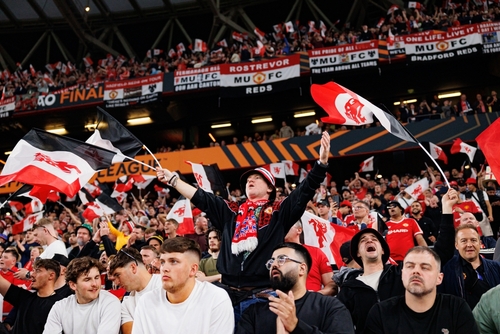
Over the past decade, supporting a football club has become increasingly expensive. Ticket prices have risen, particularly at Europe’s biggest clubs; for example, Manchester United have recently increased ticket prices for a fourth consecutive year.

The debate reached a global audience during the 2026 FIFA World Cup. Ticket prices prompted widespread criticism from supporter groups, with concerns over dynamic pricing and the overall cost of attending matches.

For many travelling fans, the cost extended well beyond admission, with flights, accommodation and local transport adding to an already significant financial commitment.

Even national team kits surged in price: Nike’s replica kits for nations such as England, France and Brazil retailed for €110 ($178 AUD), while the official match versions blew out as far as €110 ($260 AUD)

FIFA defended its adoption of the United States’ dynamic pricing model, arguing low prices would lead to inflated secondary market prices, which meant less money going back into football.

Yet the backlash highlighted a growing tension between maximising commercial returns and preserving accessibility for the game’s loyal supporters. Football Supporters Europe released a statement following the release of tickets, describing the prices as a “monumental betrayal to the tradition of the World Cup.”

None of these decisions exist in isolation.

Football clubs face rising operating costs, increasing player wages and growing expectations around facilities, technology and supporter engagement.

Stadium redevelopments, academy investment and player recruitment all require significant financial investment. Finding new sources of revenue has become a commercial necessity rather than a luxury.

Football Clubs Are Becoming Entertainment Businesses

Modern football clubs are no longer operating solely as sporting organisations. Many have evolved into entertainment businesses, with stadiums hosting concerts, corporate events, hospitality experiences and conferences alongside football matches.

From Tottenham Hotspur Stadium to Real Madrid’s redeveloped Santiago Bernabéu, clubs are investing in assets designed to generate income every day of the year, not just on matchday. 

Since moving to Tottenham Hotspur Stadium, matchday revenue has more than doubled over the last ten years and commercial revenue has nearly tripled during that same period

That strategy makes practical business sense.

The concern is whether supporters are gradually becoming customers first and fans second.

Loyalty Isn’t Transactional

Sport has always been different from other forms of entertainment because loyalty is rarely transactional. Supporters do not simply choose another club if prices rise or performances decline.

Many inherit their club through generations, travelling thousands of kilometres and investing countless hours because of an emotional connection that cannot be measured on a balance sheet.

That relationship is one of football’s greatest commercial strengths, but it also creates a responsibility.

Every pricing decision, whether it involves tickets, memberships or merchandise, should consider not only the revenue it generates today but the supporters it may exclude tomorrow.

The Cost of Watching Football

The cost of supporting a club doesn’t end once the final whistle blows. For many supporters, following football now also means paying for access to the game itself.

In Australia, broadcast rights are spread across multiple platforms, meaning fans who want to watch the A-League, Premier League, UEFA competitions and other major European leagues need several subscriptions. 

Individually, each service may represent reasonable value, but collectively they have increased the cost of following football throughout an entire season.

Broadcast Deals Come With Benefits

There is, however, another side to the argument. Broadcast rights are one of football’s biggest revenue streams, funding everything from player wages and production quality to grassroots investment and the continued growth of women’s football.

Broadcasters are paying significant sums for exclusive rights because live sport remains one of the few forms of content capable of attracting large audiences in real time. Without those investments, many competitions would struggle to maintain their current standard both on and off the pitch.

The issue, then, isn’t that football is harder to watch. It’s that following it has become increasingly fragmented. With matches spread across different platforms and services, football may be more accessible than ever, yet actually keeping up with the game can feel more challenging than ever before. 

A supporter shouldn’t need multiple subscriptions simply to follow their club, their national team and Europe’s biggest competitions. As football’s media landscape becomes more complex, convenience risks becoming another cost borne by supporters.

The recent Australia Cup match between South Melbourne and Preston Lions offered a timely reminder of what football looks like when supporters feel connected to their clubs. An official crowd of 6,673 created a vibrant atmosphere that translated brilliantly on television, or free on Football Australia’s YouTube channel.

The spectacle wasn’t driven by premium hospitality or corporate experiences. It was driven by passionate fans filling the stands and creating a classic football environment.

Finding the Balance

The challenge for football is finding the balance between commercial success and supporter accessibility.

Clubs, leagues and governing bodies don’t necessarily need to lower every ticket’s price or abandon lucrative broadcast deals. But they should continue asking whether growth is making the game easier to experience or simply more expensive to follow.

That could mean preserving affordable ticket categories, simplifying access to live broadcasts, investing in community initiatives or ensuring stadiums remain places where families and lifelong supporters feel welcome. Commercial innovation and supporter accessibility do not have to be mutually exclusive.

Football’s commercial growth is essential. Without it, clubs cannot invest in players, facilities or community programmes.

But growth should never come at the expense of accessibility.

The most successful clubs of the future will not simply be those that generate the highest revenues. They will be the ones that continue to fill their stadiums with supporters who feel they belong.

After all, football’s greatest asset has never been its broadcast deals or sponsorship agreements.

It has always been the people in the stands.

Most Popular Topics

Editor Picks

Send this to a friend