

New world-class apparel for Northern NSW Football

Umbro

Northern NSW Football has commenced a two-year deal with Umbro, announcing the Manchester-based company as its exclusive apparel supplier.

Established in 1924 by brothers Harold and Wallace Humphreys, over the years Umbro has been the brand displayed on players’ apparel during some of the most monumental football moments in history.

Iconic scenes include equipping the entire British athletics team at the 1952 Olympics, kitting out 15 of the 16 participants during the 1966 Football World Cup and Roberto Carlos wearing the brand’s boots during his ‘impossible’ strike against France in 1997.

Football aside, in 1939, Umbro famously swapped out its well-known sportswear for military uniforms during World War 2.

Specialising in football and rugby sportswear, Umbro has built up a solid portfolio of partners around the globe. Featuring Umbro’s distinguished double diamond logo on its apparel, Northern NSW Football adds to the growing list, already consisting of several English Premier League clubs, and various national football teams, as well as the England national rugby union and Williams Racing Formula One teams.

The collaboration between Northern NSW Football and Umbro will see the provision of complete staff uniforms and kits for all Northern NSW Football teams and programs. This will be a great opportunity for both organisations, with Umbro benefitting from being the preferred choice of sportswear, and, whilst wearing the most innovative and effective uniforms, registrations of Northern NSW Football are sure to rise with participants wishing to be kitted out in the same brand as their Football heroes.

Umbro will become the naming rights sponsor for a Football Five5 pitch at the Lake Macquarie Regional Football Facility, and for the Golden boot awards for the leading goal scorer in Northern NSW Football’s Premier Competitions.

Displaying pure elation, Northern NSW Football Interim CEO Peter Haynes expressed his delight toward the partnership via press release:

“Everyone in football knows and respects Umbro as a brand and we’re thrilled to join the Umbro family,” he said.

“The quality of their appeal is second to none and it’s a relationship we’d love to see grow in the future”.

Sharing the excitement, Umbro National Sales Manager Jason Rothal added via press release:

“We have been doing business with Northern NSW Football on and off for the last 10 years so it is extremely pleasing to be exclusive partners for the 2023 and 2024 season,” he said.

“We look forward to giving Northern NSW Football and their affiliate clubs the best possible service of our historic brand as we celebrate 100 years of being a leading global football brand.”

Celebrating its 100th year, Umbro is gifting 100 free drawstring bags valued at $1000 to any Northern NSW Football club that wishes to take part and join the Umbro team.

Eligibility for this offer requires clubs to spend a minimum of $10,000 in any football season.

To claim the offer, clubs are urged to enquire directly with Pro Sports Group / Umbro area managers.
Previous ArticleNext Article

Beyond Old Trafford: How Manchester United’s new stadium could reshape an entire district

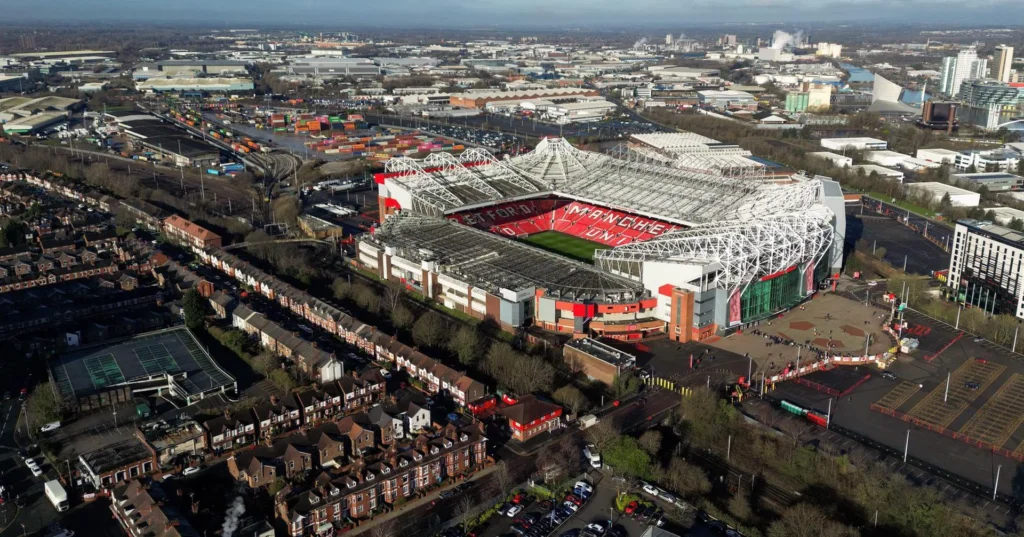
Manchester United’s proposed new 100,000-seat stadium is more than a replacement for Old Trafford.

It’s the centrepiece of one of the most ambitious urban regeneration projects ever planned by a football club.

Unveiled in March by architects Foster + Partners, the concept would see a new stadium built adjacent to Old Trafford, just 350 metres from the existing ground.

Supported by Trafford Council, the Greater Manchester Combined Authority and Old Trafford Regeneration Mayoral Development Corporation the proposed development aims to transform the area surrounding the stadium into a thriving mixed-use precinct featuring housing, commercial space, public transport improvements and new public amenities.

While the stadium dominated headlines, the broader vision is about much more than just football.

Once complete, the new venue would become the largest club football stadium in the UK, increasing capacity from around 74,000 to 100,000 spectators.


More than just a stadium

However, the stadium is only one piece of a much larger plan.

Foster + Partners vision includes new homes, offices, hotels, retail and hospitality spaces, green public areas and improved pedestrian links.

They believe this “mixed-use” destination will attract visitors throughout the year and create a “vibrant destination” for tourists and visitors from across the world.

The proposal also places a strong emphasis on sustainability, with plans for a walkable precinct supported by public transport, rainwater harvesting and renewable energy technologies integrated into the stadium’s distinctive canopy design.


A major economic opportunity

The broader regeneration has been positioned as a major economic opportunity for Greater Manchester.

An independent study conducted by Oxford Economics found that the stadium and regeneration project could contribute approximately $15 billion to the UK economy.

In addition, the project would also support around 92,000 jobs while creating more than 17,000 new homes and attracting an additional 1.8 million visitors yearly.

Those figures remain projections rather than guaranteed outcomes, but they have become central to the club’s case for the redevelopment.


Connecting United to a Wider European Trend

A key component of the proposal is improving transport connections around Old Trafford

The British Prime Minister Andy Burnham described the project as significant opportunity for the region, with investment in rail, Metrolink and surrounding infrastructure viewed as essential to unlocking the wider regeneration potential.

The plan also includes greater pedestrian accessibility, to integrate the stadium district with surrounding communities.

Manchester United’s proposal reflects a broader trend across Europe football.

Stadium developments are increasingly viewed as catalysts for urban renewal and economic development, rather than standalone sporting venues.

Projects such as Tottenham Hotspur Stadium, Everton’s new waterfront home and Real Madrid’s redevelopment of the Bernabeu have demonstrated how modern stadiums can generate revenue through hospitality, entertainment and commercial activity beyond football.


Transforming Old Trafford

Despite support for the proposal, significant hurdles remain before construction can begin.

Funding arrangements, planning approvals and major infrastructure upgrades will all need to be finalised before construction can begin.

If delivered, the project would represent one of the largest football-led regeneration projects ever undertaken in the UK.

The project would transform not only where Manchester United plays, but how the wider Old Trafford district lives, works and grows.

Google expands football footprint with AI partnerships at five European giants

Google has announced long-term partnerships with five of Europe’s biggest football clubs.

Expanding the role of artificial intelligence in fan engagement through collaborations with Arsenal, Barcelona, Bayern Munich, Liverpool and PSG.

Google Gemini will become each club’s official consumer AI Partner, while Google Pixel will serve as the official smartphone partner.

The partnerships are designed to deliver AI-powered match insights, personalised fan experiences and exclusive behind-the-scenes content across the clubs’ digital platforms.

Supporters will be able to use Gemini to access tactical insights, historical statistics and match analysis while Pixel devices will be used by club media teams to capture content through the company’s “Shot on Pixel” initiative.

A key component of the partnership is the commitment to increasing the visibility of women’s football.

Google confirmed the agreements cover both men’s and women’s teams, with AI tools and Pixel technology set to help produce content and expand the reach of the women’s game through club media channels.

The announcement continues Google’s growing investment in football technology.

Google initially had individual agreements with several of the clubs, including PSG and Liverpool.

By bringing the partnerships together under the Gemini and Pixel brands, Google is positioning artificial intelligence as a core part of the modern football fan experience rather than simply a commercial sponsorship.

For football clubs, the collaboration highlights a broader industry trend towards technology partnerships that extend beyond branding.

AI is increasingly being used to produce personalised content, deliver deeper match analysis and strengthen engagement with large global audiences.

Clubs continue to invest in these growing digital platforms alongside their traditional commercial portfolios.

The partnerships also reinforce the growing intersection between football and technology, with leading clubs increasingly working alongside global technology companies to enhance supporter experiences and explore new ways of connecting with fans on matchday and beyond.


Most Popular Topics

Editor Picks

Send this to a friend