

Balga SC release book called ‘Together’

Balga SC

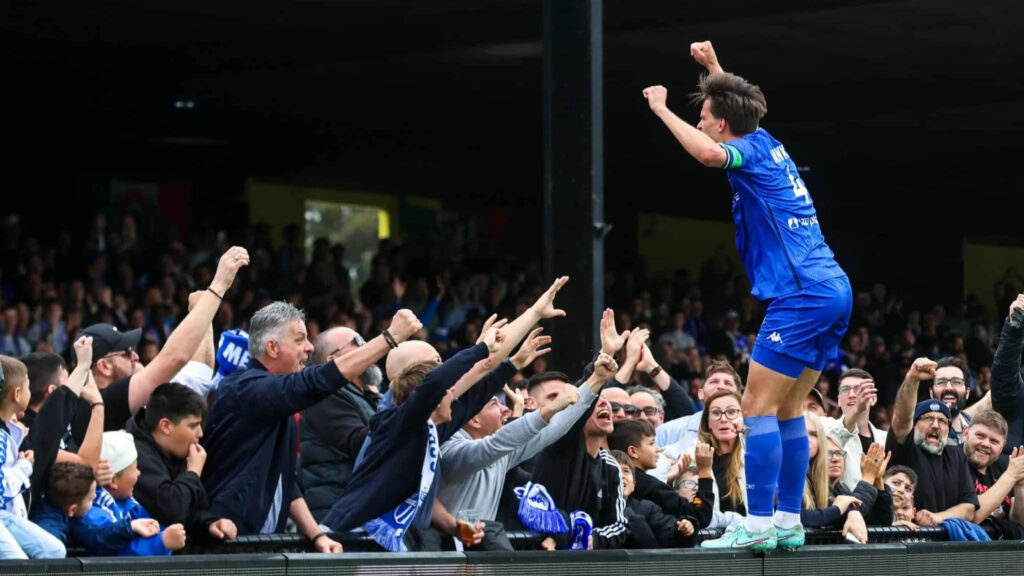
Balga Soccer Club of Western Australia’s State League Two has put out a book in which the club’s culturally diverse members, players, coaches, and other volunteers share their personal stories.

The book, written by Tom Jeffcote, features many inspiring stories, such as that of Grace Dawa and her three children, Curtis, Sean, and Zara, all of whom are South Sudanese refugees. Grace fled to Uganda with her family to escape the war and spent 11 years in a refugee camp before coming to Australia, where she has been made to feel very welcome at Balga.

“I have some writing experience,” the writer told us.

“Ken Shorto, the President of Balga SC, asked me to write the club’s story.

“I agreed to do it on a totally pro bono basis if it was about the people at the club rather than a history of results, etc. Ken agreed, and I put the book together. It is made up of a diverse group of officials, players, both past and present, and, most importantly, parents and their children from all over the world, many of whom are refugees from war-torn countries.”

Together also highlights the Fee-Free Football Programme, which they’ve put in place to get kids to play football without any financial barriers.

“We believe Balga is the only club in Western Australia and indeed Australia that has a Fee-Free Football programme; therefore, it is vitally important in allowing kids to play football when many of them would not be able to,” Jeffcote said.

Club President Ken Shorto explained:

“We have sponsors who support the ideology of Balga Soccer Club and parents and grandparents who help out doing jobs around the club as volunteers. This gets us through and saves us paying people to do these jobs,” he said.

Shorto exemplifies the culture and spirit of Balga as a club. Ken enjoys the club’s lack of egos, open honesty, and camaraderie. He has witnessed and driven the club’s culture change over the years, from a predominantly British membership to today’s multi-cultural community group membership.

“I don’t care what colour people are or ethnic or religious background they have, I just judge them by what they do, act and how they behave,” he added.

The book, which is available at the club for $10, is a worthwhile read for all and is a huge step in the right direction for giving volunteers their due credit while also recognising the purpose football serves for those who don’t have much.
Previous ArticleNext Article

Does The Australian Championship Have a Long-Term Future? Optimism Remains Despite Silence

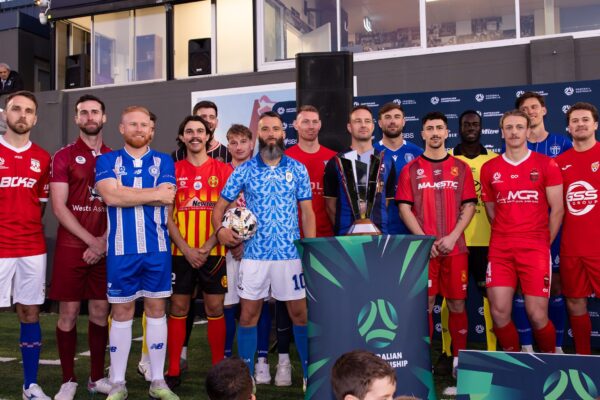
THE ASSOCIATION of Australian Football Clubs has reconvened to re-engage Football Australia on the long-term future of the Australian Championship, which returns next month for its second season.

The AAFC is preparing a formal approach to head office in the aim of establishing the next steps for the tournament’s development. Little has been said from FA about its long-term prospects since South Melbourne won the inaugural title last summer.

Operated last season as an end-of-year tournament for clubs pulled from NPL competitions around the country, under the (former) model of the UEFA Champions League, it was generally lauded by those who partook as a success. This year, the same format returns.

But there remains a lack of certainty across constituent clubs as to where the Championship is headed. Those spoken to by Soccerscene, both within and outside the ‘foundation’ ranks, retain a firm desire to see it become a full-blown national second division – as was the competition’s working title for much of its development process.

“We’re now in the process of pushing that timeframe [for future discussion] because the clubs’ concern is if you just wait another twelve months, and do nothing towards establishing the home and away competition, then another year will pass,’ said AAFC chairman Nick Galatas.

‘We’re keen on re-establishing the impetus for what we say the clubs and the fans actually want, and that is a proper competition that will be the bridge for what we all want.

“We need to link our game from bottom to top and give more opportunities to our promising young players.”

It is the general view of a number of foundation clubs that discussions with FA have always been due to re-open following this upcoming second season; however, actual specifics have proved harder to find.

“As an aspiring club, we were under the understanding that after two years there’d be a review for the potential of promotion and relegation [to the A-League],’ said one club president from within the eight foundation clubs.

“Or, to discuss expansion into the A-League. We’re not asking to get rid of A-League teams; we’re asking for a connection via expansion. For example: ‘keep playing this competition, keep performing strongly, and then if you meet the criteria, you can apply for A-League expansion.’”

It is nearing three years since Football Australia selected its eight foundation clubs, from a pool of 32 that were invited to enter its Request For Proposal phase. At the time, it was stated that a refined process – to commence early-2024 – would seek to find an additional two-to-four clubs to join them.

That this has not happened means the eight sides still fail to represent any state outside New South Wales and Victoria, a criticism levelled at the competition from its first day. From the outside, this continued inactivity could be construed as a lack of progress – although that’s not to say inactivity is the case.

“We’ve explored it a few times, and FA have been really open about where they’re up to, and really what the trajectory is,” said the president of another club, who were part of the Request For Proposal phase, but were not selected as a foundation club.

“I would describe their current position as ‘we’re doing it, we’ll review what we’re doing, and then we’ll plan to either keep doing it, or expand it.’ Does that mean expansion will happen? Not necessarily.

‘Maybe they’ll do that review and there’s a sense the timing’s not right, there are too many challenges… but I’m not getting any indication that that’s the case.’

Football Australia signed its Championship broadcast deal with SBS in September 2025 for two seasons with an option for a third. Last week, the partnership announced an increase in linear broadcasting for 2026 with an additional match per round to be broadcast on Thursday nights. The entire competition is available via SBS On Demand.

Football Australia has also added a Penalty Shootout Bonus Point Model, where drawn matches in the group stage will see sides awarded a standard one point each, before heading to the penalty spot to contest an additional point.

The competition also remains without a naming rights partner, while participant clubs have this season been charged an entry fee, which was not the case last season. Football Australia continues to foot the travel bill for parties up to a certain number for away fixtures.

Football Australia was contacted for comment.

Mbappé move from Nike to On signals new battle for Football’s sponsorship market

Kylian Mbappe UEFA Euro 2024 Qualifier

Kylian Mbappé’s decision to leave Nike after almost 20 years has opened a new chapter in the commercial battle for football’s biggest names. The Real Madrid and France star has joined Swiss sportswear brand On, a significant boon for the company on entry into the football market.

Mbappé’s departure is a significant commercial loss for Nike. The forward joined the company as a nine-year-old and grew into one of its leading football figures. His loss compounds the recent transition of Spanish star Lamine Yamal to long-time rival Adidas.

On built its reputation in running, before expanding into tennis via Roger Federer. It will now use Mbappé’s experience as it develops football products, with its first boots expected to become widely available in the near future. Former France star Thierry Henry has also joined On as its football director and is a shareholder.

On has confirmed that Mbappé’s agreement includes both cash and equity, although the financial details have not been released, gives the partnership a deeper commercial connection than a traditional endorsement deal. Nike still holds significant football contracts, including long-term partnership with numerous national teams.

However, Mbappé’s move gives On an opportunity to challenge the established order, including Nike, Adidas, Puma and other emerging competitors. But will they turn this prized signature into lasting football credibility? To do so, the brand must now deliver products that can compete on performance, design and price.

Mbappé’s switch is therefore more than a sponsorship change. It signals an increasingly competitive fight for football’s most influential athletes and the billions of fans who follow them.

Most Popular Topics

Editor Picks

Send this to a friend