

Allambie Beacon Hill United FC’s Steven Gravemade gives account of the Local Sport Grant process and its benefits

Two historic clubs from the Manly Warringah Football Association – Manly Allambie Football Club and Beacon Hill Football Club – have amalgamated to create Allambie Beacon Hill United FC (ABHUFC) in the 2024 season.

Since the decision last year to merge together, the Club has been busy streamlining and preparing its operations in its inaugural campaign.

As part of their expansion, the ABHUFC have recently been approved by the Local Sport Grant Program form the NSW government.

They have successfully received two grants, helping to get a new coffee machine for the clubhouse and new flags for the numbering of fields costing just above $7,000.

With the new fields and more club members, these purchases have become important cogs in the building of this new Club’s culture.

Soccerscene spoke to ABHUFC’s grant advisor Steven Gravemade who saw a great opportunity arise through the grant.

How did you find out about the grant?

Steven Gravemade: I usually find them posted on social media adverts and many committee members forwarded stuff they find from social media.

We always need to keep our eyes open for any grant offers.

What was the process to get the grant?

Steven Gravemade: You need to start with the right documentation especially invoices and quotes for the products, such as the expected cost, and what they are needed for, club info.

Then you need to complete a lengthy online form with the details of the grant on the app called SmartyGrants.

This grants app then forwards the information to whichever grant program is requested. Us being the Local Sport Grant Program.

The Senior Men facing Narrabeen.

Was it a hard process to go through or straight forward?

Steven Gravemade: It was not lengthy and not hard. You need to know what you are doing in the sense of creating a quote for the grant and following a similar well-created format. You do have to work methodically through the form.

There was positive correspondence for 3-7 weeks before it hit the accounts. This means we can go out and purchase the products now and keep the invoice.

The final stage of the grant is putting back into the app system the purchase, and this should finalise the whole process.

It is dependent on the grants, these were smaller grants than others. Though we did two separate grants which added time but overall, a similar experience and therefore a fluid task.

There is obvious difficulty added when you are applying for grants that involve infrastructure zoning as it takes many months and is very taxing,

You’ll have to go through other systems as well including the local council and this naturally makes it a longer process.

Whereas with this grant it can be done just by the club without the association or council involved. Just through the app.

“Now he’s done it a couple of times for both infrastructure and smaller grants. I think we’ve become pretty efficient.

Do they think the funding was a good amount and adequate for the Club?

Steven Gravemade: In this particular case, it was exactly what we requested,

The form also asks if you are willing to contribute which can help gauge the grant, but for us, it was more than adequate and perfectly suited to what we had wanted.

How do you think this will benefit the club overall?

Steven Gravemade: These grants are a big help and help save valuable fundraising, that can go elsewhere.

For example, it was a big bonus in helping us with the processes that needed other funding such as our completely new purple kits, training equipment, updating facilities and club image.

It’s a massive help to the club and to the budget. Every little bit helps.

ABHUFC’s Women’s First Grade team against Manly Vale.

For the bigger picture and first-hand experience, do you see this program as a positive plan for grassroots football?

Steven Gravemade: Yes, we feel supported through grants like this as a club. You obviously need to work hard to get it.  Though the process was fluid and for our club, any grant is appreciated.

On this topic, do you think enough clubs/associations are aware of these grants?

Steven Gravemade: They do pop up, where mailing systems are also around and the main way to know of these grants and how to get them, a lot of clubs I presume are on them.

However, you still need someone proactive in the clubs to get the ball rolling such as a grants officer.

This one came up before the start of the season so maybe many weren’t looking then”.

We found out and applied for this one before the start of the season.

Also, if you look at all the grants there are a lot given out to all sports clubs, and they only show the grants that got accepted.

You can only guess how many actually applied for a grant and maybe could not be accepted.

However, I think a lot also don’t apply in the end. Overall, for me, I think these grants are beneficial.

ABHUFC’s mixed grading day in February.


The Local Sports grant was a massive project from the NSW government to help fuel the growth of the many codes within NSW.

The positive effect this has is massive on the infrastructure for the game and the quality and experience of grassroots sports.

The grants also show that the NSW government is invested in the growth of community football and wants to actively encourage and financially support the ambitions of these grassroots clubs.
Previous ArticleNext Article

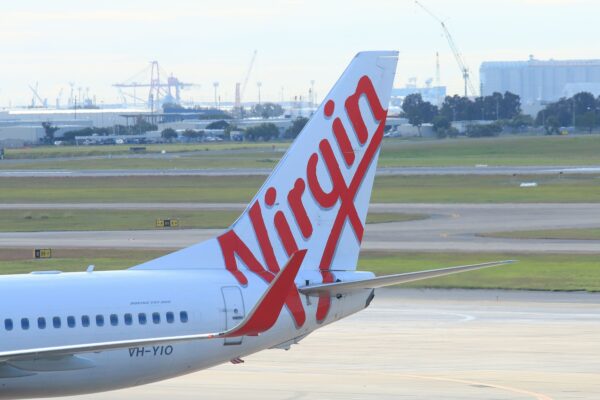
WA Government and Virgin Australia Partner to Bring Discounted Flights for Italian Football Series in Perth

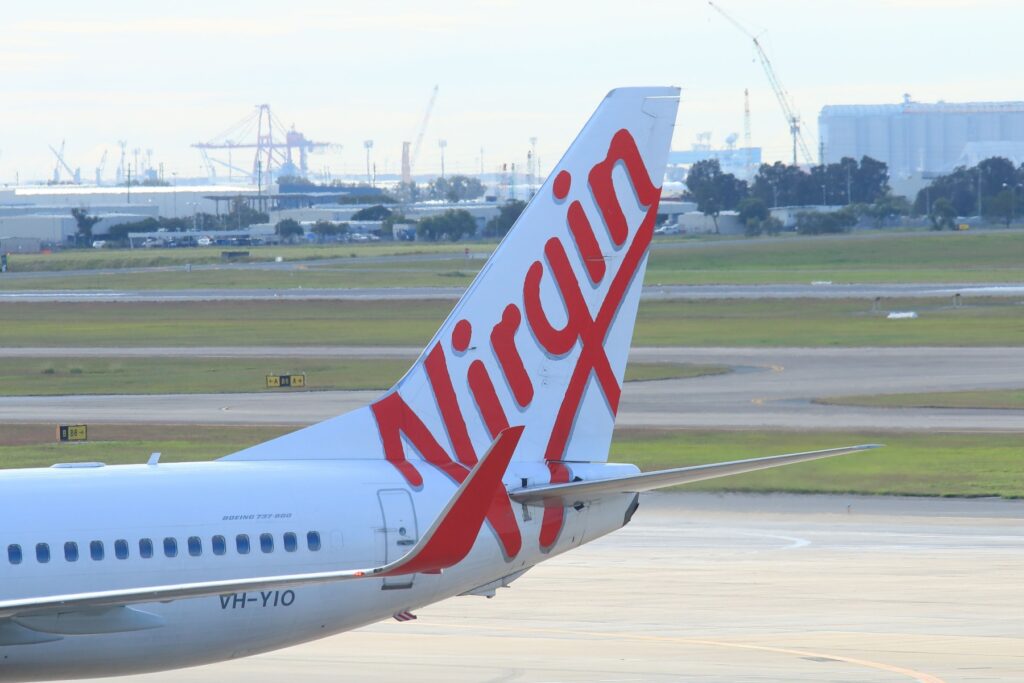
The Western Australian Government has partnered with Virgin Australia to offer discounted airfares to Perth ahead of a three-match series featuring AC Milan, Inter Milan, Juventus and Palermo, in a move that reflects how state governments are increasingly using major sporting fixtures as tools of tourism and economic strategy.

Subsidising travel costs rather than simply promoting the matches signals a shift in how state governments are approaching major sporting events. WA Tourism Minister Reece Whitby positioned the series within the state’s broader Winter of Unmissable Sport strategy, framing the partnership as a way to fill hotels, support local businesses and generate visible economic activity across a single week of programming. That logic places football alongside other major events states have used to justify public investment in visitor attraction, where the return is measured in tourism spend rather than ticket revenue alone.

A bet on Australia’s appetite for European football

Touring Italian clubs is not a routine occurrence in Australia, and Sport and Recreation Minister Rita Saffioti’s comments point to an underlying assumption behind the investment: that the existing fan base for European football in Australia is substantial enough to justify a state government underwriting travel costs to fill a stadium on the other side of the country.

Australian audiences for international football have grown considerably over the past decade, driven by streaming access, diaspora communities and the rising visibility of leagues once difficult to follow locally. State governments positioning themselves to capture economic value from that growth, rather than leaving it to broadcasters and travel operators, marks a change in how football’s commercial footprint in Australia is being treated by policymakers.

It also raises a question likely to recur as more international club fixtures are scheduled in Australian cities: whether public subsidy for travel around marquee football events delivers economic value beyond the host city, or whether the benefit is concentrated narrowly within the host state’s tourism and hospitality sectors. Virgin Australia’s involvement reflects the commercial logic on the airline side, with the partnership forming part of a broader push to connect Australians with major domestic and international destinations.

For the domestic football industry, the series is a reminder that international club football is competing for the same audience attention as the A-Leagues and grassroots competitions. Whether that competition proves complementary or extractive, in terms of where football-related spending in Australia ultimately lands, is a question state and national football bodies are likely to watch closely as similar fixtures become more frequent.

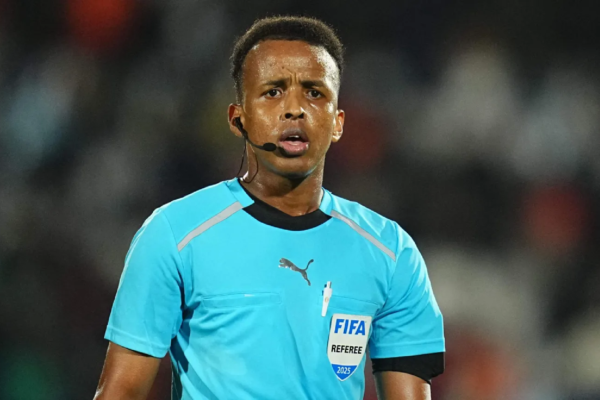
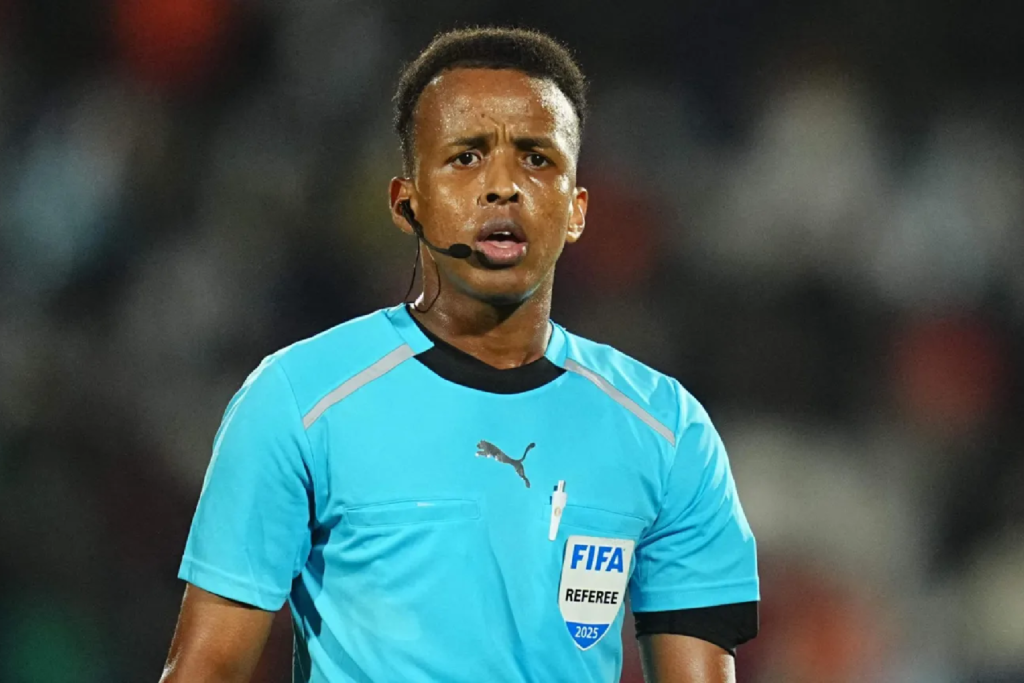
Referee Omar Artan appointed to UEFA Super Cup Final

The Somali referee will officiate the 2026 UEFA Super Cup in August between Paris Saint-Germain and Aston Villa.


World Cup controversy to Super Cup support

As 2025’s CAF Men’s Referee of the Year, Artan stands as one of the world’s leading match officials.

His expertise and skill allowed him to enter FIFA’s international list in 2018, and has since proved an outstanding ability as a referee, culminating in the CAF Men’s Referee of the Year award last year.

Despite Artan’s capabilities and reputation, his dream of officiating this summer’s World Cup tournament met a premature ending. The referee couldn’t enter into the US after arriving on a diplomatic passport and single entry visa, and was subsequently forced to return home to Somalia.

But Artan’s journey as a referee on the global stage is far from over, as UEFA and CAF confirmed that Artan will officiate the UEFA Super Cup clash between Champions League winners, PSG, and Europa League winners, Aston Villa, in Salzburg this August.


Upholding the partnership

In April of this year, UEFA and CAF signed a new Memorandum of Understanding (MoU), which promised to utilise mutual support to encourage development, inclusion and wellbeing in football.

The MoU aligns unity, cohesion and partnership between two powerhouse continents of world football.

And now, the alignment is stronger and clearer than ever. In the midst of a major blow to Artan’s personal and professional dreams, UEFA and CAF’s partnership provided an opportunity.

“Omar is an excellent young but already experienced referee, who has proven himself at the highest competition level of the Confederation of African Football,” said UEFA President Aleksander Čeferin via media release.

“Football is made to connect people, and UEFA wants to show its respect to Omar and his outstanding officiating skills, which had earned him such a prestigious nomination.”

Furthermore, CAF President, Dr Patrice Motsepe, outlined why the initiative perfectly embodies the nature of a partnership between UEFA and CAF.

“This is a great honour for Omar Artan and for African referees and is also an excellent example of football bringing together and uniting people from Africa and Europe and worldwide.”


Final thoughts

Out of bitter disappointment and controversy comes a far more positive reflection of football’s influence and impact. It also proves that an MoU is more than just signatures, but a genuine promise to support the game and all within it.

A partnership like this has the power to help millions at once.

But sometimes, helping just one person is all it takes to prove its worth.

Most Popular Topics

Editor Picks

Send this to a friend