Soccerscene the only online publication dedicated to the Australian and international football industry. It serves as a practical guide for those involved in the business of running a football club and bringing readers up-to-date research and development across all football matters providing insights, discussion and information related to topics that matter.
Western Australian Institute of Sport to earn $20.8m funding boost
Image credit: Western Australian Institute of Sport
The Cook Government is set to inject a $20.8 million funding boost over four years to enhance the operations and athlete development programs at the Western Australian Institute of Sport (WAIS) in preparation for the 2028 Olympic Games in Los Angeles and the 2032 Olympic Games in Brisbane.
Starting from 2024-25 and continuing until 2027-28, this funding increase will supplement WAIS’s existing annual base funding of $9.5 million.
The new resources are aimed at providing enhanced support to athletes aspiring to international success and improving athlete care with an overall goal to build on WA’s best-ever Olympics result in Paris.
The additional $20.8 million funding package includes:
– A $9 million increase in base funding for WAIS.
– $7.5 million allocated for advancements in WAIS operations, governance, and athlete development and care programs.
– $500,000 earmarked for refurbishments to the WAIS High Performance Service Centre to accommodate additional staff.
The WAIS played a crucial role in the early development of Sam Kerr and other Western Australian footballers before they transitioned away from the program following the FA’s national pathway change in 2012.
Today, football is no longer a primary focus for WAIS, much like the AIS, despite the sport’s continued inclusion in the Olympics.
Premier Roger Cook commented on the upgrades his Government are leading following a proud WA cohort in Paris 2024.
“Western Australian athletes have had an unbelievable Paris 2024 Olympic campaign, with stunning medal-winning performances across athletics, sailing, swimming, cycling, diving, surfing, rowing, tennis, basketball, water polo and boxing,” Cook said in a press release.
“This major funding boost for WA’s peak athlete support organisation reflects my Government’s commitment to fostering sporting talent.
“The additional resources will provide a clear pathway for our athletes and future Olympians to thrive on the world stage, and ultimately give them the best chance of bringing gold home from Los Angeles in 2028 and Brisbane in 2032.”
WAIS Chair Dr. Neale Fong spoke on the success in Paris 2024 and the future following the upgrades.
“Fifty-three Western Australians have performed on the world stage at the Paris Olympics, and a further 20 will strive for success in the Paralympics shortly,” Fong said in a statement.
“WAIS is proud to support these athletes as a vital step on their path to representing Australia, and this funding from the Cook State Government is vital in ensuring that how we win is just as important as winning itself.
“With the focus firmly on Paris at the moment, we are getting an insight into the ability of athletes to inspire a nation, which will only increase in magnitude at a home Games in Brisbane 2032.
“This investment enables WAIS to ensure we have strong foundations for future growth as we look to increase the number of athletes we support in preparing for Brisbane 2032 and beyond.”
Futsal’s potential influence on the upgrades:
With Futsal emerging as a potential candidate for future Olympic Games and participation rates skyrocketing across all states in recent years, this upgrade could pave the way for developing some of the sport’s top athletes, should they choose to pursue that path.
The situation is extremely similar of the Moreton Bay Indoor Sports Centre, approved in early August and constructed for the 2032 Olympics. The Moreton Bay City Council highlighted that the facility would accommodate various sports, with futsal noted as a possible activity on its 12 multi-use courts.
Football West and Football Queensland have both emphasised the significance of futsal’s growing popularity, recognising it as one of the fastest-growing sports in Australia.
While the question of futsal’s inclusion in the Olympics remains unanswered, the facility undeniably has the potential to host National and State Championships and serve as a breeding ground for the next generation of elite futsal players.
Mark Bosnich will bring his experience from the highest levels of football to the Queensland Football Convention in Brisbane this October. The former Australia international will headline the event as a featured speaker. He will take part in an exclusive Q&A session focused on his career and life in the game.
Bosnich will offer an honest look behind the scenes. He will discuss his time under Sir Alex Ferguson, his Premier League career, and the challenges of reaching the top. The session will also explore Australian talent pathways. Bosnich will share his views on the opportunities available to young footballers and what aspiring players need to succeed.
Premier League experience on show
Bosnich built a career across Australia and England. He played in the Premier League and represented some of the biggest clubs in the competition. His career included spells with Manchester United, Aston Villa and Chelsea. He also represented Australia at international level.
His insight will add value for leaders and developers of football in Australia.
Queensland football takes centre stage
The Queensland Football Convention will run from October 9 to 11 at the Brisbane Convention & Exhibition Centre. The event will bring together football figures and industry professionals for a celebration of the game.
Bosnich’s appearance adds another major name to the convention program. More speakers and information will be revealed soon, including who will join Bosnich to discuss the key pillars of growth, sustainability and technology in the sport. The event will also provide a platform for conversations about the future of football in Queensland and Australia.
Tickets available now
Organisers are encouraging fans to secure their places ahead of the event. Early-bird tickets will end in less than two weeks, making now the time to plan their visit to the Queensland Football Convention.
With Bosnich confirmed as a featured speaker, the Queensland Football Convention is set to offer a rare opportunity to hear directly from an Australian football figure with extensive Premier League experience.
The A-League has just lost a Victorian club. The death of Western United and the suspension of its license by the Australian Professional Leagues (APL) on August 10th was inevitable. The club says it wants to rebuild and eventually return to the competition. That is unlikely to happen considering the search for new owners has to begin.
But one day after the announcement from Western United, South Melbourne stepped forward. The four-time NSL winners announced their intention to begin formal discussions with the APL about joining the A-Leagues. They believe the timing is right. Their argument is understandable. Their football credentials and history are stronger than most A-League teams.
But there is a problem. South Melbourne may have the history. It may have the supporters. It may even have one of the most attractive potential derbies in Australian football. But that does not mean it will get an A-League licence.
In fact, the more realistic prediction from my perspective is that South Melbourne will once again be told no.
South Melbourne has never been better placed
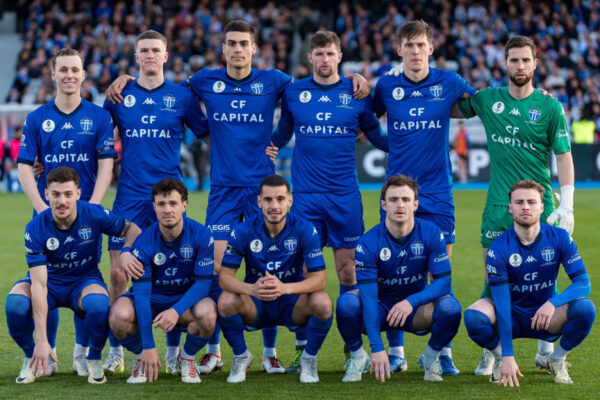
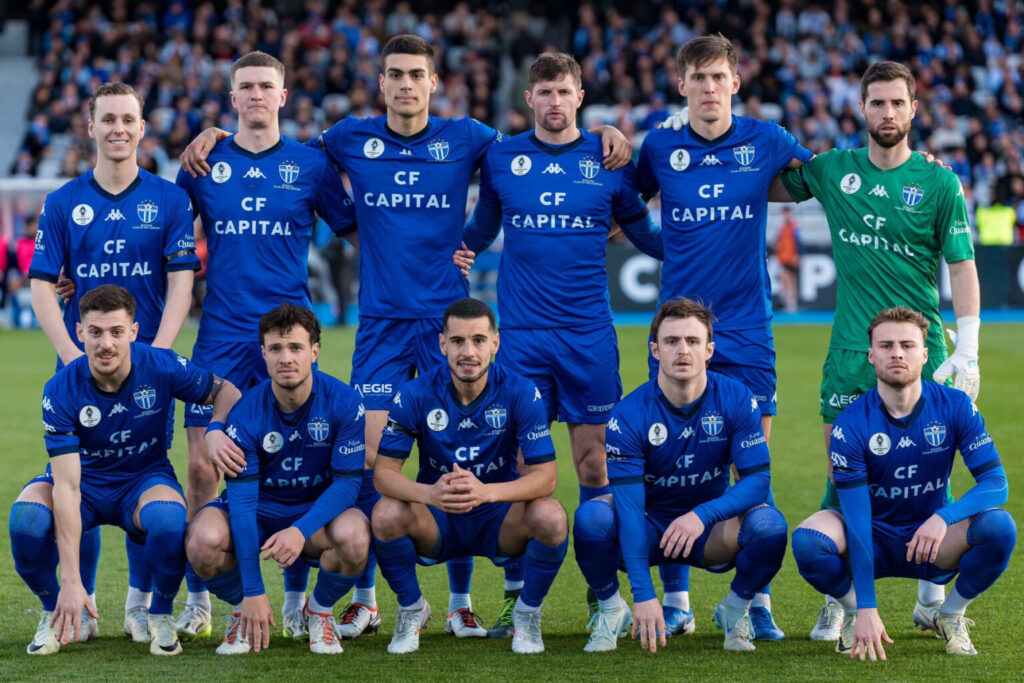
There is plenty to like about South Melbourne’s position. The club is not simply relying on its history. South Melbourne returned to national competition through the inaugural Australian Championship in 2025. It did not merely participate. South Melbourne won it. The club defeated Marconi Stallions 2-0 in the final to become the competition’s first champion.
That achievement matters. The Australian Championship was created to bridge state-based football and the professional game. Whilst it is seen as a second tier, there is no promotion and relegation with the A-League. But it has also continued to perform on the national stage. In the 2026 Australia Cup, which South Melbourne qualified for, they reached the final rounds and then produced one of the biggest results of the tournament.
Adelaide United came to Lakeside Stadium. South Melbourne won 2-1. Adelaide had won the Australia Cup three times. South knocked them out in front of its own supporters. They’re now into the quarter-finals of the 2026 Australia Cup.
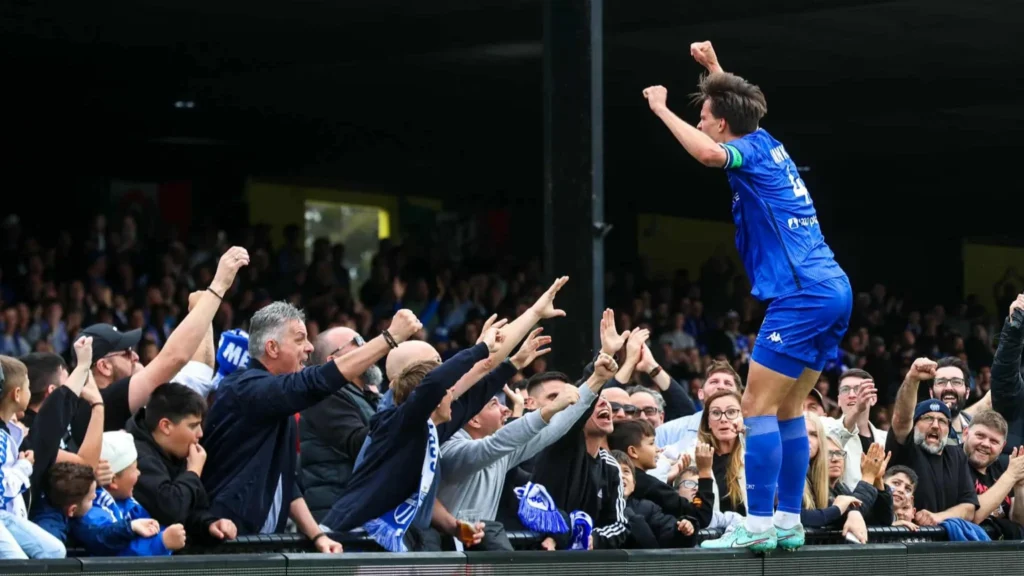
South Melbourne celebrating the Australian Championship Image Credits: South Melbourne FC
The club also has a much bigger story to tell than its recent results. Alongside its four NSL victories, the club also won the 1999 Oceania Club Championship and represented Oceania at the 2000 FIFA Club World Championship. The club has a dedicated supporter base and the history to deserve a place.
The club says its Oceania Professional League participation has helped make it Australia’s 13th professional football club. It has more than 150 businesses supporting it in 2026 and a long-term arrangement at Lakeside Stadium, in the heart of South Melbourne.
On paper, it is difficult to argue that South Melbourne is not ready. The problem is that readiness and admission are two different things.
Third time’s the charm?
South Melbourne’s current push is not new. It has been here before. The club was pursuing an A-League return almost immediately after the NSL disappeared. In 2007, South announced its interest in becoming the second Victorian A-League club.
Then came the 2008-09 process. South Melbourne backed the Southern Cross bid for the second Victorian licence. The club proposed a new team based around the redevelopment of Bob Jane Stadium and involvement from the broader Victorian football community.
It lost. The Melbourne Heart bid won the race and eventually became Melbourne City. That was South Melbourne’s first major warning. Its football heritage was not enough. Its second major attempt came almost a decade later.
The 2017-18 expansion process produced the most serious South Melbourne bid yet. South made the shortlist for an expanded A-League licence. It ultimately lost to Western United. Bill Papastergiadis has since explained that he did not genuinely expect South Melbourne to win in 2018, despite believing strongly that the club belonged in the A-League. He also reflected on the barriers facing a traditional club trying to enter the existing Victorian professional football ecosystem.
That is important context for today’s bid. South Melbourne is not entering negotiations without understanding how difficult the politics and economics of the Victorian football market can be. The club has tried the direct route twice. Neither time worked.
The Western United lesson
This is where the current situation becomes complicated. In isolation, adding South Melbourne would be fantastic for the A-League. Imagine South Melbourne against Melbourne Victory. The atmosphere would be enormous.
There is a genuine football rivalry waiting to happen. South itself points to the potential for ready-made derbies and commercial interest. But the argument that Melbourne should simply have three A-League clubs because Melbourne is a huge city ignores what has just happened to Western United.
Western United was supposed to represent Melbourne’s rapidly growing west. Its original vision centred on a major project in Geelong. The club eventually moved into Ironbark Fields in Tarneit in 2024.
Yet the geographic separation never became as clear as the original concept suggested. Western United was not a Geelong club. It was not a regional Victorian club in the traditional sense. It was a western Melbourne club based and that matters.
The A-League already has Melbourne City and Melbourne Victory. Adding South Melbourne would give the competition three clubs operating within the same metropolitan football market. It is not necessarily brilliant for the business model, which has already lost a club operating on the outskirts of Melbourne.
The NSL offers an interesting historical comparison. The Falcons provide an even more striking Victorian example. They became the first and only regional Victorian club to play in the NSL, reaching the finals in 1996. The distinction is important.
A national competition can expand its footprint by adding genuinely new markets. That is different from adding another club inside an existing Melbourne metropolitan market. That was what was envisioned for Western United, and it failed quickly.
Will the APL see South Melbourne as a safe investment? Despite the fact they’re a well-established club, I’d argue the answer is no.
Promotion and relegation is the only realistic route
There is one scenario where South Melbourne could eventually force its way into the A-League, and that’s the great missing piece of Australian football. Promotion and relegation. South Melbourne would not need somebody to decide that Melbourne suddenly has room for another licence. It would simply need to earn it.
They would have done just that in 2025, winning the Australian Championship if the football pyramid was open. Football Australia originally designed the National Second Tier with the possibility of promotion and relegation being considered once the competition matured.
The format connects NPL clubs and established foundation clubs with national competition. It does not provide a sporting pathway into the A-League. South Melbourne can win the Australian Championship, NSL and Australia Cup but none of those achievements automatically produce an A-League licence.
South Melbourne in the Oceania Championship Image Credits: Oceania Championship
Opening the pyramid is far more complicated than simply announcing promotion and relegation. Australia’s football calendar is fragmented. The A-League operates primarily through the summer months. The NPL operates through the winter and early spring. For the 2026-27 season, the A-League Men runs from October to June, while the NPL begins in February and finishes in September.
That creates an enormous structural problem for a fully connected pyramid. The clubs below the A-League would need to operate at a level capable of supporting professional football. If the A-League aligned with the NPL and the lower pyramid, it would compete in a football calendar that already has to coexist with Australia’s other major winter sports. That is a difficult feat against bigger leagues such as the AFL and NRL.
Beyond that, clubs lower down would need travel budgets and to survive commercially would take real sacrifice from all parties to make that work. The A-League’s existing clubs also have something to lose. They have invested heavily in their licences and their businesses.
Historically, A-League licences were extended through to 2034, while those licence arrangements have included provisions allowing promotion and relegation to be introduced. But the existing clubs will do everything in their power to block it. Promotion and relegation removes certainty. An A-League club can finish last in the current system with no threat to their place. Under relegation, its place is no longer guaranteed.
That is a major commercial change for clubs that have invested in securing their position in the competition. It is therefore difficult to imagine the A-League opening the door. The A-League’s licensing system gives the competition enormous control over who enters, and for South Melbourne historically they’ve been left out in the cold.
South Melbourne deserves the conversation.
The frustrating part is South Melbourne has probably never had a stronger argument. It has history, supporters, infrastructure, commercial support and most importantly, ambition. Beating A-League clubs in national competition proves the capability is there.
It deserves to be in the conversation. But being in the conversation is not the same as being selected. The Western United experience should be a warning. If the A-League could not make the Western United project work, it is difficult to see why it would suddenly decide that another Melbourne club is the answer.
South Melbourne may be the better football story. It may even be the better football club. But the A-League is not simply selecting the best football story.
It is selecting a professional competition, and until Australia embraces a genuine promotion and relegation system, South Melbourne’s path back to the top flight will remain dependent on someone handing it a licence.
That is the part of the dream that looks unrealistic. South Melbourne can keep knocking and it should. They always say third time’s the charm. But unless the pyramid is opened, I expect the door to remain closed.