

Bitget lands multi-million dollar deal with LALIGA for crypto-sports

Bitget, a global cryptocurrency exchange and Web3 innovator, has secured a multi-million dollar partnership with LaLiga, one of the world’s top football leagues.

This deal names Bitget as the official crypto partner for Eastern Europe, Southeast Asia, and Latin America, marking a new chapter in the integration of crypto into sports.

The news took place at Token2049 in Singapore, highlighting blockchain technology’s growing influence across industries. For Bitget, this partnership aligns with a broader strategy to embed crypto in the sports world, using LaLiga’s vast global presence to introduce cryptocurrency to emerging markets and new audiences.

The partnership seeks to provide unique advantages to both sides, reflecting Bitget’s ‘Make It Count’ philosophy focused on achieving excellence through dedication and passion. This collaboration places Bitget at the crossroads of sports and technology, where innovation blends with tradition.

LaLiga, renowned for its rich history and iconic players such as Kylian Mbappé, Vinícius Júnior, and Robert Lewandowski, has consistently embraced technological innovation. The league has been at the forefront of adopting cutting-edge technologies like AI, VR, big data, and machine learning, maintaining its leadership in sports advancements.

President of LALIGA, Javier Tebas, highlighted the league’s commitment to embracing new technologies.

“Over the last decade, digitalization and innovation have been among LaLiga’s priorities. We are committed to being pioneers in the sports industry, and this collaboration with Bitget will further our reach into the world of blockchain and Web3,” he said via press release.

Bitget CEO, Gracy Chen, underscored the groundbreaking potential of this partnership.

“As the world of sports continues to embrace digital innovation, crypto, blockchain, and emerging technology are becoming integral to this transformation,” she said via press release.

“Partnering with LaLiga allows us to accelerate the growth of crypto in sports, bringing new opportunities for fans and athletes alike. LaLiga’s sports spirit aligns with our belief of ‘Make It Count,’ achieving greatness through perseverance and positive passion. We believe this collaboration will enhance the experience for over a billion people as it sets a path for broader adoption of Web3 in emerging markets.”

By focusing on sports, crypto companies can access a vast global audience, with football proving to be an ideal platform for driving blockchain and cryptocurrency adoption.
Previous ArticleNext Article

Football Has the Audience. Does It Have the Commercial Strategy?

Soccerscene has launched Survey 4: Commercial Confidence in Football, calling on clubs, sponsors, governing bodies, commercial leaders and football industry professionals to assess whether the game is making the most of its enormous commercial potential.

Football has the audience, participation base and community reach to be one of Australia’s most powerful commercial platforms. But does the industry have the commercial strategy, professionalism and infrastructure required to turn that potential into sustainable growth?

That is the question at the centre of Soccerscene’s latest industry research.

The survey examines how attractive grassroots football is to potential commercial partners, what industry professionals believe is limiting football’s commercial potential, and whether clubs are presenting themselves professionally enough to sponsors.

It also explores what sponsors value most when engaging with football – from community reach and participation scale to brand alignment, values and purpose – as well as whether improved facilities could directly contribute to stronger sponsorship outcomes.

Is football fully capitalising on its commercial opportunity?

Football continues to provide brands with access to highly engaged communities across grassroots, community and elite environments. Yet the commercial landscape remains fragmented, with clubs operating with vastly different levels of resources, capability, governance, media infrastructure and commercial expertise.

Soccerscene’s survey is designed to capture the industry’s perspective on where the opportunities exist – and where football may be leaving commercial value on the table.

The research will look specifically at four key areas:

  • Commercial attractiveness – How attractive is grassroots football as a commercial partnership?
  • Commercial barriers – What is holding football back from reaching its full commercial potential?
  • Club professionalism – Are clubs presenting themselves effectively and professionally to sponsors?
  • Sponsor value – What are sponsors really looking for when they invest in football?

The survey also asks whether better facilities would have a direct impact on sponsorship outcomes, highlighting the potential relationship between infrastructure, commercial presentation and investment.

Have your say

Soccerscene is encouraging football clubs, sponsors, commercial professionals, governing bodies, administrators, media professionals and industry stakeholders to participate.

The findings will contribute to Soccerscene’s ongoing program of industry research, designed to provide a clearer picture of the challenges and opportunities facing football and the organisations operating within it.

Take the Survey: Commercial Confidence in Football

Complete the Commercial Confidence in Football Survey here

The survey will close on 30 August 2026 at midnight, with responses received before the deadline included in the final analysis.

Football has the audience. The question is whether it has the commercial strategy to match.

Football Queensland’s Logan hub plan rejected by council

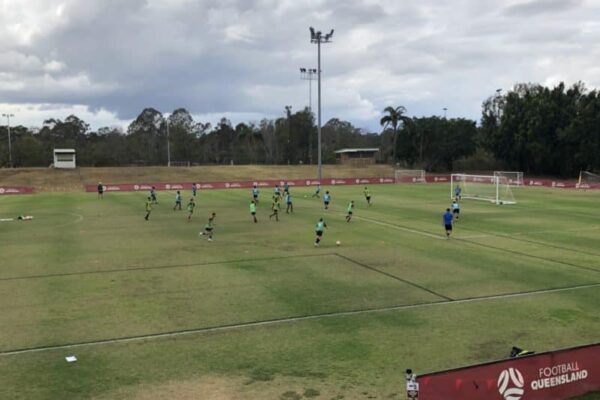
Football Queensland’s plans for a major new football hub at Meakin Park have been rejected by Logan City Council. The proposed $76.1 million redevelopment aimed to create a state home for football in Queensland.

Council unanimously rejected Football Queensland’s request for longer-term leases and additional land at the Slacks Creek site. The decision leaves the organisation’s current leases in place. The proposed development would have delivered new playing fields, elite training facilities and a dedicated home for Football Queensland.

Three-stage development

The first stage of Queensland Football’s development carried an $8.5 million price tag. It would upgrade fields, lighting, drainage and irrigation across Meakin and Mappas parks. The goal was to create a six-field, international-standard training venue.

The second stage represented the largest investment. Football Queensland planned to spend $55.3 million on a new headquarters at the adjoining Queens Park site. The facility would include a Women and Girls Academy, sports science facilities, sports medicine and strength and conditioning services.

A third $12.3 million stage would add an indoor futsal academy and two synthetic fields. Football Queensland said the project could create a major football precinct for the region. It also saw the facility playing a role in Queensland’s preparations for Brisbane 2032 and beyond.

Lease decision creates roadblock

Queensland’s governing body sought a 25-year lease with an option for another 25 years. Chief executive Robert Cavallucci said longer tenure was essential to secure government funding and move the project forward. The organisation has around three years remaining on its existing leases.

Council took a different view. Concerns included community access, funding certainty, future costs and the level of use at the existing facilities. Councillors also questioned whether a long-term arrangement would deliver enough benefit to Logan residents and grassroots clubs. Logan Council has now ordered a review of Football Queensland’s performance under its current lease.

Grassroots football at the centre

The decision highlights a wider issue for football infrastructure. Major facilities can provide elite pathways, sports science and high-performance opportunities, but unless councils can ensure local players and clubs can access the fields, they will be rejected.

Meakin Park already serves several sporting organisations, including football users and community sporting groups. Football Queensland said it had invested almost $2 million at Meakin Park and Mappas fields. It also argued the precinct operates at around 130 per cent capacity. For Queensland football, the challenge now is finding a model that can deliver high-performance facilities while expanding access for the community.

The proposal may have been rejected, but the need for better football infrastructure remains. With participation growing and Brisbane’s 2032 Olympic Games approaching, the debate over where and how Queensland builds its next generation of football facilities is unlikely to disappear.

Most Popular Topics

Editor Picks

Send this to a friend