Soccerscene the only online publication dedicated to the Australian and international football industry. It serves as a practical guide for those involved in the business of running a football club and bringing readers up-to-date research and development across all football matters providing insights, discussion and information related to topics that matter.
Australian Indigenous Football Championships held in Queensland
The 2019 Australian Indigenous Football Championships (AIFC) were held this past weekend at the Moreton Bay Sports Complex in Queensland.
Players from around the country travelled to compete in the AIFC, with some coming from as far away as Western Australia and the Northern Territory.
This was the second edition of the tournament after last year’s success, giving more Indigenous players the chance to showcase their talent.
A youth competition was introduced this year, where eight teams competed with the Platypus side defeating the Koalas in the youth Grand Final.
In the men’s Grand Final, the Brisbane Warrigals and Maliyans United played out a 1-1 draw in regulation time. The contest would be decided by a penalty shootout, which Brisbane won to claim the men’s AIFC title.
Maliyans United were also involved in the women’s Grand Final, defeating NQ Brolgas 6-0 to win the tournament.
A game between the Indigenous Football community representative team and the QLD Police Service also took place, with the match played in good spirit.
For the first time, all Semi Finals and Grand Finals were livestreamed by SBS with Craig Foster in attendance on Saturday. Foster commentated these matches, as well as meeting with those at the tournament. The games were simultaneously streamed on the NITV Facebook page.
Murray Bird, Football Queensland (FQ) General Manager of Operations, Compliance and Game Development claimed the event was extremely important for football in Australia.
“Football Queensland is extremely proud to be supporting the Australian Indigenous Football Championships in the event’s second year,” Bird said.
“The tournament is a fantastic event for football in our country.
“We look forward to seeing the Australian Indigenous Football Championships continue to grow in the coming years.”
The NSW Government has opened applications for the 2026–27 Local Sport Grant Program, with up to $4.65 million available to support grassroots sporting organisations across the state.
The program will provide grants ranging from $2,000 to $20,000 for incorporated not-for-profit sporting clubs and associations.
Funding is aimed at increasing participation, improving governance and enhancing community sporting facilities.
Applications opened on 27 July and will close at 1pm on 24 August 2026, with successful applicants expected to be announced in December 2026.
The Local Sport Grant Program forms part of the NSW Office of Sport’s ‘Everyone Plays Here’ strategic plan.
The plan is designed to strengthen community sport by supporting initiatives that encourage regular participation and improve long-term member retention.
Funding is also available for projects that reduce barriers to participation and create more inclusive sporting environments, particularly for women and girls, multicultural communities, people with disability, First Nations people and members of the LGBTQIA+ community.
In addition to participation initiatives, the program will support projects that improve the financial sustainability and governance of community sporting clubs, while also investing in the quality, adaptability and environmental sustainability of sporting facilities across New South Wales.
Successful projects must be completed by June 2028, with applicants required to meet the eligibility criteria outlined in the program guidelines.
The NSW Office of Sport has encouraged eligible organisations to submit applications before the closing date, with grants awarded through a competitive assessment process.
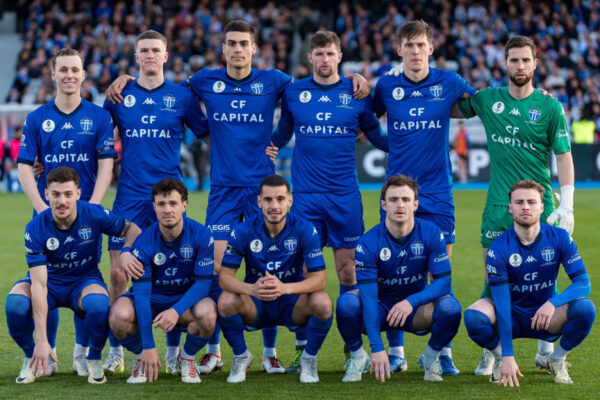
South Melbourne is knocking on the A-League’s door again. The four-time National Soccer League champions formally signalled their intention to enter the A-Leagues earlier this month, opening discussions with the Australian Professional Leagues (APL) over potential A-League Men’s and Women’s licences. The timing was significant; the announcement came a day after the APL terminated Western United’s licence.
But South Melbourne’s ambitions are bigger than simply replacing Western United. The club and its co-president, Bill Papastergiadis, believe its recent success has demonstrated that it is ready for professional football once again. South won the inaugural Australian Championship in 2025, is competing professionally in the Oceania Professional League and has continued to make its mark in the Australia Cup, including a 2-1 victory over Adelaide United in July.
Time to open up
For co-president Bill Papastergiadis, however, the push is ultimately about something bigger than South Melbourne.
“The aspirations of South Melbourne, regarding A-League football, are not just a story about South Melbourne. It’s a story for the football public and the football community,” Papastergiadis said.
“It’s a story for all of us because football is a metaphor for life’s aspirations and football revolves around the ability to inspire, to improve, and to succeed.”
Papastergiadis believes the current structure of Australian football has created a ceiling for clubs outside the A-Leagues, one that limits ambition and, ultimately, competition.
“At the moment, the glass ceiling stifles that competition and stifles those aspirations, and at that upper level, and it’s to its detriment,” he said.
South Melbourne’s argument is closely tied to the history of the NSL, when clubs could be promoted and relegated based on their performances rather than being permanently separated into different tiers. Papastergiadis remembers the intensity that came with that system when South resided in the top flight of Australian football.
“I myself remember the intensity of the matches for the clubs that were in the relegation zone. Back then during the National Soccer League,” he said.
“It keeps clubs on their toes. Everyone is engaged when they know that there are ramifications for their actions and conduct. If there are no ramifications for that, how do you have accountability?”
That philosophy sits at the heart of South Melbourne’s A-League push. The club does not simply want to join the existing system; it wants to challenge the idea that the highest level of Australian football should be closed off from the rest of the pyramid. South Melbourne won the inaugural Australian Championship but, unlike in other systems, is not rewarded with top-flight football. The club has continued strongly in 2026, knocking out A-League side Adelaide United in the Australia Cup.
South Melbourne and Bill Papastergiadis celebrate a win in the Australia Cup Image Credits: Bill Papastergiadis
“Where is it in the football dictionary that winning a title doesn’t give you the opportunity to progress within the football pyramid?” Papastergiadis asked.
“All of the matches involving A-League clubs have been incredibly tight, and the majority of them were knocked out in the earlier rounds by numerous NPL clubs.
“So we can compete on the field; our crowds in the Australian Championship were more than comparable to the A-League crowds, quite often far better.”
That, he argues, makes South Melbourne a viable proposition.
“We are a viable option. It’s time to open up football and give it back to the public. The public deserves it, and it belongs to everyone.”
A familiar ambition
This is not the first time South Melbourne has tried to enter the A-League.
The club was overlooked when the competition was established in the mid-2000s and again in 2018, when the licence ultimately went to Western United. The latest attempt therefore carries history. The club that missed out on the opportunity to join the A-League in 2018 is now pursuing a place in the competition following Western United’s exit. But Papastergiadis is reluctant to predict what happens next. For now, South Melbourne has done what it believes it needs to do: start the conversation.
“It’s very early for me to comment on our prospects in relation to the A-League at this point,” he said.
“What we’ve simply done is done the appropriate thing, which is to write to the APL. Advise of our intention, advise of our interest.
“It’s in their hands to tell us if they’re interested in this story, if they’re interested in this outcome, and if they’re interested in this conversation.”
Papastergiadis has already spoken with APL chief executive Steve Rosich, who responded to South Melbourne’s initial approach.
“I had a conversation with Steve Rosich. He responded immediately, and we spoke on the phone, and it was appropriate, courteous, and responding quickly is what I’m trying to say,” Papastergiadis said.
“We advised of our intention. He thanked us for that. I indicated that we would progress to an even more formal document and he said he’ll wait to see that.
South Melbourne is ready to make their bid Image Credits: Greek Herald
There is no guarantee that South Melbourne will receive a licence, and Papastergiadis is clear that the next step is not entirely in the club’s hands.
“There is no certainty in this process,” Papastergiadis said.
“If you don’t ask, you don’t get. It’s up to Football Australia too, to show us the path forward. We need a path forward, and it’s up to the governing body to also work with us.”
The sustainability for Melbourne
The collapse of Western United has inevitably changed the context around South Melbourne’s bid.
Western United announced that the APL had terminated its participation agreement on August 10, while saying it would seek new ownership and a pathway back into the A-League. The club also emphasised the importance of maintaining a professional football presence in Melbourne’s west and continuing its academy and community programs. South Melbourne is now one of the clubs looking towards the opening created by Western United’s departure. But Papastergiadis does not celebrate another club’s demise.
Western United’s fans are left without an A-League club Image Credits: AAP
“I do want to make the point that I’m not happy about any club folding,” he said.
“I believe in football and in the football product, and I believe in football clubs.
For the players from juniors to senior levels, they must be gutted at Western United. Their administration staff, their coaching staff, they must all be gutted. So I feel for them.”
It is a notable distinction. South Melbourne’s ambition may have been reignited by the circumstances surrounding Western United. But for South there is a new opportunity to add to Melbourne football rather than take something away from it. The prospect of South Melbourne joining Melbourne City and Melbourne Victory in the A-League would immediately raise questions about whether the market could sustain another club.
A benefit to all
Papastergiadis has little doubt and points to Melbourne’s size, sporting culture and existing interest in football as reasons for optimism.
“Absolutely. We won’t cannibalise the football-attending public. We will increase it.” He said.
“There is significant potential within the Melbourne market. We reside in the largest city in Australia, and we reside in the sporting capital of Australia, if not the world.
“We will add to the fabric of football and will increase the attendance through derbies. It’s a positive.”
That is ultimately the argument behind South Melbourne’s latest attempt to break into the A-League. The club believes the benefits would extend beyond Lakeside Stadium. South Melbourne’s recent Australian Championship success, professional status in Oceania and strong performances against A-League opposition strengthen it’s case. NPL clubs can compete at the highest level, even if promotion and relegation remain off the table.
For now, South Melbourne can only wait. The APL and Football Australia will determine whether that football product has earned it a place at the top table. But Papastergiadis believes the question is worth asking, not just for South Melbourne, but for Australian football itself.
“Whatever South can achieve in regards to breaking through that glass barrier, then that’s not just the win for South, but it’s a win for football across the board.”