

Mingle Sport: Transforming grassroots football management

Mingle Sport is designed to take the hassle out of team management, providing grassroots clubs with the tools they need to operate seamlessly and efficiently.

With three features: Team Management, Performance Tracking, and Scorekeeping. Mingle Sport brings a professional-level experience to local teams. Here’s a closer look at how each feature can enhance your club’s operations.

  1. Team Management:

Keeping a team well-organised requires more than just setting a match schedule. Mingle Sport helps coaches and managers save time, improve communication, and keep everything in one place.

Key Features:

Match & Training Scheduling – Plan all upcoming fixtures, training sessions, and team events in one place. Add locations, arrival times, and additional notes for complete clarity.

RSVP System – Know exactly who’s attending each session or match. No more last-minute confusion—ensure your squad is always prepared.

Transport Coordination – Arrange carpooling and ridesharing within the app, making sure no player is left without a lift.

Attendance Insights – Track attendance trends and understand why players miss sessions, helping coaches improve participation.

Team Chat & DMs – Keep all team communication within Mingle Sport. Share updates in the official team chat, send direct messages, or comment on specific training sessions.

Minutes Played Tracking – Keep a record of each player’s game time to ensure fair rotations and better performance assessment.

Automated Reminders – Reduce no-shows by sending automated RSVP reminders. If a player can’t attend, they can provide a reason within the app.

Formation Builder – Create your ideal team lineup with a drag-and-drop formation builder, whether for an 11-a-side match or a five-a-side tournament.

For those who like a desktop-friendly experience, Mingle Sport Homebase acts as an advanced planning hub. It allows coaches to analyse trends in training attendance, track minutes played and manage lineups more efficiently.

  1. Performance Tracking:

Statistics aren’t just for professionals—Mingle Sport brings the power of data-driven performance analysis to grassroots teams. By tracking key player and team stats, coaches and players alike can measure progress, compare results, and compete for top rankings.

Key Features:

Team & Player Stats – Keep track of match scores, goal differences, win ratios, and overall team performance.

Leaderboards – Rank players and teams based on their stats, fostering healthy competition.

Player Voting – After each match, vote for three key players:

MVP (Most Valuable Player) – The standout performer of the game.

Playmaker – The most creative and influential player.

Workhorse – The hardest-working player who put in the most effort.

Personalised Player Profiles – Each player gets a dedicated profile tracking goals, assists, match highlights, and past performances. Compare stats with previous seasons to track improvements over time.

Performance Metrics (Coming Soon) – Mingle Sport is working on exciting new features to measure shot quality, top speed, stamina, and other key performance indicators.

Attendance Tracking – Monitor individual player attendance across matches and training sessions, helping coaches manage commitment levels.

Goal Trends – Get insights into your team’s scoring patterns over the season.

Win Ratio Analysis – Identify trends in match results—does your team perform better at home or away? Against specific opponents? Use these insights to fine-tune strategies.

With all these features available in one platform, Mingle Sport makes it easier than ever to track, analyse, and improve player and team performance.

  1. Scorekeeping:

Keeping track of match statistics shouldn’t be complicated. Mingle Sport’s scorekeeping tools allow teams to record match events in real time, track player contributions, and share updates with fans and followers.

Key Features:

Goals & Assists Tracking – Keep an accurate record of every goal and assist, with the data automatically updating leaderboards and season stats.

Cards & Substitutions – Log yellow cards, red cards, and player substitutions for a complete match report.

Minutes Played – Use the in-app match timer to track each player’s time on the pitch.

Live Scoring & Match Reports – Share real-time match updates within the app or online, allowing followers to keep up with the action.

Match Ratings & MVP Voting – After each game, players can rate the match from 1 to 5 stars and vote for standout performers.

Season Trends & Team Awards – Identify long-term trends in goal ratios, win percentages, and other crucial team statistics. Recognise top performers with awards like Top Scorer of the Month.

For deeper match analysis, Mingle Sport Homebase on desktop allows coaches to take a detailed look at season statistics, match ratings, and player performance trends.

Conclusion

Mingle Sport isn’t just another team management app—it’s a game-changer for grassroots football. With a focus on efficiency, engagement, and performance tracking, it provides local teams with the tools they need to operate like the pros.

From scheduling and communication to live scorekeeping and performance stats, Mingle Sport brings everything together in one powerful and easy-to-use platform. Whether you’re a coach, manager, or player, this app ensures your team runs smoothly—both on and off the pitch.

 

Previous ArticleNext Article

We should be celebrating Australia’s football exports

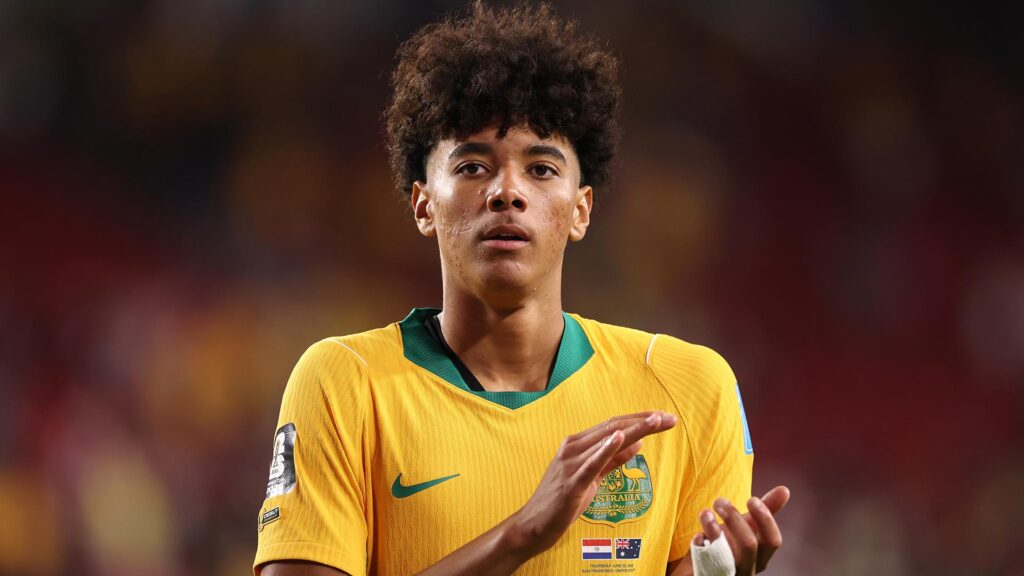
When Nestory Irankunda, Lucas Herrington and Alessandro Circati all completed high-profile moves, the headlines understandably focused on the massive transfer fees

Record deals, European giants, Australian talent making noise overseas.

But beneath the excitement lies a much bigger story.

For years, Australian football measured success by the players it could retain and attract. Today, success is increasingly being measured by the players it develops and sells.

That shouldn’t be looked at as a weakness of the domestic game.

It’s one of the A-League’s greatest strengths.

Changing landscape

The reality is, Australian clubs will continue to struggle to compete financially with Europe’s elite.

Trying to retain every emerging star was always going to be an impossible task.

Instead, clubs are embracing a model that has proven to be successful in countries across Europe and in leagues like the MLS in the United States.

Develop talented young players, provide them with first-team opportunities and a platform to showcase their talent.

Last year the A-League ranked in the top five for percentage of minutes by players aged 21 or younger across 55 leagues around the world.

These three recent transfers are not an isolated story, they are part of a broader trend.

European clubs are watching Australian football as closely as they ever have. The talent is there.

The World Cup effect

The Socceroos’ performance on the international stage have played a significant role in changing perceptions.

Australia is no longer viewed simply as a physical football nation. Increasingly, Australia is producing technically capable players who can adapt to the demands of Europe’s top leagues.

This exposure has provided players with a stronger opportunity to impress and demonstrate their ability.

The result is a transfer market where Australian players are genuine investments and viewed as integral pieces to a club’s future.

More than transfer fees

The financial benefit of player sales is obvious.

Transfer revenue provides clubs with opportunities to reinvest in academies, facilities, coaching and football operations.

But the impact extends much further.

Every Australian success story abroad raises the profile and trust of the domestic development system.

It encourages and gives European clubs greater confidence to scout Australian football more regularly and more intently.

It creates stronger relationships between local clubs and overseas markets and perhaps most importantly, it gives the next generation a clear pathway to elite football.

The next challenge

Evidently, producing talented players is not Australia’s most pressing challenge

Producing them consistently will be the real measure of how Australian football has progressed.

That requires continued investment in academies, coaching, facilities and national competitions.

Nestory Irankunda’s transfer to Sporting CP will reportedly fetch his junior club Adelaide Croatia Raiders approximately $220,000 under Fifa’s solidarity mechanism.

Fees like this are a reminder of the importance of well-developed pathways and a clear indication of how valuable strong investment in grassroots football can be.

Opportunity, not loss

Whenever another young Australian leaves for Europe, there is often discussion about what the A-League has lost.

Perhaps the better question is what Australian football has gained.

Every major transfer signals growing confidence in the country’s development pathway.

Every overseas success makes it easier for the next player to follow.

While it would be incredible to watch Nestory Irankunda play in the A-League every week, we should feel proud watching him play in the UEFA Champions League this year.

His journey is a reflection of the A-League’s success in giving young Australian footballers the opportunity and platform to reach that level.

Australia is unlikely to ever compete with Europe’s biggest leagues for salaries and prestige.

But it doesn’t need to.

If the game continues investing in youth development and embraces its position as one of the region’s leading producers of football talent, exporting player’s won’t be an indication of decline.

It will be a platform for fans to watch the next generation of world-class Socceroos playing right here on our own shores.


Global Institute of Sport hosts Masterclass on Athlete Management and Engagement

The Global Institute of Sport (GIS) held an Industry Masterclass on Athlete Management and Engagement, featuring guest speakers Brad Lloyd and Stefani Chinn.

This is part of its broader course offering, which includes a Master’s in Sports Business and Sports Analytics through the University of Newcastle.

The Masterclass addressed four themes: the day-to-day operations of player management, the construction of authentic athlete brands, the role of agents, and the impact of data.

The Panellists

Brad Lloyd is the founder of Apogee Sports Advisory, which develops micro-credentials in sport, and previously served as General Manager of Football at Carlton Football Club and as a player agent.

Stefani Chinn is a sports marketing consultant specialising in ambassador program design and formerly served as Senior Vice President of Global Marketing and Communications at the World Surf League (WSL).

Player management: the daily operations

Lloyd outlined the complexities of player management, drawing on his experience as General Manager at Carlton, highlighting the role of “list management.”

This involves negotiating player contracts and managing the composition of the list, including age profile and positional spread, to align with the club’s broader requirements.

Player welfare also falls within this remit, with a high-performance manager tasked with ensuring athletes remain fit and available.

“It’s all about attraction and retention,” Lloyd explained.

He noted that communication with club shareholders is a constant part of the role, with “talking up and down” the organisation requiring a strong team.

“Getting people, you trust with their credentials in these roles is paramount,” Lloyd explained.

Building Authentic Brands

Chinn addressed the construction of athlete-focused marketing strategies, arguing for a shift away from organisation-centred approaches.

“What was needed to do from a fan, athlete and commercial perspective was lead with an athlete-first approach.”

For this Chinn emphasised the importance of understanding athletes beyond their on-field performance.

“Knowing the athlete first is such an important piece, there is so much to the athlete than just how they play,” she said, also cautioning against an overreliance on social media metrics: “What we say is fit over followers, followers is a metric, but not a central one.”

Role of Agents

Lloyd addressed the function of agents, noting that while contract negotiation is central, agents must first understand the player and assess whether an opportunity is a suitable fit.

“I find if you get the agent onboard quickly, they will work with you,” Lloyd said.

Chinn distinguished between agents and managers: “Practically, in sports less governed, there are less agents and more managers”,

“It’s important to get the manager onside… the management team is critical” Chinn highlighted.

She noted that within the WSL, relatively few athletes have formal management, making direct engagement with players important.

The Impact of Data

Lloyd underscored the value of organised, accessible data that allows analytics to support and verify observations made within the team and the club’s image.

Though, he did stress that data-focused staff need to communicate their analysis clearly into club strategy.

Chinn discussed the evolution of data use in marketing, noting it was once used in a limited capacity, described as “spots and dots,” to determine audience reach.

Its current application allows more targeted decisions, resulting in what she described as “incredibly informed decisions.”

Though not football-focused at its core, the Masterclass offered insights applicable across codes.

Football’s scale means the club and agent-based environment is ever-present.

As individual athlete identities grow more prominent within sport, lessons from individually driven codes, offer valuable insight for a growing market.

These findings from other codes can be adopted into football; to benefit the whole system, it would be restrictive to not take these into account.

Most Popular Topics

Editor Picks

Send this to a friend