

Football South Australia confirms new Major Partner

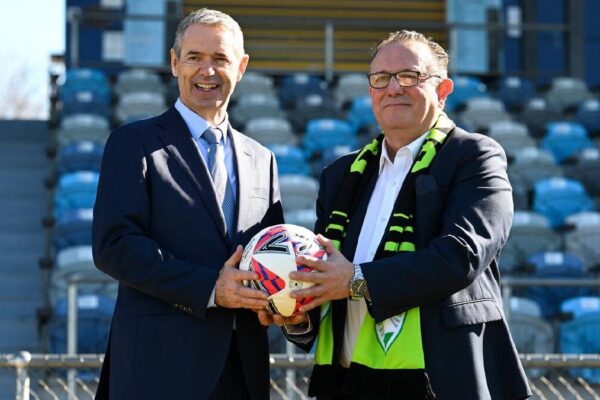
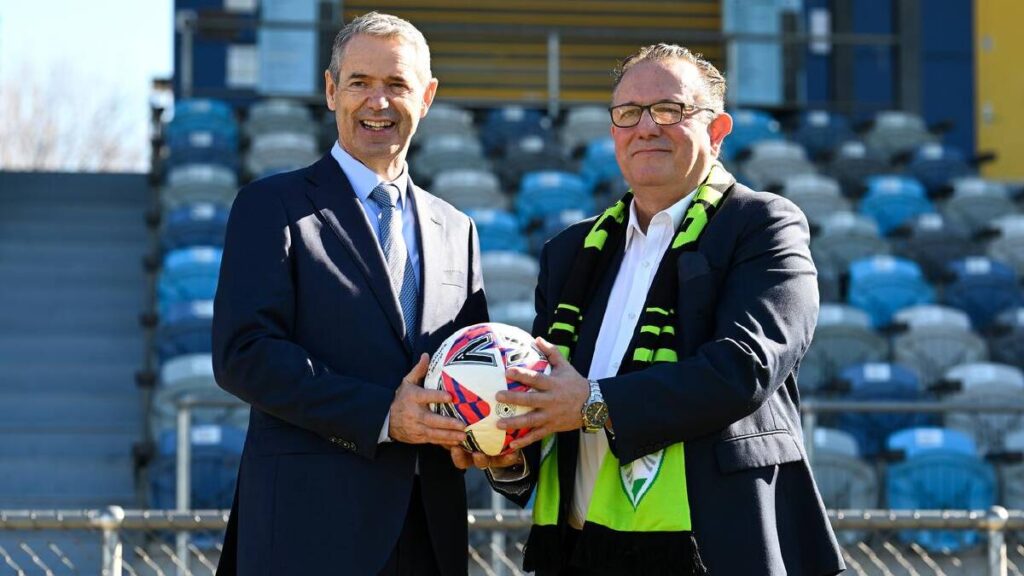
Football South Australia has confirmed a new major partnership with HPG Homes (Hot Property Group), marking the start of a meaningful relationship that’s expected to grow into a long-term support of football throughout South Australia.

HPG Homes, a division of Hot Property Group, is a multi-award-winning home builder based in South Australia, known for turning visions into reality.

Whether it’s your first home or a custom design, HPG Homes specialises in Fixed Price and Turn Key projects, ensuring your dreams are brought to life.

With a strong focus on trust, quality, and innovation, HPG Homes has gained widespread recognition and loyalty from families across the region.

This collaboration reflects a shared dedication to community, development, and the proud values that define South Australia, reinforcing HPG Homes’ commitment to delivering exceptional homes and contributing to the local community.

CEO of Football South Australia Michael Carter expressed his excitement about the new alliance.

“We are incredibly excited to welcome HPG Homes into the Football SA family,” said Mr Carter in a press release.

“This partnership brings together two proud local organisations that believe in building strong foundations—whether that’s through homes or through sport.

“We look forward to working closely with HPG Homes to make a lasting impact across our football community.”

Director of Sales, Marketing & Developments for HPG Homes, Stuart Zyhajlo, spoke about the importance of the agreement with Football SA.

“Partnering with Football South Australia is a natural fit for HPG Homes,” said Mr Zyhajlo in a press release.

“We are passionate about investing in this great state and supporting initiatives that bring people together.

“Football is at the heart of so many communities, and we’re proud to align with an organisation that shares our values of connection, excellence, and opportunity.”

Through its arrangement with Football SA, HPG Homes will become the naming rights sponsor of the HPG Homes State League 1 and 2 competitions.

This investment will help elevate the status of the senior men’s semi-professional leagues in South Australia.

Football South Australia and HPG Homes will work together to support grassroots development, empower young players and their families, and help build upon a flourishing football culture across the state.

To learn more about HPG Homes or to get in touch, click here.
Previous ArticleNext Article

Theo Fotopoulos outlines vision for Canberra United’s future

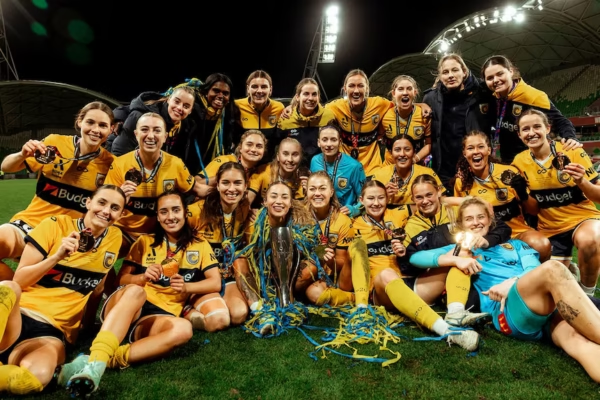
Professional football in the nation’s capital has entered a new era with Australian Sports Group (ASG) officially taking over Canberra United ahead of the 2026/27 season.

Led by Chairman Morris McAllister and CEO Theo Fotopoulos, ASG takes over a club whose future has been uncertain in recent years. Now, the focus has shifted from survival to building a sustainable future for football in Canberra.

Speaking to Soccerscene, Fotopoulos discussed why ASG chose to invest in Canberra United, the importance of preserving the club’s identity, and the roadmap for the chapter ahead for football in the nation’s capital.

Why Canberra?

The investment in Canberra United comes at an important time for the club. The beginning of the 2026/27 A-League Women season is just around the corner, and the prospect of an A-League Men side is drawing closer. Asked why ASG chose to invest in Canberra United and Canberra itself, Fotopoulos’ answer was simple.

“Canberra has stacks of football culture. It is a football city,” Fotopoulos said.

Speaking on the decision to retain the name Canberra United and not undertake a rebrand, Fotopoulos pointed to the club’s history and connection to the community.

“We retained the name, Canberra United, because of the history and the association. We felt there were more positives to retain the name,” Fotopoulos said.

The new ownership also wants supporters to play an active role in shaping the club’s future.

“The fans will be involved in making decisions,” Fotopoulos said.

Fotopoulos revealed that the club is already consulting with fans on the introduction of a nickname and is looking at developing a playing kit that is designed by the fans.

While Canberra offers a unique opportunity for professional football, Fotopoulos acknowledged the club will still compete for supporters’ attention alongside established sporting organisations such as the Canberra Raiders and ACT Brumbies.

Rather than viewing that as a disadvantage, he believes Canberra’s appetite for sport presents an opportunity to grow the club’s presence in the capital.
“It is something that allows us to accelerate the building of the brand in Canberra, Canberrans really love their sports,” Fotopoulos said.


The road ahead

The 2026/27 Ninja A-League season kicks off in October, and the priority for Fotopoulos and ASG at Canberra United is to ensure that Canberra is ready to compete not only next season, but sustainably for the years ahead.

“For us, it’s really stabilisation for the women’s. Build that and build the infrastructure around the women then translate that into an additional structure for the men’s program,” Fotopoulos said.

Infrastructure also forms a key pillar of ASG’s long-term vision. Fotopoulos said securing a long-term home at McKellar Park and improving football facilities across Canberra would play an important role in supporting future growth.

He believes better facilities will benefit not only Canberra United but football throughout the ACT and surrounding region.

Importantly, the takeover of the club included an option to introduce a team into the A-League Men’s competition from the 2028/29 season, which is something that ASG intends to pursue.

When speaking about the future of the proposed senior men’s side, Fotopoulos pointed to the quality within and around the organisation that will ensure its introduction.

“We’re quietly confident, the football department is very positive. There are a lot of quality people, both in Canberra and outside of Canberra, that have indicated interest in being part of the elite pathways academy structures that will be the foundation for a new A-League men’s team,” Fotopoulos said.


More than a football club

For Fotopoulos and ASG, this investment is about more than just owning and running a football club. The focus extends beyond results on the field to developing an integrated football structure and greater cohesion across the game.

In order to support a strong senior men’s and women’s side, Fotopoulos outlined the importance of establishing strong junior pathways for young players growing up in Canberra.

“One of the other big picture objectives is to finally get to establishing a permanent pathway,” Fotopoulos said.

Fotopoulos believes that these pathways will ensure long-term stability for Canberra United and help form the foundation of both senior playing groups for years to come.

However, it wasn’t just an investment in football in Canberra. It was a vote of confidence for women’s football in Canberra in particular.

While excitement is building around a potential expansion into the A-League Men, Fotopoulos believes that the current moment represents an even greater opportunity for the women’s game.

“If I was to look at any other time in history, this is probably the strongest time to invest in women’s football,” Fotopoulos said.


FIFPRO demands governance reform after FIFA’s FFE failure

While FIFA cancelled plans to move forward with FIFA Forward Enterprise (FFE), FIFPRO are demanding change at the top of football’s global governing body.

‘Abuse of power’

The plan to sell minority stakes in future FIFA competitions to private investors brought intense criticism from fans across the world.

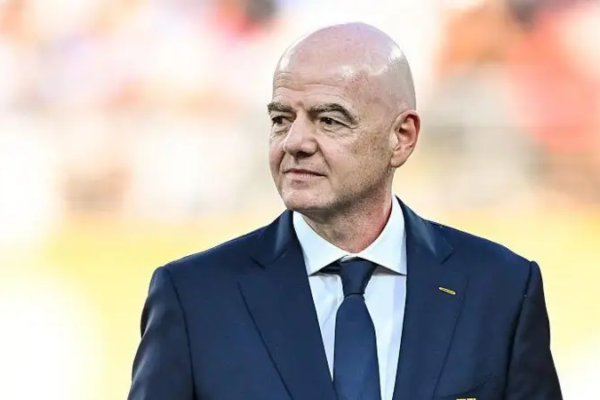
Governing bodies including UEFA (Europe), CONCACAF (North America, Central America and the Caribbean) and the AFC (Asia) rallied against FFE and FIFA President Gianni Infantino, leading to a crisis meeting in Morocco to determine Infantino’s seemingly untenable position at the head of world football governance.

The meeting, however, confirmed Infantino will remain as FIFA President going forward – a decision which has since prompted FIFPRO to make their stance clear: governance reform is a must.

“The withdrawal of FFE was inevitable. But withdrawing the proposal does not erase what it revealed,” the organisation said via an official statement on the FIFPRO website.

“A plan capable of permanently altering the ownership and governance of the FIFA World Cup, and commercialising the competitions built by generations of players, was conceived in secrecy, negotiated behind closed doors and brought to the brink of agreement before the FIFA Council, the Member Associations, players and football’s recognised stakeholders even knew it existed.”

“That is not merely a governance failure. It is a profound abuse of presidential power.”


How to navigate governance post-FFE

As reiterated by FIFPRO, the FFE controversy arrived a mere few weeks after a Memorandum of Understanding (MoU) between FIFA and the player’s union marked an optimistic step to a more collaborative future.

But what was previously a step in the right direction, now seems an insufficient policy to protect players – and the wider landscape of world football – from future unilateral decisions at the top.

FIFPRO’s demands – agreed upon by the Presidents of all FIFPRO regional divisions across Africa, Asia/Oceania, Europe, South America and Central & North America – include measures such as:

  • Using the Global Social Dialogue Platform as fundamental part of FIFA’s governance
  • Engagement with stakeholders over future decisions affecting the professional game
  • Voting rights for professional football’s stakeholders on the FIFA Council
  • Structural reforms to prevent future unilateral decisions

The message from FIFPRO is therefore clear. Now is not the time to rest on criticism; stakeholders in the professional game must encourage action and reform.

“These reforms are now indespensable. But they are the responsibility of the future, not an absolution of the past,” FIFPRO continued via their official statement.

“The players did not create this crisis. They will insist that football emerges from it with stronger institutions, stronger safeguards and leadership worthy of the trust the game demands.”

Most Popular Topics

Editor Picks

Send this to a friend