


Driving global sports leadership: Master of International Sports Business program at GIS (Sydney)

Course Overview

The Master of International Sports Business, delivered in partnership with the University of Newcastle, is a pioneering degree designed for individuals aiming to progress into senior management roles across the global sports industry.

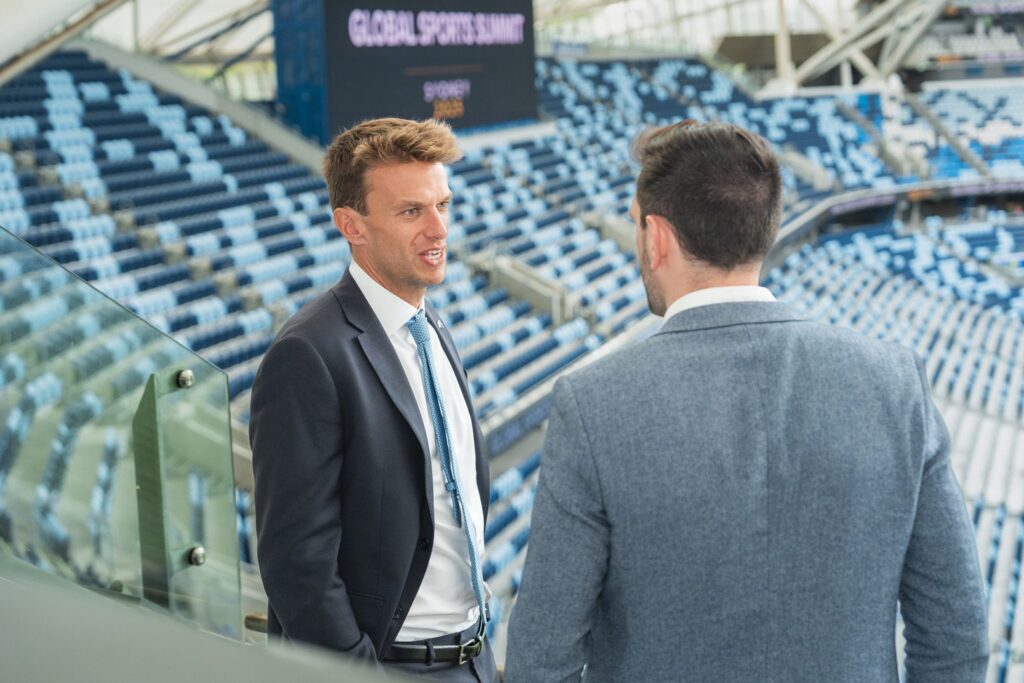
Based in Sydney, students benefit from access to world-class learning environments including the University of Newcastle’s Sydney CBD business school, the state-of-the-art Allianz Stadium, and the iconic Sydney Cricket Ground.

The course explores all major aspects of sports business management, with a strong focus on global marketing, media, finance, governance, and commercial operations. Students also gain expertise in sponsorship, athlete management, and sports economics, ensuring a well-rounded understanding of the international sports landscape.

Practical experience forms a core part of the degree, with opportunities for applied industry placements and an optional Global Study Tour, providing students with valuable exposure to the inner workings of leading sports organisations around the world.

Graduates leave with the skills, knowledge, and industry connections required to make an immediate impact in senior sports business roles.

Key Info:

Master’s

Duration: One year (full-time) or up to four years (part-time)

Study mode: Full-time or part-time – delivered on-campus in Sydney with access to Allianz Stadium and the Sydney Cricket Ground

Fees: $28,800 AUD (domestic students); $42,400 AUD (international students)

Teaching Location

Teaching is delivered across the University of Newcastle’s Sydney CBD business school and on-site at Allianz Stadium and the Sydney Cricket Ground, providing students with unique access to learning within world-class sporting facilities.

Modules

There are seven core and three optional modules designed to prepare students for leadership in the international sports sector.

Global Sports Marketing and Media

Students explore the principles of global sports marketing, focusing on consumer behaviour, brand development, and international market expansion. The module highlights the growing importance of digital and social media in driving fan engagement and building strong global brands.

Sports Sponsorship

This module examines the commercial power of sponsorships in sport. Students learn to negotiate and evaluate sponsorship agreements, assess activation strategies, and measure their impact on brand visibility and equity within global sports markets.

Sports Economics

Students develop a strong grasp of sports economics, exploring topics such as ticket pricing, stadium financing, player salaries, and the economic impact of mega-events. The module equips students with the ability to critically analyse revenue-sharing models and the broader financial structures that shape the sports industry.

Organisational Behaviour in Sport

This module focuses on human behaviour within sports organisations. Students analyse leadership styles, organisational culture, and decision-making processes, applying these insights to effectively manage and lead diverse teams in global sporting environments.

Sports Integrity

Students engage with complex ethical issues in international sport, including match-fixing, doping, and governance transparency. The module develops skills in ethical reasoning and prepares students to uphold integrity and responsibility in senior management roles.

Athlete and Agency Management

Covering areas such as contract negotiation, brand development, and athlete representation, this module provides students with a comprehensive understanding of agency practice and athlete management in the global sporting marketplace.

Applied Placement: Workplace Learning

Students undertake 140 hours of supervised work experience with a partner organisation, applying theory to practice in real-world contexts. This hands-on module helps build employability and career readiness within the sports industry.

Optional Modules

Leadership and Sustainability in Sport Enterprises: Explores sustainable business practices, strategic leadership, and continuity management in the sporting context.

New Media Analytics in Sport Business: Examines how data and digital tools are used to enhance fan engagement, media strategies, and business performance.

Global Study Tour: Provides international exposure through visits to sports organisations abroad, offering insights into cultural, commercial, and governance practices across global markets.

Entry Requirements

Applicants require one of the following:

A Bachelor degree plus one year of relevant work experience, or

A Bachelor Honours degree, Graduate Certificate, or Graduate Diploma, or

Five years of relevant work experience.

Relevant experience includes business, commerce, journalism, media, sports, statistics, data analytics, or equivalent fields. Applicants must provide certified qualifications, a detailed CV, and supporting employer statements.

English language proficiency must be demonstrated through an IELTS overall score of 6.5 (no band below 6.0) or equivalent qualifications.

Application Deadlines

Trimester 1, 2026

11 January 2026 – Last day to apply

19 January 2026 – Orientation

27 January 2026 – Commencement

Trimester 3, 2026

2 August 2026 – Last day to apply

10 August 2026 – Orientation

17 August 2026 – Commencement

Career Prospects

Graduates of the Master of International Sports Business are well-prepared for senior management positions within the multi-billion-dollar global sports industry.

Alumni from GIS and University of Newcastle programs have gone on to work with leading organisations including professional clubs, governing bodies, and major international events.

Career pathways include roles in:

  • Business development and commercial operations
  • Sports marketing and sponsorship management
  • Media and fan engagement
  • Athlete representation and agency management
  • Finance and governance within sports organisations
 

Previous ArticleNext Article

Football Has the Audience. Does It Have the Commercial Strategy?

Soccerscene has launched Survey 4: Commercial Confidence in Football, calling on clubs, sponsors, governing bodies, commercial leaders and football industry professionals to assess whether the game is making the most of its enormous commercial potential.

Football has the audience, participation base and community reach to be one of Australia’s most powerful commercial platforms. But does the industry have the commercial strategy, professionalism and infrastructure required to turn that potential into sustainable growth?

That is the question at the centre of Soccerscene’s latest industry research.

The survey examines how attractive grassroots football is to potential commercial partners, what industry professionals believe is limiting football’s commercial potential, and whether clubs are presenting themselves professionally enough to sponsors.

It also explores what sponsors value most when engaging with football – from community reach and participation scale to brand alignment, values and purpose – as well as whether improved facilities could directly contribute to stronger sponsorship outcomes.

Is football fully capitalising on its commercial opportunity?

Football continues to provide brands with access to highly engaged communities across grassroots, community and elite environments. Yet the commercial landscape remains fragmented, with clubs operating with vastly different levels of resources, capability, governance, media infrastructure and commercial expertise.

Soccerscene’s survey is designed to capture the industry’s perspective on where the opportunities exist – and where football may be leaving commercial value on the table.

The research will look specifically at four key areas:

  • Commercial attractiveness – How attractive is grassroots football as a commercial partnership?
  • Commercial barriers – What is holding football back from reaching its full commercial potential?
  • Club professionalism – Are clubs presenting themselves effectively and professionally to sponsors?
  • Sponsor value – What are sponsors really looking for when they invest in football?

The survey also asks whether better facilities would have a direct impact on sponsorship outcomes, highlighting the potential relationship between infrastructure, commercial presentation and investment.

Have your say

Soccerscene is encouraging football clubs, sponsors, commercial professionals, governing bodies, administrators, media professionals and industry stakeholders to participate.

The findings will contribute to Soccerscene’s ongoing program of industry research, designed to provide a clearer picture of the challenges and opportunities facing football and the organisations operating within it.

Take the Survey: Commercial Confidence in Football

Complete the Commercial Confidence in Football Survey here

The survey will close on 30 August 2026 at midnight, with responses received before the deadline included in the final analysis.

Football has the audience. The question is whether it has the commercial strategy to match.

Football Queensland’s Logan hub plan rejected by council

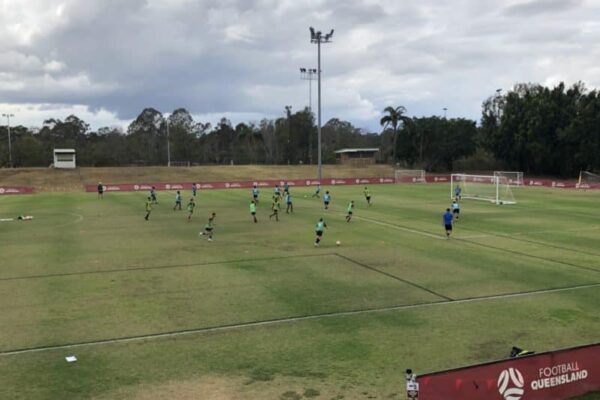
Football Queensland’s plans for a major new football hub at Meakin Park have been rejected by Logan City Council. The proposed $76.1 million redevelopment aimed to create a state home for football in Queensland.

Council unanimously rejected Football Queensland’s request for longer-term leases and additional land at the Slacks Creek site. The decision leaves the organisation’s current leases in place. The proposed development would have delivered new playing fields, elite training facilities and a dedicated home for Football Queensland.

Three-stage development

The first stage of Queensland Football’s development carried an $8.5 million price tag. It would upgrade fields, lighting, drainage and irrigation across Meakin and Mappas parks. The goal was to create a six-field, international-standard training venue.

The second stage represented the largest investment. Football Queensland planned to spend $55.3 million on a new headquarters at the adjoining Queens Park site. The facility would include a Women and Girls Academy, sports science facilities, sports medicine and strength and conditioning services.

A third $12.3 million stage would add an indoor futsal academy and two synthetic fields. Football Queensland said the project could create a major football precinct for the region. It also saw the facility playing a role in Queensland’s preparations for Brisbane 2032 and beyond.

Lease decision creates roadblock

Queensland’s governing body sought a 25-year lease with an option for another 25 years. Chief executive Robert Cavallucci said longer tenure was essential to secure government funding and move the project forward. The organisation has around three years remaining on its existing leases.

Council took a different view. Concerns included community access, funding certainty, future costs and the level of use at the existing facilities. Councillors also questioned whether a long-term arrangement would deliver enough benefit to Logan residents and grassroots clubs. Logan Council has now ordered a review of Football Queensland’s performance under its current lease.

Grassroots football at the centre

The decision highlights a wider issue for football infrastructure. Major facilities can provide elite pathways, sports science and high-performance opportunities, but unless councils can ensure local players and clubs can access the fields, they will be rejected.

Meakin Park already serves several sporting organisations, including football users and community sporting groups. Football Queensland said it had invested almost $2 million at Meakin Park and Mappas fields. It also argued the precinct operates at around 130 per cent capacity. For Queensland football, the challenge now is finding a model that can deliver high-performance facilities while expanding access for the community.

The proposal may have been rejected, but the need for better football infrastructure remains. With participation growing and Brisbane’s 2032 Olympic Games approaching, the debate over where and how Queensland builds its next generation of football facilities is unlikely to disappear.

Most Popular Topics

Editor Picks

Send this to a friend