
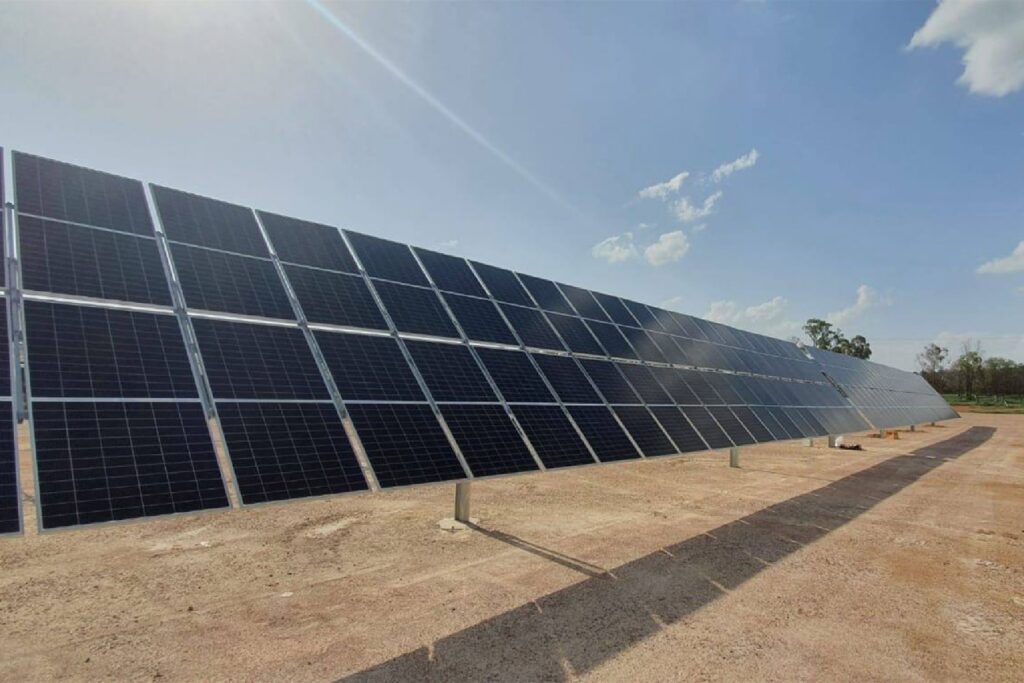
Brisbane City FC to Partner with ENERGYSALES for 2026 season

Brisbane City FC have announced the Brisbane-based energy company, ENERGYSALES, as a new sponsor for the 2026 season. The partnership is reflective of the club’s commitment to building a sustainable future, with both parties valuing excellence, integrity and respect.

Local Alliances

Brisbane City FC expressed their excitement at the opportunity to partner with ENERGYSALES ahead of next year, highlighting the core values which underpin the collaboration.

“We’re excited to welcome ENERGYSALES to the City famiglia as a Bronze Sponsor in 2026,” the club said via a social media post.

“Founded in 2007 in Brisbane’s inner suburbs, they’ve grown into a respected leader built on integrity, improvement and customer-focused service.”

Given that the company have grown from the suburbs of Brisbane to now operating in most states across Australia, they embody an ambition and professionalism which could help The Azzurri in their own developments on and off the pitch.

Working with ENERGYSALES further reflects Brisbane City FC’s continued commitment to working with local companies who are equally dedicated to building a sustainable future. Previously working with Volvo Cars Brisbane North, a company which prides itself on a “people-first” approach, the club is building a solid reputation for supporting local businesses driven by safety and sustainability.

Long-Term Sustainability

“When we build, let us think that we build forever” is the mantra behind Brisbane City FC, and one which is supporting their objectives both on and off the pitch.

As The Azzurri look to continue enhancing their membership, inclusion, junior football and senior football operations, as well as continuing their community support, forging professional connections upheld by a clear Brisbane-based identity will be crucial. So after news of a collaboration with ENERGYSALES, the club’s local fanbase can anticipate exciting developments throughout next season and beyond.

Furthermore, collaborating with ENERGYSALES offers Brisbane City FC a unique opportunity on their own sustainabilty journey off the field. Supported by a team with over 30 years of experience, the company can offer expert advice in reducing consumption, finding the best prices, and achieving their clients’ renewable energy goals.

Click here to find out more information about ENERGYSALES and the services they provide.
Previous ArticleNext Article

Global Institute of Sport hosts Masterclass on Athlete Management and Engagement

The Global Institute of Sport (GIS) held an Industry Masterclass on Athlete Management and Engagement, featuring guest speakers Brad Lloyd and Stefani Chinn.

This is part of its broader course offering, which includes a Master’s in Sports Business and Sports Analytics through the University of Newcastle.

The Masterclass addressed four themes: the day-to-day operations of player management, the construction of authentic athlete brands, the role of agents, and the impact of data.

The Panellists

Brad Lloyd is the founder of Apogee Sports Advisory, which develops micro-credentials in sport, and previously served as General Manager of Football at Carlton Football Club and as a player agent.

Stefani Chinn is a sports marketing consultant specialising in ambassador program design and formerly served as Senior Vice President of Global Marketing and Communications at the World Surf League (WSL).

Player management: the daily operations

Lloyd outlined the complexities of player management, drawing on his experience as General Manager at Carlton, highlighting the role of “list management.”

This involves negotiating player contracts and managing the composition of the list, including age profile and positional spread, to align with the club’s broader requirements.

Player welfare also falls within this remit, with a high-performance manager tasked with ensuring athletes remain fit and available.

“It’s all about attraction and retention,” Lloyd explained.

He noted that communication with club shareholders is a constant part of the role, with “talking up and down” the organisation requiring a strong team.

“Getting people, you trust with their credentials in these roles is paramount,” Lloyd explained.

Building Authentic Brands

Chinn addressed the construction of athlete-focused marketing strategies, arguing for a shift away from organisation-centred approaches.

“What was needed to do from a fan, athlete and commercial perspective was lead with an athlete-first approach.”

For this Chinn emphasised the importance of understanding athletes beyond their on-field performance.

“Knowing the athlete first is such an important piece, there is so much to the athlete than just how they play,” she said, also cautioning against an overreliance on social media metrics: “What we say is fit over followers, followers is a metric, but not a central one.”

Role of Agents

Lloyd addressed the function of agents, noting that while contract negotiation is central, agents must first understand the player and assess whether an opportunity is a suitable fit.

“I find if you get the agent onboard quickly, they will work with you,” Lloyd said.

Chinn distinguished between agents and managers: “Practically, in sports less governed, there are less agents and more managers”,

“It’s important to get the manager onside… the management team is critical” Chinn highlighted.

She noted that within the WSL, relatively few athletes have formal management, making direct engagement with players important.

The Impact of Data

Lloyd underscored the value of organised, accessible data that allows analytics to support and verify observations made within the team and the club’s image.

Though, he did stress that data-focused staff need to communicate their analysis clearly into club strategy.

Chinn discussed the evolution of data use in marketing, noting it was once used in a limited capacity, described as “spots and dots,” to determine audience reach.

Its current application allows more targeted decisions, resulting in what she described as “incredibly informed decisions.”

Though not football-focused at its core, the Masterclass offered insights applicable across codes.

Football’s scale means the club and agent-based environment is ever-present.

As individual athlete identities grow more prominent within sport, lessons from individually driven codes, offer valuable insight for a growing market.

These findings from other codes can be adopted into football; to benefit the whole system, it would be restrictive to not take these into account.

Beyond Old Trafford: How Manchester United’s new stadium could reshape an entire district

Manchester United’s proposed new 100,000-seat stadium is more than a replacement for Old Trafford.

It’s the centrepiece of one of the most ambitious urban regeneration projects ever planned by a football club.

Unveiled in March by architects Foster + Partners, the concept would see a new stadium built adjacent to Old Trafford, just 350 metres from the existing ground.

Supported by Trafford Council, the Greater Manchester Combined Authority and Old Trafford Regeneration Mayoral Development Corporation the proposed development aims to transform the area surrounding the stadium into a thriving mixed-use precinct featuring housing, commercial space, public transport improvements and new public amenities.

While the stadium dominated headlines, the broader vision is about much more than just football.

Once complete, the new venue would become the largest club football stadium in the UK, increasing capacity from around 74,000 to 100,000 spectators.


More than just a stadium

However, the stadium is only one piece of a much larger plan.

Foster + Partners vision includes new homes, offices, hotels, retail and hospitality spaces, green public areas and improved pedestrian links.

They believe this “mixed-use” destination will attract visitors throughout the year and create a “vibrant destination” for tourists and visitors from across the world.

The proposal also places a strong emphasis on sustainability, with plans for a walkable precinct supported by public transport, rainwater harvesting and renewable energy technologies integrated into the stadium’s distinctive canopy design.


A major economic opportunity

The broader regeneration has been positioned as a major economic opportunity for Greater Manchester.

An independent study conducted by Oxford Economics found that the stadium and regeneration project could contribute approximately $15 billion to the UK economy.

In addition, the project would also support around 92,000 jobs while creating more than 17,000 new homes and attracting an additional 1.8 million visitors yearly.

Those figures remain projections rather than guaranteed outcomes, but they have become central to the club’s case for the redevelopment.


Connecting United to a Wider European Trend

A key component of the proposal is improving transport connections around Old Trafford

The British Prime Minister Andy Burnham described the project as significant opportunity for the region, with investment in rail, Metrolink and surrounding infrastructure viewed as essential to unlocking the wider regeneration potential.

The plan also includes greater pedestrian accessibility, to integrate the stadium district with surrounding communities.

Manchester United’s proposal reflects a broader trend across Europe football.

Stadium developments are increasingly viewed as catalysts for urban renewal and economic development, rather than standalone sporting venues.

Projects such as Tottenham Hotspur Stadium, Everton’s new waterfront home and Real Madrid’s redevelopment of the Bernabeu have demonstrated how modern stadiums can generate revenue through hospitality, entertainment and commercial activity beyond football.


Transforming Old Trafford

Despite support for the proposal, significant hurdles remain before construction can begin.

Funding arrangements, planning approvals and major infrastructure upgrades will all need to be finalised before construction can begin.

If delivered, the project would represent one of the largest football-led regeneration projects ever undertaken in the UK.

The project would transform not only where Manchester United plays, but how the wider Old Trafford district lives, works and grows.

Most Popular Topics

Editor Picks

Send this to a friend