

AFC Women’s Asian Cup: How do we sustain growth and success?

This year’s AFC Women’s Asian Cup 2026 was not just another tournament. It was a momentum shift for women’s football in Australia. Match quality, crowd numbers and national pride have never been higher – but how do we ensure this success continues after the final whistle?

Financial input and output

Ahead of the tournament, the Australian Government demonstrated their support and commitment through a $15 million investment.

With such significant financial backing behind the Matildas’ pursuit of victory on home soil, the tournament seemed poised to be hugely successful – and it didn’t disappoint.

Projections point towards an overall revenue of over $250 million, with over 24,000 international visitors and 1000 jobs created. It proves that when money is invested into the women’s game, the rewards on and off the pitch are undeniable.

Federal Minister for Sport, Anika Wells, was present at the official announcement of the Australian Government’s funding boost.

“The Tillies and the 2023 Women’s World Cup redefined Australian sport and now the Albanese Government is backing the Matildas again with a $15 million investment for the Women’s Asian Cup,” said Wells.

“Women’s sport is not nice to have or a phase, it is brilliant, nation-stopping, and here to stay.”

With huge revenue numbers and contributions to local economies, this year’s AFC Women’s Asian Cup has demonstrated the financial power and potential of the Matildas, and ultimately of women’s football across Australia.

Attendance numbers skyrocket

Beyond finances, however, the standout factor throughout the tournament was the record-breaking crowd sizes.

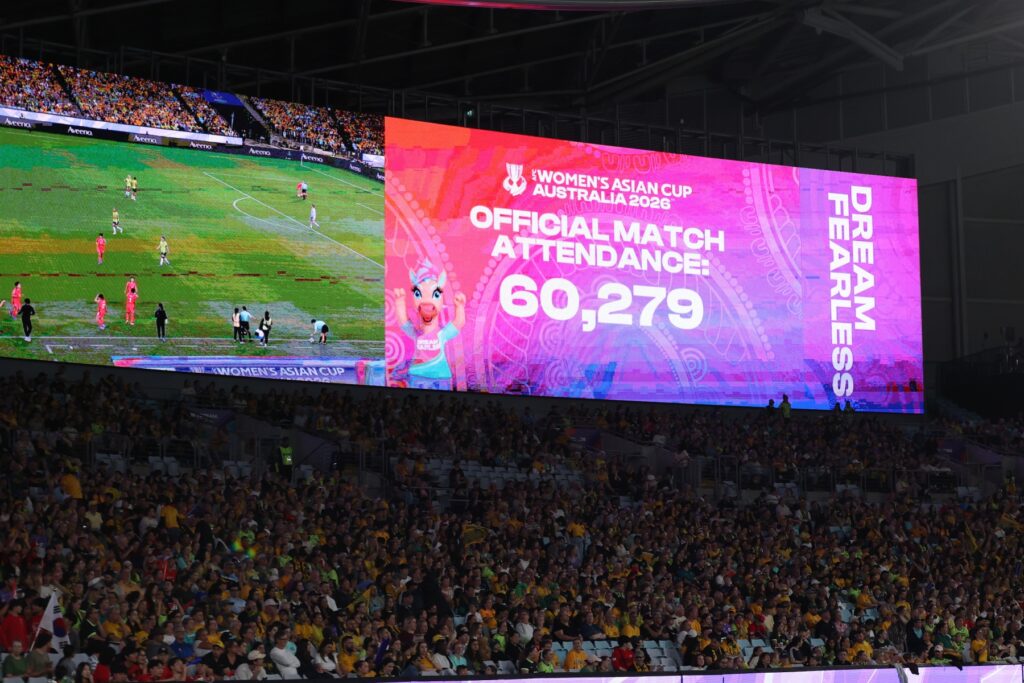
60,279 fans packed into Stadium Australia in Sydney to witness an entertaining 3-3 draw between the Matildas and South Korea, a huge number which was later smashed by Saturday’s final attendance of 74,397.

However, support wasn’t exclusive to the Matildas. At Japan’s semi-final demolition of South Korea, a 17,367 crowd set a record for the highest attendance at a Women’s Asian Cup match between two visiting teams.

Although skeptics will highlight that many games failed to sell out, the crowds attracted during this year’s tournament highlight two decades of immense growth. In 2006, the final brought in little more than 5000 people.

In fact, with 250,000 attendees over three weeks, and ticket sales increasing five-fold from the previous record, the proof of a nationwide buzz is there for all to see.

But creating a buzz is not enough. We must act on it, and sustain it, if we want to see true, long-term development.

Avoiding past mistakes

Following the excitement of the 2023 FIFA Women’s World Cup, women’s football in Australia looked set to launch into a new era of development and expansion.

Although female participation increased in New South Wales by 31% between 2022 and 2025, attendance numbers at ALW matches fell by 26% between the 2023-24 and 2024-25 seasons. The ‘buzz’ – without genuine commitment or backing to sustain it – wore off far too quickly.

This year’s AFC Women’s Asian Cup was a second chance for Australia’s football industry to correct its past mistakes, and ensure that state federations, governments and teams align in their commitment to growing the ALW and women’s football as a whole.

Furthermore, given the on-pitch prowess and off-pitch success over the past few weeks, the Asian Cup could play a major role going forward. It may yet be the catalyst, the long-awaited springboard that can propel women’s football to new heights in years to come, both on the international stage and within Australia.

How do we prolong the buzz?

So, while the success of the Asian Cup can encourage important discussions, the key is to inspire stakeholders and decision makers into taking real action.

On Saturday, Football Australia expressed their commitment to progressing the women’s game in NSW after the tournament ends. Joined by Football NSW and Northern NSW Football, they called upon the NSW government to address facility imbalances over the next decade.

“The growth of women’s football in New South Wales is not a short-term trend – it represents a fundamental shift in participation and expectation across our communities. To sustain this momentum, we must invest in infrastructure that is inclusive, accessible and fit for purpose, ensuring everyone has the opportunity to play, develop and thrive in the game,” said Football NSW CEO, John Tsatsimas.

“We call on the government to invest in the largest participation sport in NSW to bridge the growing facilities gap in NSW which will deliver economic and social long-term benefits through connected communities.”

To this end, a proposed NSW AFC Women’s Asian Cup Australia 2026 Legacy Fund – worth $343 million over a ten-year period – would address several issues at grassroots level. These include:

  • Delivering upgraded community facilities to accommodate growing participation numbers among women and girls
  • Improving accessibility, safety and playing capacity across metro, regional and remote communities
  • Supporting multi-use and multi-sport facilities
  • Strengthening pathways for women and girls across all age groups
  • Continuing the legacy of the AFC Women’s Asian Cup 2026

Should this fund be implemented in NSW over the next ten years, fans and players within the women’s game will be at the heart of a major, long-overdue realignment.

Final thoughts

Despite the bitter disappointment of losing in the final on home soil, there is nevertheless an important reminder to take away: we can’t control results on the field, but we can control intent, attitude and commitment off it.

The AFC Women’s Asian Cup 2026 was a huge success for women’s football in Australia. Matches were of extremely high quality, crowd numbers smashed tournament records, and the nation was united in their support for one of Australia’s most popular sporting outfits.

There may not be silverware to show for it, but the past few weeks have provided something far greater: recognition, respect and a platform to continue growing long after the final whistle. The demand is undeniable, participation and interest is soaring, and the voice of the women’s game can no longer be ignored.
Previous ArticleNext Article

Manchester City must pay the ultimate price for financial cheating

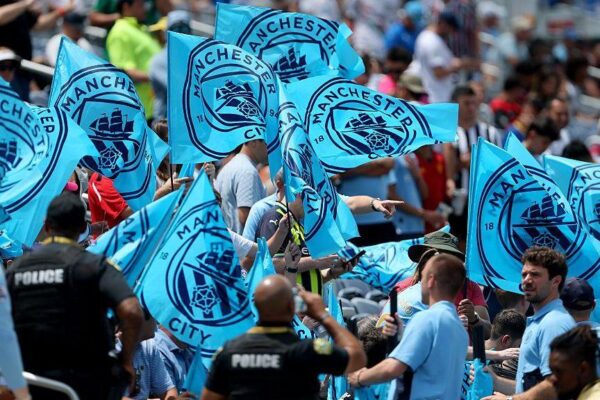
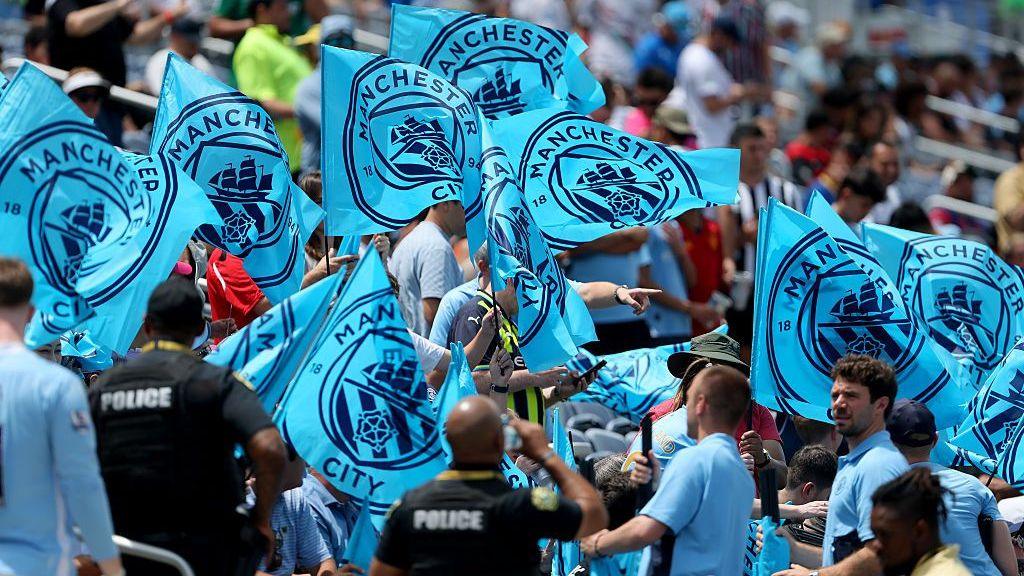
Manchester City’s financial scandal has reached boiling point. On the 29th of September, an independent commission found City guilty of all charges relating to serious breaches of the league’s financial rules across nine seasons, from 2009/10 to 2017/18. The commission also upheld three of four charges concerning the club’s failure to cooperate with the Premier League investigation.

The Premier League says City used sham commercial arrangements and disguised owner funding to inflate revenue and reduce costs by more than $1.7 billion (£900 million). Abu Dhabi United Group funded $1.58 billion (£830.69 million) that appeared in City’s accounts as sponsorship money from Abu Dhabi companies. The commission concluded that City’s accounts concealed the true financial position from auditors and regulators.

The 115 charges cover inaccurate financial information, player and manager payments, financial rules and the investigation itself. City has lodged its appeal against the guilty verdict, but for such a serious sporting scandal, attention has already turned to the potential punishments. In a Premier League era where foreign investment is king and revenues have skyrocketed, we should be asking questions. How did Manchester City get away with this for so long, and how can the punishment act as a deterrent to keep the reputation of football’s biggest league intact?

The hack that exposed the story

The most uncomfortable part of this saga is how the authorities discovered it and how most likely City never would have been exposed. In 2018, German publication Der Spiegel published leaked internal City emails and documents obtained through Football Leaks. Rui Pinto, the Portuguese hacker behind Football Leaks, supplied material that alleged City had disguised owner investment as sponsorship revenue and manipulated arrangements to satisfy financial regulations.

The Premier League investigation began in December 2018. City were formally charged in February 2023, after a four-year investigation, and the hearing finally began in September 2024. That timeline is nothing short of extraordinary; eight years between the leaks being exposed and charges being brought to Manchester City does significant sporting damage.

Man City won eight major titles during the alleged period, including three Premier League titles. Recalling titles in any sport leaves a sour taste in any sports fan’s mouth. The fans of opposing sides given titles feel robbed of the special moment, and Manchester City fans could feel rightfully deceived. But it goes beyond even this as we look at who Manchester City signed during those seasons. Players such as Ilkay Gundogan and Kevin De Bruyne played vital roles in City’s later titles beyond the 2017/2018 season. Would they have joined if this had been uncovered earlier? It’s impossible to say, but it shows how City’s early investment from 2009/10 still contributed to their titles in the 2020’s.

The Premier League’s credibility

That delay is not just embarrassing for City; it damages the Premier League. The league is the most competitive and commercially powerful domestic competition in football. Its rules are supposed to create a framework in which clubs compete on sporting merit while remaining financially sustainable. If a club can allegedly distort its accounts by hundreds of millions of dollars and the process takes years to reach a verdict, despite City’s potential obstruction, every other club has a reason to question whether the system works.

The irony is obvious: if Football Leaks hadn’t shared what they found on Manchester City through its hack, the scheme never would have been uncovered. If financial rules were designed to stop clubs gaining an unfair competitive advantage, then the Premier League may need to change how it investigates how its clubs’ finances are being managed. If anything should be gained from this, it may be that financial regulation needs to be improved as the Premier League and its clubs spend billions.

As for Manchester City, punishment cannot simply be a fine that becomes another operating cost.

Relegation is the only serious answer

If the verdict survives the appeal, Manchester City should be removed from the Premier League and those three aforementioned league titles removed. A fine would be inadequate and, depending on what points deduction City got, would punish the club in one season while leaving the historical record largely intact. Nottingham Forest received a four point deduction for a charge of Profitability and Sustainability rules in 2023-2024. City’s 114 charges will see much greater punishment then that.

Even if City are relegated they would almost be guranteed to be promoted the next season so even that feels like a slap on the wrist. Despite their investment during the nine seasons being questioned their five titles subsequent to that period will be expected to remain in their hands. My solution is to relegate City to the Championship without the potential of promotion for three seasons, one for each title won during that time.

City fans will call that harsh but their is strong reason to come down hard and that’s because this is bigger than Manchester City. Foreign ownership has brought huge investment into English football, but investment cannot mean exemption from the rules. Owners, executives and clubs must know that the Premier League’s financial regulations carry consequences that cannot be negotiated away.

The league has a choice. It can impose a manageable punishment and move on, or it can demonstrate that competitive integrity matters more than the commercial power of its biggest clubs. If City’s appeal fails, the answer should be clear: relegation, a reckoning over the titles and a message to every owner that the Premier League’s rules are not optional.

Australian referee strike ends ahead of new A-League season

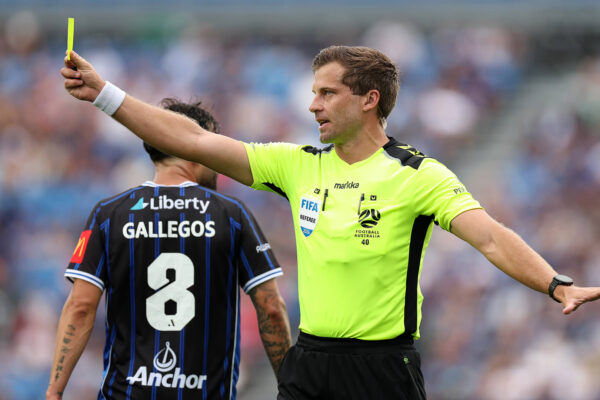
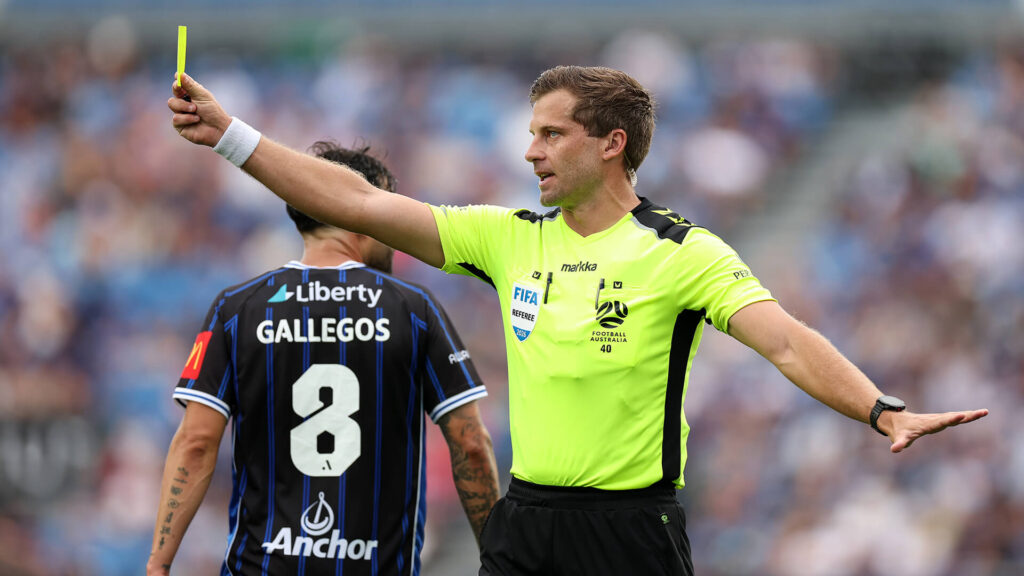
Australia’s referee crisis is over as Football Australia (FA), the Australian Professional Leagues (APL) and the Professional Football Referees Association (PFRA) have reached an agreement ahead of the 2026/27 domestic season.

The deal ends industrial action that began on September 4th. Nearly 100 of Australia’s top referees had refused appointments during the dispute. The agreement provides immediate certainty for officials. It also clears the way for Australia’s top referees to return for the Australia Cup Final this week and the opening rounds of the A-League Men and Women competitions.

Under the new framework, referees will be contracted and employed exclusively by Football Australia. The APL will cover the cost of referees appointed to A-League matches. The arrangement runs through the end of the 2026/27 season. The three organisations will continue discussions on a longer-term structure for elite refereeing in Australia.

The agreement resolves the central dispute between the parties. Football Australia had proposed shifting responsibility for A-League referees to the APL. The referees opposed the move. They raised concerns about employment certainty. They also questioned the independence of referees working under a league controlled by the clubs they officiate.

The dispute had already disrupted Australian football. Singaporean officials were brought in for the Australia Cup semi-final between Sydney FC and Melbourne Victory. Rookie Australian officials also took charge of another Cup fixture during the strike. The crisis therefore moved beyond a contractual disagreement. It affected the delivery of major matches.

The A-League Men season begins on October 16 with the Sydney derby at Allianz Stadium and the A-League Women season will also begin in October. The agreement solves the immediate problem. It does not end the wider debate over refereeing in Australian football.

FA, the APL and the PFRA must now build a sustainable model for elite officials. The strike exposed uncertainty around contracts, funding and governance. Those issues cannot return every time a new season approaches. Australian football can moves forward, but this is an issue that should be reviewed for the sustainability of Australian referees.

Most Popular Topics

Editor Picks

Send this to a friend