




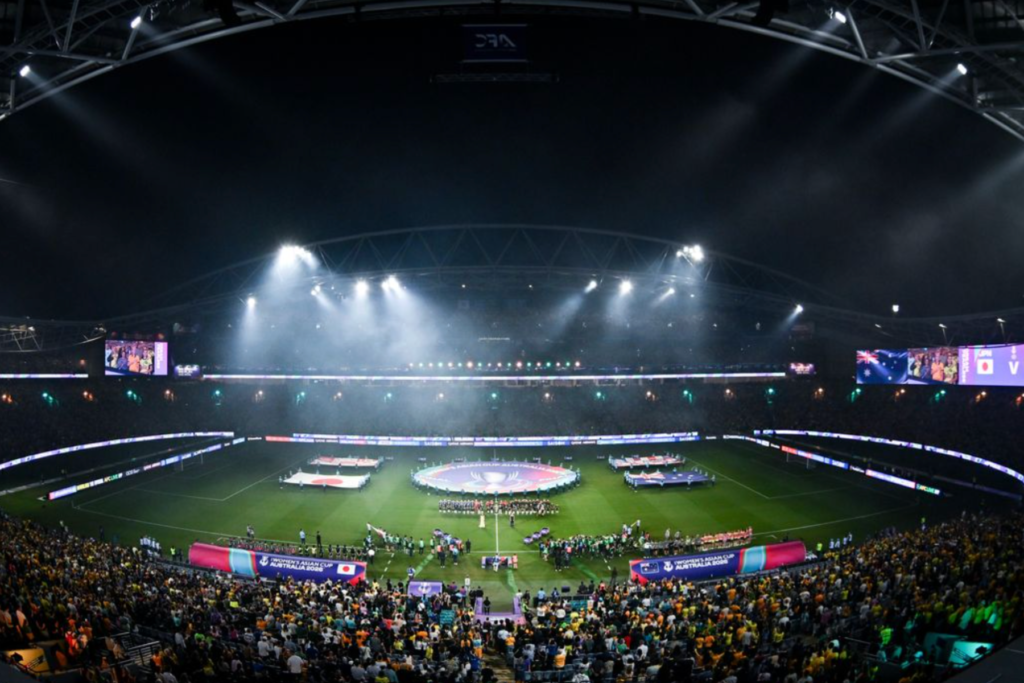
Football Australia calls for $343M to Sustain Women’s Football Boom

Football Australia has called on the NSW Government to establish a decade-long grassroots facilities fund worth up to $343 million, warning that without urgent investment in community infrastructure, the record participation growth driven by the AFC Women’s Asian Cup and the 2023 FIFA Women’s World Cup risks stalling before it takes hold.

The call, made jointly with Football NSW and Northern NSW Football as the CommBank Matildas prepare to contest the Asian Cup Final in Sydney on Saturday, centres on a proposed NSW AFC Women’s Asian Cup Australia 2026 Legacy Fund. The proposal entails annual grant rounds of up to $34 million over ten years, administered by the NSW Office of Sport in collaboration with the state’s two football governing bodies.

The fund would prioritise female-friendly and gender-inclusive changerooms, upgraded lighting and drainage, and improved accessibility across metropolitan, regional and remote communities.

“The shortage of female-friendly changerooms is a particularly critical issue, impacting safe and equitable access to the game,” said Football Australia CEO Martin Kugeler. “Securing its future in NSW requires infrastructure that meets contemporary standards, supports equitable access, and reflects the expectations of the growing number of women and girls participating in the game.”

The Growth and Infrastructure Gap

The case for the fund rests on a participation surge that has significantly outpaced the facilities available to support it. Female participation in NSW football grew by nearly 31 percent between 2022 and 2025, a trajectory accelerated by the 2023 World Cup and now further strengthened by a home Asian Cup that has drawn more than 260,000 attendees to NSW venues alone, including over 25,000 interstate and international visitors. The tournament is forecast to contribute an estimated $260 million in national economic output.

Independent analysis commissioned by the three football bodies found that NSW currently requires a ten-year infrastructure plan to adequately bridge what they describe as a facilities gap: the distance between the current condition of community grounds and the standard required to keep pace with demand.

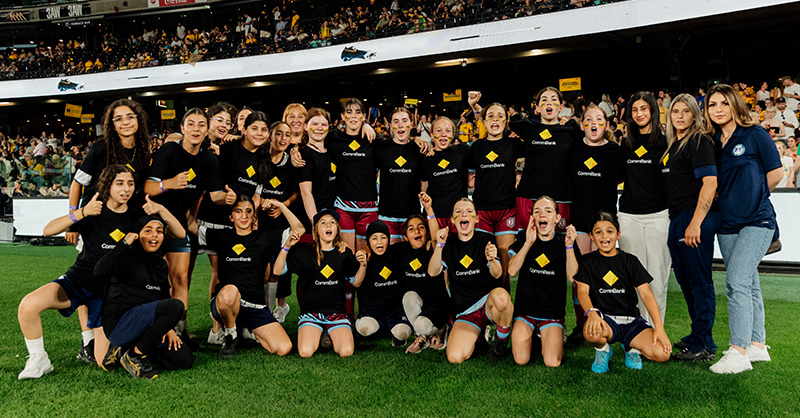
Football NSW CEO John Tsatsimas said the problem was structural and long-standing. “Historically, established and aging facilities do not cater for all-gender use, which doesn’t support growing participation by women and girls,” he said. “Across NSW, fields currently lose around 34 percent of their capacity due to playing field conditions- issues including lack of functional drainage infrastructure, insufficient lighting, and no irrigation or substandard below-ground infrastructure.”

Clubs unable to meet demand are turning players away. Facilities without adequate changerooms are effectively telling women and girls that the game was not built with them in mind, because in many cases, it wasn’t.

“Many clubs are struggling to keep pace, with outdated and inadequate infrastructure limiting opportunities for women and girls,” Kugeler said.

Regional communities bearing the pressure

The infrastructure deficit is not evenly distributed. Northern NSW Football CEO Peter Haynes said participation across the region was at record levels and still rising, but that the rate of growth had exposed how far government investment had fallen behind.

“The demand is not coming, it’s already here,” Haynes said. “More players, more teams, more competitions, but without the infrastructure and support to match, that growth becomes increasingly difficult to sustain.”

Haynes pointed to the particular pressure on regional communities, where the boom in women’s and girls’ football has been pronounced, but facilities have historically received less investment than metropolitan areas. “We have the players, the passion and the momentum,” he said. “What we need now is the long-term investment to ensure women’s football not only grows but thrives for generations to come.”

The equity dimension of that argument is difficult to overstate. Access to safe, functional sporting facilities is not evenly distributed across income levels or geography, and the communities most likely to be underserved are often those where participation growth has been most significant.

Legacy beyond the tournament

The timing of the call is deliberate. Major sporting events generate participation surges that are well documented, and equally well documented is the tendency for those surges to dissipate when the infrastructure to sustain them is not in place. Football Australia’s pitch to the NSW Government is an argument that the Asian Cup’s legacy should be measured not in ticket sales or television audiences but in the number of women and girls still playing five and ten years from now.

“The legacy of the AFC Women’s Asian Cup 2026 should endure well beyond the conclusion of the tournament,” Kugeler said. “Women’s sport, and football in particular, are essential to building a more equal, healthy and inclusive society.”

The NSW Government has not yet responded to the fund proposal. The Asian Cup Final took place at Stadium Australia last Saturday.

Previous ArticleNext Article

PlayHER Tournament returns as Football Victoria Doubles Down on Women’s Participation

Football Victoria‘s PlayHER Tournament returns to the Knox Regional Football Centre in Wantirna South this May, offering women across Victoria the chance to play football in a structured, social and welcoming environment.

Now in its fifth year, the tournament has grown considerably from its origins as the GO Soccer Mums Cup, which was recognised as Community Sporting Event of the Year at the 2023 Victorian Sport Awards. The rebranding to PlayHER reflects a deliberate broadening of the event’s ambition, from a competition aimed at a specific demographic to one designed to lower the barriers to entry for any woman who wants to play.

That ambition is visible in the structure of the day itself. Matches are played in a five-a-side format with short halves, keeping the format accessible for players who may not have competed in years, or those who are stepping onto the pitch for the first time. New for 2026, participants will compete across two categories: an Open and 35 years and over. It’s an addition that acknowledges the different pathways women take into sport, and the importance of ensuring the game remains available at every stage of life.

More than a matchday

The tournament comes at a strategically critical time. Women’s football in Australia is in the middle of a period of unprecedented growth, with record crowds at the AFC Women’s Asian Cup and a growing pipeline of players coming through at club level. Translating that momentum into lasting participation growth depends on events like PlayHER- low-cost, community-driven, and explicitly designed for women who might not see themselves reflected in elite competition.

At $20 per participant, the tournament remains one of the most accessible organised football experiences available in Victoria. The message is straightforward: the game is for everyone, and the door is open.

AFC Women’s Asian Cup: How do we sustain growth and success?

This year’s AFC Women’s Asian Cup 2026 was not just another tournament. It was a momentum shift for women’s football in Australia. Match quality, crowd numbers and national pride have never been higher – but how do we ensure this success continues after the final whistle?

Financial input and output

Ahead of the tournament, the Australian Government demonstrated their support and commitment through a $15 million investment.

With such significant financial backing behind the Matildas’ pursuit of victory on home soil, the tournament seemed poised to be hugely successful – and it didn’t disappoint.

Projections point towards an overall revenue of over $250 million, with over 24,000 international visitors and 1000 jobs created. It proves that when money is invested into the women’s game, the rewards on and off the pitch are undeniable.

Federal Minister for Sport, Anika Wells, was present at the official announcement of the Australian Government’s funding boost.

“The Tillies and the 2023 Women’s World Cup redefined Australian sport and now the Albanese Government is backing the Matildas again with a $15 million investment for the Women’s Asian Cup,” said Wells.

“Women’s sport is not nice to have or a phase, it is brilliant, nation-stopping, and here to stay.”

With huge revenue numbers and contributions to local economies, this year’s AFC Women’s Asian Cup has demonstrated the financial power and potential of the Matildas, and ultimately of women’s football across Australia.

Attendance numbers skyrocket

Beyond finances, however, the standout factor throughout the tournament was the record-breaking crowd sizes.

60,279 fans packed into Stadium Australia in Sydney to witness an entertaining 3-3 draw between the Matildas and South Korea, a huge number which was later smashed by Saturday’s final attendance of 74,397.

However, support wasn’t exclusive to the Matildas. At Japan’s semi-final demolition of South Korea, a 17,367 crowd set a record for the highest attendance at a Women’s Asian Cup match between two visiting teams.

Although skeptics will highlight that many games failed to sell out, the crowds attracted during this year’s tournament highlight two decades of immense growth. In 2006, the final brought in little more than 5000 people.

In fact, with 250,000 attendees over three weeks, and ticket sales increasing five-fold from the previous record, the proof of a nationwide buzz is there for all to see.

But creating a buzz is not enough. We must act on it, and sustain it, if we want to see true, long-term development.


Avoiding past mistakes

Following the excitement of the 2023 FIFA Women’s World Cup, women’s football in Australia looked set to launch into a new era of development and expansion.

Although female participation increased in New South Wales by 31% between 2022 and 2025, attendance numbers at ALW matches fell by 26% between the 2023-24 and 2024-25 seasons. The ‘buzz’ – without genuine commitment or backing to sustain it – wore off far too quickly.

This year’s AFC Women’s Asian Cup was a second chance for Australia’s football industry to correct its past mistakes, and ensure that state federations, governments and teams align in their commitment to growing the ALW and women’s football as a whole.

Furthermore, given the on-pitch prowess and off-pitch success over the past few weeks, the Asian Cup could play a major role going forward. It may yet be the catalyst, the long-awaited springboard that can propel women’s football to new heights in years to come, both on the international stage and within Australia.


How do we prolong the buzz?

So, while the success of the Asian Cup can encourage important discussions, the key is to inspire stakeholders and decision makers into taking real action.

On Saturday, Football Australia expressed their commitment to progressing the women’s game in NSW after the tournament ends. Joined by Football NSW and Northern NSW Football, they called upon the NSW government to address facility imbalances over the next decade.

“The growth of women’s football in New South Wales is not a short-term trend – it represents a fundamental shift in participation and expectation across our communities. To sustain this momentum, we must invest in infrastructure that is inclusive, accessible and fit for purpose, ensuring everyone has the opportunity to play, develop and thrive in the game,” said Football NSW CEO, John Tsatsimas.

“We call on the government to invest in the largest participation sport in NSW to bridge the growing facilities gap in NSW which will deliver economic and social long-term benefits through connected communities.”

To this end, a proposed NSW AFC Women’s Asian Cup Australia 2026 Legacy Fund – worth $343 million over a ten-year period – would address several issues at grassroots level. These include:

  • Delivering upgraded community facilities to accommodate growing participation numbers among women and girls
  • Improving accessibility, safety and playing capacity across metro, regional and remote communities
  • Supporting multi-use and multi-sport facilities
  • Strengthening pathways for women and girls across all age groups
  • Continuing the legacy of the AFC Women’s Asian Cup 2026

Should this fund be implemented in NSW over the next ten years, fans and players within the women’s game will be at the heart of a major, long-overdue realignment.

Final thoughts

Despite the bitter disappointment of losing in the final on home soil, there is nevertheless an important reminder to take away: we can’t control results on the field, but we can control intent, attitude and commitment off it.

The AFC Women’s Asian Cup 2026 was a huge success for women’s football in Australia. Matches were of extremely high quality, crowd numbers smashed tournament records, and the nation was united in their support for one of Australia’s most popular sporting outfits.

There may not be silverware to show for it, but the past few weeks have provided something far greater: recognition, respect and a platform to continue growing long after the final whistle. The demand is undeniable, participation and interest is soaring, and the voice of the women’s game can no longer be ignored.

Most Popular Topics

Editor Picks

Send this to a friend