


South Canberra FC Breaks the Mold: Equity-Driven Model Earns ‘Club Changer’ Honour

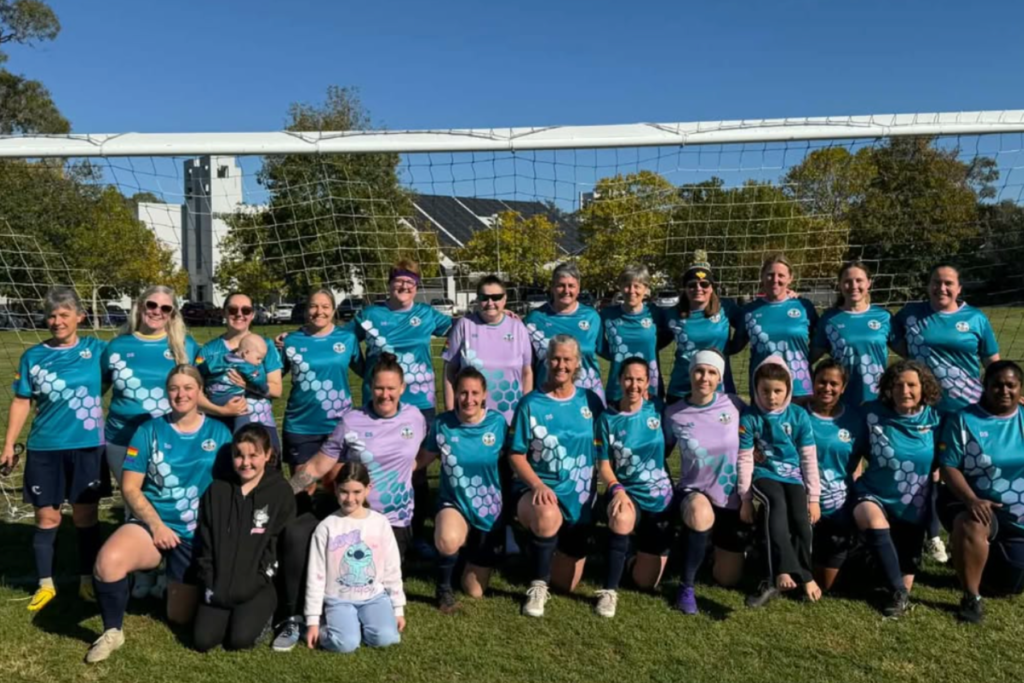
South Canberra Football Club has been named Club Changer of the Month for April, in a recognition that reflects a broader shift across Australian football toward rewarding clubs that are actively dismantling the structural barriers limiting women’s access to the game.

The AFC Women’s Asian Cup has just delivered record crowds and unprecedented visibility for women’s football in Australia, and the Club Changer program is now asking what comes next. Its decision to name South Canberra Football Club as Club Changer of the Month for April signals a clear shift in how the program defines contribution: away from participation numbers alone, and toward the equity frameworks that determine whether women stay in the game once they arrive.

South Canberra FC built that framework from the ground up. Established in 2021, the club set out to give women and female-identifying players a safe, inclusive environment to play football at any level. It runs entirely on volunteers, operates as a not-for-profit, and is governed by an all-female committee with 13 of its 14 coaches identifying as female.


Building the infrastructure of inclusion

In 2026, the club secured grant funding and put it to work immediately. Two coaches are completing their C Licence qualification, and ten coaches, players and community members have undertaken the Foundations of Football course, which directly tackles the cost and accessibility barriers that exclude women out of coaching pathways.

The club also commissioned a female-specific strength and conditioning program with sports physiotherapists ahead of the 2026 season, targeting injury prevention and explicitly supporting players returning after childbirth.

SCFC’s leadership team draws from LGBTIQ+ individuals, First Nations people and veterans, strengthening the club’s connection to the communities it was built to represent.

The Club Changer program is backing clubs that do this work- clubs that treat equity as infrastructure rather than aspiration. At a moment when Australian football is under pressure to turn its biggest-ever surge of women’s interest into something lasting, SCFC’s model offers a clear answer to the question of how.
Previous ArticleNext Article

Football West runs Indigenous pilot program during NAIDOC Week’s 50th anniversary

Football West ran a pilot program for Indigenous children at the Sam Kerr Football Centre during NAIDOC Week’s 50th anniversary. Former Socceroo David Williams delivered the session.

This year’s national NAIDOC theme, “50 Years of Deadly,” marks five decades since the movement began. It honours the Elders, artists and communities who built it.

“Having these young indigenous kids here at the Sam Kerr Football Centre was great to see,” Williams said. “The feeling they got running around the same pitch the Socceroos and Matildas have trained on was special for them and me.”

A player turned administrator

Williams retired from professional football in November 2025 after a career-ending ACL injury. As a teenager he trained with Club Brugge and Liverpool, and coach Miron Bleiberg once described him as the “best Australian prospect since Harry Kewell.”

He went on to become the first Indigenous player to represent Melbourne City, scored in the UEFA Cup against Eintracht Frankfurt, and won the Indian Super League with ATK.

Since retiring, Williams has moved into administration at Football West. He also sits on the Indigenous Football Australia Council, which oversees the grassroots initiative John Moriarty Football.

A name with its own history

Football Australia named Williams head coach of the Charles Perkins XI last year, the governing body’s national Indigenous youth team. Football Australia renamed the side in 2025 in honour of Dr Charles Perkins AO, following endorsement from the Perkins family and the National Indigenous Advisory Group.

Perkins, an Arrernte and Kalkadoon man, played for Adelaide Croatia and Pan Hellenic in the 1950s. He went on to become the first Aboriginal Australian to graduate from university and a leader of the 1965 Freedom Rides.

Football Australia has described the renamed team as reflecting a commitment to embedding cultural identity and leadership within its high-performance pathway for Aboriginal and Torres Strait Islander youth.

What happens next

“After living out my dream as a professional player, to now being able to offer experiences like this and hopefully inspire the next generation of young Indigenous footballers is very rewarding,” Williams said. “There is also a lot of talent that we can tap into.”

He said running the session during NAIDOC Week let Football West mark two things at once. “Creating a fun session for these kids during NAIDOC Week meant we could celebrate culture and sport in one go,” he said.

Williams wants the session to become a regular fixture rather than a single event. “Going forward, I would love to put on more of these programs throughout the year and get more indigenous youngsters playing football,” he said.

Football West has not yet confirmed funding or a schedule for further sessions.

ParaMatilda to headline Frankston Pines’ new cerebral palsy program

A ParaMatilda will appear at Frankston Pines Soccer Club on Saturday as the club launches Victoria’s newest cerebral palsy football program during Football Victoria’s first dedicated Para Engagement Round.

The event, part of Round 7 of the All Abilities League Junior & Youth divisions, runs at Monterey Reserve, Monterey Boulevard, Frankston North. Children and young people with cerebral palsy, acquired brain injury or stroke-related symptoms can register for come-and-try sessions and meet current para athletes.

The ParaMatildas are the reigning world champions after winning the 2024 IFCPF Women’s World Cup. The victory made them the first Australian national football side to win a World Cup at any level. Goalkeeper and captain Katelyn Smith scored a hat-trick in the 6-2 final win over the United States.

The round coincides with Frankston Pines’ official launch of its new cerebral palsy football program. The club has organised a day including a Beyond the Limits cerebral palsy football showcase, community market stalls, face painting, a colouring competition, a jumping castle, fairy floss and a free sausage sizzle.

The event also raises awareness of Football Victoria’s upcoming Para Pathways Clinics, which will provide children and young people with neurological conditions an opportunity to explore the para football pathway. Further details about the clinics will be released soon.

The engagement round builds on the growth of Victoria’s All Abilities League, which has expanded from a single division in 2017 to 20 teams across four divisions representing 12 clubs this season.

Football Victoria launched its Disability Football Framework in December 2025, a strategic initiative to strengthen the delivery of disability football programs across the state. The Framework sets direction for FV’s work, guiding the development of new resources, guidance and minimum standards that clubs can use in the future.

FV All Abilities & Inclusion Programs Coordinator Selin Arpaci, named Administrator of the Year at the 2025 Victorian Disability Sport & Recreation Awards, said the framework marked a shift from ad hoc delivery to a structured approach.

“We’re no longer doing things just because they’ve always been done that way,” Arpaci said. “Our approach is now intentional, structured, and genuinely supportive for players, clubs and the community”.

Access remains a focus. The 2024-25 Regional All Abilities Participation Grants, funded by the Victorian Government, have supported clubs including Mitchell Rangers, Traralgon Olympians and Phillip Island Soccer Club to establish or expand all abilities programs.

Football Victoria has also partnered with Powerchair Sports Victoria to strengthen pathways for people with disabilities, while monthly women and girls cerebral palsy football sessions now run at The Home of the Matildas.

Frankston Pines has been a regular participant in the All Abilities League, with its inclusive program providing opportunities for people with physical, psychosocial or intellectual disabilities to participate in a supportive environment.

Most Popular Topics

Editor Picks

Send this to a friend