Ninja unveiled as major partner for A-League Women All Stars

The Australian Professional Leagues (APL) has unveiled the official 2026 Ninja A-League All Stars playing kit, while confirming global lifestyle brand Ninja as the team’s new major partner ahead of this month’s clash with Chelsea FC Women.

Manufactured by Kappa Australia, the new kit will be worn by the Ninja A-League All Stars when they face Women’s Super League champions Chelsea at Allianz Stadium on Wednesday, August 12, as part of the Sydney Super Cup.

The announcement further strengthens Ninja’s growing presence in Australian football after becoming the naming rights partner of the Ninja A-League earlier this year. The partnership extends the global brand’s investment in the women’s game and places it front and center for one of the league’s biggest showcase fixtures.

Kappa Australia will once again supply the match apparel, continuing its association with the A-League All Stars concept. The new design is intended to celebrate the occasion while reflecting the continued growth and professionalism of women’s football in Australia.

The fixture against Chelsea provides the Ninja A-League All Stars with another opportunity to test themselves against elite international opposition, following the competition’s continued expansion as a marquee event on the Australian football calendar.

Supporters will be able to purchase the official playing jersey at Allianz Stadium on matchday, through Ultra Football and via Kappa Australia’s online store.

Previous Article

Barnsley FC’s under-17s pathway delivers six Zone League debuts in 2026

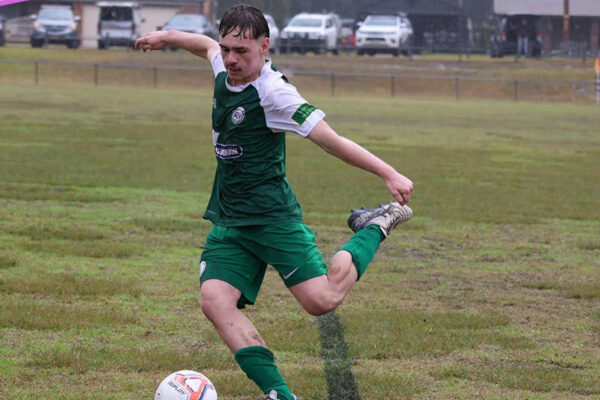
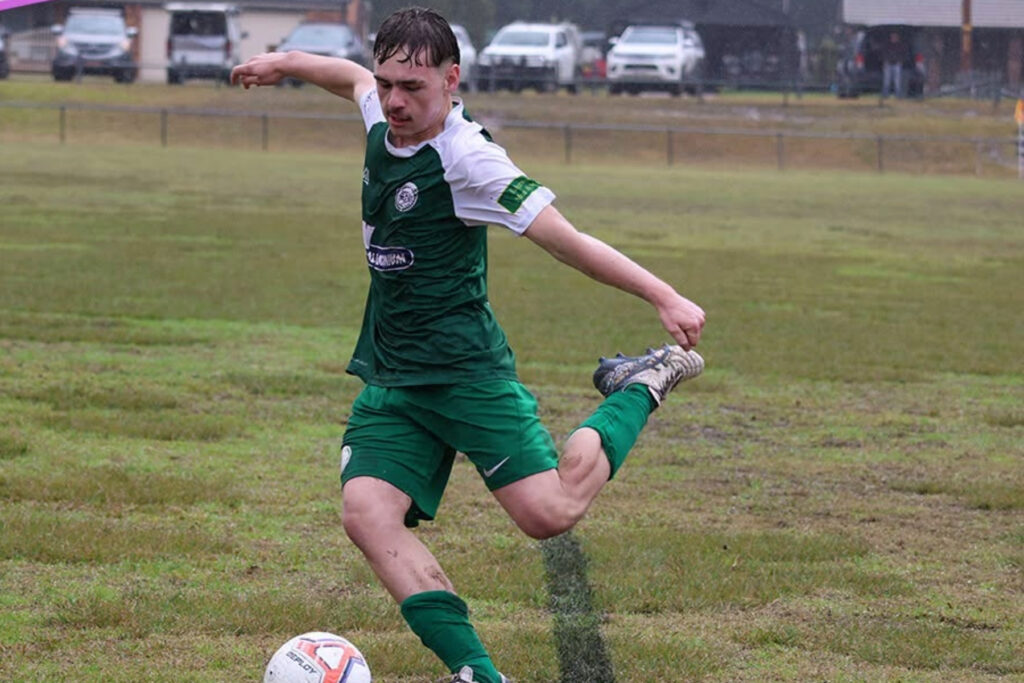
Barnsley FC has integrated six of its under-17s players into first and reserve grade football during the 2026 Zone League season, the Hunter Valley club has confirmed.

The elevations include a debut in goal at first grade level and a goal scored by another player promoted to third grade, as the club continues to formalise the pathway connecting its junior and senior programs across the 2026 season.

Team Operations Coordinator Josh Boote said the movement of players between grades had been a deliberate focus through the season.

“We have had six boys from the under-17s come up and play Zone League, with one making his debut in goals in first grade,” Boote said.

Barnsley FC head coach Jacob Avellis said the under-17s squad had trained and competed alongside senior sides throughout 2026.

“The under-17s have been a part of our season all season. We support them, they support us,” Avellis said.

Zone League is the third tier of competition within Northern NSW Football, administered jointly by Newcastle Football, Macquarie Football and Hunter Valley Football, the three sub-federations covering the region. The competition spans three divisions and around 35 clubs across more than 10 local government areas.

Clubs can be promoted from Zone League into Northern League One, the tier above, while individual players who progress through zone competition remain eligible for representative selection at state level.

Midfielder Oliver Cousin was handed the reserve grade captain’s armband late in a recent match, a decision the club attributed to his consistency and development through the season. Barnsley FC described the appointment as an example of the club’s junior-to-senior structure in practice.

Avellis said the club’s junior programs continued to depend on volunteer coaches and administrators to function alongside its representative pathway.

“They are all keen to get up in Zone League and be a part of the squad. The potential within those teams is unreal,” Avellis said.

Barnsley FC positioned the approach as part of a broader aim to retain local talent as players progress through age groups, a persistent challenge for clubs operating across the Hunter region’s geographic spread.

The club said its focus for the remainder of the season and into 2027 would be on formalising the pathway further, including clearer criteria for movement between grades and continued integration of junior training with senior programs.

Part of a wider strategic push

Northern NSW Football oversees development across the Hunter, Central Coast, Mid North Coast and New England regions, with Zone League forming part of a broader structure that includes representative and state pathways feeding into national systems.

The club-level movement aligns with a priority set out in NNSWF’s 2024 to 2026 Strategic Plan, which includes Talent Development for All as one of four core pillars alongside participation, facilities and governance.

NNSWF has previously stated the plan has driven measurable growth in registrations and competition strength across the region, including in women’s and girls’ football, since it was introduced.

A new strategic plan covering 2027 to 2029 is in development, with NNSWF engaging Sports Advisory Partners Australia to lead consultation with clubs, zones, volunteers and staff across the coming months.

Barnsley FC positioned its own pathway work at under-17s level as consistent with that broader direction, with junior and senior programs run under a single club structure rather than managed as separate entities.

The club’s first and reserve grade Zone League sides are scheduled to continue through the competition’s regular season before finals, with the under-17s squad remaining integrated into senior training in the interim.

Why the A-League’s collective bargaining negotiations matter

The Australian Professional Leagues (APL) and Professional Footballers Australia (PFA) remain at odds over a new collective bargaining agreement (CBA), with players recently rejecting the league’s latest proposal ahead of the new A-League season.

The APL has made financial sustainability its priority in CBA negotiations. After several challenging years, the league is looking to keep club costs under control while still offering a slight increase to salary caps and minimum wages. It’s a cautious approach designed to give clubs greater financial certainty.

The PFA believes caution alone won’t grow the game.

The PFA has rejected the proposal, arguing it does not go far enough to support the long-term growth of the game. The players’ union says greater investment is needed if the A-Leagues are to remain competitive, retain talent and increase their commercial value.

These negotiations are taking place at an important time for Australian football.

Australian football has become increasingly successful at producing players for Europe and Asia, but that success comes with a trade-off. Clubs often lose their best talent, with the A-Leagues providing an ideal platform for players to showcase their ability. However, rather than being the final destination, it has increasingly become a stepping stone to bigger opportunities abroad.

While this pathway has produced a large share of the next generation of Socceroos and Matildas, it has also left A-League clubs in a constant cycle of rebuilding, with success on the pitch often followed by the departure of their brightest stars. As a result, player recruitment and retention have become central issues in discussions about the long-term growth of the domestic game.

The issue of player retention was also highlighted this week by Matildas captain Sam Kerr.

Kerr said many Australian players would consider returning to the A-League Women if the league offered stronger professional conditions and salaries. While her comments weren’t directly about the CBA, they highlighted the same issue confronting the men’s and women’s competitions alike.

With negotiations stalling, the outcome of the CBA is likely to shape not only player conditions, but also the financial framework and competitive direction of the A-Leagues for years to come.

Most Popular Topics

Editor Picks

Send this to a friend