




At Malvern City Football Club, the problem isn’t finding girls who want to play football.
It is finding appropriate facilities for their growing cohort of young girls to play at.
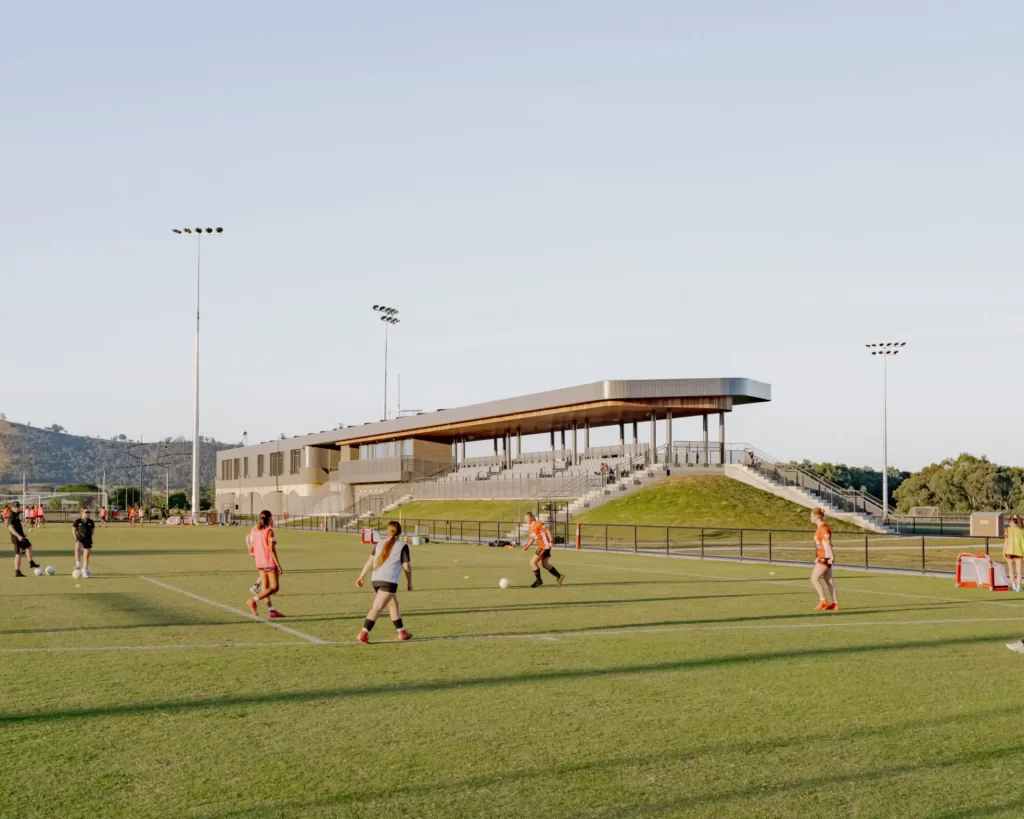
The club now has close to 100 girls in its female program, built up over the past six years. But at Sir Zelman Cowen Park, which Malvern City has called home for decades, there are no dedicated female change rooms or toilets.
Instead, there are shared facilities, public toilets and, according to club President John Hatzis, situations in which parents, coaches and team managers have had to effectively stand guard so girls can use the toilets without others entering.
“The problem we’ve got is that the public toilets are often locked, or they’re just not accessible,” Hatzis told Soccerscene
The result, he says, is a bizarre and frankly uncomfortable workaround: adults physically blocking the toilets so girls can use them.
That is the human face of what has become a much bigger argument about sporting infrastructure in the City of Stonnington.
It is the sort of arrangement that might have been observed decades ago.
Not something we see in 2026.
Malvern City isn’t a small club asking ratepayers to build it a palace.
It has more than 800 registered players. Its female program is approaching 100 participants. Its junior high-performance program is thriving, while its senior men’s side just earned promotion to VPL1.
And yet its president says the club has spent years being told, essentially, to wait.
“We’re doing everything right as a club,” Hatzis says.
“But every year around this time, we get teams of girls, we get teams of boys coming over to us and we’re saying, ‘We can’t help you. We just don’t have the facilities.’”
That should concern more than just football people.
Where Stonnington chooses to spend
Stonnington is not a municipality that pinches its pennies on sport – far from it.
The council recently completed the Stonnington Sports Centre at Percy Treyvaud Reserve, a $49.9 million project described by council as its largest-ever investment in community sport. The project delivered new facilities for tennis, lawn bowls, cricket, lacrosse, netball and basketball, as well as four indoor courts and more than 200 undercover car spaces. A project where the council contributed $45.9 million.
There are also millions more in the current and forward capital programs.
The 2026-27 budget includes $600,000 for maintenance and renewal works at Malvern Valley Golf Course. Sports-ground asset renewal and oval reconstruction programs amount to about $13.5 million over the forward program to be carried over the next decade. Pavilion renewal is worth roughly $7.3 million over the same period, while outdoor tennis facilities have a forward renewal program of about $3.3 million.
There is a roughly $10.4 million forward program attached to Central Park Pavilion and about $7 million for Waverley Oval Pavilion.
None of this means football is entitled to an equal slice of every dollar.
Many of these facilities are shared between sports. A cricket oval can also be an AFL ground. A sportsground renewal program can benefit soccer as well as football. Money allocated to floodlights or pavilions cannot simply be stamped with one sport’s logo.
A $66 million gap — and a question of priorities
There is no doubt Stonnington, too, has a legitimate argument on the other side.
Council has identified an enormous backlog of sporting infrastructure needs. Its own figures suggest about $124 million in required investment, with only about $58 million currently funded over the coming decade.
That leaves a gap of roughly $66 million.
The council cannot fix everything at once.
But that is precisely why the argument over Malvern City is worth having.
Hatzis does not dispute there are competing demands. In fact, one of the more revealing parts of our conversation was his admission that football itself bears some responsibility.
For years, he says, football clubs have simply found a way to survive.
“The squeaky wheel receives the oil,” he said.
“Obviously, we haven’t been squeaking enough over many decades and we’ve just made do with what we’ve got.”
That is a remarkably candid admission from a club president trying to make a case against his local council.
But Hatzis believes patience has run out.
A decade of planning, but no clear timeline
Malvern City has been at Zelman Cowen for almost half a century. The club says the pavilion dates back to the late 1980s, and despite repeated approaches to council, there is still no funded redevelopment of the facility in the current budget.
The council is now undertaking a 10-year Sport and Recreation Plan for Zelman Cowen, following consultation with more than 400 community members. The park contains five sports fields covering roughly 47,500 square metres and caters for football, Australian rules football, baseball, cricket, athletics and ultimate frisbee.
Council acknowledges that the precinct is under increasing pressure and that its future planning needs to consider accessibility, safety, gender equity and universal design.
But planning is not building.
And a plan without funding is a very long way from a toilet that actually works.
That is Hatzis’ frustration.
“We’re being constantly told that there’s a plan to redevelop Zelman Cowen,” he says.
“But the problem is that there is no funding.”
His estimate is that Malvern City could be seven-to-ten years away from seeing meaningful redevelopment.
Fair Access in policy, barriers in practice
That is where the council’s own rhetoric around women’s sport becomes important.
Stonnington’s sports infrastructure planning recognises that many older sporting facilities were not designed for equitable participation by women and girls.
That is not an abstract policy problem at Zelman Cowen.
There are girls standing outside a toilet.
There are parents being asked to intervene.
And there are young players who, he fears, could eventually decide that the inconvenience isn’t worth it.
“If they’re not willing to fund it, then how long can clubs fund it?” he asks.
That is the question Stonnington needs to answer.
Not because Malvern City should automatically jump to the front of the queue, but because the council needs to be able to explain why it has placed this particular queue in the order it has.
The comparison with other sporting facilities is inevitably going to be uncomfortable.
Hatzis points to the state-of-the-art facilities available to some AFL and cricket clubs. He points to major investment at Toorak Park and the new Stonnington Sports Centre.
His argument is that Malvern City would be prepared to meet council halfway.
Malvern City is willing to meet council halfway
The club would lobby state and federal governments. It would seek private funding. It would even ask its own support base to contribute.
“We’d be happy to go and lobby the state and federal government to help us with the funding,” Hatzis says.
“And even creating some private funding. I’d be happy to get our support base to help with that also.”
That matters, because this isn’t simply a demand that ratepayers write Malvern City’s club a cheque.
It is a demand for a pathway. Give us a plan. Give us a timeframe. Give us something to work towards.
Instead, Hatzis says, the message from council has become increasingly difficult to accept.
“The communication coming down the line that we don’t have any funding is absolutely wearing thin.”
Football’s missing support
One of the more damning parts of our conversation wasn’t even about the council.
Hatzis says he has repeatedly contacted Football Victoria seeking support. He says he has been told someone would contact him to begin an engagement process and that Malvern City is an important part of the fabric of Victorian football.
That call is yet to come, which raises an uncomfortable possibility: perhaps Malvern City’s problem isn’t just that it has failed to convince Stonnington; perhaps it’s that football itself has historically been too willing to accept second-best facilities and making do.
Football has grown enormously in the past 25 years, while girl’s and women’s football in particular has exploded across the past decade. Clubs are increasingly expected to provide pathways from junior participation to elite competition.
Yet the infrastructure beneath that growth has not kept pace.
A story bigger than one club
That is where Stonnington’s own Fair Access Policy becomes particularly difficult to reconcile with what is happening at Zelman Cowen.
The council says the policy is designed to address “known barriers” experienced by women and girls in accessing community sport facilities, before acknowledging in its budget that implementing Fair Access will require “significant new funding”.
It is a remarkable admission: the council recognises the barriers, recognises that its sporting infrastructure needs to change, yet the girls at Malvern City are still being asked to wait for the money to make that change happen.
Malvern City’s story is therefore bigger than one pavilion.
It is about what happens when a sport grows faster than the facilities designed to accommodate it.
And it is about whether councils can continue to promote female participation while asking girls to accept facilities that would be considered unacceptable in other parts of community life.
Stonnington says it has limited resources.
That is undoubtedly true.
But scarcity does not remove the responsibility to explain the choices being made.
If there is $600,000 available for one year’s renewal and maintenance at a golf course, if millions are flowing through tennis, pavilion and sports-ground programs, and if a $49.9 million flagship sporting centre can be delivered, then telling Malvern City simply that there is “no funding” is not really an answer.
It is only the beginning of the question.
Why that facility?
Why now?
Why them?
And why not Zelman Cowen?
Malvern City has spent decades making do.
Its president admits the club has not always been loud enough.
But over the last decade, that has changed.
“We’re doing everything right as a club,” Hatzis says.
“We need to be heard”
Perhaps the real test for Stonnington now is not whether it can find enough money to fix every sporting facility in the municipality.
It clearly cannot.
The test is whether, when the council sits down to decide who waits another decade and who moves forward. Malvern City, a club with more than 800 players, a senior men’s program that is among Victoria’s elite, and a growing cohort of girls can make a convincing enough case to finally move up the list.
Because asking girls to wait years for a proper place to change is not a particularly convincing way to build the future of women’s sport.