
Benefits of NPL clubs going cashless – here’s why

Cash is briskly becoming the least likely payment option in the modern world. As is the case in football stadiums.

The United Kingdom is populated with both professional and semi-pro football clubs and in a case study of the nationwide usage of cash in 2018, there were 39.3 billion Euro handed over in transactions, with 28 per cent of those using hard copy currency.

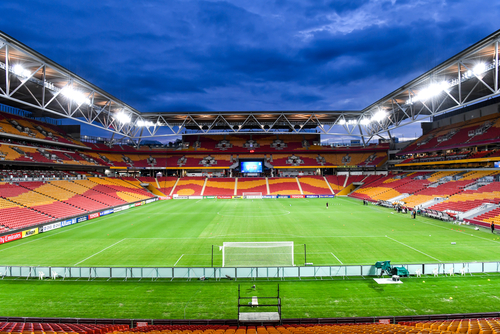
We’ve already seen one of the leading clubs in England take a futuristic initiative. Tottenham Hotspur made their new 62,000 capacity home ground the first completely cashless stadium in the United Kingdom.

In a world that is continuing to evolve with technology and its availability, NPL and A-League clubs could well consider introducing the cashless alternative into their game day experience for fans.

In this day in age, people are less inclined to carry cash in their pockets, particularly those in the younger demographic.

Australian football should start considering introducing cashless purchases and ATM machines at all venues, whether it be at NPL or A-League level.

There are lessons to be learned from the UK. Here are the top four benefits of going cashless.

Save on labour costs

Accepting cash payments at your stadium business means committing valuable staff time to several tasks that will simply disappear if you choose to go cashless. Setting up cash floats at the beginning of the day, periodically refilling the registers with change, counting and reconciling cash for each register at the end of the day and making bank deposits all become redundant.

With cashless payments, everything is digitised through your POS system, meaning clubs are ready to go as soon as the till is switched on and all counting time is eliminated. By doing this, some UK venues are reporting labour cost savings of up to 2 hours per day per staff member.

Additional benefits include vastly reducing the risk of exposing your business to human error and, because card and mobile transactions are automatically reconciled with your bank, there is also no need to pay for a security team to support your business with bank transfers.

Increase the volume of sales

On average, it takes 15 seconds to complete a cash transaction. By contrast, chip and pin takes between 5-8 seconds and contactless transactions can be completed in just 2 seconds.

A few seconds may sound insignificant but let’s consider the difference this could make within a typical 15-minute (900 second) half-time period.

900 seconds = 60 cash transactions = at £30 per transaction = £1,800

900 seconds = 450 contactless transactions = at £30 per transaction = £13,500

While this comparison isn’t entirely accurate (there would of course be additional time to factor in while people are selecting and placing their orders), the point is well made. As well as increasing revenue, the increase in speed also improves the experience for fans who really don’t want to miss any of the action whilst queuing for food or merchandise.

Increase average spend

There have been several studies which compare card to cash payments and the simple fact is, that when using a card, people will spend more – and significantly so.

In fact, it has been reported that the average customer spend per visit to a stadium event can increase by as much as 25% when using a card payment instead of cash.

Reduce fraud and theft

Another significant reason to go cashless is the improvements such a strategy can bring around fraud and theft, both of which are serious issues for the stadium sector.

Not only is the sight of tills and cash boxes highly attractive to thieves who may be targeting your venue, but also the often-transient nature of a stadium’s workforce can make it vulnerable to fraud or theft from within.

Moving to a cashless point of sale system vastly reduces such opportunities as digital transactions are easier to track and any discrepancies will also be much easier to spot.

There are many reasons for Australian football stadiums to explore the cashless option. The sooner they do, the sooner they will catch up to the European trends that are setting the standard for stadium experience.

Previous ArticleNext Article

Brazil is coming. But what is the real price of bringing football’s giants to Australia?

There is something undeniably exciting about Brazil coming to Australia. The five-time World Cup winners will face the Socceroos twice in Queensland from Friday, with Townsville and Brisbane set to host the blockbuster fixtures.

For Australian football, these are the kind of games that should be anticipated, celebrated and capture the public’s attention. But they also raise questions: how much should Australian football pay to bring the world’s biggest nations here, and when does the bill become too big? 

The cost of bringing the big names

Australia has always paid up to bring big names down under. Last week’s NFL game in Melbourne, at a cost of between $10 and 15 million dollars to the Victorian Government, is just the latest example.

It could cost the same amount to bring Brazil to Queensland. A report in The Sydney Morning Herald last year revealed Brazil was reportedly seeking around $7.5 million per match to play in Australia. The fee is in line with other major international events; Western Australia reportedly faced a bill of around $12 million in taxpayer funding for the recent Perth Italian Football Festival.

I’m worried Football Australia won’t get return on investment to make this particular event worthwhile. The enormous fee to bring Brazil to Australia can’t immediately be justified as an investment in our footballing future. Instead, Football Queensland and the state government could have put these funds into grassroots facilities. Part of Football Queensland’s scrapped state headquarters investment plan was to spend $8.5 million to refurbish fields, lights, drains and irrigation at Mappas and Meakin parks. Instead of these plans to invest in the state’s youth players and academies, money has been spent on two international friendlies.

So ahead of the fixtures, the question remains: will these games inspire the future generation, and will participation grow? The NFL match was impossible to ignore: a sold-out MCG and a live audience of 2.1 million on free-to-air, not even including those watching on ESPN and Netflix. Football Australia is not simply buying 90 minutes of football; it is buying the attention that comes with Brazil. So let’s see if they can maximize returns. 

Ticketing Tells a Story

Ticket sales provide insight into the interest in the fixture. Brisbane has sold much quicker than Townsville, but neither have sold out as yet. The fact these games didn’t immediately sell out may be considered surprising as there is a genuine appetite in Australia for elite international football at the moment, evidenced by SBS’ World Cup viewership numbers of 17.1 million.

Brazil is bringing some of its brightest stars: Vinicius Junior, Raphinha, Bruno Guimaraes, Marquinhos and Endrick are among the headline names in their squad. The star power is there. So why haven’t these matches sold out? There’s a chance it comes down to the competition and the visibility of the event.

The viewing problem

The timing of this fixture could raise eyebrows amongst fans. As much as Australia and Brazil will draw huge crowds, both games fall on either side of the AFL Grand Final. The 2024 AFL Grand Final, which involved Queensland’s Brisbane Lions, drew over 4 million viewers on free-to-air. Brisbane, who have won the last two premierships, will feature once again on Grand Final day. Therefore, fans who could’ve attended may instead be making the trip to Melbourne.

Then comes the strangest part: one of the fixtures Australia will play will not even be available on free-to-air television. The Townsville match will be shown free on Network 10 and 10 Streaming, as well as Paramount+. The Brisbane match, however, will be available exclusively on Paramount+. That creates a disconnect. If governments and football administrators are spending millions to bring a global sporting brand to Australia, why should a large section of the Australian public need a subscription to watch the second match?

The Brisbane game is behind a paywall, limiting the national reach of the event. Reach is surely part of the justification for spending big on Brazil, it’s not just that 50,000 people get to sit inside Suncorp Stadium. It is that millions of Australians get exposed to the spectacle and if that audience is restricted, the value of this fixture is limited.

A solution could be to spend the money on advertising the match to the public to try to generate interest across streaming and free-to-air. With less than a week until the first game I don’t believe the advertising has done enough to generate enough interest to justify a $15 million price tag for the two game series. 

The Brazil friendlies will be spectacular. They should attract big crowds, create memories and give the Socceroos an excellent test against one of football’s most recognisable nations. But for the appropriate return, attention must be measured. Does this fixture carry on the Socceroos hype and keep the eyeballs of the general public on our sport? I’m not convinced. However, if these matches bring new fans to football, strengthen the national team and create lasting investment in the sport, the enormous price tag could still be justified. But if they simply produce two nights of football before the attention disappears, then Australian football has paid a premium for a very expensive show.

Arncliffe Aurora’s Riverine Park investment creates a platform for growth

Arncliffe Aurora Football Club has started a new chapter with the launch of Riverine Park, creating a larger platform for football, community engagement and long-term growth in Sydney’s St George region. More than 2,500 people attended the community opening on 8 August, marking the club’s first matches at its new home and showcasing a significant upgrade in its operating capacity.

Riverine Park provides two full-size natural turf football fields, modern player and community amenities, and a new clubhouse. The additional capacity responds to strong growth in Arncliffe Aurora’s football programs, particularly at junior level. The club has also highlighted a $2.5 million investment in facility upgrades. Together with its existing Arncliffe Park base, Riverine Park gives Aurora two homes and a stronger physical platform for its football operations.

More capacity allows the club to accommodate more teams, players and programs, while updated facilities can support stronger member retention and recruitment. They create more opportunities for coaching, development programs, events and community activities. The new site can also strengthen the club’s commercial proposition; a modern facility gives sponsors greater visibility and provides more opportunities to activate partnerships around football and community events. It can also help the club build relationships with schools, community organisations and football bodies. That matters as grassroots clubs increasingly operate as community hubs rather than simply sporting organisations.

Riverine Park also creates opportunities for the wider football ecosystem. Football St George has identified the facility as a platform to grow participation and provide opportunities for players of different ages, abilities and backgrounds. Bayside Council’s project includes upgraded change rooms, toilets, canteen facilities, lighting, seating and solar panels, adding further functionality to the precinct.

For Arncliffe Aurora, the investment is therefore about more than adding fields. It creates infrastructure that can support participation, player development, community programs and commercial activity over the long term. The challenge now shifts from construction to utilisation. The club must maximise the new capacity, maintain the assets and convert greater participation into a sustainable operating model to benefit the community long-term.

Most Popular Topics

Editor Picks

Send this to a friend