



AFC delivers new online courses for Asian match officials

The Asian Football Confederation’s (AFC) match officials have been given the opportunity to complete new online courses, ensuring they remain in sharp focus during the COVID-19 pandemic.

With world sport currently put on hold, players and now officials alike are looking to keep up their training in order to be ready for when competitions do resume.

The AFC have embraced the use of technology as people are encouraged to stay at home. The introduction of these new courses can be accessed by anyone throughout the continent.

So far, over 300 participants have taken part – including elite men and women referees and assistant referees as well as newly recruited referees who joined the courses, which have focused on theoretical education, online discussions and fitness.

Organised by the AFC Referees Department, the online courses have comprised various topics including laws of the game, video tests, discussion based on case studies and match analysis. Six Referee Technical Educators (RTE), Suresh Srinivasan, Cheung Yim Yau, Niu Huijun, Etsuko Fukano, Awni Hassouneh and Vladislav Tseytlin, have been assigned to lead these online courses in designated zones in Asia.

“It is not a normal period, as most of the activities are postponed in Asia. During this critical period where most people are under lockdown procedure, AFC Referees Department decided to organise the online activities to keep the referees engaged in football,” Ali Al Traifi, the RTE Coordinator, said.

“This is a good opportunity to refresh their memories on the laws of the game and to get them thinking on their interpretation of match incidents. It is also important to conduct some activities for the new elite referees and women referees as well during this restricted movement period.”

The AFC Referee Academy courses are also ongoing with academy educators Farkhad Abdullaev, Hakan Anaz, Sachiko Yamagishi conducting the technical sessions online with academy members from 2017, 2018 and 2019 respectively while instructors Alejo Perez Leguizamon and Ravichandran Chappanimutu manage the fitness sessions.

Previous ArticleNext Article

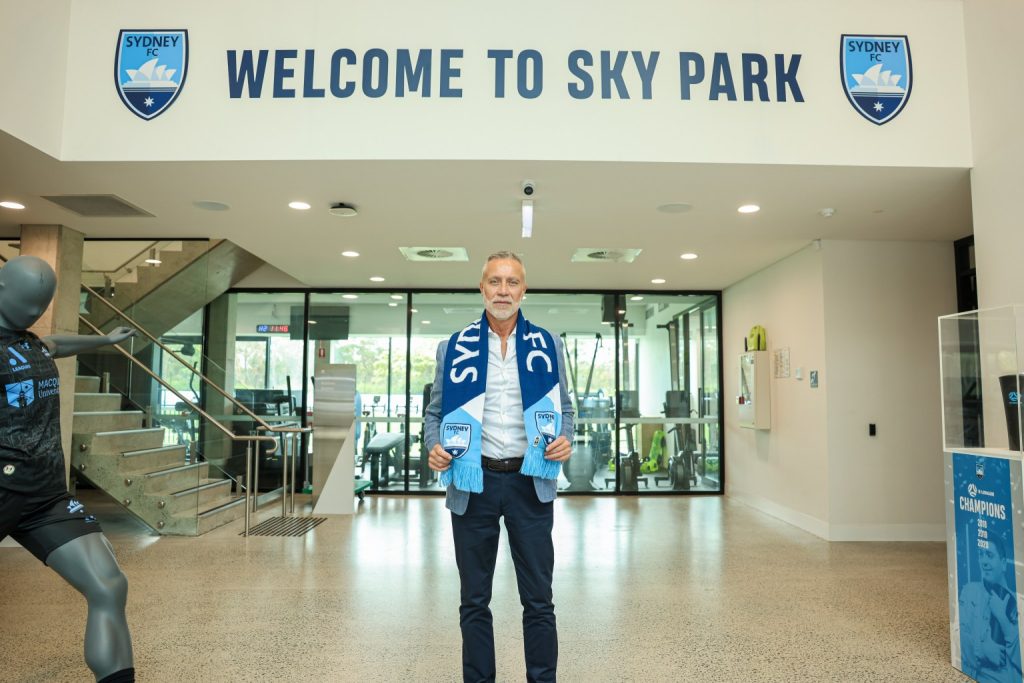
Michael Petrillo joins Sydney FC as new CEO

Sydney FC has appointed former Melbourne City and Adelaide United Director of Football Michael Petrillo as their new Chief Executive Officer (CEO).

Petrillo replaces former Sky Blues Executive Vice Chairman Sebastian Gray, who has stepped down.

The new CEO, who begins his role later this week, has been involved in the A-League since its inception.

He was the founding CEO of Adelaide United and guided them to their inaugural A-League Premiership (2005), an AFC Champions league final (2008) and their first Australia Cup (2014) across a decade-long stint.

He then joined City as Director of Football, overseeing an exceptional period of on-field success as their men’s team won three consecutive premiership, and their women’s team five championships and five championships.

While silverware was flowing, he also helped develop training facilities and youth pathways at both clubs, cementing himself as a prominent advocate for the next generation of Australian players.

Petrillo, speaking via Sydney FC said, ‘this is a Club with a remarkable history, passionate supporters, outstanding facilities and a proud tradition of winning. But what excites me most is what it can become.

‘We should be competing for Premierships and Championships every season, representing Australia proudly in Asia, developing the next generation of Socceroos and Matildas and filling stadiums,’ he said.

While always one of the top performers in the league, Sydney haven’t won an A-League Men’s Championship since 2019/20.

Sydney FC Chairman, Dr Jan Hendrik Voss said in the press release, ‘Sydney FC has a proud history, a winning culture and an extraordinary connection with its supporters, but we will not be defined only by our past.’

‘We want Sydney FC competing for trophies every season, setting the benchmark for Australian football, being a leading force in Asia and earning respect on the global stage,’ he stated.

Petrillo will be reunited Sydney FC manager Patrick Kisnorbo, the pair having proven a winning partnership at City during their premiership/championship double in 2020/21.
‘
Patrick and I share a very clear understanding of what it takes to build a winning team, and I know the standards, intensity and ambition he brings.

‘I’m looking forward to working with Patrick and the entire football department to create an environment where players thrive, young talent develops and success becomes an expectation,’ he said.

Hendrik Voss continued, ‘Michael has spent more than 20 years showing what it takes to build successful football clubs. He understands that lasting success comes from strong leadership, a clear football philosophy, outstanding people and a relentless commitment to excellence.’

‘His record, international experience and global relationships make him an exceptional choice to lead us into this new era.’

Thornaby FC’s community commitment leads the way, but football fans continue to suffer

The cost of living crisis has impacted people and businesses worldwide and football is no different.

Football fans globally – and especially top flight British supporters – are being priced out of the game they created, and by the teams they have supported their whole lives.

In the 2024/25 season, 19 of 20 Premier League clubs raised their ticket prices. The highest single jump was a 28% increase, and additionally an 11% hike on tickets for children. Between 1990-2025, football fans in the UK have seen their ticket prices increase by an immense 800%. 

The fan reaction has been continually damning. Via the UK-based Football Supporters’ Association, over one hundred supporter groups campaigned for Premier League clubs to freeze ticket prices at home games for two seasons, as part of the Stop Exploiting Loyalty Campaign.

An FSA statement reads: ‘Football is for everyone. Rising prices are making it harder for regular fans, especially younger generations and working-class communities to attend matches.’ 

With fans of clubs from right across the country united on the matter, their position was clear: stop taking football from the people.

One club that did heed the message were North Yorkshire non-league side, Thornaby FC. This season, they are offering free season tickets to local residents for both men’s and women’s games.

Over 20,000 people are eligible thanks to the partnership between the club and the local council. With the club awarded AUD 12,000 (GBP 6,500), the initiative aims to bring the community together and drive locals to games.

This is not seen as a final solution, but certainly a major step in gaining support and interest for the team; in turn it will hopefully drive local investment, revenue and growth via the community that supports it, as opposed to investment groups that potentially hold less interest in the health of the club and its community. 

The Stop Exploiting Loyalty Campaign has also gained the support of MPs in Parliament. In March, they recognised the problem and as part of an Early Day Motion stated: ‘working-class and young supporters are being priced out; squeezing out local and dedicated fans poses an existential threat to the culture and community of football.’

While those words may be encouraging, what they can change in their current systematic position feels minimal.


The World Cup is another example of football fans suffering greatly at the hands of commercial interests.

On the grandest stage, where fans from around the world gather en masse to support their nations and the spirit of the game should in theory be at its most authentic, fans are deliberately exploited by FIFA.

According to Forbes Middle East, the 2026 edition in the USA, Canada and Mexico saw a rise in ticket prices for 90 of the 104 matches compared to the previous edition in Qatar.

Football is being held up by investors and governing bodies like a puppet on strings. They deem growth to be the only measure of success.

Growth is of course a key requirement of success, but what good is that when it sees the interests of local communities, including loyal football fans, pushed to the side? When it comes to modern day football, good deeds – such as those committed by Thornaby FC – are rarely seen as time well spent.

The pursuit for growth is also not just financial. Human attention is a newly monetised market; from streaming views to social-media engagement to email sign-ups. As football continues its global push into lounge rooms and onto smartphones, it is at major risk of overlooking those who commit their time and resources to stand in the terraces or sit in the stands.

Most Popular Topics

Editor Picks

Send this to a friend