


Glenn Fontana – the Lord Mayor of Wollongong Football

It was Jim Fraser, the former heroic Socceroo goalkeeper and current head of Western Sydney Wanderer’s youth goalkeeping program, who some years ago recognised Glenn Fontana’s contribution to football in the Illawarra region by naming him the Lord Mayor of Wollongong.

In his many years as a senior player, senior and youth coach, Fontana has been held in high esteem by generations of former senior and youth players which has elevated him to household name status in the region.

Fontana commenced his long journey in football as a professional with Balgownie in NSW Federation 2 in the 1974 season, graduating to the NSL with Wollongong City where he remained for five seasons , making ninety appearances and scoring over twenty goals. He has been ever present in coaching roles to this day since he retired from playing.

Unlike most Australian coaches who confine their education to home, Fontana had a long term association with Liverpool and Fulham for whom he was Chief Talent Scout for a combined period of seventeen years.

He has crossed paths with many legendary football figures in his ventures overseas but never believed he would meet Wiel Coerver at a Liverpool training session.

At one stage he had two hundred players at his Coerver coaching school in Wollongong.

In this interview with Roger Sleeman, Glenn Fontana recalls his early memories of football on the South Coast, the worship of Jim Kelly’s Gang , Adrian Alston, Peter Wilson and Max Tolson, his experiences as a senior player, adventures in Europe and his love affair with the world game.

ROGER SLEEMAN

What are your memories of South Coast football in your early days, and who were the greatest coaches, influences and idols?

GLENN FONTANA

I played my junior football from u/6’s with Balgownie and always had an ambition to play first grade which transpired when George Ramage, the legendary Balgownie and South Coast keeper, selected me in a match against Marconi as a striker in 1974 at the tender age of eighteen

I was fortunately influenced by the great South United flanker, Denis Paterson, who I also played with in the Illawarra League when Balgownie became defunct.

In 1980, I signed for Wollongong United in the NSW State League and was coached by the inimitable Mike Johnson.

ROGER SLEEMAN

When Jim Kelly, the former Blackpool and England B player, who was a team-mate of Sir Stanley Mathews came to Australia in the early 1960’s to eventually become captain coach of South Coast United, football boomed in the Illawarra?

What are your recollections of those times?

GLENN FONTANA

It was a famous era in the region when the Kelly Gang would play, particularly after that inspiring win against Apia in the 1963 grand final at the Sydney Sports Ground which drew a record Australian club crowd of 30,158.

It was the day local South Coast products like Max Tolson, Denis Paterson, Peter Beattie and Casey de Bruin came of age.

All youngsters on the Coast aspired to play for the Kelly Gang and Max Tolson was a major idol for me as he personified skill, tenacity and sometimes outright brilliance.

When Peter Wilson and Adrian Alston came to Australia, I witnessed two magnificent footballers who have created such a legacy for Australian football.

Significantly, at the time football was in the psyche as no other sports mattered.

I still remember at the age of six taking the train to Sydney with my grandmother to see the great Ron Lord play in goals for Prague.

I always supported United but always took notice of visiting players like Ray Baartz, John Giacometti, Alan Marnoch, John Watkiss and Mike Denton to name a few.

ROGER SLEEMAN

In the NSL you played ninety games and scored more than twenty goals as a target man for Wollongong City.

Did you like doing all the hard work which was required as a central striker and what were your main attributes?

GLENN FONTANA

I originally started my career as a winger because I had genuine pace but I was used as the wide player in a 4-3-3 structure . My first coach at Wollongong City, Ken Morton brought me in to replace the Kiwi striker, Brian Turner, who didn’t fit the bill in the centre of the attack.

I was given my chance in 1981 and scored in my debut game against Newcastle who that day boasted the Leeds United and England defender , Paul Reaney as a guest player.

I was good in the air and had a useful first touch but I was never a dribbler.

I was mainly there to finish or create chances for others.

ROGER SLEEMAN

You never played representative football for NSW or Australia?

What was that next step to play at those levels?

GLENN FONTANA

My first touch was adequate and I was good at laying the ball off to team-mates but I only worked on first touch in senior football, not at youth level.

I was sadly lacking in this area and was a late developer and learner.

Technique should be mastered between 10-15 years of age and I was working at striking a ball at 22-23 with Brian Turner, Max Tolson and Adrian Alston.

They made be a better player which made up for the lack of instruction I received as a youth player.

Glenn scoring for Wollongong City in last match of 1982 season against Brisbane City.

ROGER SLEEMAN

What are your lasting memories of the NSL?

GLENN FONTANA

Those five seasons were all memorable as my dream to play senior football at the highest level in the country was realised.

However, the highlight was the third place finish in the 1982 season.

In the final we played St George but were defeated by two goals from the England striker, Ted McDougall .

I was denied a headed goal by former Socceroo custodian, Terry Greedy, who somehow spread himself low into the extreme left hand corner of his goal to parry the ball beyond the goal-line.

ROGER SLEEMAN

What prompted your interest to enter the coaching ranks after your playing career ended?

GLENN FONTANA

I was always a keen student of the game and was fortunate to coach youth at Wollongong Wolves and Fairymeadow.

I did my apprenticeship as assistant coach to John Fleming and Dave Ratcliffe in senior football at the Wolves and went out on my own as a senior coach at Mount Pritchard in 1989.

ROGER SLEEMAN

What was your football philosophy?

GLENN FONTANA

I emphasized playing out from the back in a passing game with a predominant skill and attacking style.

Also, I was determined to give youth a chance to play at the highest level.

When I was assistant coach at the Wolves in the State League, I introduced Matt Horsley and Sasha Dimoski to the youth team and at Wollongong United , Scott Chipperfield, Mile Sterjovski and Richard Lloyd .

ROGER SLEEMAN

Matt Horsley was one of the best products on the South Coast?

Why was he different to other wide players?

GLENN FONTANA

I watched him in a State League match and like Rhyan Grant and Brett Emerton, he had boundless energy and an unique ability to run at players and cruise past them.

I selected him for the Wolves youth team and by the end of the year , Dave Ratcliffe put him into the first team and the rest is history.

I’ve always believed we should be encouraging youth to progress to elite level and Horsley was a perfect example.

ROGER SLEEMAN

You were involved with Coerver training during it’s infancy in Australia and you were also privileged to meet Wiel Coerver in England.

Tell us more.

GLENN FONTANA

Football NSW conducted some demonstrations in 2000 and in the same year Charlie Cooke, the former Scotland and Chelsea wizard, came to Australia with Alf Galustian ,the Chelsea youth coach , to demonstrate how Coerver could be implemented into normal training.

Charlie Cooke was amazing and he was instrumental in influencing me to use Coerver in my own coaching from that day on.

I encouraged young players to use it in dribbling e.g. the Cruyff turn , the Beckenbauer inside outside cut and the Rivelino method, especially in small sided games.

Terry Antonis, David Carney and Brett Holman were among the best exponents of Coerver in the NSW state teams I coached .

I met Wiel Coerver by chance when I was watching a training session at Anfield in 2008.

I saw this fellow on the sideline and introduced myself to him and I was in seventh heaven when he told me who he was.

I told him I used his method with my coaching in Australia and we had a great discussion about the finer points of the game.

Glenn playing against Melita Eagles in NSL 1984.

ROGER SLEEMAN

You were Liverpool’s chief scout for Australia between 2000-2010

How did that transpire and can you relate your experiences?

GLENN FONTANA

In 2000 when I was the coach of the NSW u/15’s at the national titles, I met Trevor Gould(son of the legendary Coventry striker, Bobby Gould) who was the Academy Manager at Coventry City.

He invited me England to look at the club setup because he wanted me to represent Coventry and when I went there I was also approached by Sam Allardyce at Bolton. The very next day I was watching Liverpool at Anfield with my old team -mate from the Wolves, Jeff Ainsworth ,and he introduced me to Sammy Lee.who offered me the opportunity to join Liverpool’s scouting network and I agreed.

In that time period, I would spend 3-4 weeks a year at Anfield and meet with Steve Heighway, the Academy Manager, and he made it quite clear to only send the best players to him.

At the time, Nick Rizzo and Robbie Fowler were playing and I also became friendly with U.S. goalkeeper, Brad Friedl .

I was responsible for bringing Dean Bouzanis to the club and it was Rafa Benitez who rated him the best goalkeeper in the world for his age at the time.

After Heighway left, Malcolm Elias took over but he was sacked and went to Fulham.

ROGER SLEEMAN

You were Fulham Chief Scout for Australia from 2011-2017.

Describe your experience at Fulham.

GLENN FONTANA

Malcolm Elias enlisted my services and he had a very strong background in discovering talent like Gareth Bale and Theo Walcott.

I took Corey Gameiro over and he stayed for two seasons without making any first team appearances.

Malcolm came to Australia and was very impressed with Bailey Wright playing for Victoria in the state titles.

Unfortunately, Malcolm missed out when Wright signed for Bristol City.

Alex Gersbach was also considered but his commitments with the Olyroos and the Socceroos were always a hinderance.

When Fulham were relegated they dropped all their scouts so at the moment I have no attachment to the club.

However, if they remain in the Premier League , I will probably get work again.

ROGER SLEEMAN

What role are you performing at the moment?

GLENN FONTANA

I’m employed by Football South Coast to run the SAP program for the South Coast Flames which I do three days a week and I play a very keen interest in A-League and NPL football.

I’m often asked to write reports on games for local coaches.

The game runs in my veins and I’ve been extremely fortunate to experience such wonderful times in football in Australia and Europe and had the pleasure of attending three World Cups.

Previous ArticleNext Article

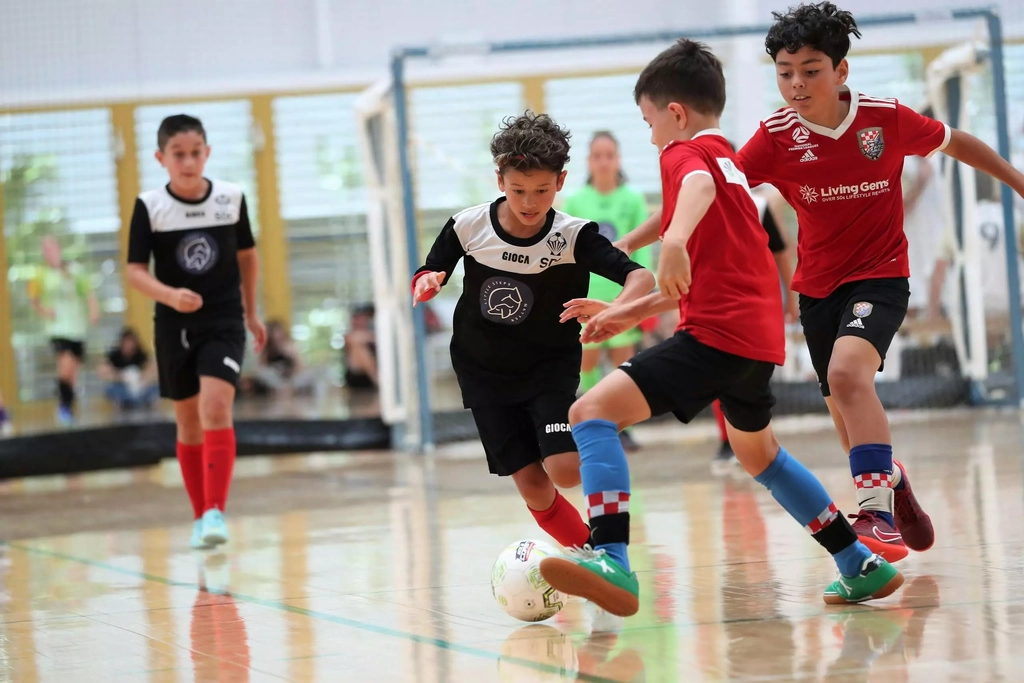
Gold Coast International drives futsal growth as international interest surges

The 2027 Gold Coast International is set to be the biggest year of growth in the tournament’s history. The tournament has become one of Australia’s premier futsal events. Attracting the best teams from not just Australia but around the world. Andrew Parkes is the founder and managing director of the Gold Coast City Futsal Association and an advisory board member at Football Queensland. He says the tournament, and its international reputation, is only strengthening.

“Registrations are actually a step up from what they were last year,” Parkes said.

“We’ve got several teams from New Zealand. At the moment, we’ve got some Pacific Island teams that have expressed interest in coming. We got interest from Japan, and from England as well.

“We’ve got over 140 teams so far, and that’s not including anything from the local areas.”

Over 200 teams attended the 2026 edition, and the Gold Coast International is well set to break that record next year. The figures show the tournament is becoming more than a local competition. It is building a strong national and international presence.

Football Queensland and Football Australia unite behind growth

Parkes believes collaboration has played a major role in the development of futsal in Queensland. The tournament is sanctioned by both Football Queensland and Football Australia. He praised Football Queensland for its work across the sport. He said the organisation has helped create a stronger and more professional futsal system. This relationship between state and national bodies and the event has allowed the Gold Coast to play host to the national competition as well. This ensures shared resources including referees and courts.

“Football Queensland have been a major driving force and a godsend in relation to the development of futsal,” Parkes said.

“We’ve got the nationals the week before the Gold Coast International now. We’re working in harmony and synergy and supporting each other.

“I think the proofs in the pudding, not just with the Gold Coast International, but with the exposure and obviously the diversity of teams that attend. But then the further development in our local leagues, and that’s resulted in.”

E-sports adds another pathway for players and clubs

E-sports has become another major part of the Gold Coast International. Parkes said he had explored the idea for several years and that the tournament allows the community to grow beyond just the physical players on the court. The use of e-sports also allows friends and families to have an interactive experience with simulators and games whilst at the Gold Coast International.

“We launched e-sports about 2 years ago, just with a bit of a light feel. We’ve incorporated the competition into the tournament fees, which is excellent. So it doesn’t cost anybody anymore to be part of it,” Parkes said.

“It actually allows the clubs and academies to extend on their current offerings as it is at the moment and allows gaming players to be part of the club, to be part of the atmosphere and to join and that unity and be part of that sporting community.”

“We had three times the amount of teams that we had from the first year of e-sports. We’re looking to probably even double that again this year, which is really exciting as well.”

New pathways shape the tournament’s future

Parkes wants the Gold Coast International to keep expanding. He is now looking at ways to create pathways beyond the tournament itself. He said the use of its international experiences that can be earned through the tournament is not only about investing in players. But ensuring coaches have a more time-efficient avenue to be involved with futsal. It also gives more coaches the chance to work with players at an international tournament.

“We’ve now created the Gold Coast International All Stars, which is now embraced by many of the coaches and the players,” Parkes said.

“That also provides coaches who don’t have the time or the ability or whatever for the state teams, and the commitment that they need to put in the state teams throughout the year.”

“It allows us to have a lot more outreach to far more coaches that have a lot of passion and enthusiasm, and be part of the Futsal community. They want to build on the players’ abilities but may not have that year-long or eight-month-long exposure that is required by the state Futsal team coaching staff.”

For Parkes, the future is about widening access while continuing to raise standards. The tournament is growing its international reach, strengthening partnerships and creating new opportunities for both physical and e-sports players. The Gold Coast International is no longer just a tournament. It is becoming a broader platform for the development of futsal and its wider community.

For more information on the Gold Coast International and to inquire about competing in the 2027 edition, visit their website.

Who Coaches the Coaches? Gary Cole on the Gaps in Australian Football’s Development System

Australian football has long placed player development at the centre of discussions about the game’s future. But former Socceroo, coach and football administrator Gary Cole believes another question deserves greater attention: who is developing the coaches responsible for developing those players?

Following Soccerscene’s recent analysis of the challenges facing Australia’s coaching system, Cole spoke about his experience of coach education, the National Football Curriculum, pathways into professional coaching and the growing number of Australian players pursuing opportunities overseas.

His assessment points to a broader issue. Australia does have a formal pathway for aspiring coaches, but qualifications alone do not necessarily create better coaches or provide a pathway into professional employment.

For Cole, the missing link is what happens between completing a coaching course and becoming capable of consistently improving players on the pitch.


From coach education to coaching

Cole’s introduction to coaching stretches back to the early development of formal coach education in Australia during the 1970s.

He recalls being encouraged into coaching by Dr Ron Smith while studying to become a primary school teacher, before later working under influential figures including Eric Worthington.

One experience with Worthington as a young player fundamentally changed Cole’s understanding of what coaching could achieve.

Worthington worked with Cole and his fellow forwards on their movement and ability to create space for one another. Rather than simply organising a training exercise, the coach was deliberately changing individual and collective behaviours that could then influence what happened in a match.

“It was a light bulb moment for me,” Cole said.

“What he was doing was changing my and the team’s behaviours in training, where that could impact the way we played together on the field.”

That distinction remains central to how Cole views coach education today.


Does the current coach education system adequately prepare Australian coaches?

“I think it prepares some of your coaches some of the time, but not all of the coaches all of the time,” Cole said.

His concern is that Australian coach education has, at times, moved too far away from the practical environment in which coaching actually occurs.

“In my opinion, and from the feedback that we’ve gotten at Football Coaches Australia over the journey, coach education lost its way a little bit for a period of time,” he said.

“Some of it became academic. It was more about PowerPoint presentations, more about talking about coaching than it was about coaching.

“The magic of coaching happens between human beings on grass. That’s where the success happens.”

Cole does not dismiss the importance of theory, tactical discussion or other off-field preparation. Instead, his argument is that these elements ultimately need to translate into a coach’s ability to influence player behaviour.

As coaches progress further into performance environments, he believes that ability becomes increasingly important.

“The reality in coaching, as you go up through the performance pathways, is it becomes more and more about helping people to get the right behaviours individually and collectively on the pitch on the weekend,” he said.

“And that requires you to do that on the pitch during the week.”


Is the National Football Curriculum still fit for purpose?

Australia’s National Football Curriculum has played an important role in creating a common framework for player and coach development.

But with the current curriculum dating back more than a decade, Cole believes a review is overdue.

“There was a lot of good stuff in there,” he said.

“There was a bunch of stuff that wasn’t in there. There’s nothing about tackling or heading the ball, which is quite bizarre given these are two parts of the game.

“Does it need reviewing? Yes, absolutely.”

The need for a review is not simply about individual football skills.

The environment surrounding coaching has changed significantly, from data and performance analysis to artificial intelligence and the increasingly diverse backgrounds of players entering Australian football.

“The game does change and evolve,” Cole said.

Perhaps more importantly, Cole cautions against assuming there is only one correct way to coach.

He admits that earlier in his career he was something of a “coaching snob”, believing successful coaches needed to approach the game in a similar way to those he had learned from.

Experience changed that perspective.

“There’s never just one way of doing it,” he said.

“People can be successful doing things differently.”

For Australian coach development, that raises an important question: should a national curriculum prescribe how coaches should think, or give them the foundations from which they can develop their own approach?


Australia has a coaching pathway – but where does it lead?

Cole is clear that there is a formal route available to aspiring Australian coaches.

Coaches can progress through the licence system from the C and B Licences towards the A and ultimately Pro Licence.

But accessing qualifications and building a professional coaching career are two different challenges.

“Having the licence is one thing that gives you access to the road,” Cole said.

“But to become the driver, you need to get on the road, make some mistakes – preferably don’t kill you – and do all those things.

“Go and get yourself a job at whatever level that you can and you’re comfortable at and develop as a coach.”

Experience, he argues, cannot be replaced by certification.

“The best coaches are the ones that have had hundreds and thousands of hours working with football and on the park, because that’s where they develop.”

Cole points to Joe Montemurro as an example of that evolution.

Early in his coaching career, Montemurro told Cole he would observe other coaches and borrow training exercises that looked effective. Over time, however, he developed a clearer understanding of who he was as a coach, how he wanted his teams to play and which exercises actually served that philosophy.

“The best coaches have the capacity to make the complex simple,” Cole said.

The missing bridge into professional coaching

The greater structural problem emerges when coaches attempt to turn that development into a career.

Cole points to Heidelberg United coach John Anastasiadis as an example of the type of progression that should theoretically exist: achieve success in the NPL, earn an opportunity within an A-League environment and potentially progress towards becoming a professional head coach.

In practice, Cole believes that transition remains rare.

“The number of NPL coaches that get spotted and targeted by A-League coaches is almost non-existent,” he said.

“If they’re lucky, they can get a job, and that’s great because it’s the door towards being a professional coach.”

Cole believes Australian coaches with established professional records are highly regarded. However, when clubs look beyond that group, overseas experience can often be prioritised ahead of coaches working within Australia’s NPL competitions.

“We rarely then look down into the NPL competitions in all of the states to find the next batch of elite coaches,” he said.

It creates a difficult contradiction within the Australian pathway.

Coaches are encouraged to obtain qualifications, accumulate experience and prove themselves within the domestic system, yet success at NPL level does not necessarily provide a clear bridge into the professional game.

Are overseas pathways a failure of Australian development?

The same pathway debate applies to players.

The United States college system has become an increasingly visible option for Australian footballers, offering an established sporting and educational environment alongside opportunities to progress into professional competition.

Cole, however, cautions against treating every player who leaves Australia as evidence that the domestic system has failed.

“Development of players is not linear,” he said.

“You like to put things in boxes, but the reality of player development is it can go ahead in leaps and bounds, and then it doesn’t move for a while.”

His advice to parents of talented young players is therefore relatively simple.

“Take them to somewhere where they want your child to be a part of it, you’ve got a good coach and they’re going to play.”

That final point is particularly important.

Australian players have increasingly secured opportunities in Europe and other overseas markets, but Cole argues the prestige of signing abroad matters less if the player is not receiving meaningful playing time.

“We’ve seen a whole bunch of young Australian players in the last 10 years go off into Europe, get a contract in Europe, not play in Europe, get some time in the reserves, and then come back and play more regularly in the A-League,” he said.

“And that’s okay as well.”

For Cole, development should ultimately be judged by whether an environment gives a player the coaching and competitive minutes required to improve.

“Who coaches the coaches?”

It was Cole’s final observation that perhaps best encapsulates the challenge facing Australian football.

When formal coach education was first established, he recalls technical directors carrying responsibility for both player development and coach development.

He believes that role has changed significantly.

At NPL level in particular, technical directors can now spend substantial amounts of time dealing with parents and concerns surrounding selection, playing time and the significant fees families pay for junior football.

“The technical director role is more like a customer service officer because they’re dealing with parents who are paying an awful lot of money for their kids to play,” Cole said.

“If the kids don’t play, they don’t get enough game time or they don’t start enough, they want to know why, and that role falls back on the TD.”

The consequence is potentially significant.

If technical directors become consumed by administration and parent management, responsibility for actively developing coaches can become secondary.

“Within the club system, someone needs to be responsible for player and coach development,” Cole said.

“Because if we’re going to help our players and coaches develop, we need to be thinking about what goes on.

“And who coaches the coaches?

“Coaches can learn without being coached, but coaches benefit from being coached as well.”

That may ultimately be the distinction Australian football needs to address.

Creating more qualified coaches is measurable. Creating environments in which those coaches receive mentorship, accumulate meaningful experience, develop their own football philosophies and can progress towards professional employment is considerably more difficult.

If Australia wants to improve the players emerging from its development system, strengthening the people responsible for developing them may be one of the most important places to start.

Most Popular Topics

Editor Picks

Send this to a friend