


FA CEO James Johnson opens up on difficulties in the game and opportunities for the future

Speaking at Football Victoria’s Community in Business event on Friday, Football Australia CEO James Johnson reflected on his first 14 months in the top job of the sport, detailing the difficulties the organisation faced in 2020 and the opportunities it has in the coming years.

“I’d like to share with you what I walked into in January 2020,” Johnson told the audience in Melbourne.

“I walked into Football Australia and what I understood from the off was that the organisation had really lost a sense of unity. I believe the organisation had lost its connection with the community.”

Johnson criticised the focus of the governing body’s financial model, believing it was not looking after the best interests of the game overall.

“The business model was heavily centred on the A-League,” he said.

“That was what decision making evolved around, while other parts of the game, in my opinion, were neglected. The business model was disconnected, fractured and was inefficient. It was inefficient because of the duplication of administration. It wasn’t set up to foster growth for a thriving football ecosystem.

“The model denied the most significant part of our game, our identity, our community, our people, our stories, our diverse and multicultural base and our great national teams.

“In place of this identity, we’ve allowed a narrative to proliferate over the past 10-15 years that is divided, politicised, old soccer against new football, but this is not what our game is.”

Football Australia CEO James Johnson

The former Brisbane Strikers player admits that the game is far from perfect in this country and needs to address a range of issues.

“We have some really serious challenges ahead of us,” he said.

“We don’t own enough facilities for our growing base, we have too many players, we are turning children and families away from our code because we don’t have enough infrastructure around the country. This is a real issue.

“The performance gap that we released in 2020 tells us that the age group that plays the most minutes in our elite men’s competition (the A-League) is the age of 32. We are not giving enough opportunities for our players under 23. We also have challenges with our football pyramid, we must reconnect our pyramid so we can unleash this potential of an ecosystem.”

Since Johnson was appointed as CEO early last year, the governing body has shifted their business model allowing them to deliver strategic priorities and focus on initiatives such as: the implementation of the domestic match calendar, the proposed introduction of a domestic transfer system, a half slot to the ACL for the FFA Cup winner and more. Johnson believes factors such as these are vital to reconnecting Australian football’s national pyramid.

In his speech at the Community in Business event, the former senior executive at the AFC, FIFA and the City Football Group also strongly emphasised the importance of recognising the game’s history properly, something the game has continued to neglect in previous years.

“We have a rich history and it must be celebrated,” he said.

“There are moments in our game, that not only shaped the game, but they shaped the way that our country is. In 1974, we sent our first men’s team to the World Cup led by Rale, in 1993 Maradona came here, in 1997 Iran broke our hearts, in 2005 a famous penalty got us to our first World Cup in many decades and in 2020 we won the rights to host the Women’s World Cup.

“Our game is full of these moments and I think if you all think about those moments, people will remember where they were when they occurred. We forget that our clubs in this country predated federation. We forget that football was the first sport in Australia to have a national competition in the 70’s. We forget the first cup competition in this country was in the 60’s, the Australia Cup.

“We forget that women played football in this country as early as 1909. Nearly 42 years ago, our very first Matildas stepped out onto Seymour Shaw Park for the first Matildas match. Now, we are only a few years away from the biggest sporting event for women in the world coming to our shores.

“We forget that 99 years ago our Socceroos played their first match against New Zealand. We are one year away from 100 years.

“We forget the role that football played in the lives of indigenous children, like John Moriarty, Jade North and Kyah Simon.

“We forget that our national competitions have always been the hallmark of our game. The NSL for many, many years. Our history provides us with platforms to move forward to and to launch a bold, exciting future for our sport.”

Johnson addresses the audience at Football Victoria’s CIB event

Johnson sees the Women’s World Cup in 2023 on home soil as the perfect avenue to establish a strong future for the game.

“We are focused on creating that link between our national teams, in particular the Matildas and our community,” he said.

“Our base of 2 million participants is great, but only 22% per cent of our base are women and girls. There is a direct link between the importance and relevance of national teams and the base of community. With our national teams starting up again, you will see over the next 3 years (particularly with the Women’s World Cup) that our base will grow further and it will grow well.

“Our ‘Legacy 23’ framework is an ambitious plan to maximise the opportunities that the legacy of the Women’s World Cup (WWC) will provide us. Legacy is not something that starts after the WWC, it started last month. We’ve got to try as best as possible to ensure the WWC has a long-lasting legacy, similar to what happened with the Sydney Olympics in 2000.”

The FA CEO concluded by calling on every single stakeholder to be open to change, including the governing body itself, and push forward to make the sport the best it can be.

“If we are to reach the potential of our game, each and every one of us, every stakeholder, Football Australia, Member Federations, clubs, leagues, our community need to be open to change,” he said.

“Change and innovation are the commodities that we must deal with in 2021. I’m under no illusions that Football Australia must continue to earn the trust and confidence back from our stakeholders and community. To do this, we need deeds not just words.

“Let’s seize this opportunity and put our best foot forward.”
Previous ArticleNext Article

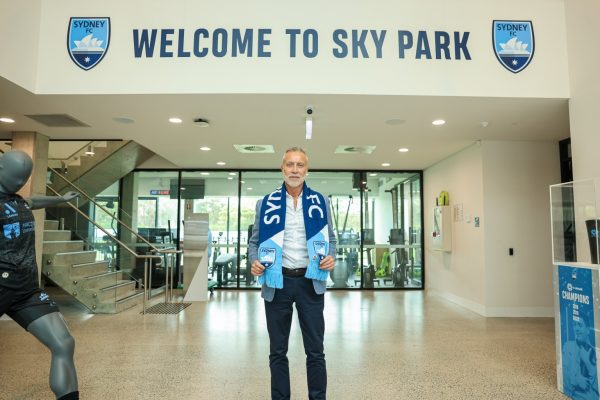
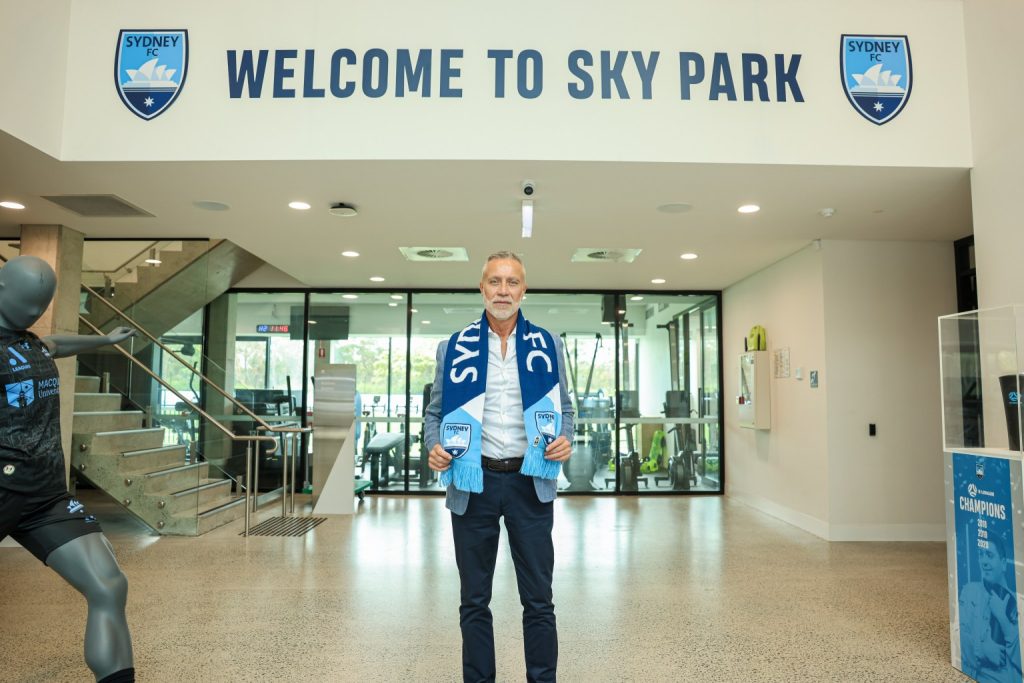
Michael Petrillo joins Sydney FC as new CEO

Sydney FC has appointed former Melbourne City and Adelaide United Director of Football Michael Petrillo as their new Chief Executive Officer (CEO).

Petrillo replaces former Sky Blues Executive Vice Chairman Sebastian Gray, who has stepped down.

The new CEO, who begins his role later this week, has been involved in the A-League since its inception.

He was the founding CEO of Adelaide United and guided them to their inaugural A-League Premiership (2005), an AFC Champions league final (2008) and their first Australia Cup (2014) across a decade-long stint.

He then joined City as Director of Football, overseeing an exceptional period of on-field success as their men’s team won three consecutive premiership, and their women’s team five championships and five championships.

While silverware was flowing, he also helped develop training facilities and youth pathways at both clubs, cementing himself as a prominent advocate for the next generation of Australian players.

Petrillo, speaking via Sydney FC said, ‘this is a Club with a remarkable history, passionate supporters, outstanding facilities and a proud tradition of winning. But what excites me most is what it can become.

‘We should be competing for Premierships and Championships every season, representing Australia proudly in Asia, developing the next generation of Socceroos and Matildas and filling stadiums,’ he said.

While always one of the top performers in the league, Sydney haven’t won an A-League Men’s Championship since 2019/20.

Sydney FC Chairman, Dr Jan Hendrik Voss said in the press release, ‘Sydney FC has a proud history, a winning culture and an extraordinary connection with its supporters, but we will not be defined only by our past.’

‘We want Sydney FC competing for trophies every season, setting the benchmark for Australian football, being a leading force in Asia and earning respect on the global stage,’ he stated.

Petrillo will be reunited Sydney FC manager Patrick Kisnorbo, the pair having proven a winning partnership at City during their premiership/championship double in 2020/21.
‘
Patrick and I share a very clear understanding of what it takes to build a winning team, and I know the standards, intensity and ambition he brings.

‘I’m looking forward to working with Patrick and the entire football department to create an environment where players thrive, young talent develops and success becomes an expectation,’ he said.

Hendrik Voss continued, ‘Michael has spent more than 20 years showing what it takes to build successful football clubs. He understands that lasting success comes from strong leadership, a clear football philosophy, outstanding people and a relentless commitment to excellence.’

‘His record, international experience and global relationships make him an exceptional choice to lead us into this new era.’

Thornaby FC’s community commitment leads the way, but football fans continue to suffer

The cost of living crisis has impacted people and businesses worldwide and football is no different.

Football fans globally – and especially top flight British supporters – are being priced out of the game they created, and by the teams they have supported their whole lives.

In the 2024/25 season, 19 of 20 Premier League clubs raised their ticket prices. The highest single jump was a 28% increase, and additionally an 11% hike on tickets for children. Between 1990-2025, football fans in the UK have seen their ticket prices increase by an immense 800%. 

The fan reaction has been continually damning. Via the UK-based Football Supporters’ Association, over one hundred supporter groups campaigned for Premier League clubs to freeze ticket prices at home games for two seasons, as part of the Stop Exploiting Loyalty Campaign.

An FSA statement reads: ‘Football is for everyone. Rising prices are making it harder for regular fans, especially younger generations and working-class communities to attend matches.’ 

With fans of clubs from right across the country united on the matter, their position was clear: stop taking football from the people.

One club that did heed the message were North Yorkshire non-league side, Thornaby FC. This season, they are offering free season tickets to local residents for both men’s and women’s games.

Over 20,000 people are eligible thanks to the partnership between the club and the local council. With the club awarded AUD 12,000 (GBP 6,500), the initiative aims to bring the community together and drive locals to games.

This is not seen as a final solution, but certainly a major step in gaining support and interest for the team; in turn it will hopefully drive local investment, revenue and growth via the community that supports it, as opposed to investment groups that potentially hold less interest in the health of the club and its community. 

The Stop Exploiting Loyalty Campaign has also gained the support of MPs in Parliament. In March, they recognised the problem and as part of an Early Day Motion stated: ‘working-class and young supporters are being priced out; squeezing out local and dedicated fans poses an existential threat to the culture and community of football.’

While those words may be encouraging, what they can change in their current systematic position feels minimal.


The World Cup is another example of football fans suffering greatly at the hands of commercial interests.

On the grandest stage, where fans from around the world gather en masse to support their nations and the spirit of the game should in theory be at its most authentic, fans are deliberately exploited by FIFA.

According to Forbes Middle East, the 2026 edition in the USA, Canada and Mexico saw a rise in ticket prices for 90 of the 104 matches compared to the previous edition in Qatar.

Football is being held up by investors and governing bodies like a puppet on strings. They deem growth to be the only measure of success.

Growth is of course a key requirement of success, but what good is that when it sees the interests of local communities, including loyal football fans, pushed to the side? When it comes to modern day football, good deeds – such as those committed by Thornaby FC – are rarely seen as time well spent.

The pursuit for growth is also not just financial. Human attention is a newly monetised market; from streaming views to social-media engagement to email sign-ups. As football continues its global push into lounge rooms and onto smartphones, it is at major risk of overlooking those who commit their time and resources to stand in the terraces or sit in the stands.

Most Popular Topics

Editor Picks

Send this to a friend