


When speaking to brothers (and footballers) Jacob and Dominic Falla about Oxidate Performance, one begins to understand the true passion and insight behind their work. Oxidate Performance is Melbourne’s newest training centre dedicated to delivering football and performance coaching like never before.
Oxidate is much more than just activities and training drills, the performance centre was established by the pair in an effort to take athlete development and education, injury rehabilitation, recovery and football development to new heights. In addition, Oxidate currently have the lowest injury statistics across the state of Victoria.
Currently plying his trade with Heidelberg United in Victoria’s National Premier Leagues 1, Dominic previously spent five years in Europe learning from the elite schools of Spanish and English football. Jacob has had his own experiences in working with footballers across various levels, often with an eye on what could be done to provide athletes with the right tools to continue to evolve throughout the remainder of their career.
What is Oxidate?
Jacob: So, we’re a sports performance and coaching company who specialise specifically in the football development and physical development sectors. We tie a few pillars of performance together; including strength and conditioning, nutrition, skill development, massage therapy and myotherapy and physiotherapy. Working closely within the sports science realm and exercise science realms.
Undoubtedly there are a range of things on offer at Oxidate, how did it all come together though?
Jacob: Dom and I have been footballers for all our life, and we’ve figured out that there’s a good portion of development, help, education and training programs that have been missing. So, we thought, based on our experiences, our studies and our expertise that we’d develop the missing link, and provide the training content that is Oxidate Performance.
And now, the launch of our new performance centre in Coburg is very much that. It’s your one stop performance destination where football athletes, of all ages and skill levels, can come and receive the right types of help, training and guidance to enhance their opportunities overall.
How do you go about educating your clients?
Dominic: The big thing we think is missing is the educating of the parents. So, every single session when a client comes through, we spend time describing what the session is, what it entails, and what we’re looking for in terms of the performance and how we can maximise each session. It’s about giving them an education on what we’re actually doing in the session, rather than coming in and just running through training drills and skills.
 So, giving the education to the player or the client, as well as the parent, is key to the overall experience so that they can learn in the short term and long term. They can then implement these things throughout the remainder of their career.
What are some of Oxidate’s other points of difference when compared with other football and performance coaching places?
Jacob: We pride ourselves on the physical development of our clients and the fact that we have the lowest injury statistics in Victoria. And we’ve held that statistic since 2016.
We track the metrics and the data of every club that we work with, from the grassroots level all the way through to the NPL. So, we’re recording these stats and each year we are progressing and developing by fine tuning our programs. Which in turn continues to provide these opportunities for athletes to develop and hopefully reduce that risk of injury as well.
How do you want Oxidate to impact the football industry?
Jacob: For us, it’s about bridging the gap between professional football and semi-professional football, or the elite to sub-elite. There’s a lot of areas that we can improve on, from the football fundamentals and the basics right through to athlete development.
We pride ourselves on the athlete development side of things more so, to us, this is what is currently lacking when comparing Australia to other nations. It’s the level of athleticism, and the ability to play the game at high tempo and speeds, or having the engine to cope with the physical demands of training two sessions per day, 6 days per week.
We’ve got an awesome gym setup here focusing on strength training not just in the off-season and pre-season, but in continuing the right types of training throughout the season. Because a child or athlete’s career should be seen from a progress standpoint, as every season they’re getting stronger, fitter and faster and developing their skills.
How similar is Oxidate’s coaching philosophy to your own personal coaching philosophies?
Dominic: Pretty much Oxidate, for Jacob and myself, is our baby. So, it is our own personal philosophies that we’ve built together through years of experience. I personally spent five years in Europe learning from different coaches, different teams and different types of football in Spain and England.
So, we’ve molded these experiences, including the missing links together to create our own version of football performance, now trademarked as the Oxidate philosophy. And that is what Oxidate performance is. We practice what we preach and teach. It is our mission to help improve the standards of Football in Australia.
What is the science behind Oxidate?
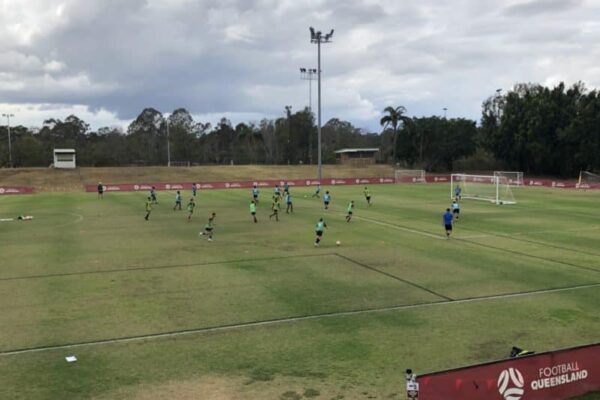
Jacob: We do a lot of performance analysis, and that may be viewing players on the pitch as we get a lot of parents request that we go and watch their child play, but also, we work in the sports science realm as well. That involves bringing players in, whether that be teams or individual clients, and testing them through a range of different things.
So, we do a full-body assessment and screening, where a physiotherapist assesses ankles, knees, hips, range of motion and the likelihood of where injuries could arise. And then we look at the performance testing as well with strength and power tests, and speed and agility tests. From there, what we do with those metrics is we build the training program specifically and then retest that client or athlete before the next training block. This is the pinnacle of individual performance.
We’re taking individual performance to the grand scale as well. We’re working with Heidelberg United, so what we’ve done is we’ve formed a collaboration with that club and launched an Athlete Development & High-Performance Program that includes working with over 100 athletes to provide these same opportunities. 
What does the week-to-week look like for Oxidate?
Jacob: We’re here seven days a week and our coaches and staff are available for a range of high-performance sessions, recovery or rehabilitation. We’re here to provide opportunities for everyone that would like to enhance their careers.
Obviously, we follow a set structure, we set up a weekly schedule for each of our clients and we give them our opinions based on when and how they should train, and we setup a weekly forecast for them. So, for example, it might look like a Monday day recovery where (tying back into that point of difference) a lot of footballers, coaches, teams and clubs are taking a recovery day as a lesser option where they’re not really doing too much. Whereas, recovery can be enhanced if you stick to the science and stick to a proper structure.
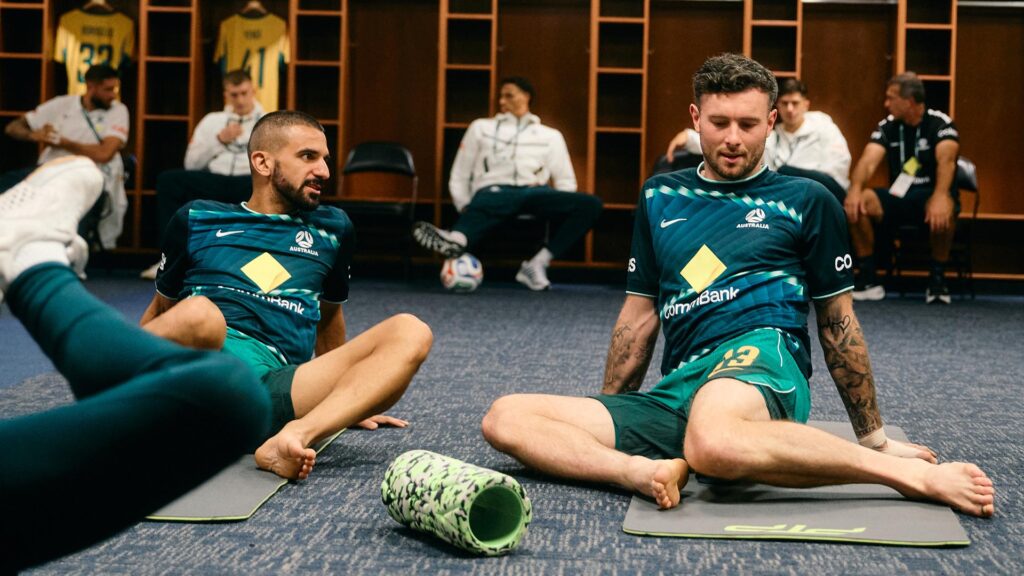
Recovery at Oxidate includes our recovery pools. Hot and cold contrast water therapy. We do a lot of active recovery style sessions and a lot of injury prevention stuff too, including strength training. So, that’s a huge point of difference here as our clients are always progressing, instead of plateauing due to doing nothing. Rest is not always the answer for recovery. 
A midweek session on a Wednesday will be your heavy strength power sessions, and then we do a Friday session which is game day -1. And we do what’s called a neural priming session, which involves a lot of work on the nervous system, a lot of stimulation work, a lot of low volume work at a high intensity. We do some sprints and agility training as well. All of our systems and programs are designed purely to make sure our clients dominate on game day, week in, week out, all season long.
It sounds like there is a huge variety of coaching and treatment on offer, who are the type of coaches working with Oxidate?
Jacob: All of our coaches have exercise science and sports science-based backing. So, every coach has a university degree of either 3 or 5 years. But, they’re also more importantly either current football players or previous players, so  they understand the demands of the sport. They’re not just gym-goers or lab-tech gurus, they know what it feels like to play and they know what the demands are of a coach or a club. So, I think it really gives us a unique backing which then ties into that unique experience that you get when you step into our doors and come train with us.
It sounds like you both have an in-depth knowledge about performance coaching, but what inspired the way you approach things? Was it a particular coach or club experience?
Dominic: For myself, I have had some really good football coaches throughout my footballing career. There’s one or two here in Australia, but over in Spain the standard of actual coaching over there is on another level. And I guess, throughout my 4-5 years over there in Spain and England, I was consistently speaking with Jacob and saying how crazy the coaching was and how different it was.
From that I think I learnt a lot. I don’t need to name drop anyone because they’re overseas, but there were a few coaches who really took the technical side of the game to another level. And I think it shows in the way, for example, the way international teams like Spain and England play when compared to Australia.
So, that experience of training 4-5 times a week in Spain compared to here where it’s 2-3 sessions in a club setting, that contact time in terms of football development, hours spent in terms of load and actually improving the physical aspects as well made a massive difference. For me, learning all that from those coaches and that experience is where I personally got all the knowledge, we have today that I have passed on to Jacob.
Jacob: It really just comes from trial and error. So, I like to call it being “in the trenches”, and I’ve sort of been in the trenches for the last 10-11 years in the industry. That has involved trialling, erroring, testing, reassessing and shaping this hybrid program, philosophy and format. So, my knowledge has come from years of working with 100s and 1000s of different athletes, trialling different areas and just tweaking and always improving them.
We’re very grateful Dom and I, that we’ve still got youth on our side. We’re still optimistic and open-minded, and we’re not too set in our ways. Which gives us that edge of adaptability and that’s probably a key word, ‘adaptability’, and that includes being adaptable to the client, situation, team or performance that’s needed.