


Adidas apparel deal under threat for Manchester United

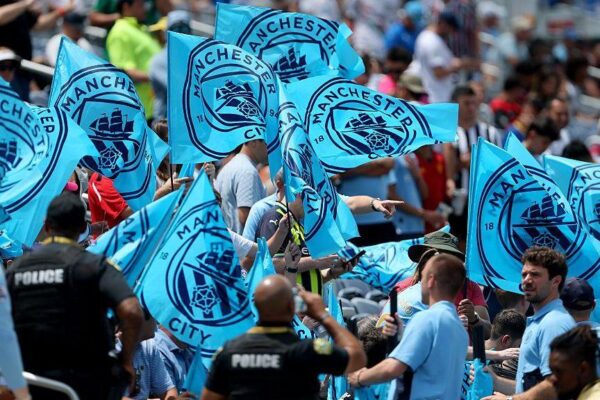
Manchester United’s season goes from bad to outright embarrassing as each week passes, and a new report suggests that their massive apparel deal with Adidas is under threat due to their on-field failures.

According to The Telegraph, Adidas holds the right to terminate the deal with a one-year notice period should the Red Devils face relegation to the Championship.

United’s Form Sparks Concerns Over Lucrative Partnership

Manchester United’s long-standing relationship with German sportswear giant Adidas is under serious threat as their poor form continues to raise relegation fears.

Adidas first supplied Manchester United’s apparel in 1980 to 1992 before reuniting with the clu in 2015 following a 23-year gap.

The two parties recently inked a lucrative 10-year extension in June 2023, worth $1.8 billion AUD (£900 million). However, United’s current Premier League struggles could jeopardise this deal.

Premier League Woes Could Prove Costly

Sitting in 13th place, Manchester United are only seven points above the relegation zone, with Ipswich Town breathing down their neck.

It comes after the club had the least amount of points after the halfway mark to a Premier League season in the club’s history (22 pts), a record they seemingly find themselves breaking every year.

In the unlikely event that relegation does happen, the financial blows would be critical for the club.

Adidas’ Relegation Clause Explained

Adidas reportedly has a clause in the contract that allows them to reduce payments by 50% if Manchester United are not in the Premier League. Moreover, the club stands to lose an additional $20 million AUD (£10 million) annually if they fail to qualify for the Champions League.

If United were relegated, their payout could shrink to a mere $70 million (£35 million)  next season—a massive drop from the initial agreement.

Relegation Battle Heats Up

United manager Ruben Amorim has acknowledged the reality of the relegation battle his side faces.

Even if the concept of a Red Devils relegation seems impossible, the mere discussion of it is an indictment on the club.

Conclusion

If Manchester United’s downward spiral continues, the club not only risks relegation but could face severe financial consequences.

Their lack of Champions League football and a potential season without European football as a whole would mark a historic low point for the club and bring significant commercial repercussions.

Previous ArticleNext Article

Melbourne Victory and BYD drive innovation through new major partnership

Melbourne Victory has officially welcomed BYD as a Major Partner and the Club’s exclusive Motor Vehicle Supplier for the next 12 months. At a partner launch bringing together the two organisations, the focus is on building around innovation, growth and a drive for success. The partnership will place BYD at the centre of Melbourne Victory’s fan experience. The brand will feature on the front of both the A-League men’s and women’s home and away jerseys. This gives BYD a strong presence across matchdays, broadcasts and digital content throughout the season.

The partnership extends well beyond the playing kit. BYD will be integrated across Melbourne Victory’s media, Academy and community assets. The two organisations will also collaborate through Member and pathways programs. This creates opportunities for BYD to connect with Victory supporters across multiple touchpoints.

For BYD, the partnership provides a direct connection with Melbourne Victory’s growing supporter and member base. The automotive brand has built a rapidly expanding presence in Australia and New Zealand. Its partnership with Victory provides another platform to build awareness and engage with Australian consumers. BYD Australia Chief Operating Officer Stephen Collins said the alignment between the two organisations was a key factor behind the deal.

“At BYD we’re enormously excited to welcome the Melbourne Victory into the BYD family as an exclusive automotive partner,” Collins said.

“What really appeals to us was the culture of innovation and the hunger for success.”

That alignment is reflected in the way the partnership will operate. BYD will not simply appear on Melbourne Victory assets. The brand will be connected to the Club’s members, fans, business network, pathways and community programs. Melbourne Victory Managing Director Caroline Carnegie said the partnership reflects a shared ambition for continued growth. She also highlighted the organisations’ common focus on leading, connecting and inspiring their communities. Together, Melbourne Victory and BYD will bring the partnership to life across matchdays, media, community initiatives and supporter experiences throughout the 2026-27 season.

The ball is no longer just being improved it is being connected

The humble football is becoming one of the more technologically advanced objects on a football pitch.

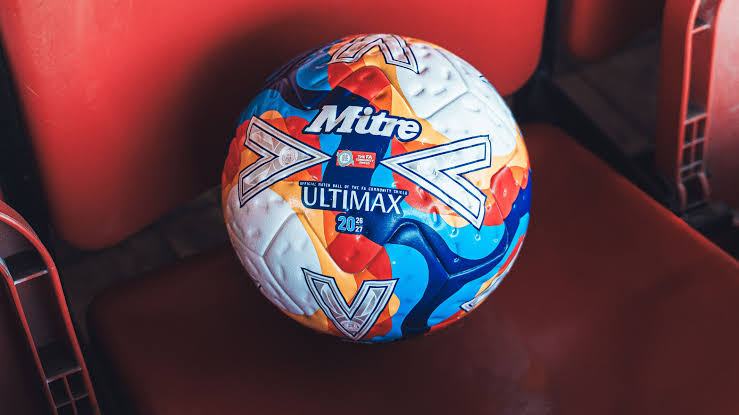
Across the A-Leagues, Mitre’s new Ultimax Pro is focused on improving what happens when the ball is kicked, while LaLiga has taken the next step by turning the ball into a source of live match data.

The contrast shows how football technology is moving in two directions at once, improving the physical performance of equipment while increasingly connecting it to the digital systems surrounding the game.

Refining the Physical Object: Mitre’s Ultimax Pro

The Ultimax Pro, which will be used across the 2026/27 A-League Men and Ninja A-League Women seasons, incorporates Mitre’s HyperFlow, HyperFoam, HyperSeal and Delta Skin technologies.

Its debossed grooves are designed to reduce drag and improve stability in flight, while the cushioning, bonding and surface technologies are aimed at producing consistent rebound, durability and control. The ball carries FIFA Quality Pro certification, reflecting the testing standards required for professional match balls.

The technology is largely invisible to supporters. Its purpose is to make the ball behave more predictably for players, rather than fundamentally changing the football itself.

Connecting the Ball to the Digital Ecosystem: LaLiga’s Sensor-Driven Approach

LaLiga’s approach is different.

The Spanish competition has introduced a radio-frequency sensor developed by KINEXON into its PUMA match ball, with the technology being used across every LaLiga EA Sports fixture this season.

The sensor continuously transmits information about the ball’s position and the precise moment of contact. Around 12 antennas installed in each stadium capture the data and feed it into LaLiga’s wider technology infrastructure.

That gives the ball a role beyond simply being the object of play.

Knowing exactly when the ball is touched can help officials in a variety of situations. Offside, handballs, deflections and other decisions where a difference of milliseconds can affect the outcome could all benefit.

But the more interesting development may sit outside officiating.

LaLiga is using the connected ball to create xBALL, an official data layer that can feed broadcasts, digital products and future second-screen experiences. Data such as shot speed, ball spin and trajectory could all be incorporated into its media and digital products.

The ball is no longer just something that manufacturers compete to make faster, more durable or more responsive. It can also become a source of proprietary data that leagues can use to improve broadcasts, develop digital products and create new ways for supporters to understand the game.

The Ball as Part of Football’s Intelligence Layer

Mitre is refining the physical object. LaLiga is connecting that object to the digital ecosystem of the match.

Together, however, they point to the same direction of travel.

Football equipment is becoming increasingly intelligent.

The evolution is not necessarily about adding technology for its own sake. In the A-Leagues, the objective is consistency: predictable flight, touch and rebound. In LaLiga, the objective is precision and information: knowing exactly where the ball is and when it was touched.

The commercial opportunity comes from what can be built around those capabilities.

As stadiums become more connected, broadcasts become more data-rich and clubs and leagues collect increasingly detailed information about matches, the football itself can become another input into that infrastructure.

It also changes the relationship between equipment manufacturers and competitions.

A match ball used to be primarily a physical product supplied to a league. Connected technology creates the possibility of the ball becoming part of a broader technology stack involving officiating systems, broadcast platforms, analytics and fan-facing digital products.

The A-Leagues are starting with the physical performance of the ball. LaLiga is showing what can happen when that physical object becomes connected.

The next generation of football technology may not be something players wear or referees use.

It may be the ball itself.

Most Popular Topics

Editor Picks

Send this to a friend