Creativity, wellbeing and benchmarking: Football NSW launches 2026 Girls Youth League season

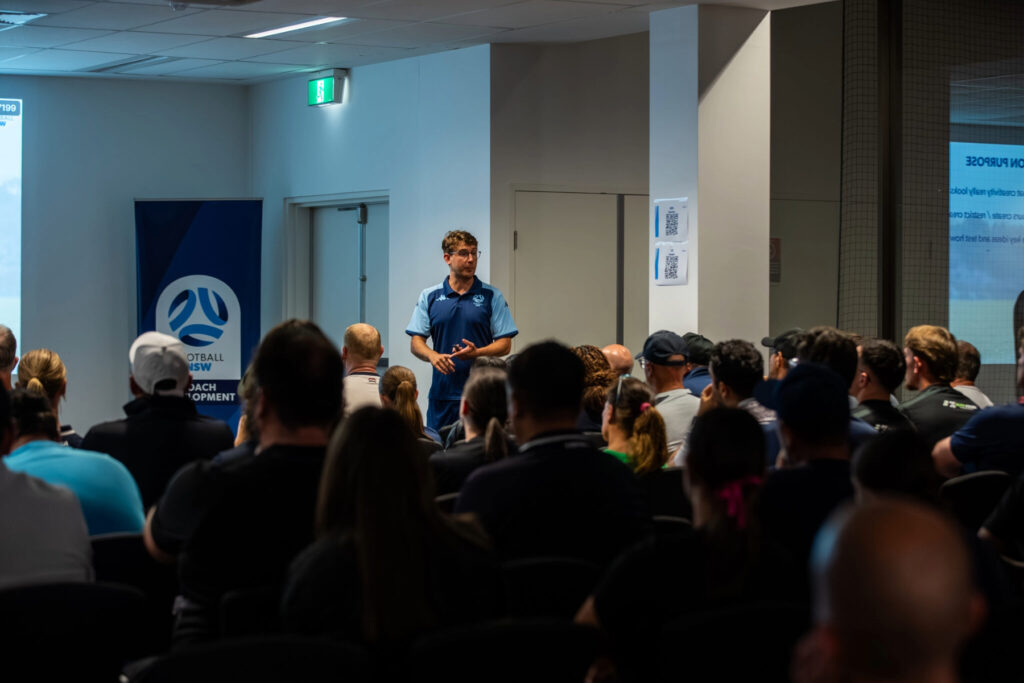
Over 200 technical directors and coaches descended on Valentine Sports Park this weekend to launch the 2026 Girls Youth League (GYL) and Girls Junior Development League (GJDL) season.

Two core themes dominated the conference: cultivating player creativity and integrating structured wellbeing programs.

Football Australia National Team Coaches Mike Cooper and Alex Epakis led the technical delivery. The duo ran practical sessions focused on intervention methods and decision-making. Their presence ensures the state league speaks the same tactical language as the national pathways.

Benchmarking the Future

The operational spotlight fell on the Club Standards & Benchmarking Framework. Now entering its third year, the policy carries significant weight. Football NSW briefed clubs on how 2026 performance metrics will directly dictate competition structures for 2027.

Football NSW Club Technical Development Manager Neil Mann emphasised the shift away from pure results-based assessment.

“The success of a youth development program should not be determined solely by league outcomes,” Mann said.

“It provides guiding principles to help clubs create positive environments… while allowing clubs to retain their own identity.”

Person First, Player Second

Wellbeing professional Holly Fuda delivered the keynote address. She challenged directors to embed mental health strategies into daily training, rather than treating them as tokenistic add-ons.

Football NSW Head of Football Development Ed Ferguson reinforced this cultural shift.

“The curiosity and contribution across both days is testament to our ecosystem,” Ferguson said.

“Every club in attendance highlighted their responsibility to develop better individuals through football. That puts us in a strong position to create environments built on trust.”

Previous ArticleNext Article

GIS Sydney connects students with Australia’s sporting industry

The Global Institute of Sport (GIS) is giving students new opportunities to build careers in Australia’s growing sports industry. Combining academic study with direct access to sporting organisations, venues and industry professionals. Based at Allianz Stadium and the Sydney Cricket Ground, GIS Sydney places students at the heart of Australia’s sporting landscape. The campus gives students the chance to study while surrounded by major sporting organisations and events, creating a direct connection between education and the industry they hope to join.

Students also benefit from regular access to experienced sports professionals. More than 50 guest speakers have shared their expertise with GIS students, including representatives from FIFA, Red Bull, Cricket Australia and the AFL. These sessions give students a valuable insight into the different roles and career pathways available across the sports sector. GIS Sydney delivers programs including Sports Analytics and International Sports Business in partnership with the University of Newcastle. The courses combine academic learning with opportunities for students to develop practical skills that they can take into the workplace.

Industry experience forms another important part of the student journey. GIS provides students with 140 hours of relevant work experience, allowing them to apply their knowledge in professional settings. Students have secured placements with organisations including the Professional Football Scouts Association, Football Coaches Australia and Basketball NSW.

GIS also works with Yakka Sport to create paid employment opportunities for students while they study. This allows students to gain workplace experience while developing professional networks within the sporting community. The opportunities extend internationally, with GIS Global Sports Summits giving students access to sporting organisations and venues in destinations including London and Miami.

For students pursuing careers in sport, GIS Sydney is creating a pathway that combines education, practical experience and industry connections. By bringing students closer to the people and organisations shaping the sector, GIS is helping the next generation turn their interest in sport into professional opportunities.

Inspiring the future of women’s football: The Growing Football Community grant now open

Grassroots football is where the game grows. It is where players find their first team, coaches develop skills, and clubs function as part of local communities. Football Australia’s Growing Football Community Grant is designed to strengthen those foundations, with a particular focus on creating more opportunities for women and girls to play, coach and stay involved in football. The 2026/27 program is now open, and eligible clubs and associations can apply for grants of up to $5,000.

What is the Growing Football Community Grant?

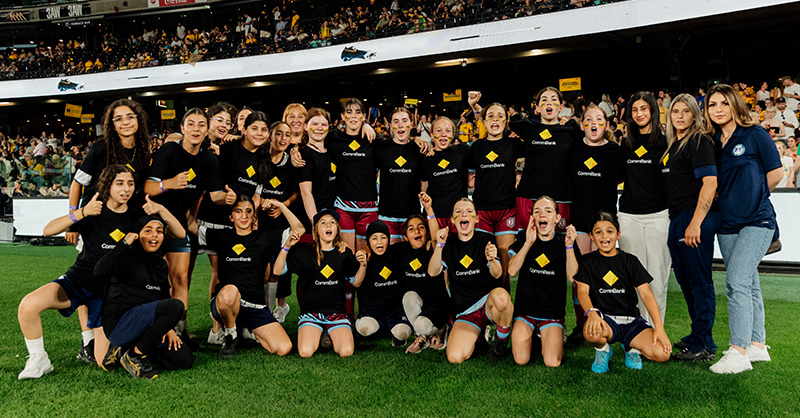
The grant forms part of Football Australia’s Growing Football Fund, which was established with the support of CommBank following the FIFA Women’s World Cup 2023 hosted in Australia. Its main goal is simple: help clubs and associations attract and retain women and girls in football. Funding can support projects that improve the experience of existing players or create new pathways into the game. It can also help clubs develop coaches and build more inclusive, safer environments.

The program is about more than getting people onto the pitch. It aims to create the conditions that encourage participants to keep coming back.

Who does it support?

The program is aimed at eligible football clubs and associations across Australia. For participants, that can mean new opportunities to play, and for coaches, it can mean better access to education and development. For clubs, it can provide practical support to remove barriers that can make participation harder.

Previous grants have supported a wide range of grassroots projects, and these have included ‘come and try’ programs, female-only football activities, subsidised registration fees, improved playing uniforms, coaching education and leadership programs. The program also has a strong regional and community focus. Football Australia says 93 of the 297 clubs supported across the first three grant rounds were from regional and remote communities.

What is the community benefit?

The biggest impact can extend beyond the individual player. A club that creates a stronger pathway for girls can help build participation across an entire community. Better coaching can improve the experience for players. More women in coaching and leadership can create new role models. Removing financial or practical barriers can also make football more accessible.

That can help clubs build stronger connections with families and their local communities. Football Australia’s stated objectives include providing quality experiences for new and returning participants, developing community coaches and helping clubs create inclusive and safe environments that support the retention of women and girls. Recent recipients show how that can work in practice. Broulee Stingrays Soccer Club is using grant funding to support a female coaching pathway in the Eurobodalla region, including subsidised coaching courses for girls from the age of 14.

How can clubs apply and key dates

Applications for the Growing Football Community grants opened on the 8th of September. The deadline is 10 pm AEDT on Tuesday the 20th of October. Clubs and associations should first review the Growing Football Community Grant guidelines and check their eligibility.

Applicants then need to develop their project and budget before completing the online application. The application asks clubs to explain how their project aligns with the program objectives, the barriers they face and how the funding will help address those barriers. Successful applications are scheduled to be announced in December, with funded projects to be delivered during 2027.

For clubs looking to grow women’s and girls’ football, the grant offers an opportunity to turn a local idea into a practical community project. The impact does not stop with one season. Stronger pathways, better coaching and more welcoming clubs can help build a football community where more women and girls can start playing, stay involved and find their place in the game.

Most Popular Topics

Editor Picks

Send this to a friend