



Cynergy Bank secured as official bank sponsor for Brentford FC

It’s a series of firsts for Brentford FC and Cynergy bank, who have struck a four-year deal. As Brentford’s official bank partner, this will be Cynergy’s first collaboration with professional football, and they will also be the first bank partner that Brentford FC has ever had.

Founded in 1955 and based in London, Cynergy Bank is a specialist lender offering tailored financial services to business owners, property investors, and family-run enterprises, with a strong emphasis on supporting small and medium-sized businesses (SMEs).

Cynergy aims to utilise Brentford’s visibility within the community to recruit local business enterprises, which will boost their platform as well as those who actively engage with the London SME scene.

Community engagement was a major motivator for the deal, as both the club and the new collaborator, will see benefits through branding integration, joint community programs, and business outreaches. Cynergy Bank will also feature throughout Brentford’s stadium assets, digital platforms, and across both business and fan circles.

Fran Jones, Commercial Director at Brentford FC, mentioned the shared values of both organisations in areas such as community and innovation.

“We’re delighted to welcome Cynergy Bank as our official banking partner. This partnership is based on shared values around innovation, performance and community. Like Brentford, Cynergy aims to do things differently in their sector, as well as provide a more human approach to their services. We see a lot of potential where Cynergy Bank can also support west London’s thriving SME community to support growth in the region,” he said via press release.

Additionally, the bank looks forward to working with both the men’s and the women’s team, supporting innovation across genders.

Sharon Maguire, Chief Operating Officer at Cynergy Bank, shared her own sentiments about the collaboration.

“We are so proud to partner with a club that shares so many values with Cynergy Bank,” she said via press release.

“Brentford is agile, innovative, and they use the power of data to their advantage – something we also pride ourselves on. I’m excited to support not only the men’s team but also the women’s team. At Cynergy Bank we’re passionate about supporting equality and diversity in everything we do, and I’m excited to champion the incredible talent and potential within women’s sports.”

As both Brentford FC and Cynergy Bank push for modernity, equality and financial innovation, members of the London business and football community can expect very positive times ahead.

Previous ArticleNext Article

Thornaby FC’s community commitment leads the way, but football fans continue to suffer

The cost of living crisis has impacted people and businesses worldwide and football is no different.

Football fans globally – and especially top flight British supporters – are being priced out of the game they created, and by the teams they have supported their whole lives.

In the 2024/25 season, 19 of 20 Premier League clubs raised their ticket prices. The highest single jump was a 28% increase, and additionally an 11% hike on tickets for children. Between 1990-2025, football fans in the UK have seen their ticket prices increase by an immense 800%. 

The fan reaction has been continually damning. Via the UK-based Football Supporters’ Association, over one hundred supporter groups campaigned for Premier League clubs to freeze ticket prices at home games for two seasons, as part of the Stop Exploiting Loyalty Campaign.

An FSA statement reads: ‘Football is for everyone. Rising prices are making it harder for regular fans, especially younger generations and working-class communities to attend matches.’ 

With fans of clubs from right across the country united on the matter, their position was clear: stop taking football from the people.

One club that did heed the message were North Yorkshire non-league side, Thornaby FC. This season, they are offering free season tickets to local residents for both men’s and women’s games.

Over 20,000 people are eligible thanks to the partnership between the club and the local council. With the club awarded AUD 12,000 (GBP 6,500), the initiative aims to bring the community together and drive locals to games.

This is not seen as a final solution, but certainly a major step in gaining support and interest for the team; in turn it will hopefully drive local investment, revenue and growth via the community that supports it, as opposed to investment groups that potentially hold less interest in the health of the club and its community. 

The Stop Exploiting Loyalty Campaign has also gained the support of MPs in Parliament. In March, they recognised the problem and as part of an Early Day Motion stated: ‘working-class and young supporters are being priced out; squeezing out local and dedicated fans poses an existential threat to the culture and community of football.’

While those words may be encouraging, what they can change in their current systematic position feels minimal.


The World Cup is another example of football fans suffering greatly at the hands of commercial interests.

On the grandest stage, where fans from around the world gather en masse to support their nations and the spirit of the game should in theory be at its most authentic, fans are deliberately exploited by FIFA.

According to Forbes Middle East, the 2026 edition in the USA, Canada and Mexico saw a rise in ticket prices for 90 of the 104 matches compared to the previous edition in Qatar.

Football is being held up by investors and governing bodies like a puppet on strings. They deem growth to be the only measure of success.

Growth is of course a key requirement of success, but what good is that when it sees the interests of local communities, including loyal football fans, pushed to the side? When it comes to modern day football, good deeds – such as those committed by Thornaby FC – are rarely seen as time well spent.

The pursuit for growth is also not just financial. Human attention is a newly monetised market; from streaming views to social-media engagement to email sign-ups. As football continues its global push into lounge rooms and onto smartphones, it is at major risk of overlooking those who commit their time and resources to stand in the terraces or sit in the stands.

Nike to end Adidas’ 25-year run as UEFA Champions League ball supplier

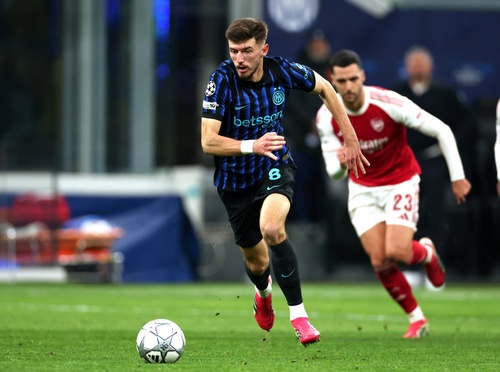
Nike has signed with UEFA to supply the ball for the Men’s Champions League competition for the next four seasons, with the agreement reportedly in the region of AUD 65.3 million (EUR 40 million).

Nike previously supplied the ball for the top level of men’s European club football from 1998-2001, before Adidas commenced a 25-year partnership early in the millennium.

The new deal will also see Nike replace Decathlon brand Kipsta as the ball supplier for UEFA’s Europa and Conference League competitions, marking the first time one manufacturer has fulfilled all three competitions.

While the specific figure of the deal remains undisclosed, the Financial Times has reported the approximate figure has doubled the value of UEFA’s current agreement with Adidas and Decathlon.

‘Football is the world’s game, and the ball is at the centre of it, the one thing every player, in every competition, has in common,’ said Camilo Andrade, vice president and general manager of Nike Football.

‘This is a long-term commitment for Nike. We will listen to the athlete’s voice, push the edges of innovation, honour the prestige and tradition of these competitions, and make sure the ball represents the instinct, creativity and joy football brings to billions of fans.’

The contract comes as welcome news for Nike, who have been without a ball supply deal across elite European football since the end of a 25-year partnership of their own, with the Premier League moving to Puma from the start of the 2025/26 season.

Nike has also recently farewelled Kylian Mbappe, with the France and PSG star – and one of the most recognisable athletes in the world – signing with relatively lesser-known Swiss company On, rather than extend his deal.

Despite the end of their quarter century Champions League agreement, UEFA and Adidas remain in partnership on a number of fronts; the heritage German manufacturer remains the official match ball supplier for the Women’s Champions League, Euro 2028, and the Nations League.

Most Popular Topics

Editor Picks

Send this to a friend