

Does The Australian Championship Have a Long-Term Future? Optimism Remains Despite Silence

THE ASSOCIATION of Australian Football Clubs has reconvened to re-engage Football Australia on the long-term future of the Australian Championship, which returns next month for its second season.

The AAFC is preparing a formal approach to head office in the aim of establishing the next steps for the tournament’s development. Little has been said from FA about its long-term prospects since South Melbourne won the inaugural title last summer.

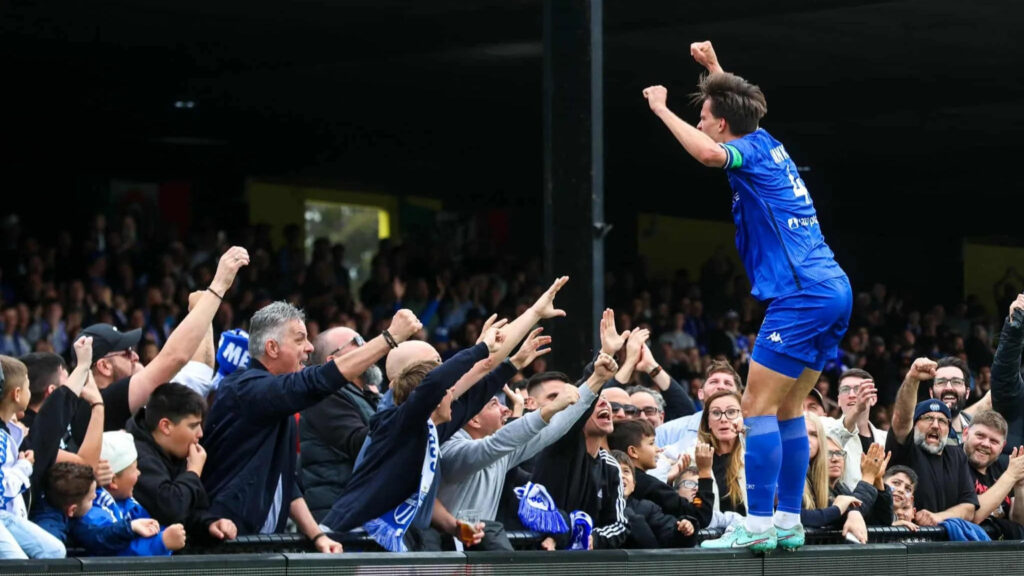
Operated last season as an end-of-year tournament for clubs pulled from NPL competitions around the country, under the (former) model of the UEFA Champions League, it was generally lauded by those who partook as a success. This year, the same format returns.

But there remains a lack of certainty across constituent clubs as to where the Championship is headed. Those spoken to by Soccerscene, both within and outside the ‘foundation’ ranks, retain a firm desire to see it become a full-blown national second division – as was the competition’s working title for much of its development process.

“We’re now in the process of pushing that timeframe [for future discussion] because the clubs’ concern is if you just wait another twelve months, and do nothing towards establishing the home and away competition, then another year will pass,’ said AAFC chairman Nick Galatas.

‘We’re keen on re-establishing the impetus for what we say the clubs and the fans actually want, and that is a proper competition that will be the bridge for what we all want.

“We need to link our game from bottom to top and give more opportunities to our promising young players.”

It is the general view of a number of foundation clubs that discussions with FA have always been due to re-open following this upcoming second season; however, actual specifics have proved harder to find.

“As an aspiring club, we were under the understanding that after two years there’d be a review for the potential of promotion and relegation [to the A-League],’ said one club president from within the eight foundation clubs.

“Or, to discuss expansion into the A-League. We’re not asking to get rid of A-League teams; we’re asking for a connection via expansion. For example: ‘keep playing this competition, keep performing strongly, and then if you meet the criteria, you can apply for A-League expansion.’”

It is nearing three years since Football Australia selected its eight foundation clubs, from a pool of 32 that were invited to enter its Request For Proposal phase. At the time, it was stated that a refined process – to commence early-2024 – would seek to find an additional two-to-four clubs to join them.

That this has not happened means the eight sides still fail to represent any state outside New South Wales and Victoria, a criticism levelled at the competition from its first day. From the outside, this continued inactivity could be construed as a lack of progress – although that’s not to say inactivity is the case.

“We’ve explored it a few times, and FA have been really open about where they’re up to, and really what the trajectory is,” said the president of another club, who were part of the Request For Proposal phase, but were not selected as a foundation club.

“I would describe their current position as ‘we’re doing it, we’ll review what we’re doing, and then we’ll plan to either keep doing it, or expand it.’ Does that mean expansion will happen? Not necessarily.

‘Maybe they’ll do that review and there’s a sense the timing’s not right, there are too many challenges… but I’m not getting any indication that that’s the case.’

Football Australia signed its Championship broadcast deal with SBS in September 2025 for two seasons with an option for a third. Last week, the partnership announced an increase in linear broadcasting for 2026 with an additional match per round to be broadcast on Thursday nights. The entire competition is available via SBS On Demand.

Football Australia has also added a Penalty Shootout Bonus Point Model, where drawn matches in the group stage will see sides awarded a standard one point each, before heading to the penalty spot to contest an additional point.

The competition also remains without a naming rights partner, while participant clubs have this season been charged an entry fee, which was not the case last season. Football Australia continues to foot the travel bill for parties up to a certain number for away fixtures.

Football Australia was contacted for comment.

Previous ArticleNext Article

Melbourne Victory and BYD drive innovation through new major partnership

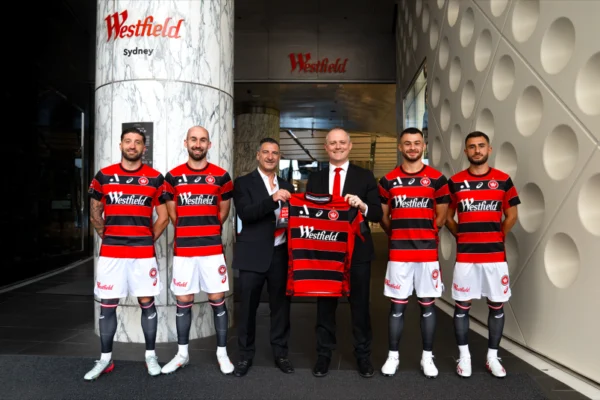
Melbourne Victory has officially welcomed BYD as a Major Partner and the Club’s exclusive Motor Vehicle Supplier for the next 12 months. At a partner launch bringing together the two organisations, the focus is on building around innovation, growth and a drive for success. The partnership will place BYD at the centre of Melbourne Victory’s fan experience. The brand will feature on the front of both the A-League men’s and women’s home and away jerseys. This gives BYD a strong presence across matchdays, broadcasts and digital content throughout the season.

The partnership extends well beyond the playing kit. BYD will be integrated across Melbourne Victory’s media, Academy and community assets. The two organisations will also collaborate through Member and pathways programs. This creates opportunities for BYD to connect with Victory supporters across multiple touchpoints.

For BYD, the partnership provides a direct connection with Melbourne Victory’s growing supporter and member base. The automotive brand has built a rapidly expanding presence in Australia and New Zealand. Its partnership with Victory provides another platform to build awareness and engage with Australian consumers. BYD Australia Chief Operating Officer Stephen Collins said the alignment between the two organisations was a key factor behind the deal.

“At BYD we’re enormously excited to welcome the Melbourne Victory into the BYD family as an exclusive automotive partner,” Collins said.

“What really appeals to us was the culture of innovation and the hunger for success.”

That alignment is reflected in the way the partnership will operate. BYD will not simply appear on Melbourne Victory assets. The brand will be connected to the Club’s members, fans, business network, pathways and community programs. Melbourne Victory Managing Director Caroline Carnegie said the partnership reflects a shared ambition for continued growth. She also highlighted the organisations’ common focus on leading, connecting and inspiring their communities. Together, Melbourne Victory and BYD will bring the partnership to life across matchdays, media, community initiatives and supporter experiences throughout the 2026-27 season.

The ball is no longer just being improved it is being connected

The humble football is becoming one of the more technologically advanced objects on a football pitch.

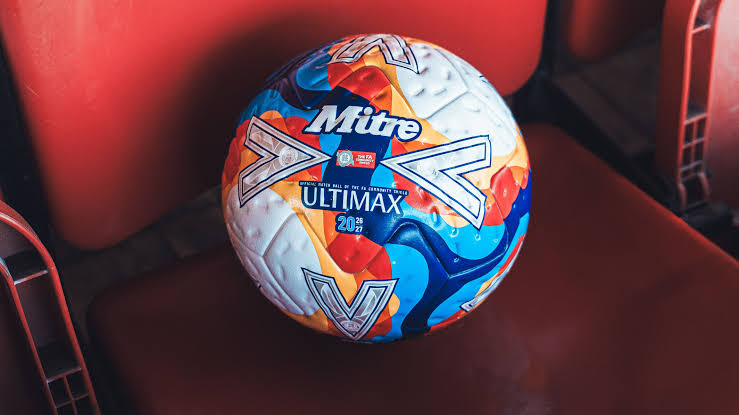
Across the A-Leagues, Mitre’s new Ultimax Pro is focused on improving what happens when the ball is kicked, while LaLiga has taken the next step by turning the ball into a source of live match data.

The contrast shows how football technology is moving in two directions at once, improving the physical performance of equipment while increasingly connecting it to the digital systems surrounding the game.

Refining the Physical Object: Mitre’s Ultimax Pro

The Ultimax Pro, which will be used across the 2026/27 A-League Men and Ninja A-League Women seasons, incorporates Mitre’s HyperFlow, HyperFoam, HyperSeal and Delta Skin technologies.

Its debossed grooves are designed to reduce drag and improve stability in flight, while the cushioning, bonding and surface technologies are aimed at producing consistent rebound, durability and control. The ball carries FIFA Quality Pro certification, reflecting the testing standards required for professional match balls.

The technology is largely invisible to supporters. Its purpose is to make the ball behave more predictably for players, rather than fundamentally changing the football itself.

Connecting the Ball to the Digital Ecosystem: LaLiga’s Sensor-Driven Approach

LaLiga’s approach is different.

The Spanish competition has introduced a radio-frequency sensor developed by KINEXON into its PUMA match ball, with the technology being used across every LaLiga EA Sports fixture this season.

The sensor continuously transmits information about the ball’s position and the precise moment of contact. Around 12 antennas installed in each stadium capture the data and feed it into LaLiga’s wider technology infrastructure.

That gives the ball a role beyond simply being the object of play.

Knowing exactly when the ball is touched can help officials in a variety of situations. Offside, handballs, deflections and other decisions where a difference of milliseconds can affect the outcome could all benefit.

But the more interesting development may sit outside officiating.

LaLiga is using the connected ball to create xBALL, an official data layer that can feed broadcasts, digital products and future second-screen experiences. Data such as shot speed, ball spin and trajectory could all be incorporated into its media and digital products.

The ball is no longer just something that manufacturers compete to make faster, more durable or more responsive. It can also become a source of proprietary data that leagues can use to improve broadcasts, develop digital products and create new ways for supporters to understand the game.

The Ball as Part of Football’s Intelligence Layer

Mitre is refining the physical object. LaLiga is connecting that object to the digital ecosystem of the match.

Together, however, they point to the same direction of travel.

Football equipment is becoming increasingly intelligent.

The evolution is not necessarily about adding technology for its own sake. In the A-Leagues, the objective is consistency: predictable flight, touch and rebound. In LaLiga, the objective is precision and information: knowing exactly where the ball is and when it was touched.

The commercial opportunity comes from what can be built around those capabilities.

As stadiums become more connected, broadcasts become more data-rich and clubs and leagues collect increasingly detailed information about matches, the football itself can become another input into that infrastructure.

It also changes the relationship between equipment manufacturers and competitions.

A match ball used to be primarily a physical product supplied to a league. Connected technology creates the possibility of the ball becoming part of a broader technology stack involving officiating systems, broadcast platforms, analytics and fan-facing digital products.

The A-Leagues are starting with the physical performance of the ball. LaLiga is showing what can happen when that physical object becomes connected.

The next generation of football technology may not be something players wear or referees use.

It may be the ball itself.

Most Popular Topics

Editor Picks

Send this to a friend