


Everton’s new home to be called the Hill Dickinson Stadium

Everton Football Club has announced that its new stadium at Bramley-Moore Dock will be named the Hill Dickinson Stadium, following a major naming rights partnership with the Liverpool-based legal firm.

Hill Dickinson, which has its headquarters in the city and was founded in 1810 — 68 years before Everton was established — has secured the naming rights for the impressive waterfront venue.

While the length and financial terms of the deal haven’t been made public, Everton has described the partnership as “one of the largest stadium naming rights deals in Europe,” suggesting it could be worth approximately £10 million (around $20.7 million AUD) annually.

The deal marks a significant milestone in the club’s move to their new $1.65 billion AUD (£800 million) stadium, as they prepare to leave their historic home at Goodison Park at the end of the 2024-25 season.

The club confirmed the agreement with Hill Dickinson is a “long-term” arrangement.

The Hill Dickinson Stadium will boast a 52,888-seat capacity and is scheduled to officially open in August 2025, in time for the 2025-26 Premier League season.

Test events have already begun at the venue, including a youth match between Everton and Wigan’s under-18 sides — the first football fixture ever held at the new ground.

This naming rights deal not only solidifies the stadium’s identity ahead of its debut season but also reflects the club’s ongoing efforts to align with prominent, locally rooted partners as it enters a new era.

Hill Dickinson chief executive officer Craig Scott explained the importance of this naming rights deal for the club and the city of Liverpool.

“To put our name to Everton’s new stadium is a once-in-a-generation opportunity,” Scott said in a press release.

“We believe deeply in what this project stands for – a bold, transformational vision for Liverpool and its future.”

Everton Football Club are still yet to comment officially on the name change.

Whilst the new stadium name is incredibly unpopular amongst the fanbase, the Merseyside club have suffered two separate point deductions and multiple years of financial hardship on and off the pitch which had led to the club making a more financial decision.

As the club heads into next season safely in the Premier League, it has aspirations of using the additional revenue of this stadium and the naming rights deal to once again challenge for the European places, which hasn’t been done in almost a decade.

Previous ArticleNext Article

Central Coast Mariners Women secure future under Holman Barnes Group

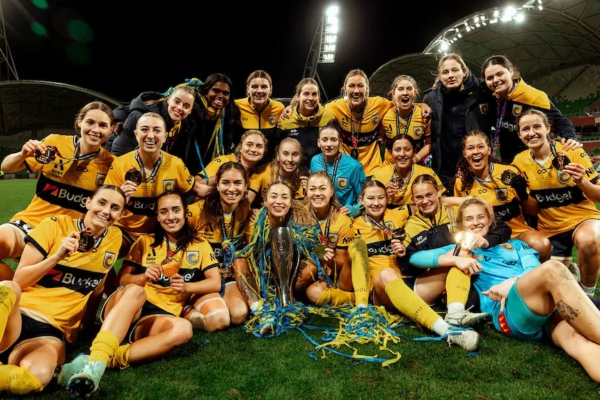
The future of the Central Coast Mariners Women has been secured after the Holman Barnes Group (HBG) reached an agreement to become the new operator of the club’s A-League Women program. The deal ends uncertainty surrounding the team’s participation in the 2026/27 season.

The agreement between HBG, the Australian Professional Leagues (APL) and Total Soccer Growth Holdings (TSG) ensures the Mariners will remain in the Ninja A-League Women competition. It also introduces a new operating model designed to provide long-term stability.

The uncertainty emerged following TSG’s acquisition of the Central Coast Mariners’ men’s side and academy in June. The women’s program was excluded from the original takeover. TSG already owns English football side Queens Park Rangers (QPR) and MLS club Los Angeles FC. The omission placed the future of the 2025 A-League Women champions in doubt. It also prompted the APL to seek a sustainable solution ahead of the new campaign.

A new operating model

Under the new arrangement, HBG will oversee all operational aspects of the women’s team. This includes the football program, staffing and day-to-day management. TSG will retain the club licence and continue overseeing the men’s program and academy. It will also support the women’s operation through its broader football network.

The agreement represents an innovative partnership between the three organisations. It has been designed to strengthen the long-term sustainability of professional women’s football on the Central Coast. HBG’s plans extend beyond the senior team. They include a strong focus on developing participation pathways and creating greater opportunities for female footballers throughout New South Wales.

Attention turns to the new season

The transition comes at a crucial time with preparations for the 2026/27 Ninja A-League Women season underway ahead of its October 16 start. The new operators are expected to begin managing the program immediately. This remains subject to the completion of the remaining regulatory processes. The team currently has no sponsors and games are expected to be moved away from Central Coast Stadium.

The A-League had previously set a July 31 deadline for new owners to be found to secure a place in the upcoming competition. With that now achieved, HBG will be on the clock to ensure the season begins without disruption and becomes a commercial success.

For the Central Coast Mariners Women, the agreement delivers certainty after a turbulent off-season. It also allows the club to shift its attention to the 2026/27 campaign and the team’s on-field performance.

Boroondara Eagles Secure Landmark Victory as Macleay Park Set to Become NPLW Home

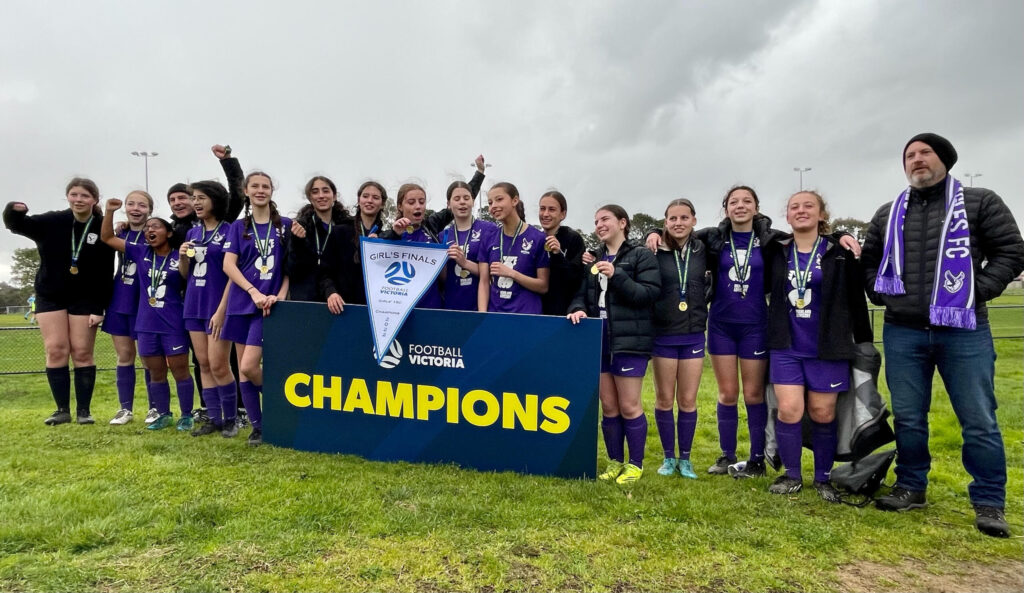
A long-awaited breakthrough for the Boroondara Eagles Football Club has brought the vision of a permanent home for women’s football one step closer, with Boroondara City Council endorsing plans for an NPLW-compliant pitch at Macleay Park.

For the Eagles, the ambition to provide women with deserving facilities took a significant step forward this week after the Boroondara City Council committed to upgrading the pitch as part of the Macleay Park Masterplan.

This masterplan involved new sports lights on Macleay Park Oval 3 but failed to see any further development to the soccer facilities or the Boroondara Eagles until Monday night.

The decision marks a defining moment in the club’s history and provides a platform for sustained growth, particularly for its thriving women’s and girls’ football programs.

While the resolution represents an important planning milestone, its significance extends well beyond the construction of a new playing surface. It signals a commitment to ensuring female footballers have access to facilities capable of supporting elite development pathways while remaining connected to their local community.

Purpose-built facilities remain one of the biggest challenges facing women’s football across Australia. As participation continues to surge, many clubs have outgrown venues originally designed around significantly smaller player bases.

For a club that has experienced rapid growth in recent years, the announcement provides the opportunity to establish a permanent home capable of meeting the demands of National Premier Leagues Women’s football.

The investment also reflects a broader shift within local government and football stakeholders towards recognising the infrastructure required to support the continued growth of the women’s game.

The Council’s decision was underpinned by strong community support, with players, families, coaches, volunteers and supporters filling the Council Chamber in a powerful display of unity.

The overwhelming attendance demonstrated the depth of connection between the club and the local community, highlighting how football facilities can become important social and sporting assets beyond matchday.

Although the inclusion of the NPLW-compliant pitch within the Macleay Park Masterplan represents a significant victory, the project remains at the beginning of its journey.

Funding, planning and delivery will now become the focus as the Boroondara Eagles works alongside Council, partners and the wider community to bring the Macleay Masterplan to life.

The club has already called on local businesses, sponsors and community members to become involved in the next phase, recognising that delivering modern sporting infrastructure is a collaborative effort.

Should the project progress as envisioned, Macleay Park has the potential to become more than simply the club’s home ground. It could emerge as a center point for women’s football in the local Boroondara community, supporting participation, talent development and community engagement for years to come.

For the Boroondara Eagles, the Council resolution is not the destination—it is the foundation upon which the club can build its next chapter.

Most Popular Topics

Editor Picks

Send this to a friend