






FCA Relaunches Coach Education Program with Expanded CPD Opportunities Through 2026

Football Coaches Australia (FCA) is set to relaunch its Coach Education Program, offering coaches across the country a comprehensive schedule of online workshops and new education opportunities through to the end of 2026.

Following a break in the program during the FIFA Men’s World Cup period, FCA’s coach education schedule returns this month with a strong focus on providing coaches with opportunities to complete the Continuing Professional Development (CPD) hours required to maintain their coaching licences.

FCA plans to deliver two online workshops per month through to December, alongside a range of additional coach education initiatives covering the technical, tactical, physical and emotional aspects of the game.

The program returns on Monday, August 24, with Scottish FA Coach Education Manager Martyn Buckie presenting Technical and Tactical Priorities – The Differences When Coaching Junior/Youth and Adults.

Buckie has been a regular presenter across FCA’s coach education program and will return with another engaging session designed to provide practical insights for coaches working across different levels and age groups.

FCA members can attend the session free of charge when using the FCA member code, while guests and non-members can register for $22.50.

The following week, on Monday, August 31, Scottish National Women’s Team coach Melissa Andreatta will present The Identity Advantage – Building a Team to Stay Connected When Pressure Is Highest.

Andreatta’s session will explore the importance of team identity and connection, particularly in high-pressure environments, providing coaches with insights applicable across the game.

FCA President Ian Greener said the return of the program represents an important opportunity for coaches to continue developing their knowledge while meeting their CPD requirements.

“Our ongoing relationship with Football Australia to provide these sessions, all supported with CPD, is a valuable component of the coach education landscape and one we here at FCA are proud to bring to coaches at all levels of our game,” Greener said.

The program will continue throughout September, with Ernie Merrick among the presenters already confirmed and further speakers to be announced in the coming months.

FCA’s expanded schedule is designed not only to help coaches accumulate vital CPD hours, but also to expose them to a diverse range of perspectives and expertise from across the football community.

A major new initiative will begin in October, with renowned coach Ron Smith delivering a six-part series focused on using information technology to develop coaches’ skills in match analysis.

The series will provide Australian coaches with a new opportunity to explore the use of technology and match analysis as part of their coaching development. Initially, the program will be limited to 10 coaches, with further details to be announced by FCA shortly.

With two quality sessions planned each month through to the end of the year, FCA’s renewed Coach Education Program will provide coaches at all levels with regular opportunities to learn, connect and continue their professional development.

Further presenters, workshops and education opportunities will be announced throughout the coming months.

Registrations for Martyn Buckie’s August 24 workshop are now open via this link.

FCA looks forward to welcoming coaches back to its Coach Education Program and continuing to support the development of coaches across Australian football.

Previous ArticleNext Article

Football Victoria campaign for upgrade to Baranduda Fields

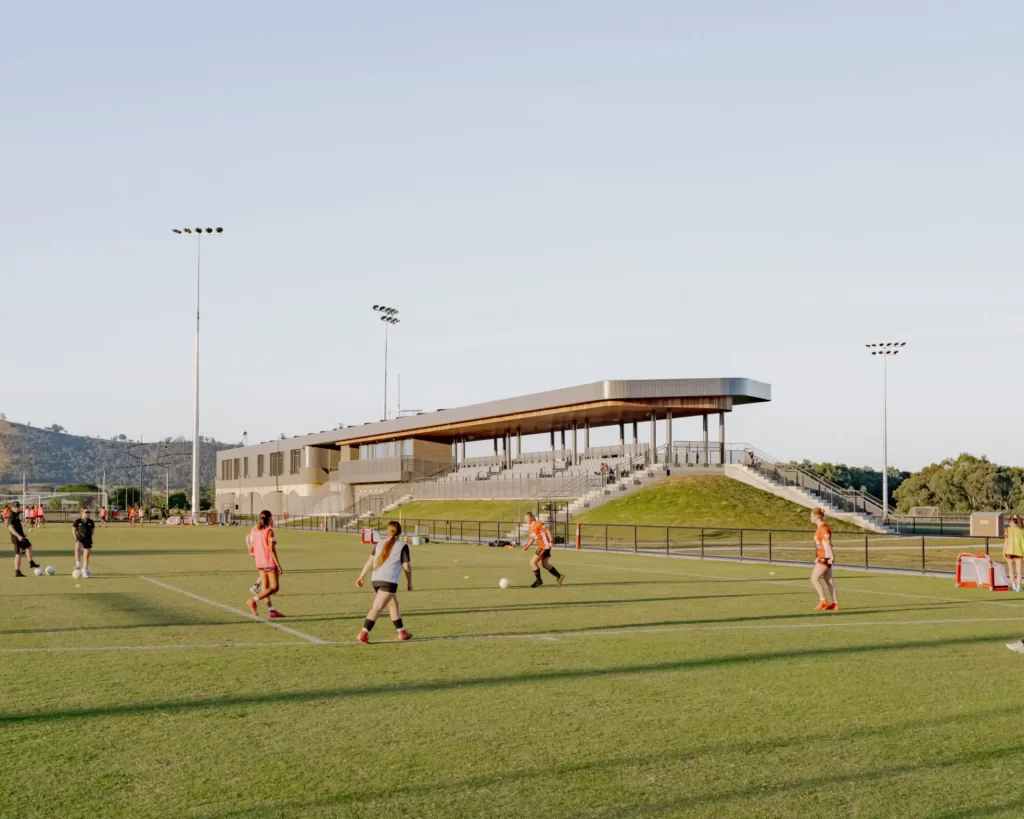
Football Victoria is partnering with the local community of Wodonga in advocating for a significant expansion of Baranduda Fields to help accommodate the rapid growth of football participation in the region.

Wodonga, a growing regional city south of the Victoria/New South Wales border, has seen involvement in football increase by over 130% in just six years.

A massive part of that is the growth of women’s & girl’s football, with participation increasing by almost 300% in the last six years alone.

With such a dramatic rise, the current facilities are not able to meet the demand. 

Alongside the local community, Football Victoria is campaigning for a synthetic pitch and lighting infrastructure to be provided for Baranduda Fields. This would provide players the chance to play year round, including at times when the weather may preclude use of traditional pitches.

It would not only help Murray United FC, who play and train there, but create a regional football hub capable of supporting the increase in activity within the local area.

Football Victoria’s Head of Government Relations & Facilities, Lachlan Cole, said in a press release, ‘The growth of football across this part of Victoria has been extraordinary, and the numbers tell only part of the story.’

‘Football Victoria has a strategic commitment to regional football, and Baranduda Fields gives us the opportunity to think beyond one club for the benefit of a whole region,’ he said.

Whilst the demand for football continues to grow across the country, areas like Wodonga are feeling the exponential rise more than others. Particularly highlighted by the dramatic increase in female participation, the need for upgraded accommodation is no longer a future consideration.

Speaking to Football Victoria, Murray United FC Chairman Pedro Afonso said, ‘A synthetic pitch and lighting would unlock much-needed access to the regions first synthetic football pitch, which provides major benefits to all year round participation and provides access in all weather conditions.’

‘More space and capacity gives Murray United and the sport in the region ability to keep growing. The demand is here – we need the infrastructure to match it.’

Whilst the games grows, the facilities need to be available to sustain it. Football Victoria’s pledge to help maintain that is exactly what the next generation requires.

Ernie Merrick: ‘There are many clubs that would be fantastic additions to the A-League’

Ernie Merrick will be forever recognised as a key figure through the A-League’s golden early years. Appointed Melbourne Victory’s foundation manager in 2004 he led the club to not just silverware, but legitimacy and respect in a serious sport city.

A Scottish migrant and PE teacher by trade, Merrick was the youngest of the NSL’s managerial crop when he started with Preston in 1987 in the era of Thomson, Arok & Matic; when he finished with Newcastle in 2020 he was the elder statesman in the A-League age of Postecoglou, Popovic and Arnold.

For the places the game took him and all he achieved – including time as national team manager of Hong Kong – Victory supporters can comfort themselves in the fact that for whatever they feel towards Merrick and his iconic group of players, that feeling is mutual.

‘Yes, definitely,’ Merrick told Soccerscene Unfiltered when asked if managing Victory was the highlight of his career.

‘I think success is [fans] having identification with players, especially. We had Victorian boys playing for Victory.

‘That second year I was determined to have a complete pre-season. Archie Thompson bought me a birthday cake with 200 candles and said “Ernie, we’ve had 200 training sessions. We should celebrate this” – so he was looking forward to a big year, and we won the Grand Final 6-0.’

Nearing 20 years on, Victory and the A-League in general haven’t managed to drive forward as would have been hoped. Unsurprisingly that comes as painful to Merrick, as does the change in landscape regarding his other great passion and contribution in player development. 

‘I’m disappointed, as would most people be, that it’s struggled so badly. To me, there’s something missing,’ said Merrick of the current state of the A-League.

‘Those players we produced at the AIS and VIS went on to be the golden generation. Unless the league is fixed, there’s going to be ongoing problems with the financial status of things.

‘You just cannot earn enough money from selling a youngster, who you might get a million for, who then becomes worth several million in a few years if he does well. Maybe there’s a bit too much of selling players early.’

As someone who gave enduring service across Australia’s two domestic leagues, his voice holds weight in the consideration as to whether it’s time to now blend the, in today’s hyper-corporate landscape.

‘South Melbourne and Preston are two clubs that are perfect for the A-League, I think, down the track. They’ve set up, they’ve endured, they’ve been resilient, they’re playing good football and they’ve got a home base with a home crowd, which is far better than starting a club up from scratch.

‘All those players coming through those squads and the number of supporters they’ve got would be a huge addition. In Sydney too, there’s Marconi – there are so many good clubs around that I think would make a great addition to the A-League.’ 

Merrick also spent thirteen years as head coach at the Victorian Institute of Sport. He feels modern player development is an equation we still haven’t got right, post the closure of the AIS’ football program in 2017.

While many argue the move to club-based academy structures has seen Australia fall more in line with global practice while still producing players of quality, Merrick still feels there is merit in a national high performance program, in addition to club academies.

He was in the process of setting up state academies through the Member Federations during his time as Football Australia’s chief football officer from 2022-25. While the Victoria project was short-lived, academies in Tasmania, Western Australia and South Australia continue to run, but it appears the broader expansion of the concept has been abandoned.

‘I think both systems should work [together] equally well. When I started with the FA program clubs thought they would lose players to us, but I didn’t take any of their players. We offered the opportunity of a high-performance program to other youngsters.

‘We could develop players completely; we weren’t restricted to playing 4-3-3 to combine with the way the first team were playing. We provided more of a rounded education, and good players can play in any system.

‘We managed to affect the coaches involved so they were up to date with the latest information on methods of coaching, etc.’

Catch the full chat with Ernie Merrick on Soccerscene Unfiltered: from being two-footed by a 15-year old Kevin Muscat to his enthusiasm for the future of the Socceroos, his memories of Wellington and Newcastle, and plenty more…

Most Popular Topics

Editor Picks

Send this to a friend