

FIFPRO Europe and UEFA sign MoU to enhance players’ influence

UEFA and FIFPRO Europe have signed a memorandum of understanding (MOU) aimed at strengthening players’ influence in European football governance.

As part of the agreement signed by both organisations’ leaders in Paris, a FIFPRO Europe representative will join UEFA’s executive committee starting May 2025.

UEFA has also pledged to consult FIFPRO Europe on decisions affecting players’ employment conditions and any competition reforms that could influence players’ workload.

Additionally, active players and player representatives will take part in a new UEFA Professional Players’ Advisory Forum, set to begin meeting next month to discuss solutions for collective challenges facing professional footballers in Europe.

This three-year MOU will grant footballers and their unions more influence over decisions impacting their work, including match calendar adjustments, playing conditions, and health and safety issues.

The agreement also establishes a framework for FIFPRO Europe and UEFA to work together on initiatives to advance women’s football, focusing on fair employment conditions and minimum standards.

The two organisations will also collaborate on medical research, player education, and awareness campaigns addressing doping and discrimination.

Additional collaboration areas include strengthening stakeholder dialogue at both national and European levels, exploring joint commercial opportunities involving player data and intellectual property rights, and offering support to players who are out of contract.

FIFPRO President, David Terrier, was full of positive thoughts regarding this agreement.

“This agreement is a hugely positive milestone for professional players across Europe. With player representation now anchored at UEFA’s highest level, we are securing a stronger voice for players where it matters most,” he said via press release.

“Our ongoing dialogue with UEFA is already yielding positive results, and this MoU will only strengthen our ability to shape a framework that will advance player welfare and ensure a healthier and more sustainable future for football, where the needs and rights of players shall always be at the forefront, both on and off the pitch.”

UEFA President, Aleksander Ceferin, is confident their relationship with FIFPRO will support the growth of football for all.

“This partnership represents a new era in our relationship with FIFPRO Europe. Players are at the heart of football, and their perspectives must shape the decisions taken,” he said via press release.

“By inviting them to join the UEFA Executive Committee, we are creating a more inclusive future for the game, one in which the topic of player welfare will be at the forefront. This is about making tangible strides to ensure football continues to grow for everyone.”

You can view the MOU here.
Previous ArticleNext Article

Brazil is coming. But what is the real price of bringing football’s giants to Australia?

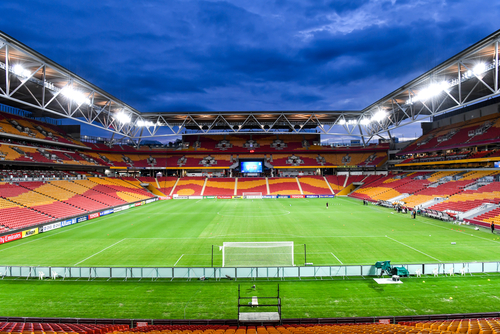
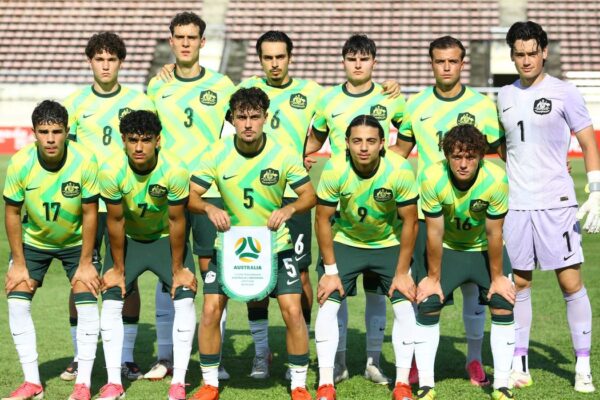
There is something undeniably exciting about Brazil coming to Australia. The five-time World Cup winners will face the Socceroos twice in Queensland from Friday, with Townsville and Brisbane set to host the blockbuster fixtures.

For Australian football, these are the kind of games that should be anticipated, celebrated and capture the public’s attention. But they also raise questions: how much should Australian football pay to bring the world’s biggest nations here, and when does the bill become too big? 

The cost of bringing the big names

Australia has always paid up to bring big names down under. Last week’s NFL game in Melbourne, at a cost of between $10 and 15 million dollars to the Victorian Government, is just the latest example.

It could cost the same amount to bring Brazil to Queensland. A report in The Sydney Morning Herald last year revealed Brazil was reportedly seeking around $7.5 million per match to play in Australia. The fee is in line with other major international events; Western Australia reportedly faced a bill of around $12 million in taxpayer funding for the recent Perth Italian Football Festival.

I’m worried Football Australia won’t get return on investment to make this particular event worthwhile. The enormous fee to bring Brazil to Australia can’t immediately be justified as an investment in our footballing future. Instead, Football Queensland and the state government could have put these funds into grassroots facilities. Part of Football Queensland’s scrapped state headquarters investment plan was to spend $8.5 million to refurbish fields, lights, drains and irrigation at Mappas and Meakin parks. Instead of these plans to invest in the state’s youth players and academies, money has been spent on two international friendlies.

So ahead of the fixtures, the question remains: will these games inspire the future generation, and will participation grow? The NFL match was impossible to ignore: a sold-out MCG and a live audience of 2.1 million on free-to-air, not even including those watching on ESPN and Netflix. Football Australia is not simply buying 90 minutes of football; it is buying the attention that comes with Brazil. So let’s see if they can maximize returns. 

Ticketing Tells a Story

Ticket sales provide insight into the interest in the fixture. Brisbane has sold much quicker than Townsville, but neither have sold out as yet. The fact these games didn’t immediately sell out may be considered surprising as there is a genuine appetite in Australia for elite international football at the moment, evidenced by SBS’ World Cup viewership numbers of 17.1 million.

Brazil is bringing some of its brightest stars: Vinicius Junior, Raphinha, Bruno Guimaraes, Marquinhos and Endrick are among the headline names in their squad. The star power is there. So why haven’t these matches sold out? There’s a chance it comes down to the competition and the visibility of the event.

The viewing problem

The timing of this fixture could raise eyebrows amongst fans. As much as Australia and Brazil will draw huge crowds, both games fall on either side of the AFL Grand Final. The 2024 AFL Grand Final, which involved Queensland’s Brisbane Lions, drew over 4 million viewers on free-to-air. Brisbane, who have won the last two premierships, will feature once again on Grand Final day. Therefore, fans who could’ve attended may instead be making the trip to Melbourne.

Then comes the strangest part: one of the fixtures Australia will play will not even be available on free-to-air television. The Townsville match will be shown free on Network 10 and 10 Streaming, as well as Paramount+. The Brisbane match, however, will be available exclusively on Paramount+. That creates a disconnect. If governments and football administrators are spending millions to bring a global sporting brand to Australia, why should a large section of the Australian public need a subscription to watch the second match?

The Brisbane game is behind a paywall, limiting the national reach of the event. Reach is surely part of the justification for spending big on Brazil, it’s not just that 50,000 people get to sit inside Suncorp Stadium. It is that millions of Australians get exposed to the spectacle and if that audience is restricted, the value of this fixture is limited.

A solution could be to spend the money on advertising the match to the public to try to generate interest across streaming and free-to-air. With less than a week until the first game I don’t believe the advertising has done enough to generate enough interest to justify a $15 million price tag for the two game series. 

The Brazil friendlies will be spectacular. They should attract big crowds, create memories and give the Socceroos an excellent test against one of football’s most recognisable nations. But for the appropriate return, attention must be measured. Does this fixture carry on the Socceroos hype and keep the eyeballs of the general public on our sport? I’m not convinced. However, if these matches bring new fans to football, strengthen the national team and create lasting investment in the sport, the enormous price tag could still be justified. But if they simply produce two nights of football before the attention disappears, then Australian football has paid a premium for a very expensive show.

Adelaide United renews StudyAdelaide partnership for Asian campaign

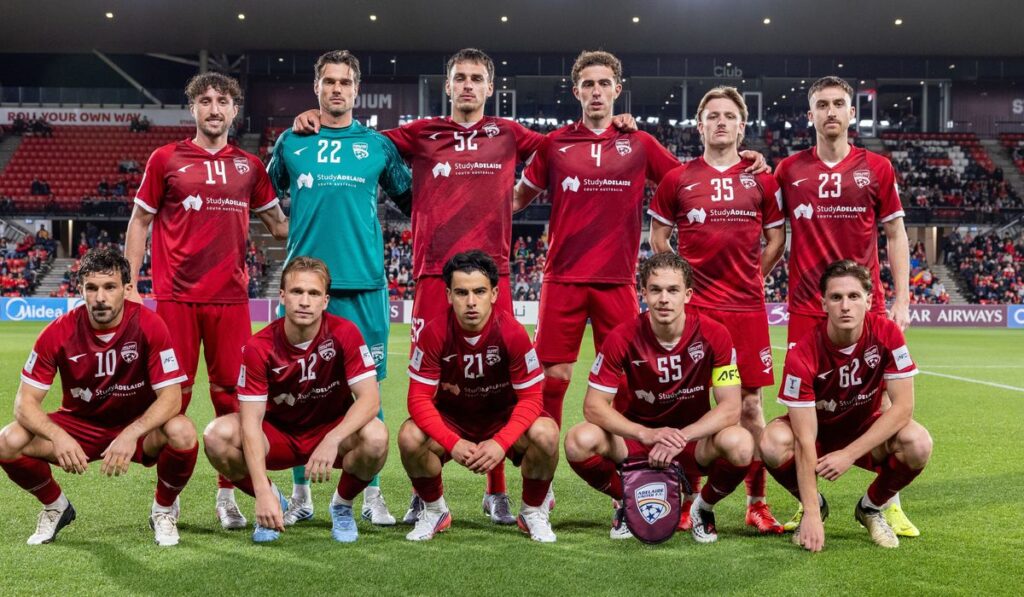
Adelaide United has brought back a familiar commercial partner for its return to continental competition, with StudyAdelaide signing on as front-of-shirt sponsor for the club’s 2026/27 AFC Champions League Two campaign.

The partnership reconnects two South Australian organisations after StudyAdelaide previously featured on Adelaide United’s shirt during their 2010 AFC Champions League campaign.

Adelaide commenced their six-match group-stage campaign on Thursday at Hindmarsh, defeating Hong Kong’s Tai Po 3-0.

For StudyAdelaide, the value of the partnership extends beyond traditional football sponsorship. The organisation, a partnership between the South Australian Government and more than 50 education institutions, is using Adelaide United’s Asian competition to promote South Australia as an international study destination.

The club’s continental schedule provides exposure in several key Asian markets, with Adelaide travelling to face BG Pathum United in Thailand and Lion City Sailors in Singapore during the group stage.

StudyAdelaide chief executive Jane Johnston said the partnership would provide a great opportunity to connect with young people across Asia.

“Having StudyAdelaide featured throughout this international competition is a unique platform to connect with young people across Asia and highlight the many reasons South Australia is their best option to study, live and build a career,” Johnston said.

The deal illustrates how football’s international competitions can provide commercial value beyond traditional brand exposure, particularly for organisations looking to promote to a specific or new region.

The Reds’ ACL Two campaign continues against BG Pathum United in Thailand on October 15.

Most Popular Topics

Editor Picks

Send this to a friend